




Grater OEM Yangjiang: Practical Buyer Guide for Grater Sets
Yangjiang is widely associated with kitchen tools, and buyers searching for a grater OEM partner in Yangjiang usually want more than a colorful product photo. They need to understand the tool mix, the intended user, the quality questions to ask, and how to compare supplier answers before placing a wholesale or private-label order.
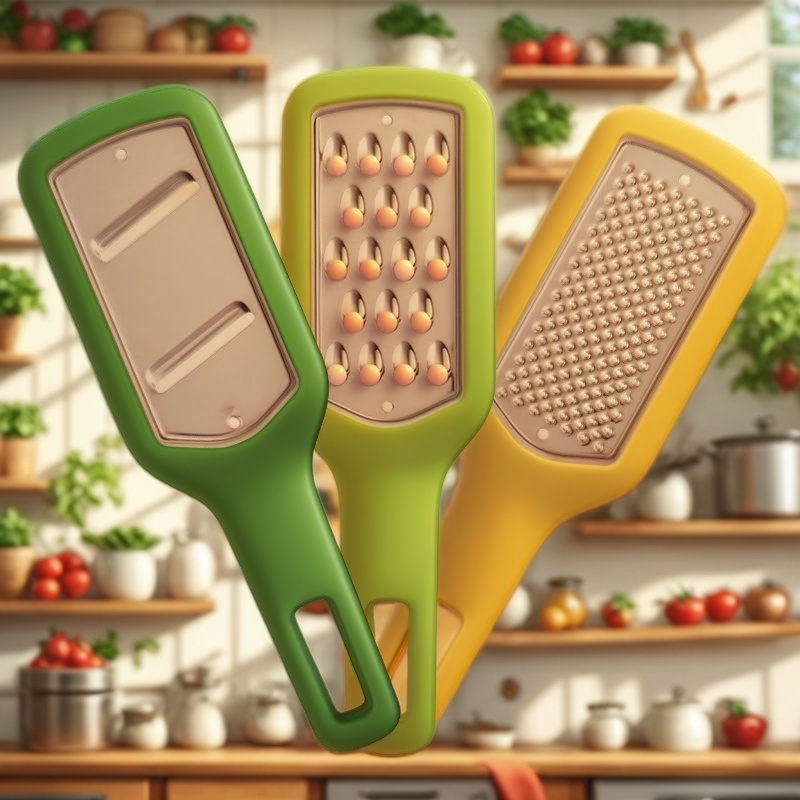
The original product concept is a three-piece grater and slicer collection. It includes a green slicer with large dual blades, a yellow classic grater with a fine-grain surface, and a lime paddle grater with oval perforations. The set is positioned for common food-preparation tasks such as slicing fruits and vegetables, grating hard cheeses or nuts, and zesting citrus or finely grating root vegetables. For OEM buyers, the value of this type of set depends on whether the design, materials, packaging, and supplier support match the target sales channel.
Key Takeaways
- A three-piece grater set can cover several kitchen tasks, but each tool should be evaluated separately for blade performance, grip comfort, cleaning, and packaging fit.
- Do not assume material grade, test results, certifications, MOQ, or production capacity unless the supplier provides written confirmation.
- For OEM or wholesale sourcing, ask for samples, artwork requirements, packaging options, inspection standards, and replacement policies before confirming an order.
- Product claims should be specific and verifiable, especially when selling to retailers, distributors, or online marketplaces.
Understanding the Three-Piece Grater Set
This grater collection is built around three different kitchen tasks. The green slicer features large dual blades for making even slices of fruits and vegetables. This type of tool is often selected for quick prep work where consistent slices matter, such as salads, garnishes, and everyday home cooking.
The yellow classic grater uses a fine-grain surface. According to the source description, it is intended for hard cheeses, nuts, and similar ingredients that need delicate shreds. Buyers should test whether the grating surface produces the texture their customers expect, because a fine grater for cheese may not perform the same way on chocolate, ginger, garlic, or firm vegetables.
The lime paddle grater includes oval perforations and is described as suitable for citrus zesting or finely grating root vegetables. Paddle graters are popular because they are simple to use and easy to store, but the handle angle, surface width, and stability during use all affect customer satisfaction.
What OEM Buyers Should Confirm With a Supplier
When sourcing grater OEM products in Yangjiang, buyers should treat the product description as a starting point, not a final specification. The original article mentions stainless-steel construction, non-slip handles, durability, and easy cleaning. Those are useful features, but a professional purchasing process should ask for details that can be checked and documented.
- Ask what stainless-steel grade is used for the grating and slicing surfaces.
- Request sample units to test sharpness, grip stability, cleaning, and resistance to bending during normal use.
- Confirm whether handle color, logo placement, packaging, barcode labeling, and instruction sheets can be customized.
- Ask what quality inspection steps are used before shipment and what defect standards apply.
- Check whether the supplier can provide product photos, packaging dielines, and carton information for your sales channel.
If you sell through retail chains or online marketplaces, also ask what compliance documents are available for your destination market. Avoid placing claims on packaging or product pages unless the supplier can support them with relevant documentation.
Comparison Checklist for Product Selection
The table below can help importers, distributors, and private-label buyers compare samples from a Yangjiang grater manufacturer or OEM kitchen utensils supplier.
| Item to Review | What to Check | Why It Matters |
|---|---|---|
| Blade and grating surface | Sharpness, consistency, edge finish, and surface rigidity | Affects cutting performance, user effort, and perceived quality |
| Handle design | Grip comfort, non-slip feel, balance, and hand clearance | Improves control and reduces frustration during repeated prep tasks |
| Tool mix | Slicer, fine grater, and paddle grater functions | Determines whether the set feels useful or repetitive to end users |
| Cleaning | Food residue removal, safe handling, and drying time | Easy cleaning is important for repeat use and reviews |
| Packaging | Retail display, e-commerce protection, labeling, and instructions | Packaging must fit the sales channel and reduce transit damage |
| Supplier documentation | Specifications, inspection criteria, customization details, and compliance papers | Reduces misunderstanding before mass production |
Quality Details That Influence Customer Reviews
Graters look simple, but small details can create major differences in user experience. A slicer with dual blades should feel stable and predictable. A fine grater should cut cleanly rather than crush food. A paddle grater should be comfortable enough for repetitive motion. For all three tools, buyers should check whether the handle remains secure when the surface is wet.
Cleaning is another practical issue. Fine-grain surfaces and oval perforations can trap food particles. Buyers should test common ingredients such as cheese, citrus peel, carrot, and ginger, then clean the tools using the method recommended by the supplier. If the product will include consumer instructions, those instructions should be clear, accurate, and consistent with the supplier's guidance.
For wholesale buyers, sample testing should include more than one unit. Compare several samples from the same batch if possible. Look for variation in blade alignment, handle finish, color consistency, and surface smoothness. If you plan to sell the set as a premium kitchen accessory, visible finishing details matter as much as cutting performance.
OEM Branding and Packaging Considerations
A grater set can be sold as a kitchen prep set, a cooking gift set, an entry-level utensil set, or a private-label accessory for retailers. The right positioning affects packaging choices. For a physical store, buyers may need a display-friendly box or carded presentation. For e-commerce, the priority may be protective packaging, compact carton size, and clear product images.
Before confirming an OEM order, ask the supplier what branding methods are available. Common questions include whether a logo can be added to the handle or packaging, what artwork format is required, whether color matching is available, and how pre-production samples are approved. Do not rely on verbal agreements for design details; use written specifications and approved samples.
The product page in the original article also referenced a related kitchen tool link: multi-functional peeler. If building a broader kitchenware line, buyers may compare this grater set with peelers, slicers, tongs, and other prep tools to create a consistent assortment.
How to Evaluate a Yangjiang Grater Manufacturer
Supplier evaluation should balance price with reliability. A low unit cost is not helpful if the samples do not match mass production, packaging fails during shipping, or documentation is incomplete. Ask for a clear quotation that separates product cost, packaging cost, customization charges, tooling if any, sample cost, lead time, payment terms, and shipping terms.
It is also reasonable to ask how the supplier handles changes after sample approval. For example, what happens if the buyer adjusts handle color, packaging text, or carton layout? Who confirms the final artwork? What inspection report is available before shipment? These questions help prevent avoidable delays.
Because commercial details such as MOQ, capacity, certifications, and testing results are not stated in the source, buyers should request them directly from the supplier and verify whether they meet the destination market's requirements. Written confirmation is especially important for importers, retailers, and distributors with formal vendor onboarding processes.
Practical FAQ
What is included in this grater set?
The described set includes a green slicer with large dual blades, a yellow fine-grain grater, and a lime paddle grater with oval perforations.
Is this product suitable for OEM or private-label sourcing?
It may be suitable, but buyers should confirm customization options, packaging formats, logo methods, MOQ, lead time, and sample approval steps with the supplier.
What materials are used?
The source mentions stainless-steel construction, but it does not state a specific stainless-steel grade. Buyers should ask the supplier to confirm the grade in writing.
What should buyers test before ordering?
Test slicing consistency, grating texture, handle grip, cleaning convenience, finish quality, packaging strength, and whether samples match the written specification.
How can buyers contact the supplier?
The original article listed the contact email as sales202@bonetcn.com. Buyers should request current product specifications and commercial terms directly.
