




Grater OEM Yangjiang: Practical Sourcing Guide for Kitchenware Buyers
For kitchenware brands, importers, and wholesale buyers, a Grater OEM Yangjiang sourcing project is usually about more than choosing a colorful tool. Buyers need to understand blade function, handle comfort, packaging options, quality control, and how well a supplier can support repeat orders. Yangjiang is widely known as a manufacturing center for blades, cutlery, and kitchen tools, so it is a common place to look for OEM kitchen utensils such as handheld graters, slicers, peelers, and related preparation tools.
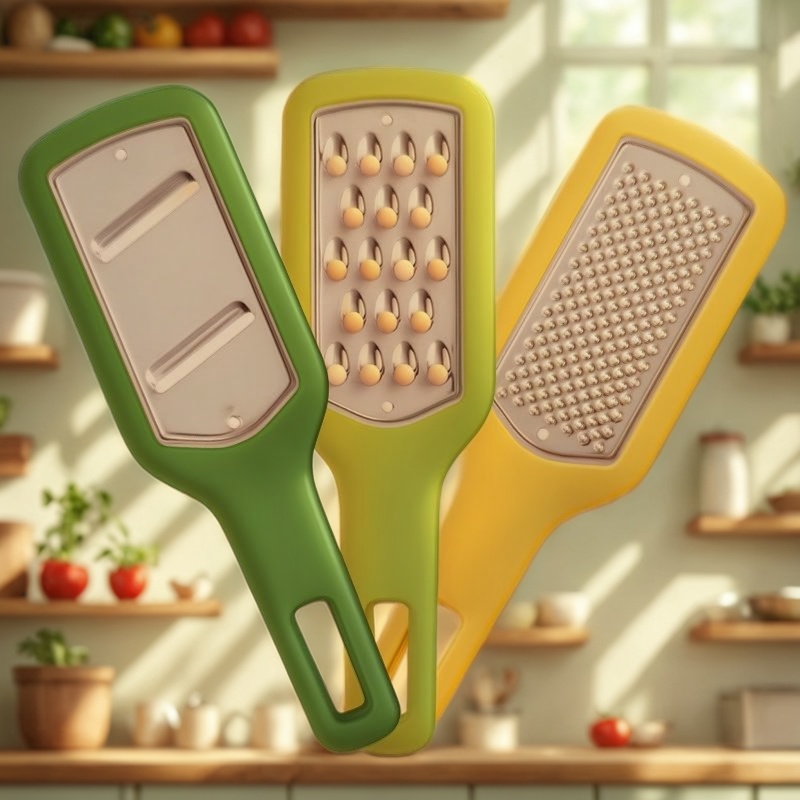
The original product description highlights a collection of handheld graters, including a green dual-blade slicer for fruits and vegetables, a leaf-green grater with large holes for cheese, carrots, or zucchini, and a yellow fine grater for citrus zest, ginger, nutmeg, and other delicate tasks. Those are useful starting points for a buyer, but a strong sourcing decision also requires practical checks before confirming an order.
Related product reference: https://bonethome.com/product/upgrade-your-kitchen-with-a-multi-functional-peeler
Key Takeaways
- Match each grater blade style to a clear food-preparation use case before requesting samples.
- Ask the supplier to confirm material grade, blade thickness, handle material, packaging, and any applicable test reports instead of assuming specifications.
- Evaluate comfort, stability, cleaning, and cutting performance with real food tests during sample review.
- For OEM orders, clarify branding, color, packaging artwork, inspection standards, lead time, and reorder support in writing.
Why Yangjiang Is Relevant for Grater OEM Sourcing
Yangjiang has a long association with blade and cutlery manufacturing, which makes it relevant for buyers sourcing graters and other kitchen preparation tools. A grater may look simple, but its performance depends on accurate punching or sharpening, consistent metal finishing, safe edges, comfortable handling, and stable assembly. These details affect customer satisfaction and return rates.
When evaluating a Yangjiang grater manufacturer, buyers should avoid relying only on product photos. Request physical samples and check whether the supplier has experience with the grater type you need: coarse shredders, fine zesting surfaces, dual-blade slicers, or multi-function sets. If the project is for private label or retail distribution, also ask whether the supplier can support barcode labels, instruction cards, color boxes, display packaging, or other market-specific requirements.
Understanding the Grater Types in the Collection
The collection described in the original article includes several practical handheld tools. The green dual-blade slicer is positioned for uniform slices of fruits and vegetables. This type of tool is often used for cucumbers, potatoes, carrots, and similar ingredients, depending on blade spacing and sharpness. For safety and consistency, buyers should ask whether a hand guard or protective cover is available.
The leaf-green grater with large holes is intended for heartier shredding tasks such as cheese, carrots, or zucchini. For this style, buyers should test whether food moves smoothly across the grating surface and whether shredded pieces release cleanly instead of clogging. The yellow fine grater is positioned for citrus zest, ginger, nutmeg, and other fine grating tasks. Fine graters should be checked for sharpness, comfort during repeated strokes, and ease of cleaning around small perforations.
Comparison Checklist for Product Selection
| Item to Compare | Why It Matters | Questions to Ask the Supplier |
|---|---|---|
| Blade function | Determines whether the tool slices, shreds, or finely grates effectively. | Which foods is this blade designed for, and can you provide samples for testing? |
| Metal material | Affects sharpness, corrosion resistance, and perceived quality. | What stainless steel grade is used, and can it be documented? |
| Handle design | Impacts grip comfort and control during repeated use. | What is the handle material, and is a non-slip option available? |
| Surface finishing | Influences safety, cleaning, and product appearance. | How are burrs, sharp edges, and finish defects controlled? |
| Packaging | Supports retail presentation and protects the tool in transit. | Can you supply neutral packaging, private label packaging, or custom artwork? |
| Inspection standard | Reduces disputes before shipment. | What AQL level, functional checks, and carton drop checks can be agreed? |
OEM Questions Buyers Should Ask Before Ordering
OEM sourcing works best when commercial and technical details are confirmed early. Instead of assuming that every color, logo, or package format is available, prepare a written request for quotation. Include the intended market, annual forecast, target packaging, logo placement, required languages, and expected inspection procedure.
- Can the supplier provide existing samples of the green dual-blade slicer, large-hole grater, and fine grater?
- What materials are used for the blade, handle, and any frame or cover?
- Which parts can be customized: color, logo, handle shape, packaging, instruction sheet, or set combination?
- What is the sample lead time, production lead time, and reorder process?
- What quality documents, test reports, or compliance documents are available for the target market?
- How are defects handled if inspection finds blade damage, poor finishing, color mismatch, or packaging errors?
Quality Checks for Handheld Grater Samples
A buyer should test samples in conditions close to normal use. For a slicer, check whether slices are even and whether the tool remains stable on a cutting board or bowl. For a large-hole grater, test cheese, carrots, and zucchini to see whether food catches or tears. For a fine grater, test citrus peel and ginger, then check how easy it is to clean the surface.
Also inspect non-performance details. Look for burrs around holes, rough seams on the handle, loose parts, uneven color, sharp exposed corners, and packaging damage. If the product is described as stainless steel, ask the supplier to confirm the exact grade and provide available documentation. Do not rely only on generic wording such as “high quality” when a specific market requires documented material or safety information.
Branding, Packaging, and Wholesale Planning
For Yangjiang products wholesale, packaging can be as important as the tool itself. A grater sold through supermarkets may need a hang card or blister-style presentation, while e-commerce sellers may prioritize compact packaging that protects sharp surfaces during shipping. A professional buyer should request dielines, artwork requirements, carton specifications, and product weight before confirming a private-label program.
If the order includes multiple graters as a set, confirm whether each tool will be packed individually or bundled together. Buyers should also ask how the supplier separates colors during production, controls color consistency, and prevents scratches during bulk packing. These details are especially important for colorful kitchen tools where surface marks are easy for consumers to notice.
How to Evaluate a Yangjiang Grater Manufacturer
A capable supplier should be able to answer practical questions clearly and provide samples that match the quoted product. Communication speed matters, but it should not replace technical verification. Ask for photos or videos of production steps when appropriate, but still use sample testing and pre-shipment inspection as your main safeguards.
Before placing a larger order, confirm payment terms, production schedule, artwork approval process, inspection timing, and how changes will be documented. If you need to contact Bonet Houseware about a related kitchenware sourcing project, the original article lists this email contact: sales202@bonetcn.com.
FAQ
What should I check first when sourcing a grater OEM in Yangjiang?
Start with the product function. Decide whether you need a slicer, coarse grater, fine grater, or a combined set. Then request samples and confirm material, packaging, customization, and inspection requirements.
Can I assume all graters use the same stainless steel?
No. The original article mentions stainless steel construction, but buyers should ask the supplier to confirm the exact grade and provide any available documentation for the target market.
Are colorful graters suitable for private label programs?
They can be, but buyers should confirm color options, logo method, packaging artwork, color tolerance, and whether repeat orders can match the approved sample.
What tests should be done before wholesale purchase?
Test slicing, shredding, zesting, handle comfort, cleaning, edge safety, packaging protection, and carton condition. Agree on inspection standards before production begins.
What information should be included in an OEM inquiry?
Include target grater type, quantity estimate, logo needs, packaging format, destination market, required documents, sample request, inspection expectations, and delivery timeline.
