




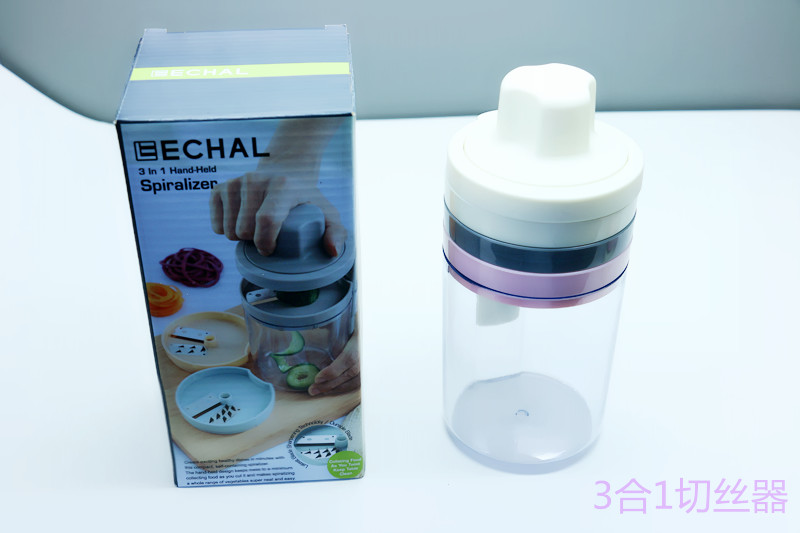
Handheld Spiralizer Guide for Better Vegetable Prep
A handheld spiralizer is a compact kitchen tool designed to turn firm vegetables and some fruits into spirals, strips, shreds, or slices. For home cooks, it can make vegetables easier to add to salads, stir-fries, noodle-style dishes, garnishes, and low-carbohydrate meal ideas. For retailers, importers, and kitchenware buyers, the category is also attractive because it is small, easy to demonstrate, and linked to everyday meal preparation.
The product described in the original Bonet Houseware article is a multifunctional vegetable slicer set rather than a single-purpose cutter. It includes a transparent measuring cup and three interchangeable cutting discs: a pink disc for fine or coarse shredding of cheese or vegetables, a blue disc for thin strips suitable for salads, and a gray disc for straight, even slices of fruits and vegetables. The article also states that the tool uses stainless steel blades. Those details are useful starting points when comparing handheld spiralizers, but buyers should still confirm final specifications, packaging, and compliance requirements with the supplier before placing an order.
What a Handheld Spiralizer Is Best For
A handheld spiralizer works best when the ingredient is firm enough to press against the blade without collapsing. Zucchini, carrots, cucumbers, potatoes, and similar vegetables are common choices. The result can be used raw, lightly cooked, or as a decorative ingredient. Compared with large countertop spiralizers, a handheld model usually takes less storage space and can be quicker to wash after a small meal prep task.
However, the smaller format also means the user should be realistic about capacity. It is ideal for one or two portions, side dishes, toppings, and quick salads. For high-volume restaurant prep or batch processing, a larger machine may be more efficient. Understanding this use case helps consumers choose the right tool and helps B2B buyers position the product accurately.
Key Features to Check Before Buying
When evaluating a spiral vegetable cutter, do not judge it only by appearance. The most important questions are whether it cuts consistently, feels safe in the hand, is simple to clean, and offers the cutting styles your recipes require. The Bonet article highlights several features that are worth considering:
- Transparent measuring cup: useful for collecting prepared vegetables and checking portion size during prep.
- Interchangeable cutting discs: a practical way to expand from spiral-style cutting to shredding and slicing.
- Pink shredding disc: described for fine or coarse shredding of cheese or vegetables.
- Blue strip disc: described for thin strips that suit salads.
- Gray slicing disc: described for straight, even slices of fruits and vegetables.
- Stainless steel blades: stated in the original article and important to confirm in the final product specification.
If you are buying for resale, request clear product photos, component lists, user instructions, and sample packaging. If you are buying for personal use, focus on whether the set matches the foods you actually prepare.
Comparison Checklist for Selection
| Selection Point | Why It Matters | Questions to Ask |
|---|---|---|
| Cutting options | Determines whether the tool can shred, slice, or make thin strips. | Which discs are included, and what cut does each disc produce? |
| Blade material | Affects cutting performance and cleaning expectations. | Are the blades stainless steel, and how should they be maintained? |
| Container design | Helps collect food and control portions during preparation. | Is a transparent measuring cup included, and is it marked for measurement? |
| Ease of cleaning | Small food pieces can remain around blades and discs. | Are the parts removable, and what cleaning method is recommended? |
| Safety and instructions | Sharp blades require clear handling guidance. | Is there a user manual, warning label, or hand-protection guidance? |
| B2B order details | Commercial terms affect sourcing decisions. | What are the MOQ, packaging options, lead time, and sample policy? |
How to Use a Handheld Spiralizer Effectively
Start by washing and drying the produce. Trim the ends so the vegetable sits evenly against the cutting surface. Firm, straight vegetables are easier to guide than soft, curved, or overripe ingredients. If the tool includes a collection cup, attach or position it securely before cutting so the prepared food falls into the container instead of onto the counter.
- Select the disc that matches the result you want: shredding, thin strips, or straight slices.
- Cut large vegetables into manageable lengths before inserting them into the tool.
- Apply steady pressure rather than forcing the ingredient into the blade.
- Keep fingers away from the cutting edge, especially as the vegetable becomes shorter.
- Empty the cup before it becomes overfilled to avoid clogging or uneven cutting.
For salads, thin cucumber or carrot strips add texture without long cooking time. For warm dishes, zucchini or potato spirals should usually be cooked briefly so they keep some structure. Cheese shredding can be useful for toppings, but chilled cheese is typically easier to grate cleanly than very soft cheese.
Cleaning and Care Tips
Clean the spiralizer soon after use. Vegetable starch, cheese, and small fibers are easier to remove before they dry around the blades. Detach the cutting disc if the design allows it, rinse away loose pieces, and use a small brush or sponge carefully around sharp edges. Avoid reaching directly into blade openings with your fingers.
Because the original article states that the blades are stainless steel, users should still dry the parts after washing and store them in a ventilated place. Stainless steel is selected for kitchen cutting tools because it is practical for repeated food preparation, but proper cleaning and drying remain important. If the supplier provides dishwasher guidance, follow that instruction rather than assuming every part is dishwasher-safe.
Guidance for Retailers, Wholesalers, and OEM Buyers
For B2B sourcing, a handheld spiralizer should be evaluated as both a functional tool and a packaged consumer product. Buyers should avoid relying on generic claims and instead ask for written confirmation of the final product details. Important questions include: What materials are used for the cup, body, and discs? Are the blades stainless steel as described? What packaging formats are available? Can instructions be provided in the target market language? What labeling, barcode, carton, and drop-test requirements can the supplier support?
If the order is for OEM or private label, clarify logo placement, color options, artwork approval, sample timing, production lead time, inspection process, spare parts policy, and after-sales handling. Do not assume certifications, test reports, or regulatory approvals are included; request current documents that match the exact product, market, and shipment batch. A reliable supplier should be able to answer these questions clearly or explain what must be verified before production.
Key Takeaways
- A handheld spiralizer is best for small-batch vegetable prep, salads, garnishes, and noodle-style vegetable dishes.
- The featured multifunctional set includes a transparent measuring cup plus pink, blue, and gray cutting discs for different prep styles.
- Stainless steel blades are stated in the source, but buyers should confirm the final specification before ordering.
- Cleaning, safe handling, and clear instructions are essential for daily use and customer satisfaction.
FAQ
Can a handheld spiralizer replace a full-size spiralizer?
It can replace one for quick home meals, salads, and small portions. For large batches or commercial kitchen prep, a countertop or powered option may be more efficient.
Which vegetables work best?
Firm vegetables such as zucchini, carrot, cucumber, and potato usually work well. Very soft, hollow, or uneven produce may cut less consistently.
How do I prevent clogging?
Use firm produce, trim it to a manageable size, apply steady pressure, and empty the collection cup before it becomes too full. Clean the disc between ingredients if fibers build up.
What should B2B buyers confirm before purchasing?
Confirm materials, blade specification, included discs, packaging, instructions, MOQ, lead time, sample availability, inspection standards, and any required compliance documents for the target market.
