




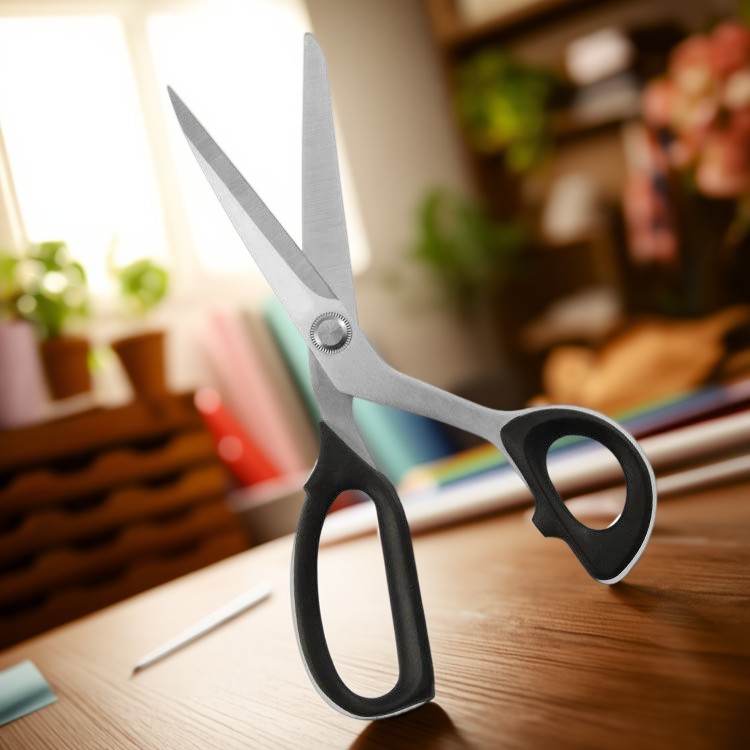
Heavy Duty Tailor Scissors: Precision and Durability
Heavy duty tailor scissors are a core tool for anyone who cuts fabric regularly, from alteration shops and sewing studios to craft rooms and sample-making desks. The original product description highlights stainless steel blades, an ergonomic handle design, a sturdy pivot bolt, black accent styling, a soft non-slip grip, and lightweight handling. Those details point to the qualities most buyers look for: clean cutting, stable blade movement, comfort during repeated use, and enough versatility for fabric, denim, paper patterns, and general workshop tasks.
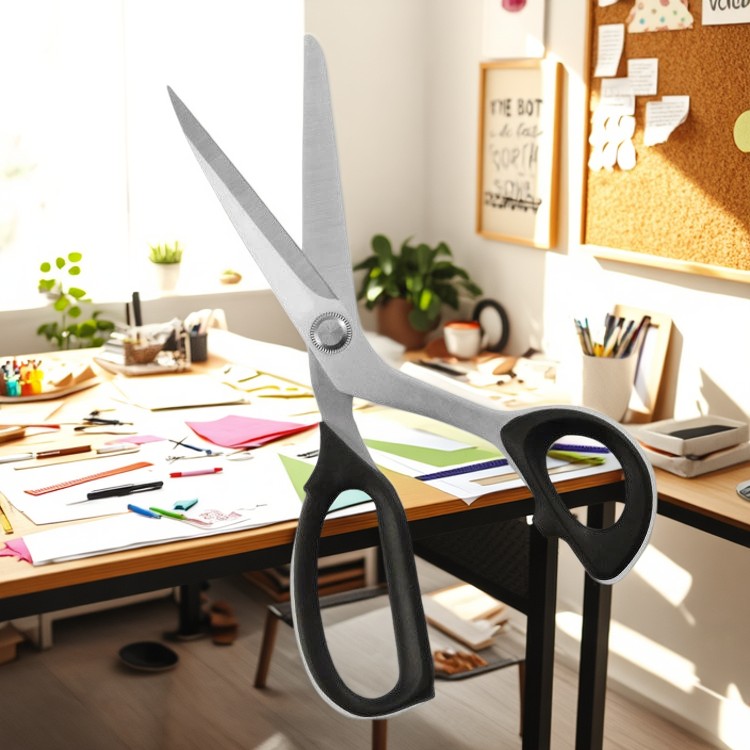
This guide explains how to evaluate heavy duty tailor scissors in practical terms. Instead of focusing only on appearance, it looks at blade control, handle comfort, maintenance, and questions to ask before purchasing for professional or bulk use.
Key Takeaways
- Choose tailor scissors based on the materials you cut most often, not only on size or weight.
- Stainless steel blades, a stable pivot, and a comfortable non-slip handle can improve consistency during repeated cutting.
- Keep fabric scissors separate from paper and packaging tools to protect the edge.
- For wholesale or OEM sourcing, ask suppliers about samples, materials, packaging, inspection standards, and replacement policy before ordering.
What Makes Tailor Scissors “Heavy Duty”?
Heavy duty tailor scissors are typically designed to handle more frequent cutting and thicker or layered materials than lightweight household scissors. In tailoring, the challenge is not just cutting through fabric; it is keeping long cuts straight, trimming curves accurately, and avoiding frayed or compressed edges. A tool that feels strong but poorly balanced can still cause mistakes.
The product description mentions finely honed stainless steel blades and a sturdy pivot bolt. These are important because blade sharpness determines how cleanly the scissors enter the fabric, while the pivot affects how evenly the two blades meet. If the pivot is too loose, the fabric may fold between the blades. If it is too tight, the user may need extra force, which can lead to hand fatigue.
Best Uses for Heavy Duty Tailor Scissors
These scissors are suitable for a range of cutting tasks where control matters. The original article mentions soft fabric, sturdy denim, delicate paper, craft use, DIY tasks, and office work. For best results, however, it is wise to separate scissors by purpose. A pair used daily on fabric should not be used to cut adhesive tape, wire, plastic straps, or abrasive packaging materials.
- Tailoring and alterations: trimming seams, cutting garment panels, and adjusting hems.
- Fabric crafts: cutting cotton, felt, lining, and similar materials for small projects.
- Pattern work: cutting paper patterns when a separate paper-only pair is not available.
- Denim and thicker textiles: cutting should be done slowly, especially through multiple layers.
- Workroom support: general textile preparation where precision and repeatability are needed.
Feature Checklist for Selecting Tailor Scissors
Before buying heavy duty tailor scissors, compare the features that affect daily use. A good pair should feel controlled from the first cut to the last, especially when cutting long fabric lengths or repeated small pieces.
| Feature to Check | Why It Matters | What to Ask or Test |
|---|---|---|
| Blade material | Stainless steel is commonly valued for durability and ease of maintenance. | Ask what material is used and whether the supplier provides material details. |
| Blade sharpness | Sharp blades reduce fabric drag and help create cleaner edges. | Test on the fabrics you cut most: cotton, denim, lining, or craft material. |
| Pivot stability | A stable pivot supports smooth blade movement and reduces misalignment. | Open and close the scissors several times; check for wobble or grinding. |
| Handle comfort | Ergonomic and non-slip grips can reduce strain during longer work sessions. | Confirm the grip fits your hand size and cutting style. |
| Weight and balance | Heavy duty should not mean awkward or tiring. | Hold the scissors as if cutting a long pattern line, not just for a quick test. |
| Intended use | Fabric, paper, and mixed-use work place different demands on the edge. | Decide whether the pair will be fabric-only or general-purpose. |
Comfort and Cutting Control
Comfort is not a minor detail in a busy sewing environment. The original description notes ergonomically contoured handles, black accents, and a soft non-slip grip. These features can help users maintain control, especially when cutting curved pattern pieces or working for extended periods.
When testing comfort, do more than open and close the scissors once. Put your fingers through the handles and simulate cutting along a long line. Check whether the handle edge presses into the fingers, whether the thumb position feels natural, and whether the grip stays secure without squeezing too hard. For shared workrooms, choose scissors that can serve a range of users comfortably, or keep multiple sizes available.
How to Care for Heavy Duty Tailor Scissors
Even durable scissors lose performance if they are misused. Good maintenance is simple, but it must be consistent. Keep the blades clean and dry, store the scissors where the edge will not strike other tools, and avoid dropping them because impact can affect alignment.
- Wipe the blades after cutting lint-heavy fabrics.
- Keep fabric scissors away from tape, glue, and rough packaging materials.
- Store them closed in a drawer, sleeve, or tool roll.
- Do not force the blades through materials beyond their intended use.
- If cutting becomes rough, have the scissors sharpened by a qualified service rather than grinding them unevenly at home.
If the pivot begins to feel loose or stiff, inspect it before continuing. Some scissors allow adjustment, while others do not. Buyers should ask the supplier about maintenance recommendations for the specific model.
B2B and Wholesale Sourcing Questions
For retailers, sewing schools, uniform shops, craft brands, and distributors, sourcing tailor scissors is not only about the product photo. It is about consistency across units, packaging suitability, and after-sales communication. Avoid assuming details that are not provided in the listing. Instead, ask clear questions before placing a bulk order.
- Can the supplier provide pre-production or stock samples for cutting tests?
- What blade material and handle material are used, and can they be documented?
- Is custom packaging, branding, or labeling available, and what are the requirements?
- What inspection steps are used for blade alignment, sharpness, handle finish, and pivot movement?
- What is the policy for defective, damaged, or inconsistent units?
- What are the lead time, minimum order quantity, carton details, and shipping options?
These questions help buyers compare suppliers on practical reliability rather than broad claims. If the scissors will be sold in a regulated market, buyers should also confirm what compliance documents are required for that market and whether the supplier can provide them.
Practical FAQ
Are heavy duty tailor scissors only for professional tailors?
No. They can also be useful for hobby sewing, DIY fabric work, craft rooms, and office cutting tasks. Professionals may notice the benefits more because they cut frequently, but any user can benefit from better control and comfort.
Can I use the same scissors for fabric and paper?
You can, but it is better to keep fabric scissors separate. Paper and packaging materials can dull the edge faster, which may reduce cutting performance on fabric.
What should I test before buying in bulk?
Test sharpness, blade alignment, pivot smoothness, handle comfort, packaging quality, and consistency between samples. Use the actual fabrics or materials your customers are likely to cut.
How do I know when scissors need sharpening?
Signs include fabric folding between the blades, uneven cutting, snagging, or needing extra pressure to complete a cut. If cleaning does not help, professional sharpening may be needed.
Are stainless steel blades maintenance-free?
No. Stainless steel can still lose sharpness or accumulate residue. Wipe the blades, store the scissors properly, and avoid cutting unsuitable materials.
Final Thoughts
Heavy duty tailor scissors should be judged by how reliably they cut, how comfortable they feel, and how well they hold up to routine work. The stainless steel blades, sturdy pivot, ergonomic handle shape, soft non-slip grip, and lightweight handling described in the original product information are all relevant selection points. For individual users, the best choice is the pair that matches your fabrics and cutting habits. For business buyers, the best choice also depends on supplier transparency, sample testing, packaging options, and consistent quality control.
