




High-Performance Tailor Scissors for Professionals
Professional tailoring depends on repeatable accuracy. A clean cut helps pattern pieces stay true to size, reduces fabric waste, and makes sewing easier later in the workflow. For studios, garment sample rooms, alterations shops, and wholesale buyers, the right tailor scissors are not only a hand tool; they are part of quality control.
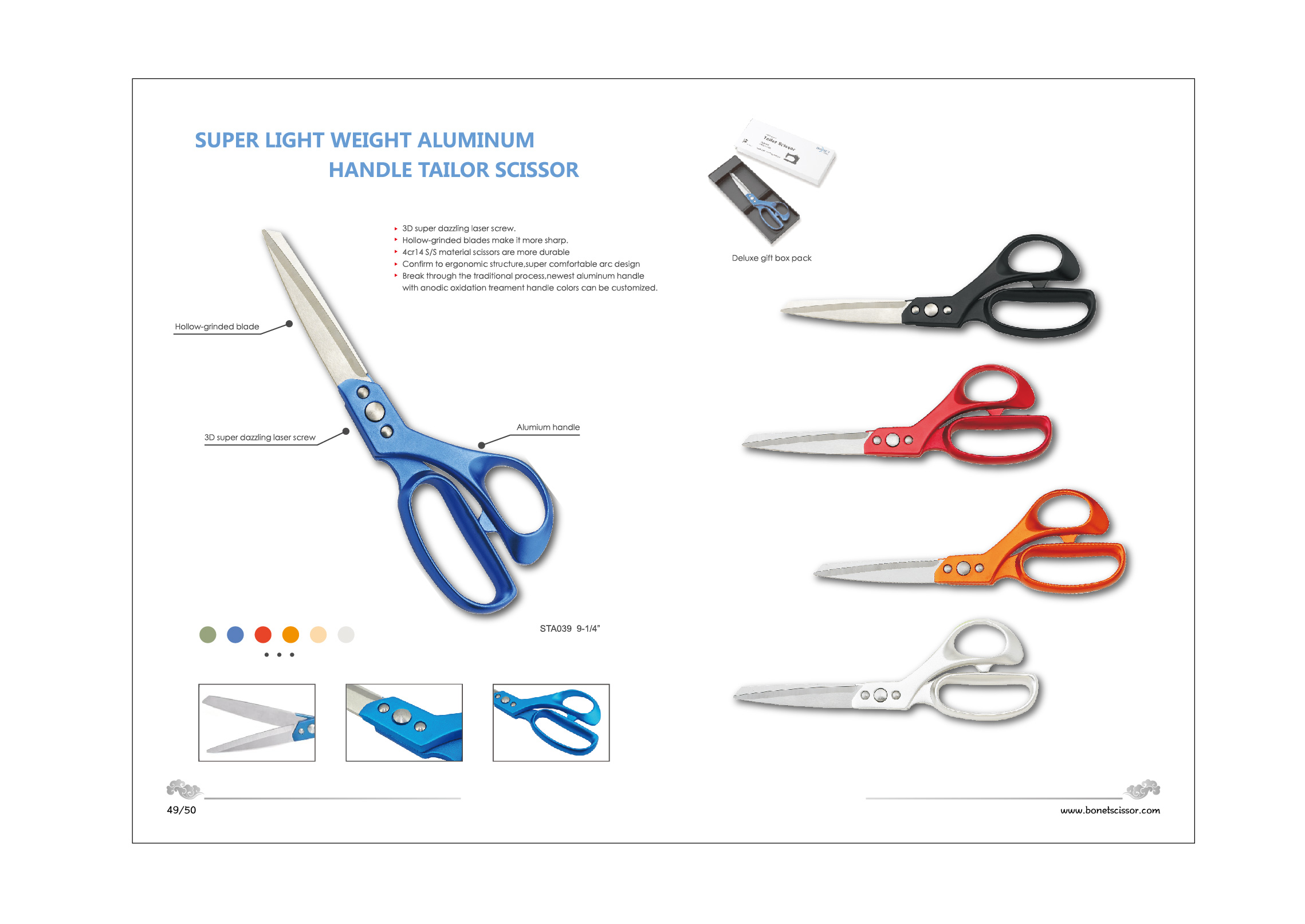
This guide explains how to evaluate high-performance tailor scissors for professional use, including blade behavior, handle comfort, tension adjustment, packaging, and sourcing questions to ask before placing an OEM or wholesale order. The original product information highlights hollow-grinded blades made from 4# and 4.5# material, a 3D super dazzling laser screw for adjustment, an aluminum handle, anodic oxidation color options, and a deluxe gift box. Those details are useful, but buyers should still verify specifications with the supplier before confirming production.
Key Takeaways
- Tailor scissors should cut fabric cleanly without dragging, chewing, or shifting the cloth.
- Blade tension matters; an adjustable screw can help maintain smooth opening and closing.
- An aluminum handle may reduce overall weight, which is helpful during long cutting sessions.
- For B2B sourcing, confirm materials, size range, packaging, inspection standards, lead time, and after-sales process in writing.
What Makes Tailor Scissors Different?
Tailor scissors are designed for fabric work, where control is more important than speed alone. Compared with general household scissors, a professional fabric-cutting tool needs a long, stable cutting line and enough sharpness to pass through textiles without lifting the material. The lower blade is often kept close to the table so the fabric remains flat while cutting.
In professional use, small differences become noticeable. A blade that is slightly dull can fray delicate fabric. A handle that is too heavy can cause fatigue after repeated cuts. A screw that loosens too easily can affect tension and create uneven results. For this reason, buyers should evaluate the scissors as a complete tool rather than focusing on one feature only.
Blade Performance and Cutting Precision
The source product description states that the blades are hollow-grinded from 4# and 4.5# material. Hollow grinding is commonly used to create a cutting edge geometry that supports sharp contact between the blades. For professional users, the important question is how that edge performs on the fabrics they actually cut, such as cotton, wool blends, denim, lining fabric, felt, or synthetic textiles.
When reviewing samples, do not test only one straight cut. Try long curves, short notches, multiple fabric layers, and fine trimming near a seam allowance. The blades should close smoothly from pivot to tip, and the cut should be consistent along the full blade length. If the tip struggles to finish a cut, it can slow down pattern work and cause uneven edges.
Handle Comfort for Long Cutting Sessions
The original description notes an aluminum handle. This is an important feature to evaluate because cutting rooms and tailoring studios often require repeated use over several hours. A lighter handle can reduce strain, but comfort also depends on handle shape, finger clearance, balance, and whether the grip suits the user’s hand size.
Ask sample users to cut for a realistic period rather than testing the scissors for only a few minutes. A tool that feels comfortable at first may create pressure points after repetitive work. If you are purchasing for a team, consider whether one size and handle profile will suit all users or whether multiple sizes should be sourced.
Adjustment, Tension, and Daily Reliability
The product information mentions a 3D super dazzling laser screw that allows adjustment. In practical terms, an adjustable pivot can help users set the tension between the blades. If the tension is too tight, cutting becomes tiring. If it is too loose, fabric may fold or slip between the blades.
For B2B buyers, ask the supplier how the screw should be adjusted, whether special tools are required, and whether replacement screws or service guidance are available. Also check whether tension remains stable after repeated opening and closing. A good sample test should include continuous cutting, not just a visual inspection.
Color, Finish, and Packaging Considerations
The original article lists anodic oxidation treatment and color options including black, red, orange, and white. Color can help with product line planning, retail display, or workshop identification. For example, a studio may assign different colors to different workstations or material categories. However, appearance should not replace functional testing.
The product is also described as being presented in a deluxe gift box. For retail and wholesale programs, packaging affects shelf presentation, shipping protection, barcode placement, and customer perception. Before ordering, request packaging dimensions, material details, artwork requirements, and whether custom branding is available. Do not assume logo printing, private labeling, or packaging customization unless the supplier confirms it.
Comparison and Buyer Checklist
| Evaluation Point | What to Check | Questions to Ask the Supplier |
|---|---|---|
| Blade edge | Clean cutting from pivot to tip on target fabrics | What material and grinding process are used, and can samples be tested? |
| Blade tension | Smooth opening and closing without fabric slipping | How is the laser screw adjusted, and is guidance provided? |
| Handle | Weight, balance, finger comfort, and grip fit | What handle material and size options are available? |
| Finish and color | Surface consistency and color matching | Are black, red, orange, and white available for the planned order? |
| Packaging | Protection, presentation, labeling space | What are the gift box details and customization options? |
| Quality control | Consistent sharpness, alignment, and appearance | What inspection steps are used before shipment? |
How to Test Samples Before a Wholesale Order
Sample testing should reflect real use. Prepare the fabrics your customers or workers cut most often, and test each sample under similar conditions. Record comments from more than one user because hand size and cutting habits vary.
- Inspect blade alignment, screw position, handle finish, and packaging condition on arrival.
- Cut single-layer fabric, then test multiple layers if that matches your workflow.
- Check the tip for precise trimming and the full blade length for long straight cuts.
- Use the scissors for an extended session to evaluate fatigue and balance.
- After testing, check whether the pivot feels loose and whether the blades still meet properly.
For OEM or wholesale purchasing, document the approved sample carefully. Keep notes on material claims, finish, color, packaging, labeling, and any agreed changes. This reduces misunderstanding when moving from sample approval to bulk production.
Care Tips for Professional Users
Even high-performance tailor scissors need proper care. Use them only for fabric unless the supplier confirms broader use. Cutting paper, wire, plastic sheets, or adhesive materials may dull the edge or leave residue. Wipe the blades after use and store the scissors in their box or a protective sleeve to prevent impact damage.
If cutting becomes rough, do not force the blades through fabric. Check for lint at the pivot, improper tension, or edge damage. If sharpening is needed, use a qualified sharpening service familiar with fabric scissors and the blade style. Poor sharpening can change the edge geometry and reduce performance.
FAQ
What fabrics should I use to test professional tailor scissors?
Test the fabrics you cut most often. Common choices include cotton, suiting fabric, denim, lining, and lightweight synthetics. Include both straight cuts and curves.
Does an aluminum handle always mean the scissors are better?
No. An aluminum handle may reduce weight, but overall comfort also depends on shape, balance, hand fit, and cutting habits. Sample testing is essential.
Why is an adjustable screw useful?
An adjustable screw allows blade tension to be fine-tuned. Correct tension helps the scissors cut smoothly without excessive resistance or fabric slipping.
Can these scissors be ordered with custom branding?
The source information mentions color options and a gift box, but it does not confirm branding services. Ask the supplier directly about logo, packaging artwork, MOQ, and lead time.
What should wholesale buyers confirm before ordering?
Confirm blade material details, available sizes, handle colors, packaging, sample approval process, quality inspection criteria, delivery schedule, and after-sales support.
Final Sourcing Advice
High-performance tailor scissors should be selected through practical testing, not description alone. The stated features—hollow-grinded 4# and 4.5# material, adjustable laser screw, aluminum handle, anodic oxidation colors, and gift box packaging—give buyers a useful starting point. The next step is to verify how the scissors perform in your own cutting environment and to put all commercial and technical expectations in writing before moving forward.
