




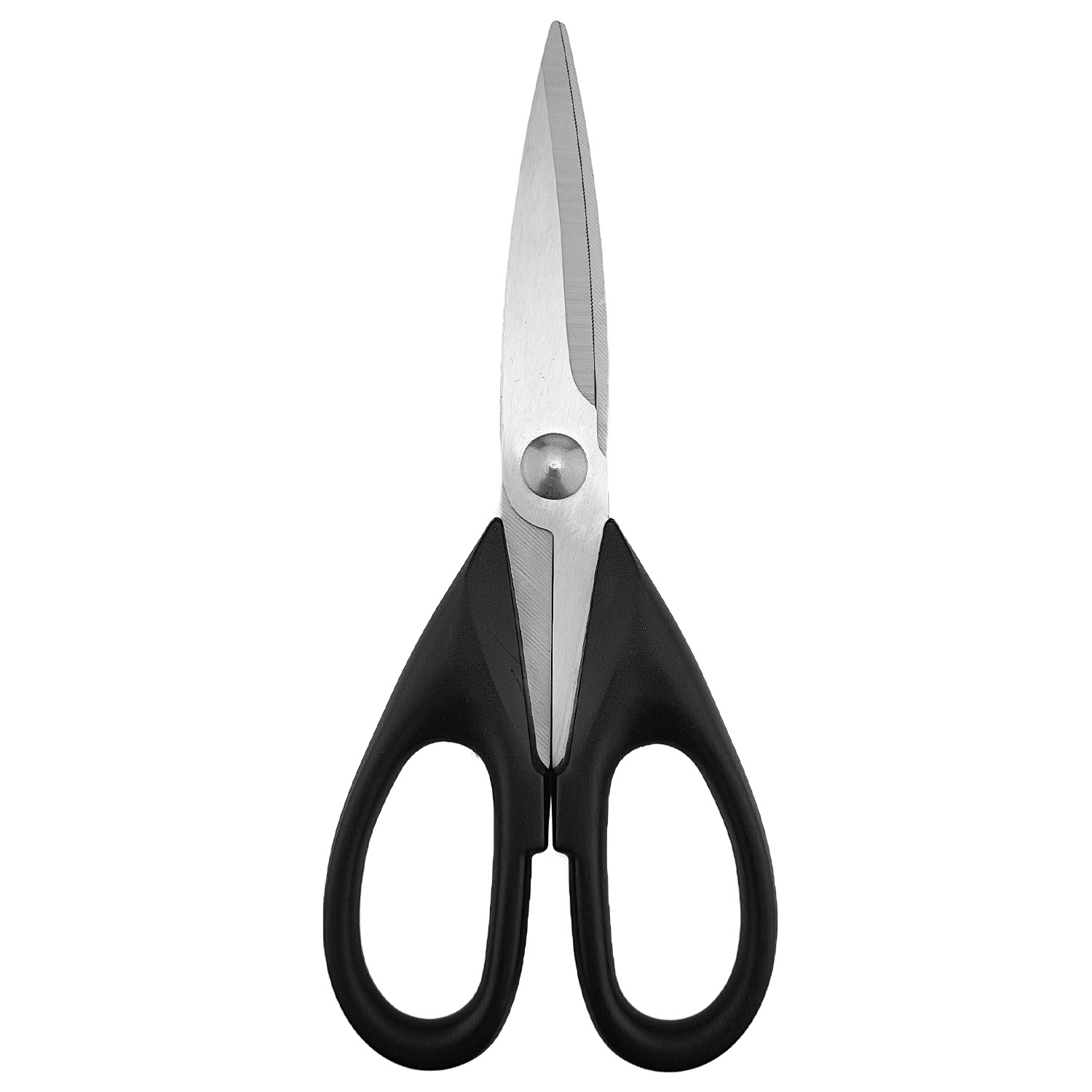
High-Quality OEM Kitchen Scissors from Yangjiang Producers
OEM kitchen scissors are a common sourcing category for houseware brands, kitchenware importers, promotional buyers, and wholesale distributors. The product looks simple, but small differences in blade geometry, handle fit, finishing, packaging, and quality control can affect customer satisfaction and repeat orders. For buyers considering Yangjiang producers, the goal is not only to find a low unit cost, but to confirm whether a supplier can deliver consistent cutting performance, safe handling, and reliable customization support.
Yangjiang is widely known as a major cutlery and scissors production area in China. Many buyers look there when they need OEM kitchen scissors for retail, hospitality, food preparation, or general household use. This guide explains how to evaluate producers, what to ask before sampling, and how to compare product options without relying on vague claims.
Key Takeaways
- Choose OEM kitchen scissors based on intended use: poultry, herbs, packaging, seafood, or general household tasks.
- Ask suppliers to confirm blade material, hardness range, handle material, finish, packaging, and quality inspection process in writing.
- Do not rely only on product photos; request samples and test cutting comfort, alignment, and durability.
- For wholesale or private label projects, clarify logo method, packaging artwork rules, lead time, MOQ, and replacement policy before ordering.
Why OEM Kitchen Scissors Need Careful Sourcing
Kitchen scissors are expected to cut a wide range of materials, from herbs and vegetables to poultry skin, food packaging, paper labels, and thin plastics. A poor design may feel acceptable in a catalog image but fail in daily use because the blades twist, the handles pinch, or the pivot becomes loose. For a retailer, that means returns and negative reviews. For a distributor, it may create inconsistent feedback between batches.
OEM sourcing adds another layer of responsibility. Buyers may need custom branding, blister cards, gift boxes, barcode labels, instruction sheets, or assortment packaging. These details should be planned early because they affect quotation, sampling time, and inspection standards. A good sourcing process treats the scissors as both a cutting tool and a packaged retail product.
What Makes Yangjiang Relevant for Kitchen Scissors
Yangjiang has a long association with cutlery, knives, and scissors manufacturing. This regional concentration can be useful for buyers because suppliers may have access to related processes such as blade forming, sharpening, polishing, handle assembly, packaging, and export coordination. However, buyers should still verify each supplier individually. Being located in a well-known production area does not automatically prove quality, compliance, or suitability for a specific market.
When speaking with a Yangjiang scissors manufacturer, ask about their main product categories, export experience, available OEM services, and how they control incoming materials and finished goods. If your market requires specific documentation or packaging language, raise that requirement before sampling rather than after mass production begins.
Product Selection: Match Scissors to Real Kitchen Tasks
Before requesting a quote, define the use case. General-purpose kitchen scissors may not need the same structure as heavy-duty poultry shears. Herb scissors, seafood scissors, and multi-purpose household scissors can have different blade shapes, handle proportions, and cleaning requirements. If you are building a retail line, it may be better to source two or three clearly positioned models instead of one product that tries to cover every task.
- General kitchen scissors: suitable for everyday cutting of food packaging, herbs, paper, and light food preparation.
- Poultry or heavy-duty scissors: should be evaluated for grip comfort, blade strength, pivot stability, and cutting leverage.
- Seafood scissors: may need a narrow blade profile and secure handle control for shells and fins.
- Multi-purpose scissors: useful for household and kitchen tasks, but buyers should test whether the blade edge remains practical for food-related use.
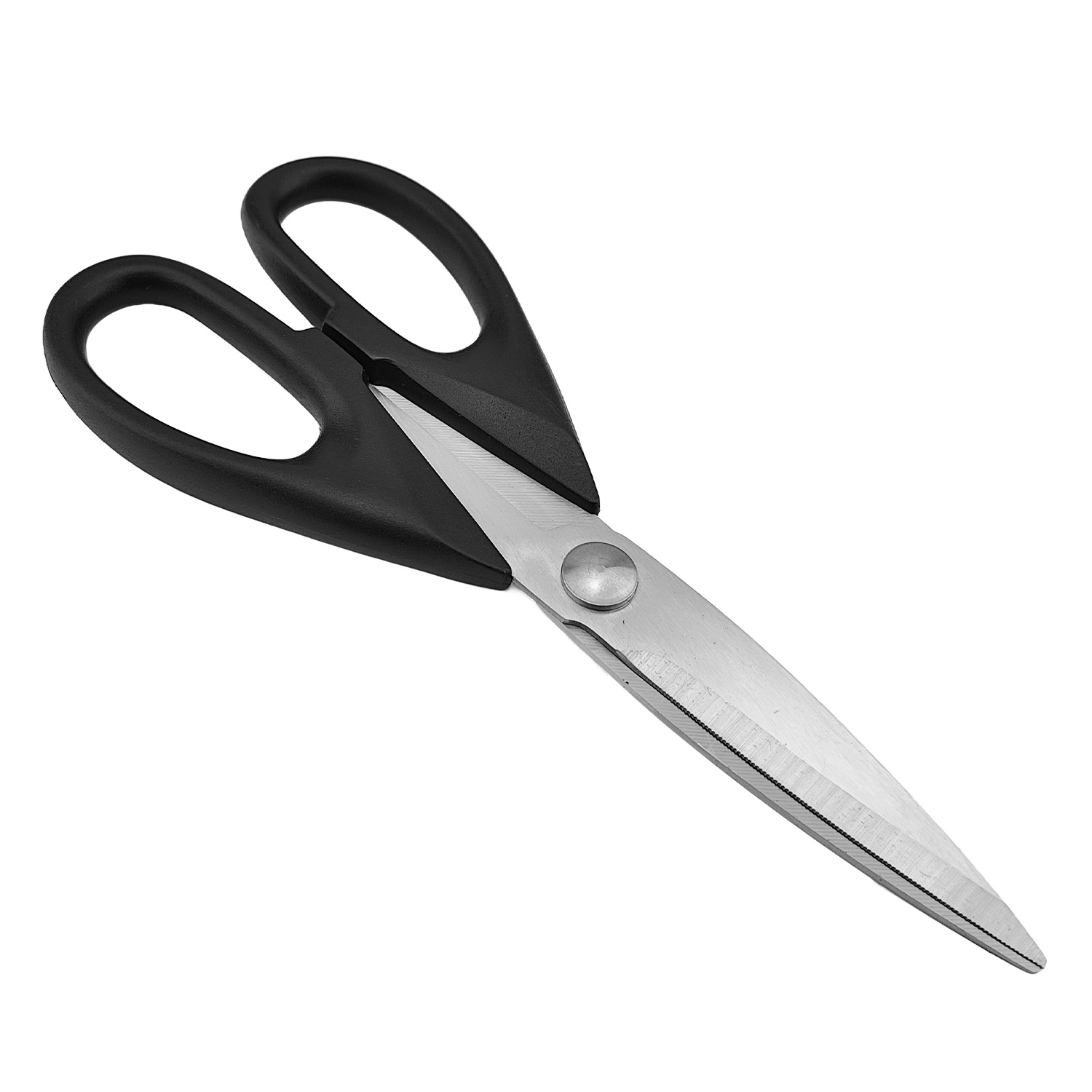
The original product discussion mentioned black handles, ergonomic form, and multi-purpose use. Those may be useful selling points if they are confirmed in the sample and specification sheet. Buyers should avoid advertising unverified features such as material grade, rust resistance, or special coatings unless the supplier provides clear documentation.
Comparison Checklist for OEM Buyers
Use a structured comparison table when reviewing samples from different producers. This helps purchasing, quality, and sales teams discuss the same facts instead of relying on impressions.
| Evaluation Point | What to Check | Questions to Ask the Supplier |
|---|---|---|
| Blade performance | Clean cutting, edge alignment, no excessive force | What blade material and hardness range are used? |
| Pivot and assembly | Smooth opening, stable screw or rivet, no wobble | How is pivot tightness inspected during production? |
| Handle comfort | Grip size, pressure points, slip control, left/right usability | What handle materials and color options are available? |
| Finishing | No burrs, sharp unwanted edges, stains, or rough surfaces | What finishing and final inspection steps are standard? |
| OEM packaging | Logo, label, barcode, carton strength, retail presentation | Can packaging artwork and pre-production samples be approved? |
| Order control | MOQ, lead time, batch consistency, defect handling | What are the terms for sample approval and quality claims? |
Sampling and Testing Before Bulk Orders
Samples are essential. A buyer should test OEM kitchen scissors in the same way the end user will use them. Cut herbs, thin food packaging, parchment, plastic bags, poultry skin if relevant, and cardboard retail materials if the product is marketed as multi-purpose. After testing, check whether the blades remain aligned and whether the pivot loosens.
It is also important to test cleaning and handling. Kitchen scissors may come into contact with wet ingredients, oil, and food residue. Ask the supplier for care instructions and confirm whether the design is intended to be detachable or fixed. Do not assume dishwasher suitability unless it is stated and supported by the supplier. If your sales channel requires warnings or use instructions, include them in the packaging brief.
OEM Customization Questions to Clarify
OEM projects often run into delays because details are confirmed too late. Before approving a quotation, buyers should prepare a written specification sheet. This does not need to be complicated, but it should cover product dimensions, target use, blade and handle materials, color, logo placement, packaging type, carton requirements, inspection criteria, and any market-specific labeling needs.
- Which existing models are available for private label branding?
- Can the supplier provide a sample with the intended handle color and logo method?
- What packaging formats are available, such as carded packing, boxes, or bulk cartons?
- What is the MOQ for standard models and customized versions?
- How are defects classified for inspection, such as blade gaps, handle scratches, or packaging damage?
- What is the expected lead time after sample and artwork approval?
If the supplier cannot answer these questions clearly, the buyer may need a more detailed sampling round or a different production partner.
Quality Control Points for Importers and Wholesalers
Quality control should begin before mass production. Approve a golden sample and keep it available for comparison. Define acceptable tolerances for appearance, function, packaging, and carton marking. For kitchen scissors, practical inspection should include opening and closing action, blade contact, cutting test, surface finish, handle security, and packaging accuracy.
Buyers should also ask whether third-party inspection is accepted before shipment. This is especially useful when ordering for a new retail program or when the scissors carry custom branding. Inspection cannot replace good product development, but it can reduce the risk of receiving goods that differ from the approved sample.
FAQ: Sourcing OEM Kitchen Scissors
Are Yangjiang kitchen scissors suitable for private label projects?
They can be, especially because Yangjiang is a recognized production area for cutlery and scissors. Buyers should still verify the specific supplier’s OEM experience, sample quality, packaging capability, and quality control process.
What information should I provide to get an accurate quotation?
Provide target use, quantity, preferred blade and handle materials, color, logo requirements, packaging style, destination market, and any inspection or labeling requirements. A photo reference is useful, but a written specification is better.
Can one pair of kitchen scissors handle every task?
Not always. A general-purpose model may work for light household use, while poultry, seafood, or heavy-duty cutting may require a stronger design. Choose the model based on the main user need.
Should I claim stainless steel or rust resistance in my listing?
Only if the supplier confirms the material and performance claims in writing and provides any documentation your market requires. Avoid unsupported claims in packaging and product descriptions.
How many samples should a buyer test?
For a new supplier, test several pieces from the same model and compare them with at least one alternative model. This helps reveal consistency, comfort, and whether the product fits your target price and quality level.
Final Sourcing Advice
High-quality OEM kitchen scissors are the result of clear requirements, realistic testing, and careful supplier communication. Yangjiang producers may offer strong sourcing options for buyers who need kitchen scissors, multi-purpose scissors, or private label houseware tools. The best approach is to define the task, request complete specifications, test samples thoroughly, and confirm packaging and inspection terms before placing a bulk order.
