




High-Quality Tailor Scissors: Precision & Comfort
High-quality tailor scissors are an everyday tool for sewing rooms, craft studios, quilting tables, alteration shops, and retail sewing kits. A good pair should cut fabric cleanly, feel stable in the hand, and help users work accurately without unnecessary strain. For hobby users, the goal is smoother project work. For wholesalers, private-label brands, and sewing product buyers, the goal is to select scissors that are consistent, practical, and suitable for the target market.
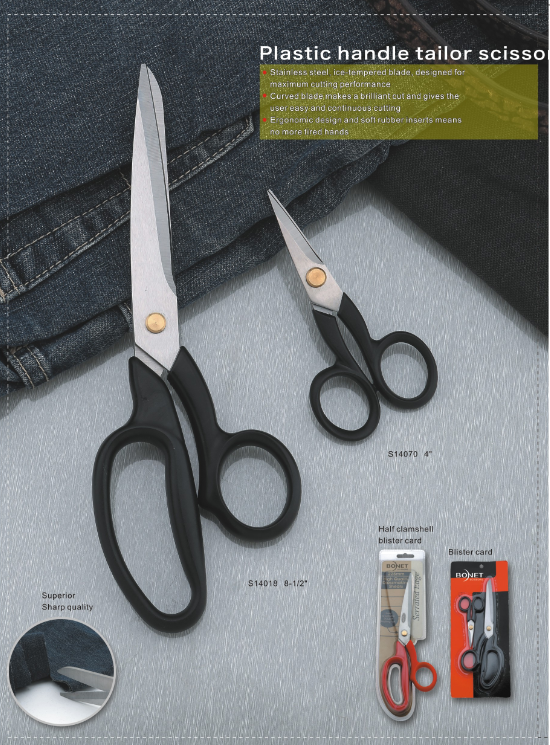
The original product information highlights tailor scissors designed for sewing, quilting, and crafting, with stainless steel ice-tempered blades, a curved blade design, a contoured plastic handle with a soft-touch surface, multiple size options including 8 1/2-inch and 4-inch versions, and packaging options such as half clamshell or full blister card. It also notes OEM availability. These details are useful starting points, but buyers should still verify performance, materials, packaging, and commercial terms directly with the supplier before placing an order.
Key Takeaways
- Choose tailor scissors based on fabric type, cutting task, hand comfort, and expected frequency of use.
- Stainless steel ice-tempered blades and a curved blade design are stated product features, but buyers should request samples to test cutting performance.
- An 8 1/2-inch model can suit general fabric cutting, while a 4-inch version is better for detail work and small trimming tasks.
- For OEM or wholesale sourcing, ask clear questions about packaging, branding, quality checks, lead time, and order requirements.
- Proper care, storage, and fabric-only use help scissors stay sharp and reliable for longer.
What Makes Tailor Scissors Different?
Tailor scissors are designed for controlled cutting through fabric, not for paper, wire, kitchen tasks, or general household use. Compared with ordinary scissors, they usually offer longer blades for smooth strokes, a handle shape that supports cutting on a flat surface, and a cutting edge intended for textiles. The benefit is not only sharpness; it is also control. Clean cuts reduce fraying, help pattern pieces stay accurate, and make sewing work easier to manage.
For crafters and sewing professionals, poor scissors can create uneven edges, pulled threads, and repeated cuts along the same line. That wastes fabric and time. For retailers and distributors, a low-quality scissor can also lead to complaints, returns, and weaker customer confidence. This is why selection should include both product feel and commercial reliability.
Blade Features to Review Before Buying
The source product description states that these scissors use stainless steel ice-tempered blades. Stainless steel is commonly valued for everyday usability, while ice tempering is presented as a process related to sharpness and durability. Because exact steel grade and test results are not provided in the source, buyers should avoid assuming performance claims beyond what is stated. Instead, request technical details and run sample tests on the fabrics your customers actually use.
The curved blade design is another stated feature. A curved blade can help the lower blade sit closer to the cutting surface, which may support smoother fabric handling. This can be useful when cutting patterns, long fabric panels, or layered materials. Still, cutting experience depends on edge geometry, blade alignment, pivot tension, handle comfort, and the material being cut. A sample test is the most practical way to confirm suitability.
Comfort, Handle Design, and Daily Use
Comfort matters because fabric cutting often involves repeated motions. The source notes a contoured plastic handle with a soft-touch surface designed to reduce hand fatigue and improve grip. This is especially relevant for users who cut many pieces in one session, such as quilters, tailors, sewing teachers, alteration shops, and craft workshop operators.
When evaluating comfort, consider hand size, finger opening, grip angle, pressure required to close the blades, and whether the scissors feel balanced. A pair that feels sharp but awkward may not be ideal for long use. For consumer-facing sales, it is useful to explain which size is best for general cutting and which is better for detail work, rather than presenting one model as suitable for every task.
Size Selection for Sewing and Craft Tasks
The original article mentions multiple sizes, including an 8 1/2-inch model and a compact 4-inch version. These two sizes serve different needs. Larger tailor scissors are better for long, continuous cuts through fabric, while smaller scissors are more useful for trimming threads, cutting notches, working around curves, or handling intricate craft details.
| Selection Point | 8 1/2-Inch Tailor Scissors | 4-Inch Detail Scissors | Buyer Checklist |
|---|---|---|---|
| Main use | General fabric cutting and longer strokes | Small cuts, trimming, and detailed work | Match size to the most common customer task |
| User type | Tailors, quilters, sewing hobbyists | Crafters, embroiderers, sewing kit users | Confirm whether buyers need single units or sets |
| Handling | More cutting length per stroke | More control in tight areas | Test grip comfort with different hand sizes |
| Retail packaging | May suit blister card display | May suit compact kit packaging | Ask about half clamshell and full blister card options |
B2B Sourcing Guidance for OEM and Wholesale Buyers
Because the source mentions cutting scissors OEM solutions, business buyers should treat product selection as both a quality and supply-chain decision. Do not rely only on photos or brief descriptions. Request physical samples, packaging samples, and written answers to key commercial questions. If you plan to sell under your own brand, confirm which branding options are available and whether artwork, barcode, language, and packaging layout requirements can be supported.
Useful supplier questions include:
- What blade material details can be provided beyond the stated stainless steel description?
- What quality checks are performed for sharpness, blade alignment, pivot tightness, handle fit, and appearance?
- Which sizes are available, and can mixed-size assortments be supplied?
- What are the available packaging options, including half clamshell and full blister card?
- What are the MOQ, lead time, sample process, private-label options, and carton packing details?
- Can the supplier provide documents required for the destination market or retailer, if applicable?
These questions help avoid assumptions. The original text does not state minimum order quantities, prices, production capacity, certifications, or compliance test results, so those points should be confirmed directly before sourcing.
How to Test Tailor Scissors Samples
A practical sample test should reflect real usage. Cut lightweight cotton, medium woven fabric, denim or thicker fabric if relevant, and small curved pattern areas. Check whether the blades cut cleanly from base to tip, whether fabric slips, and whether the handle causes pressure points. Also test repeated opening and closing to evaluate pivot smoothness.
For retail or wholesale buyers, compare several samples from the same batch if possible. Consistency matters. One excellent sample does not always prove bulk quality. Ask how the supplier controls inspection before packing, and confirm what happens if goods arrive with defects or packaging damage.
Care Tips for Longer Service Life
Even well-made tailor scissors need proper care. Use fabric scissors only on textiles, because paper and hard materials can dull the edge. Wipe blades after use, especially when cutting materials that leave lint or residue. Store scissors closed and dry, preferably in protective packaging or a dedicated sewing box. Do not drop them, as impact can affect blade alignment.
If cutting performance changes, first check for thread caught near the pivot or residue on the blades. If the edge is dull, use a suitable sharpening service rather than forcing the scissors through fabric. For workshops and classrooms, labeling scissors for fabric-only use can prevent accidental misuse.
Practical FAQ
Are these tailor scissors suitable for quilting?
The original description names quilting as one intended use. For quilting, test the scissors on the fabric layers your customers normally cut, especially if batting or multiple layers are involved.
What is the advantage of the 8 1/2-inch size?
An 8 1/2-inch scissor is generally useful for longer fabric cuts and everyday sewing tasks. It can reduce the number of strokes needed compared with smaller scissors.
Why choose a 4-inch scissor?
A 4-inch scissor is useful for detail cutting, trimming threads, small craft work, and close control around curves or pattern notches.
Can these scissors be sourced for private label?
The source states that OEM solutions are available. Buyers should ask about logo application, packaging design, sample approval, MOQ, lead time, and artwork requirements.
What packaging options are mentioned?
The source mentions half clamshell and full blister card packaging. Confirm dimensions, display-hole style, printed card options, carton packing, and barcode placement with the supplier.
How should consumers keep tailor scissors sharp?
Use them only for fabric, keep them clean and dry, store them safely, and avoid cutting paper, plastic, wire, or adhesive materials unless the scissors are specifically intended for that use.
