




Household Scissors: A Practical Guide to Artful Everyday Cutting
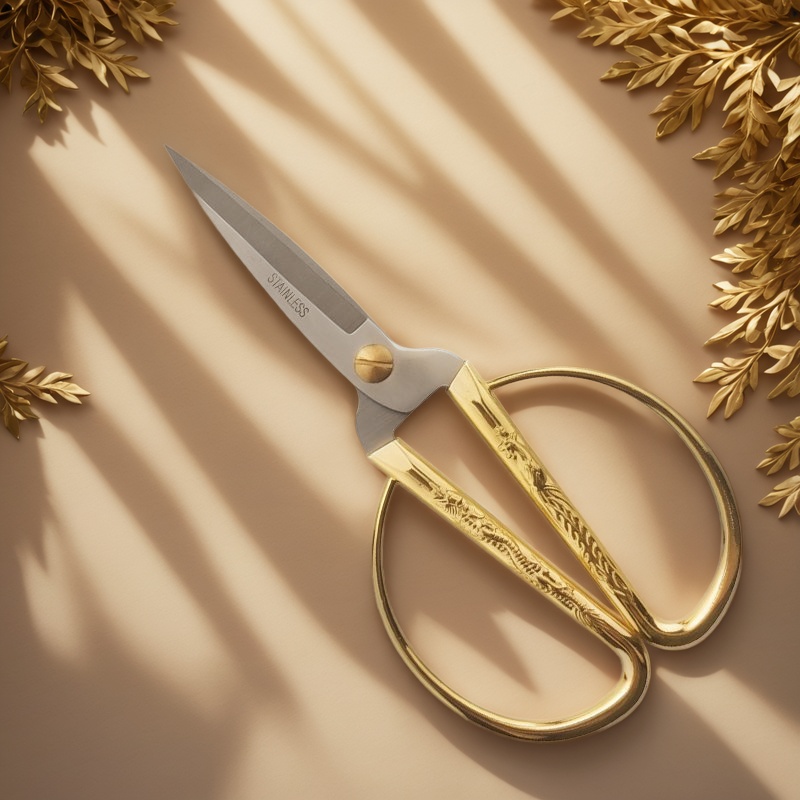
Household scissors are one of the simplest tools in a home, yet they are used for a surprisingly wide range of tasks: opening packages, trimming paper, cutting string, preparing craft materials, and handling light kitchen or utility jobs. A good pair should feel controlled in the hand, cut cleanly, and remain easy to maintain. Decorative scissors, such as the Golden Elegance Shears shown in the original article, add another consideration: visual design. The goal is not only to own an attractive object, but to choose scissors that are still practical for daily use.
Key Takeaways
- Choose household scissors based on intended use, blade performance, handle comfort, and ease of care.
- Decorative handles can be appealing, but they should not compromise grip, control, or safety.
- A visible stainless marking on the blade suggests stainless steel, but buyers should still confirm material details with the supplier or product documentation.
- Keep general-purpose scissors away from hard wire, thick plastic, and wet storage to extend service life.
Why Household Scissors Still Matter
Many households own several cutting tools, but scissors remain the most convenient for quick, controlled cuts. Compared with a utility knife, scissors give better control on flexible materials such as paper, ribbon, thread, and thin packaging. Compared with kitchen shears, general household scissors are usually lighter and easier to keep in a drawer, craft box, or office organizer.
The best household scissors are not necessarily the largest or most ornate. They are the ones that match the user’s daily tasks. For paper and light packaging, clean blade alignment matters more than heavy construction. For crafting, tip accuracy and hand comfort become more important. For display or gifting, the appearance of the handles may carry additional value, provided the tool still cuts reliably.
Design Inspiration: Decorative and Chinese-Style Scissors
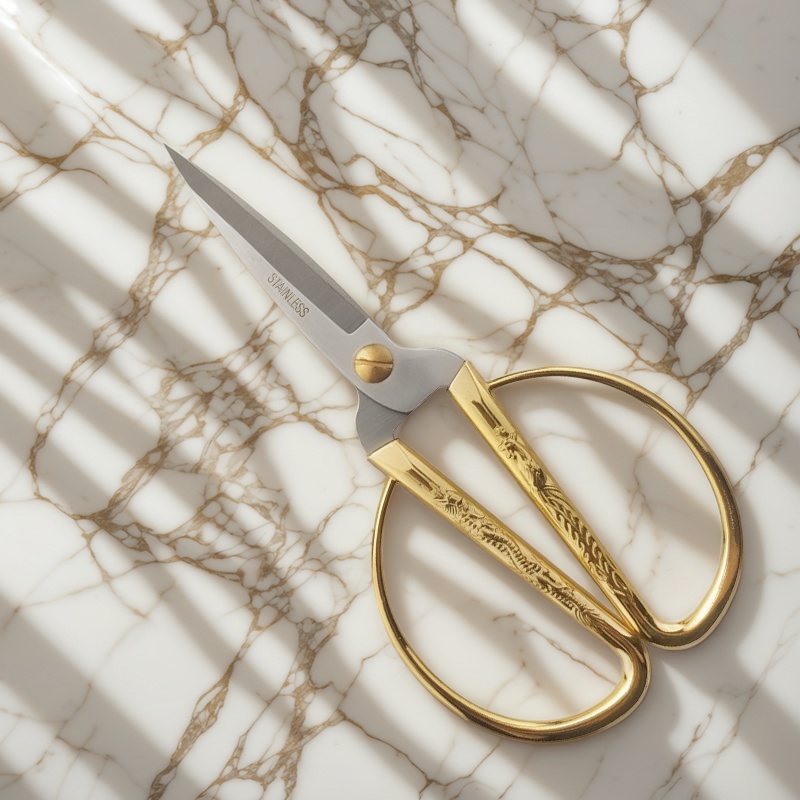
The original article describes the Golden Elegance Shears as being inspired by traditional Chinese-style scissors, with handles that feature intricate botanical motifs. This type of design connects a practical object with visual culture and hand-tool tradition. Decorative scissors can sit naturally on a desk, sewing table, or gift set because they offer more character than plain utility scissors.
However, buyers should evaluate decorative scissors with the same practical standards used for simple scissors. Beautiful handle detailing should not create sharp pressure points. The finger openings should allow a natural grip. The weight should feel balanced enough for repeated cuts. If the scissors are intended for regular use rather than display, comfort is not optional.
Blade Material, Handle Material, and What to Verify
The original description notes a blade marked with “STAINLESS,” indicating a stainless-steel blade. Stainless steel is commonly used for scissors because it can offer corrosion resistance and a clean cutting edge when properly manufactured and maintained. Still, the marking alone should not be treated as a complete technical specification. If material grade, hardness, coating, or edge retention matters to your purchase, ask the supplier for written details.
The source also mentions zinc alloy as a possible handle material in modern scissors manufacturing. For a specific product, do not assume the handle material unless it is confirmed on the product page, packaging, or supplier documentation. This is especially important for wholesale buyers, retailers, and gift-set planners who need accurate product listings.
Comparison Checklist for Choosing Household Scissors
| Selection point | What to look for | Questions to ask |
|---|---|---|
| Primary use | Paper, craft work, packaging, thread, or light household tasks | Are these scissors recommended for the materials you cut most often? |
| Blade quality | Smooth opening, clean closing, and no visible blade gap when shut | What is the blade material, and is any hardness or finish information available? |
| Handle comfort | Finger openings that fit without pinching or twisting the hand | Is the handle suitable for extended use or mainly decorative use? |
| Decorative finish | Motifs and surface details that are cleanly formed and comfortable to hold | Will the finish resist normal handling, and how should it be cleaned? |
| Care needs | Easy wiping, dry storage, and a pivot that can be kept free of debris | Does the supplier provide use-and-care guidance? |
How to Use Household Scissors Properly
Using scissors correctly helps protect both the tool and the user. Household scissors are generally intended for light to moderate cutting tasks. Avoid using them as screwdrivers, pry tools, wire cutters, or box openers for very thick plastic. Misuse can damage the blades, loosen the pivot, or create unsafe burrs along the cutting edge.
- Open the scissors only as wide as needed for the cut.
- Keep the material close to the pivot for stronger, more controlled cutting when appropriate.
- Use the blade tips for precision trimming, not for forcing through tough material.
- Wipe adhesive residue after cutting tape or labels.
- Store the scissors closed and away from moisture.
If a pair is used for crafts, consider keeping it separate from kitchen or packaging tasks. Adhesive, grit, and hard materials can reduce cutting performance quickly. A dedicated pair for paper or fabric-like craft materials will usually stay sharper and cleaner for longer.
Care and Maintenance for Everyday Reliability
Scissors need only simple care, but consistency matters. After use, wipe the blades with a dry or slightly damp cloth, then dry them thoroughly. If tape residue builds up, clean it gently according to the supplier’s care instructions. Avoid soaking decorative handles unless the product documentation confirms that water exposure is safe.
The pivot area should open and close smoothly. If the scissors feel gritty, check for paper fibers, dust, or adhesive near the joint. Some scissors may benefit from a tiny amount of appropriate lubricant at the pivot, but this should be done carefully and wiped clean so it does not transfer to paper, ribbon, or packaging. If the scissors become loose, chipped, or misaligned, replacement may be safer than continued use.
Guidance for Retailers and B2B Buyers
For retailers, gift brands, and sourcing teams, decorative household scissors require more than a visual review. Product photos may show the style, but purchasing decisions should also consider consistency, packaging protection, labeling accuracy, and after-sales expectations. If you are evaluating a supplier, ask practical questions rather than assuming details that are not published.
- What are the confirmed blade and handle materials?
- Are samples available for checking grip comfort, cutting feel, finish consistency, and packaging?
- What care instructions should be included for consumers?
- How are sharp edges protected during shipping and retail display?
- Are product claims, markings, and descriptions consistent across packaging and online listings?
These questions help prevent problems such as inaccurate material descriptions, finish damage in transit, or products that look attractive but are uncomfortable for repeated use. For decorative scissors, the best sourcing outcome is a balance of appearance, verified specifications, and reliable day-to-day performance.
FAQ
Are decorative household scissors suitable for daily use?
They can be, if the blades cut cleanly and the handles are comfortable. Check grip, weight, blade alignment, and whether the decorative details interfere with hand movement.
Can household scissors cut cardboard or plastic packaging?
They may handle light packaging, but thick cardboard, hard plastic, wire, or tough strapping can damage the blades. Use a more suitable cutting tool for heavy materials.
Does a “STAINLESS” blade marking tell me the exact steel grade?
No. It suggests stainless steel, but it does not confirm the exact grade, hardness, or finishing process. Ask the supplier for written specifications if these details matter.
How should I store household scissors?
Store them closed, dry, and away from children. A drawer organizer, sheath, or craft box helps protect both the blades and surrounding items.
What should I ask before buying decorative scissors in bulk?
Ask for confirmed materials, samples, packaging details, care instructions, finish expectations, and any documentation needed for your sales channel. Avoid relying on appearance alone.
