




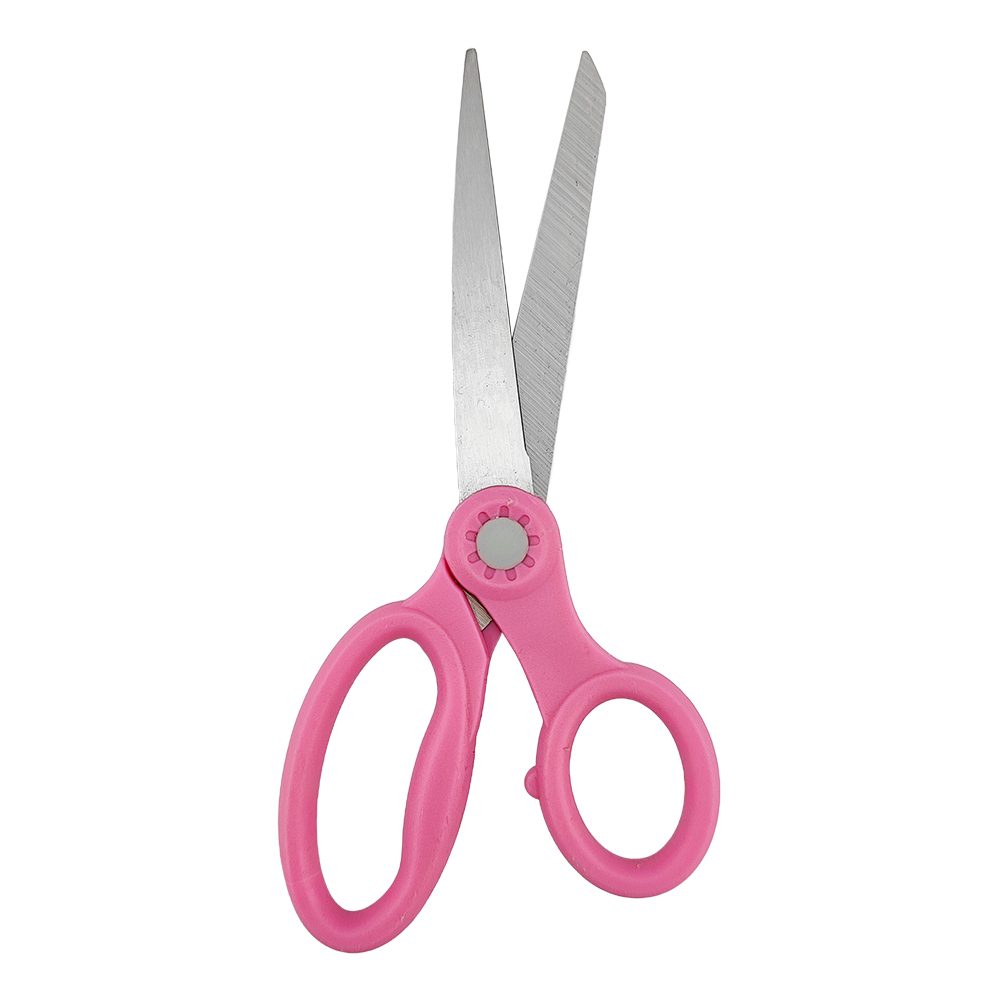
Household Scissors: Explore OEM Yangjiang Quality
Household scissors are simple tools, but B2B buyers know that small differences in blade finish, handle comfort, packaging, and consistency can affect repeat orders. The original product highlighted a pair of household scissors with pink handles, sharp stainless steel blades, corrosion-resistant cutting performance, and an ergonomic grip intended for everyday home, office, craft, and light fabric tasks. For importers, wholesalers, private-label brands, and promotional product buyers, the bigger question is not only whether one sample cuts well, but whether a supplier can deliver the same quality across a full order.

Key Takeaways
- Household scissors should be evaluated for blade sharpness, handle comfort, closing action, finish, and packaging durability.
- Yangjiang is widely known as a manufacturing hub for cutting tools, making it a logical sourcing region for OEM scissors programs.
- Do not rely on appearance alone; request samples, tolerances, packaging details, and inspection criteria before confirming an order.
- For private-label or wholesale projects, ask suppliers about customization options, lead time, MOQ, carton packing, and quality control processes.
Why Household Scissors Need Careful Sourcing
Many buyers treat household scissors as a low-risk item because the design looks familiar. In practice, the category includes a wide range of performance levels. A pair intended for light paper cutting may not satisfy users who also cut packaging, thread, ribbon, or household fabric. A handle that feels comfortable for a quick cut may cause fatigue when used repeatedly during craft or office work.
The pink-handled scissors in the source article were described as combining practical cutting performance with an easy-to-spot design. That matters in consumer retail: color can help differentiate a product on a shelf or make it easier to find in a drawer. However, for B2B purchasing, color is only one part of the decision. The buyer should confirm whether the handle color can be matched to a brand palette, whether color variation is controlled, and whether the handle material and finish meet the target market's expectations.
Blade, Handle, and Finish Details to Review
The original article explicitly described sharp stainless steel blades and corrosion-resistant cutting performance. Those are useful selling points, but buyers should still ask for the exact blade material description used by the supplier, the finishing process, and the intended use range. If a product will be marketed for crafts, office use, household repairs, or fabric cutting, the supplier should understand the expected cutting media and provide suitable samples.
Handle design is equally important. The source notes ergonomic handles that help reduce fatigue during extended use. When reviewing samples, test the handle with different hand sizes and cutting angles. Check whether the inner grip edges are smooth, whether the handle flexes too much under pressure, and whether the pivot action feels stable. A good household scissor should open and close smoothly without excessive looseness, scraping, or stiffness.
Comparison Checklist for OEM Household Scissors
| Check Point | What to Inspect | Questions to Ask the Supplier |
|---|---|---|
| Blade sharpness | Clean cutting on paper, packaging, thread, and light household materials | What cutting tests are used before shipment? |
| Blade material | Stated stainless steel blades and surface finish consistency | What material description will appear on the specification sheet? |
| Handle comfort | Grip shape, edge smoothness, hand fit, and fatigue during repeated cutting | Can handle shape, color, or logo placement be customized? |
| Pivot action | Smooth opening and closing, no excessive wobble, no rough scraping | What inspection standard is used for pivot tightness? |
| Appearance | Pink handle color consistency, blade cleanliness, no visible defects | How are cosmetic defects classified during QC? |
| Packaging | Retail card, sleeve, blister, bulk pack, carton strength, barcode needs | What packaging options and artwork requirements are available? |
Yangjiang as a Scissors Manufacturing Base
The source article identifies Yangjiang as a scissors manufacturing hub. Yangjiang is well associated with knives, scissors, and kitchen tools, so buyers often look there for OEM and wholesale programs. The advantage of sourcing from a specialized region is access to suppliers familiar with cutting-tool production, handle molding, finishing, packing, and export workflows.
Still, buyers should not assume every factory in the same region offers the same quality level. A strong supplier should be able to discuss sample development, production consistency, defect handling, packaging, and shipment documentation clearly. If the order is for a retailer, marketplace seller, or distributor, confirm whether the supplier can support the required labeling, cartons, and inspection process. Avoid making decisions based only on a catalog photo or a low unit price.
OEM and Wholesale Questions Buyers Should Ask
Before placing an OEM household scissors order, prepare a clear request for quotation. Include target size if relevant, blade and handle expectations, color, packaging style, order quantity estimate, destination market, and any required artwork. Since commercial details such as MOQ, production capacity, lead time, and certifications are not provided in the source article, buyers should ask the supplier directly rather than assume.
- What is the available product specification for this household scissors model?
- Can the pink handle color be customized, and is there a color matching process?
- What logo methods are available for handle, blade, card, or outer carton branding?
- What MOQ applies to standard stock, custom color, and custom packaging?
- What is the typical sample lead time and mass production lead time?
- What in-process and final inspections are performed?
- How are sharpness, pivot tightness, appearance, and packaging checked?
- Can the supplier provide carton dimensions, gross weight, and packing quantity before shipment?
Use Cases and Product Positioning
Household scissors are commonly used for paper, labels, ribbons, packaging, light crafting, office tasks, and small home projects. The original article also mentioned household fabrics, but buyers should define the intended scope carefully. If the product will be promoted for fabric, craft, or school use, samples should be tested against those scenarios. A general household scissor is not the same as a professional tailor scissor or heavy-duty utility shear.
The pink handle gives the product a visible retail identity. It may work well for home organization ranges, craft sets, stationery assortments, gift packs, or private-label kitchen and household tool lines. For wholesale buyers, the key is matching the product to the channel. A discount channel may prioritize simple packaging and cost control, while a branded retail program may require stronger presentation, clearer instructions, and more consistent finish standards.
Quality Control Before Shipment
A practical inspection plan can prevent many common complaints. Randomly selected units should be checked for cutting performance, handle defects, blade alignment, pivot stability, rust or staining, printed artwork accuracy, and packaging damage. If the scissors are packed in retail packaging, the inspection should also include barcode placement, warning text if required by the buyer, carton marks, and inner packing arrangement.
Buyers should define acceptable quality limits and defect examples in advance. For example, a small cosmetic mark may be treated differently from a blade that does not cut cleanly. Clear standards help both sides avoid disputes and make reorders easier. For a repeat OEM program, keep an approved golden sample and compare future shipments against it.
Practical FAQ
Are these household scissors suitable for private-label sourcing?
They may be suitable for private-label programs, especially because the design includes a distinctive pink handle. Buyers should ask the supplier which customization options are available for logo, color, packaging, and carton marking.
What should I confirm about the stainless steel blades?
Confirm the supplier's exact material description, blade finish, sharpness test method, and recommended use. Do not add material-grade claims to your listing unless the supplier provides verified specifications.
Why source scissors from Yangjiang?
Yangjiang is known as a manufacturing base for cutting tools, including scissors. Buyers may benefit from supplier experience in tool production, but each factory should still be evaluated individually through samples and quality checks.
How can I reduce risk before placing a bulk order?
Request pre-production samples, confirm packaging artwork, define inspection criteria, ask about MOQ and lead time, and keep an approved reference sample. For larger programs, consider arranging third-party inspection before shipment.
What makes a household scissor good for everyday users?
Users usually value clean cutting, comfortable handles, smooth opening and closing, reliable blade alignment, and a design that is easy to find and store. The pink handle can help with visibility, but performance should remain the priority.
