




Household Scissors Factory: Practical Sourcing Guide for Quality Buyers
Choosing a household scissors factory is not only about finding a sharp tool at a competitive cost. For importers, retail brands, promotional product buyers, and wholesale distributors, the real task is to judge whether a supplier can make a consistent product, communicate clearly, support packaging needs, and answer technical questions before production begins. A pair of household scissors may look simple, but blade finishing, handle comfort, surface treatment, hinge movement, packaging, and inspection standards all affect customer satisfaction.
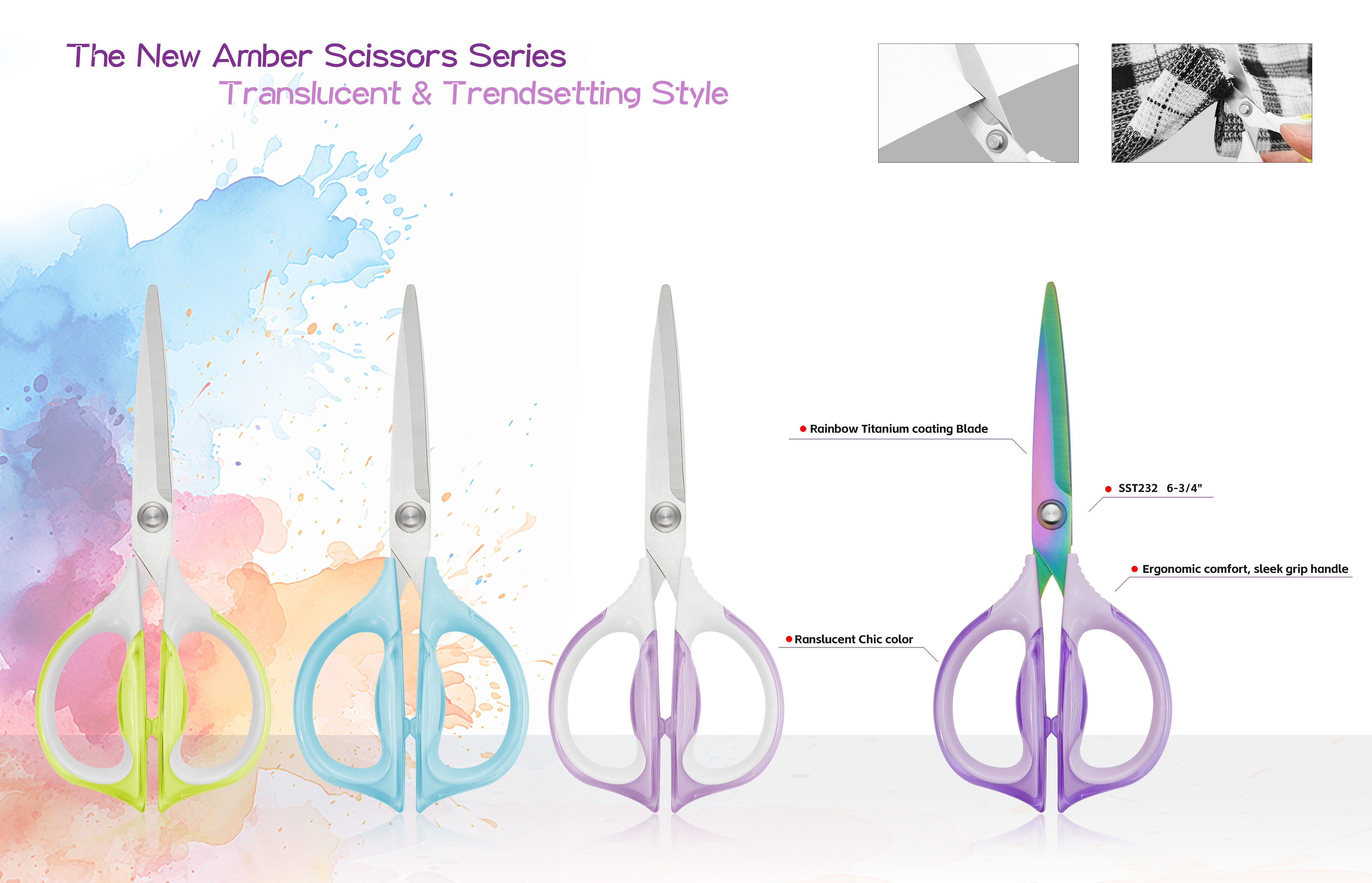
The original Amber Scissors Series introduces several visible product points: a 6-3/4 inch blade, a rainbow titanium coating, and translucent handles in soft neon green, blue, and violet. Those details make the product suitable for buyers comparing household scissors with a more decorative look. However, responsible sourcing requires more than reading a product description. Buyers should confirm each claim, request samples, and agree on quality standards in writing before placing an OEM or wholesale order.
What a Household Scissors Factory Should Help Buyers Clarify
A reliable factory should help you move from a general idea to a clear purchasing specification. That includes confirming the intended use, such as kitchen drawer tasks, office paper cutting, gift sets, sewing kits, craft packs, or general home use. Scissors designed for light household cutting may not be suitable for heavy cardboard, fabric production, or professional tailoring unless the supplier confirms that use case.
Before discussing branding or packaging, ask the factory to define the basic product standard. Useful questions include blade length, overall length, blade material description, coating type, handle material, available colors, unit weight, packing method, carton details, and inspection process. If a supplier cannot answer these clearly, buyers may face inconsistent samples, unclear quotations, or disputes during production.
Blade Quality: What to Review Before Ordering
The blade is the working part of any household scissors. The source article states that the Amber Series uses steel blades, a 6-3/4 inch blade size, and a rainbow titanium coating. It also describes the coating as intended to support corrosion resistance and durability. Buyers should treat those points as starting information and ask for the supplier's written specification, because commercial orders need measurable standards.
During sample review, check whether the blades open and close smoothly, whether the tips align, and whether the cutting edge performs consistently from heel to tip. Test several common materials that match the intended retail promise, such as copy paper, thin packaging film, gift wrap, or light household materials. If your market requires specific corrosion, sharpness, or safety testing, ask the supplier what documents are available and what third-party testing can be arranged. Do not assume a coating, color, or finish automatically proves a performance level.
Handle Design and User Comfort
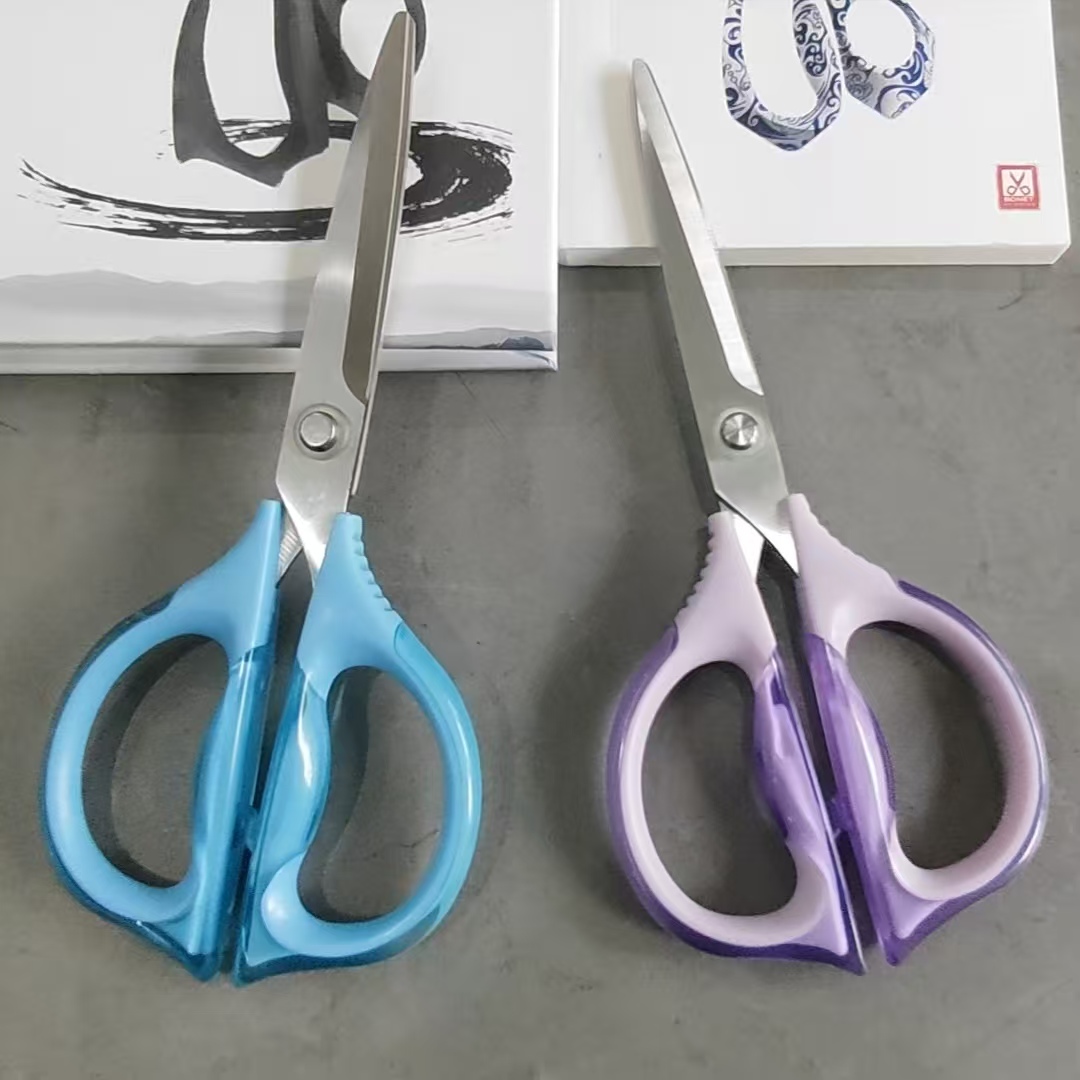
The Amber Series is described with an ergonomic grip and translucent handles in soft neon green, tranquil blue, and gentle violet. For buyers, handle design matters because it affects comfort, visual appeal, and return rates. A handle can look attractive online but still feel uncomfortable if the finger openings are too small, edges are rough, or balance is poor.
When evaluating samples, ask several users to hold and cut with the scissors. Check for pressure points, slippery areas, burrs, uneven molding, and color consistency. If you are sourcing for a retailer, consider whether the handle colors match your shelf plan, seasonal range, or private-label identity. If you are sourcing for an OEM project, ask which handle colors can be made, whether color matching is available, and what approval method the factory uses for color samples.
Comparison Checklist for Scissors Sourcing
| Review Area | What to Check | Questions to Ask the Supplier |
|---|---|---|
| Blade | Sharpness, alignment, smooth opening, tip finish | What blade specification is used, and how is cutting performance inspected? |
| Coating | Appearance, coverage, consistency, resistance expectations | What coating process is used, and what test reports can be provided if required? |
| Handle | Comfort, molding quality, color consistency, grip size | Which handle colors and materials are available for OEM orders? |
| Packaging | Retail display, barcode area, protection during shipping | Can packaging artwork, inner packing, and carton marks be customized? |
| Quality Control | Sample approval, inspection points, defect definitions | What is the inspection standard before shipment, and can buyers define AQL requirements? |
OEM and Wholesale Questions to Ask Early
For B2B buyers, early communication prevents problems later. Do not wait until after quotation to discuss branding, packaging, lead time, sample fees, or compliance documents. Commercial details vary by project, so ask the supplier directly rather than assuming standard terms.
- What is the minimum order quantity for the selected scissors model and for custom colors?
- Can the factory support private-label packaging, logo placement, or barcode printing?
- What sample options are available before bulk production?
- Which product details are fixed, and which can be customized?
- What quality checks are completed before shipment?
- What export documents or test reports can be provided for the destination market?
If you are comparing several household scissors factories, use the same questionnaire for each supplier. This makes quotations easier to compare and helps identify vague answers. A low unit price may not be the best value if the supplier cannot confirm packaging, inspection, or after-sales handling.
How to Evaluate Samples Like a Buyer
Sample approval should be more than checking whether the scissors look attractive. Record the sample date, supplier name, model name, color, blade length, packaging type, and any promised features. Take photos and keep one approved sample sealed as a reference for mass production.
Test multiple pairs if possible. Open and close each pair repeatedly, cut the same material several times, and compare the feel between units. Look at the coating under good light to see whether the color effect is even. Check the handle edges and hinge area for roughness. If packaging is included, drop or compression testing may be useful depending on your shipping route and retail channel. For large orders, consider pre-shipment inspection by your team or a third party.
Key Takeaways
- A household scissors factory should provide clear product specifications, not only attractive photos.
- The Amber Series information highlights a 6-3/4 inch blade, rainbow titanium coating, and translucent handle colors.
- Buyers should verify blade performance, handle comfort, coating consistency, and packaging before bulk orders.
- OEM projects need written confirmation of customization options, quality standards, and commercial terms.
- Samples, inspection plans, and clear defect definitions reduce sourcing risk.
Practical FAQ
What should I ask a household scissors factory first?
Start with the intended use, blade size, material description, handle material, coating, available colors, packaging options, MOQ, sample process, lead time, and inspection method. Ask for written specifications before comparing prices.
Is a rainbow titanium coating only decorative?
The source article describes the coating as supporting corrosion resistance and durability, while also creating a rainbow appearance. Buyers should ask the supplier for the exact coating description and any available test documentation required for their market.
How do I compare OEM scissors suppliers fairly?
Send each supplier the same product brief, including target use, size, color, packaging, logo needs, order quantity, destination market, and inspection expectations. Compare the completeness of the response, not only the unit price.
Should I approve production based on one sample?
It is safer to review several samples and keep an approved reference sample. For bulk orders, confirm whether production will match the approved sample in blade finish, handle color, packaging, and cutting performance.
Can household scissors be customized for retail branding?
Many scissors suppliers offer OEM or private-label options, but available customization depends on the model and order details. Ask directly about logo methods, packaging artwork, color matching, barcode placement, and approval steps before ordering.
