




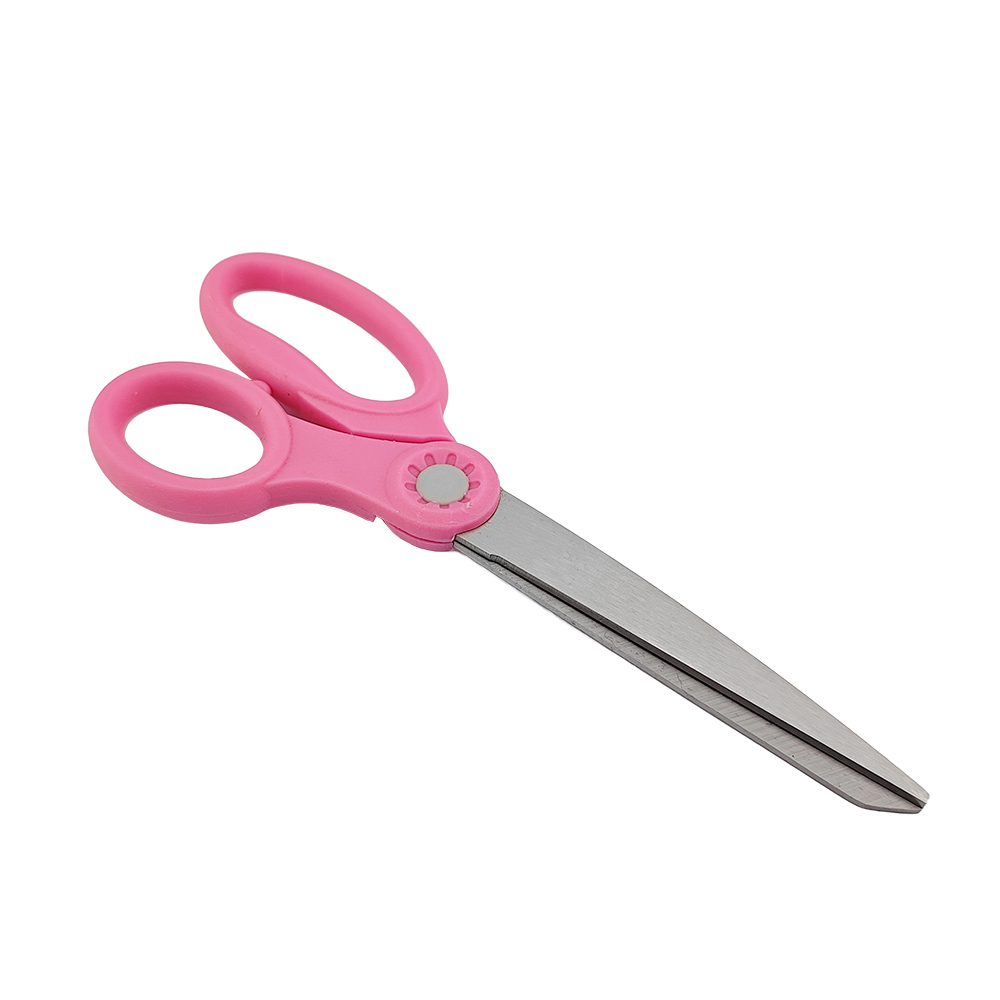
Household Scissors: Pink Precision Craft Review
Pink household scissors are often chosen for craft rooms, school kits, office drawers, sewing boxes, and gift-oriented retail ranges. The original article presents this product as a pair of Pink Precision Craft Scissors with a bright pink appearance, stainless steel blades, and comfort-grip handles. This rewrite looks at the product from a buyer’s point of view: how it may perform in daily use, what details should be verified before ordering, and how importers, wholesalers, and OEM buyers can assess a household scissors supplier without relying on vague claims.
Key Takeaways
- Pink household scissors can suit craft, stationery, home, school, and promotional product assortments.
- The source article states that the scissors use stainless steel blades and comfort-grip handles; buyers should confirm exact specifications with the supplier.
- For OEM or wholesale orders, request samples and ask about blade hardness, handle material, packaging, color tolerance, and quality inspection steps.
- Choose scissors according to the intended use: paper and craft cutting, light fabric trimming, office tasks, or retail gift sets.
- Good care practices, including dry storage and avoiding hard materials, help maintain cutting performance.
Product Overview: What the Pink Design Offers
The most visible feature is the pink color. For consumer retail, color can matter because scissors are often displayed in stationery aisles, craft sections, kitchen utility areas, and online product thumbnails. A pink handle may appeal to buyers building a colorful craft range, a back-to-school collection, or a home office assortment that is easy to distinguish from standard black or grey tools.
However, color alone does not determine product quality. A sourcing team should evaluate the cutting edge, blade alignment, pivot smoothness, handle comfort, packaging protection, and consistency across multiple samples. The original article describes the product as household scissors for paper, fabric, and everyday tasks. That makes it important to define the intended cutting workload before placing a wholesale or OEM order. Light household and craft use is different from industrial fabric cutting, food preparation, or heavy-duty workshop use.
Build Quality Factors Buyers Should Verify
The source article mentions stainless steel blades and comfort-grip handles. Those are useful starting points, but a professional buyer should ask for more detail rather than assuming performance. For stainless steel blades, confirm the steel type if it is relevant to your market, the blade thickness, hardness range, surface finish, and whether the edge is sharpened for general household cutting or a more specialized application.
Handle comfort should also be checked through real samples. Ask whether the handle is single-material or over-molded, whether the grip is suitable for left-handed users, and whether the finger openings fit the target customer group. For long craft sessions, the inner handle shape can affect fatigue more than the outside color. The pivot should open and close smoothly without looseness, squeaking, or uneven resistance.
Performance in Common Household and Craft Tasks
For household scissors, practical testing should be simple and repeatable. Test the scissors on copy paper, thin cardboard, wrapping paper, thread, ribbon, and light craft materials. If the item is intended for sewing kits, include fabric swatches in the evaluation. The goal is to see whether the blades cut cleanly from the base to the tip and whether they snag, bend the material, or leave ragged edges.
A good sample test should include more than one pair. Single-sample performance can be misleading, especially for bulk purchasing. Ask the supplier for several samples from the same production batch or from a recent production run. Check whether each pair has consistent sharpness, handle color, blade alignment, screw or rivet tightness, and packaging condition. If a supplier offers OEM customization, request a pre-production sample that includes the final handle color, logo placement, and packaging artwork before approving mass production.
Comparison and Buyer Checklist
| Evaluation Point | Why It Matters | Questions to Ask the Supplier |
|---|---|---|
| Blade material | Affects sharpness, corrosion resistance, and expected use. | What stainless steel specification is used? Can you provide material details? |
| Blade alignment | Poor alignment causes snagging and uneven cutting. | How is blade alignment checked during production? |
| Handle comfort | Important for craft sessions and repeated household use. | What is the handle material? Is a sample available for grip testing? |
| Color consistency | Important for pink retail ranges and branded sets. | What color tolerance is acceptable across a bulk order? |
| Packaging | Protects blades and supports retail presentation. | What packaging options are available for wholesale or OEM orders? |
| Quality inspection | Reduces returns and inconsistent customer experience. | What inspection steps are used before shipment? |
OEM and Wholesale Sourcing Guidance
The original article refers to OEM scissors and a Yangjiang scissors manufacturer. Yangjiang is widely associated with knife and scissors production, but buyers should still evaluate each supplier individually. Do not rely only on location or product photos. A capable supplier should be able to discuss materials, tooling, handle color matching, logo methods, packaging choices, sample timing, production lead time, order quantity requirements, and inspection standards.
Before confirming an OEM order, prepare a clear specification sheet. Include the required size, handle color, blade finish, packaging type, barcode needs, carton marks, target market, and any compliance documents your business requires. If you sell into regulated markets, ask the supplier what documents they can provide, but do not assume certifications or test results unless they are current, relevant, and verified.
- Request physical samples and test them on your real target materials.
- Confirm the exact blade and handle specifications in writing.
- Approve color and logo samples before production.
- Ask how defects are classified and handled.
- Clarify packaging, carton strength, and shipping protection.
- Keep a sealed approval sample for comparison during inspection.
Use and Care Tips for End Users
Even well-made household scissors need appropriate use. Do not use craft scissors to cut wire, thick plastic, metal strips, or other hard materials unless the product is specifically designed for that purpose. Hard materials can damage the cutting edge or loosen the pivot. After cutting adhesive tape, wipe the blades to remove residue. Store the scissors dry, especially if they are kept in a kitchen drawer, craft box, or humid utility area.
For families, consider storage safety. Scissors should be kept away from small children unless they are child-safe scissors designed for supervised use. If the pink scissors are sold as general household or craft scissors, packaging and product descriptions should clearly state the intended use and any age or safety guidance required by the buyer’s market.
Final Verdict
Pink household scissors can be a useful addition to a craft, stationery, or home utility range when the product is selected for more than its appearance. The pink handle supports visual appeal and easy identification, while the stated stainless steel blades and comfort-grip handle are relevant features to verify through samples and supplier documentation. For B2B buyers, the best approach is to treat this item as a specification-driven product: define the use case, test cutting performance, confirm materials, review packaging, and document quality expectations before ordering.
If sourced carefully, this type of household scissors can serve everyday cutting needs for paper, thread, ribbon, and light craft materials. The strongest purchasing decision will come from a combination of sample testing, clear communication with the supplier, and practical expectations about what general-purpose household scissors are designed to do.
FAQ
Are pink household scissors only for crafts?
No. They can be used for common household and office tasks such as cutting paper, labels, ribbon, wrapping paper, and thread. The exact suitability depends on the blade design and supplier specifications.
What should an OEM buyer confirm before ordering?
Confirm blade material, size, handle material, color standard, logo method, packaging, sample approval process, inspection steps, lead time, and order quantity requirements.
Can these scissors cut fabric?
The source article mentions fabric use, but buyers should test samples on the actual fabric types they plan to market for. Light fabric trimming is different from professional tailoring work.
How should household scissors be maintained?
Use them only on suitable materials, keep the blades clean and dry, remove adhesive residue after cutting tape, and store them in a safe place away from moisture and young children.
Why request multiple samples from a scissors supplier?
Multiple samples help reveal consistency in sharpness, blade alignment, handle finish, pivot smoothness, and packaging quality. This is especially important for wholesale and OEM sourcing.
