




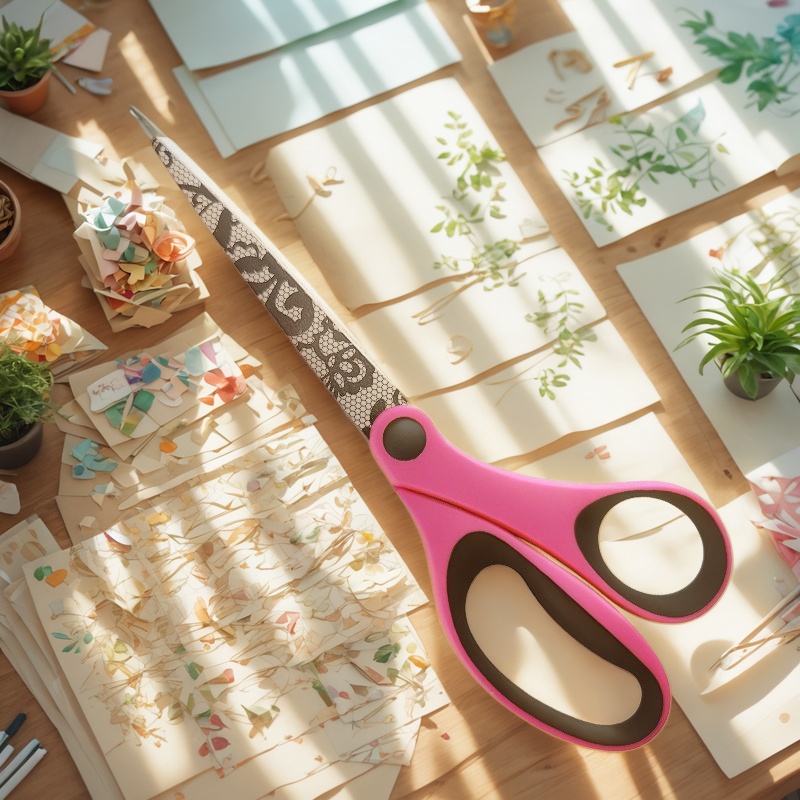
Household Scissors with Coated Blades: What Buyers Should Check
Household scissors are used for small but frequent jobs: opening packaging, cutting paper, trimming thread, preparing craft materials, and keeping a desk or utility drawer ready for daily tasks. The original product description highlights a pair of household scissors with coated blades, precision-cut stainless steel, and a decorative lace pattern. Those details make the product relevant for both consumer use and B2B sourcing discussions, because buyers need scissors that cut reliably while also fitting a specific retail or promotional style.
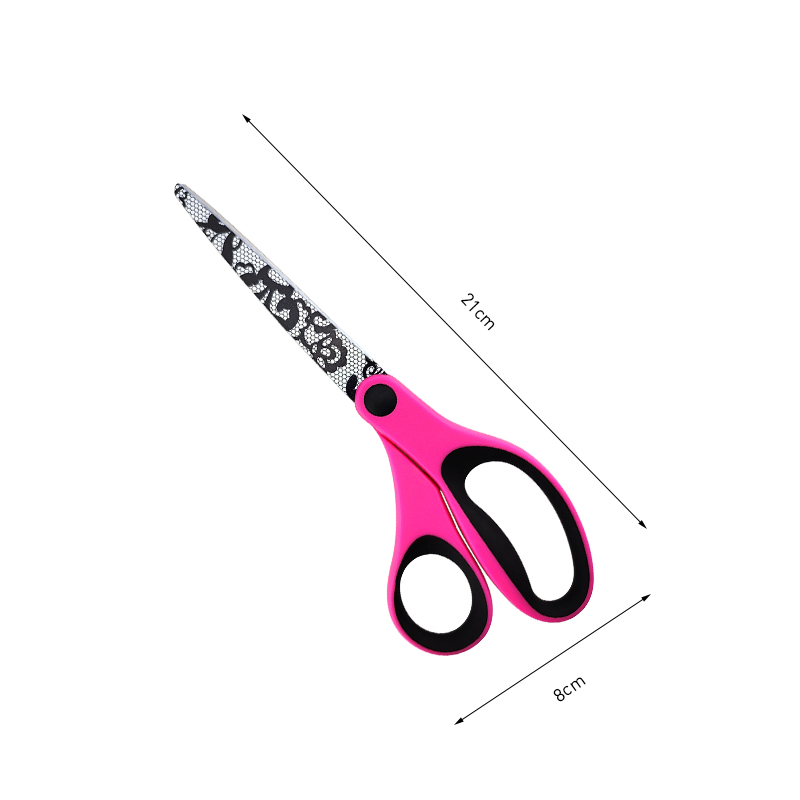
This guide explains how to evaluate coated-blade household scissors without relying on vague claims. It covers practical use, sourcing questions, inspection points, and care habits that can help buyers compare samples more effectively.
Key Takeaways
- Coated blades can add visual appeal, but buyers should still judge cutting accuracy, blade alignment, and comfort first.
- The source article states that the scissors use precision-cut stainless steel and a lace-pattern coating; further specifications should be confirmed with the supplier.
- For OEM or wholesale orders, ask about sample approval, coating durability checks, packaging options, labeling, and quality control steps.
- For home use, keep scissors dry, avoid cutting unsuitable hard materials, and store them safely to protect the blade edge.
Why Coated-Blade Household Scissors Are Popular
Standard household scissors often focus only on basic cutting. Coated-blade scissors add a decorative surface treatment that can help the product stand out in a kitchen drawer, craft kit, office set, or retail display. In this case, the original article describes a unique lace pattern on the blades, giving the scissors a more recognizable look than plain metal scissors.
However, appearance should not replace performance. A good pair of household scissors should open and close smoothly, cut cleanly from the base of the blade to the tip, and feel balanced in the hand. If the scissors are intended for retail, buyers should also consider whether the coating remains consistent across production batches and whether the design matches the target customer group.
Everyday Uses to Consider Before Buying
Household scissors are general-purpose tools, but not every pair is ideal for every material. Before choosing a model, define the expected use. A home user may need scissors for paper, labels, craft sheets, ribbons, and light packaging. A stationery buyer may prioritize smooth cutting and visual design. A promotional buyer may focus on color, packaging, and perceived value.
Common household tasks include:
- Cutting wrapping paper, envelopes, and printed sheets
- Trimming thread, ribbon, string, and light craft materials
- Opening soft plastic packaging or cartons
- Keeping a desk, sewing kit, school supply box, or utility drawer equipped
- Using decorative scissors as part of a coordinated gift or stationery set
Users should avoid treating household scissors as hardware tools. Cutting wire, thick plastic, metal sheet, or other hard materials can damage the edge, loosen the pivot, or scratch the blade coating.
Blade, Coating, and Cutting Performance
The original article specifically mentions precision-cut stainless steel and coated blades. Stainless steel is commonly used in household scissors because it can support everyday cutting performance and is easier to maintain than many untreated metals. Still, buyers should ask the supplier for the exact material information if it matters for their market, because the source text does not provide a stainless steel grade.
The coating has two roles: it contributes to the appearance and may help create a smoother, more finished blade surface. For sourcing teams, the important question is not simply whether the coating looks attractive on a sample. It is whether the finish is uniform, whether the lace pattern is aligned and clear, and whether normal opening and closing causes visible wear too quickly.
When testing samples, cut multiple materials using the full blade length. Check whether paper tears near the tip, whether thread slips instead of cutting, and whether the blades rub unevenly. These small observations are often more useful than a supplier's general description.
Comparison and Inspection Checklist
The following table can help retailers, distributors, and OEM buyers compare coated-blade household scissors during sample review.
| Check Point | What to Look For | Questions to Ask the Supplier |
|---|---|---|
| Blade sharpness | Clean cuts on paper, thread, and light packaging without tearing | How is blade sharpness checked before shipment? |
| Blade alignment | Tips meet properly; blades close smoothly from pivot to tip | What inspection standard is used for alignment? |
| Coating finish | Even color, clear lace pattern, no obvious scratches or bubbles | How is coating consistency controlled across batches? |
| Handle comfort | Comfortable grip for expected users and cutting duration | Can handle color or material options be reviewed by sample? |
| Packaging | Protects blade tips and presents the product clearly for retail | What packaging formats and artwork requirements are available? |
| Order review | Sample matches confirmed appearance and performance expectations | What are the MOQ, lead time, payment terms, and sample process? |
OEM and Wholesale Sourcing Guidance
Because the original article refers to an OEM scissors manufacturer and a Chinese scissors factory, B2B buyers should approach this product with a structured sourcing process. Start with the intended sales channel: retail stores, online marketplaces, gift sets, stationery assortments, or private-label household goods. Each channel may require different packaging, labeling, barcode placement, and documentation.
Before placing a bulk order, request production-representative samples rather than relying only on photos. Confirm the blade finish, handle feel, pivot smoothness, tip protection, and carton packing. If private labeling is needed, ask which branding elements can be customized and what artwork files are required. Do not assume that every color, coating pattern, or package style is available without tooling or additional review.
Important commercial and technical questions include:
- What is the confirmed material specification for the blades and handles?
- What sample approval steps are required before mass production?
- How are coated blades inspected for scratches, pattern clarity, and color consistency?
- What packaging options are available for retail, wholesale, or promotional orders?
- What are the current MOQ, lead time, shipping terms, and payment terms?
- Can the supplier provide documents required by the buyer's destination market, if applicable?
How Consumers Can Choose the Right Pair
For individual users, the best household scissors are the pair that fits the tasks performed most often. If you mainly cut paper and light packaging, prioritize a smooth blade action and comfortable handles. If the scissors will sit on a desk or be part of a craft kit, the lace-pattern coated blades may be a useful design detail. If multiple family members will use the scissors, choose a size and grip that works for different hands.
Check the pivot area before purchase if possible. The scissors should not feel too loose, because loose blades can fold material instead of cutting it. They should also not feel overly tight, because that can make repeated use tiring. Look for clean finishing around the handles and tips, especially if the scissors will be used for school, crafts, or gift packaging.
Use and Care Tips for Longer Service
Basic care can help preserve both cutting performance and the coated appearance. Wipe the blades after cutting adhesive labels or tape, because residue can make the scissors feel dull even when the edge is still usable. Store the scissors in a dry place, and avoid dropping them tip-first into a drawer where the blade points can be damaged.
- Use household scissors for paper, thread, ribbon, and light packaging rather than hard materials.
- Keep the pivot area clean and free from paper dust or adhesive buildup.
- Dry the blades after cleaning and avoid long exposure to moisture.
- Store scissors closed, ideally in a drawer section, pouch, or package that protects the tips.
- Keep sharp scissors away from young children unless supervised.
FAQ
Are coated-blade household scissors only decorative?
No. The coating and lace pattern add visual interest, but cutting performance still depends on blade sharpness, alignment, pivot quality, and the materials being cut. Always test function as well as appearance.
What materials can these household scissors cut?
They are best suited to common household and craft tasks such as paper, ribbon, thread, and light packaging. Avoid hard materials unless the supplier specifically confirms the scissors are designed for that use.
Is the stainless steel grade specified?
The original description mentions precision-cut stainless steel, but it does not state a grade. B2B buyers should ask the supplier to confirm the exact material specification if it affects purchasing or compliance requirements.
What should OEM buyers confirm before ordering?
Confirm sample quality, coating consistency, branding options, packaging, inspection procedures, MOQ, lead time, payment terms, and any documentation required for the destination market.
How do I protect the coated blade finish?
Use the scissors for suitable materials, wipe off adhesive residue, keep them dry, and store them closed. Avoid abrasive cleaning tools that may scratch the decorative surface.
