




Household Scissors: A Practical Guide to Choosing, Using, and Caring for a Three-Size Set
Household scissors are one of the simplest tools in a home, sewing kit, craft room, or small workshop, yet choosing the wrong pair can make everyday cutting frustrating. A good pair should cut cleanly, feel stable in the hand, and suit the material you are working with, whether that is fabric, paper, packaging, thread, ribbon, or light cardboard.
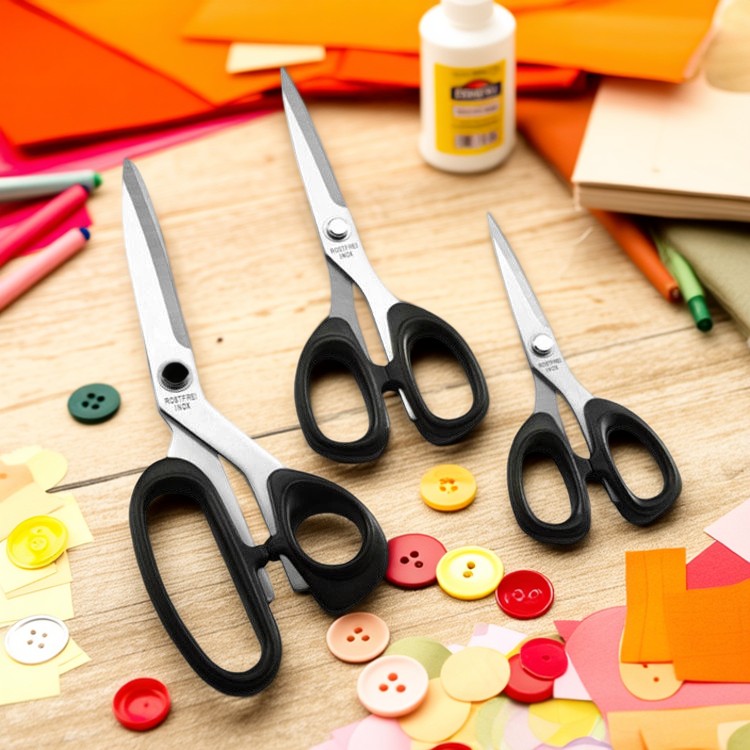
The original product described here is a household and tailor-style scissors set with stainless steel blades, black ergonomic handles, and three size options: large, medium, and small. That combination is useful because different tasks call for different levels of leverage, control, and blade length. This guide explains how to evaluate such a set, how to match each size to common tasks, and how to maintain scissors so they stay practical for longer.
Key Takeaways
- A three-size scissors set is more versatile than a single pair because large, medium, and small scissors handle different cutting jobs.
- Stainless steel blades are valued for household use because they offer dependable cutting performance and corrosion resistance.
- Ergonomic handles matter if you cut for long periods, especially during sewing, crafting, or packaging work.
- Do not use the same scissors for every material if you need clean fabric cuts; reserve one pair for textiles when possible.
- Basic cleaning, dry storage, and careful use help preserve cutting quality.
What Makes Household Scissors Useful?
Household scissors are expected to cover a wide range of small jobs. In one week, the same home may need scissors for opening parcels, trimming loose threads, cutting paper patterns, shaping craft materials, or making quick repairs to fabric. For that reason, versatility matters more than one narrow feature.
The set described in the source article includes stainless steel blades and black ergonomic handles. Stainless steel is a common choice for household scissors because it is easy to clean and resists corrosion better than many untreated metals. The ergonomic handle design is also important because it affects grip stability, hand pressure, and cutting control. Even a sharp blade can feel awkward if the handle does not sit comfortably in the hand.
How to Match Scissor Size to the Task
A three-piece set can reduce wear on any one pair and make cutting more accurate. The large scissors are best for longer cuts and broader surfaces, the medium pair works well for general household use, and the small pair is better for detail work. Choosing the right size helps you cut with less force and more control.
| Scissor size | Best suited for | Why it helps | Use with caution on |
|---|---|---|---|
| Large | Fabric panels, paper sheets, broad craft materials, light cardboard | Longer blades help create straighter cuts and cover more material per stroke | Very small curves or detailed trimming |
| Medium | Everyday home tasks, packaging, labels, paper, ribbon | Balances cutting reach with easy handling | Heavy-duty materials that may damage the edge |
| Small | Thread trimming, sewing details, corners, fine craft work | Short blades allow closer control and cleaner detail work | Long straight cuts that require speed and consistency |
Blade Quality: What to Look For
The source description highlights stainless steel blades and sharp cutting accuracy. When evaluating household scissors, inspect how the blades meet. They should close smoothly from pivot to tip without obvious gaps. If the tips do not align, detail work becomes difficult. If the blades feel loose, the scissors may fold or chew through material instead of cutting cleanly.
Sharpness is especially important for sewing and craft work. Dull scissors can pull fabric, leave ragged edges, or require repeated cutting. For paper and packaging, sharp blades also reduce hand strain because less pressure is needed. However, avoid assuming that all stainless steel scissors perform the same. Material, grinding, blade thickness, pivot tension, and finishing all affect cutting feel. If buying from a supplier or retailer, ask what materials the scissors are intended to cut and whether they are recommended for fabric, general household use, or both.
Handle Comfort and Cutting Control
The black ergonomic handles mentioned in the original article are more than a visual detail. Handle shape influences how naturally your fingers sit, how much pressure is distributed across the hand, and how stable the scissors feel during longer sessions. This matters for tailoring, craft projects, gift preparation, and repeated packaging tasks.
When selecting scissors, check the handle opening size, edge smoothness, and grip angle. A handle that is too small can pinch fingers, while a handle that is too large may reduce control. If multiple people in a home or workplace will use the same set, a medium-sized handle design is often more practical than a highly specialized shape.
Practical Uses Around the Home and Workspace
A well-chosen household scissors set can cover many routine tasks without needing specialized tools for every job. Common uses include:
- Trimming fabric for simple sewing repairs or craft projects
- Cutting paper, labels, wrapping material, and patterns
- Opening light packaging and parcel tape
- Trimming thread, ribbon, yarn, or loose garment fibers
- Cutting thin cardboard for DIY or school projects
- Handling detail cuts in scrapbooking or small handmade items
For best results, separate scissors by use when possible. A pair used frequently on cardboard or adhesive tape may not remain ideal for fabric. If clean textile cuts matter, reserve the large or medium pair for fabric only and use another pair for packaging.
Care and Maintenance Tips
Household scissors do not require complicated maintenance, but a few habits can help preserve cutting performance. Wipe the blades after cutting sticky materials, especially tape or adhesive labels. Moisture should be removed before storage, even when the blades are stainless steel, because clean and dry storage is still better for long-term condition.
- Use the right size scissors for the material instead of forcing small scissors through thick board.
- Clean residue from the blades with a soft cloth after use.
- Store scissors closed in a drawer, case, or tool organizer.
- Avoid dropping them, as impact can affect blade alignment or tip accuracy.
- Keep them away from children unless supervised and suitable for the child’s age and task.
If the scissors begin to cut poorly, first check for adhesive buildup or a loose pivot. Do not continue forcing the blades through resistant materials, as this can worsen alignment issues.
What Buyers Should Ask Before Purchasing
If you are sourcing household scissors for a shop, sewing studio, craft program, or promotional product range, focus on practical questions rather than assumptions. Ask the supplier which materials the scissors are designed to cut, whether all three sizes share the same blade material, and how the handles are constructed. If packaging, labeling, or private-label supply is needed, confirm those details directly with the supplier. Also ask about available samples, quality inspection steps, carton details, lead time, and any documentation relevant to your market. These are commercial details that should be verified before ordering.
FAQ
Can household scissors be used for fabric?
Yes, household scissors can be used for fabric, especially when the blades are sharp and the scissors feel stable. For cleaner fabric edges, reserve one pair for textile use and avoid using it on cardboard or tape.
Why choose a three-size scissors set?
A three-size set gives you more control. Large scissors suit longer cuts, medium scissors handle everyday tasks, and small scissors are better for threads, corners, and detailed craft work.
Are stainless steel blades easy to maintain?
Stainless steel blades are practical for household use because they are easy to wipe clean and resist corrosion. They should still be stored dry and cleaned after cutting sticky materials.
How do I know if the handles are comfortable?
Look for smooth edges, enough finger room, and a grip that does not pinch. Ergonomic handles are helpful for longer use because they can reduce pressure on the hand.
Should I use household scissors on thick cardboard?
Light cardboard is usually manageable if the scissors are suitable and sharp. For thick or dense board, use a tool designed for heavier cutting to avoid damaging the blades or pivot.
