




How to Choose a Kitchen Prep Tools Supplier for Commercial and Retail Programs
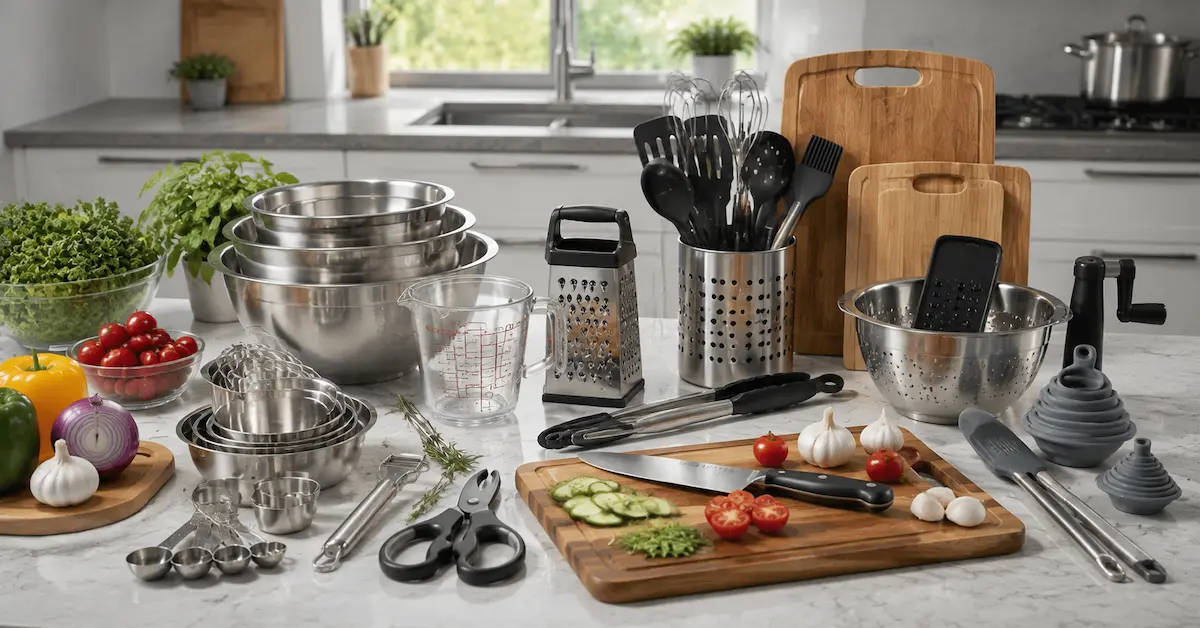
Choosing a kitchen prep tools supplier is not simply a matter of finding the largest catalog or the lowest quoted unit price. For restaurant operators, sourcing managers, and private-label product teams, the harder task is building a practical assortment that works across preparation tasks, fits the available storage space, and can be specified clearly before production begins. The right decision depends on material choices, tool geometry, manufacturing capability, quality control, and the supplier’s ability to explain what is—and is not—included.
This article helps buyers assess an assortment of preparation tools for household, hospitality, food-service, catering, bakery, culinary-school, and retail applications. It focuses on the questions that should be answered before requesting a quote or approving samples.
The purchasing problem: a broad assortment can hide specification gaps
A typical kitchen preparation range may include mixing bowls, measuring cups and spoons, cutting boards, knives, shears, whisks, tongs, graters, strainers, colanders, spatulas, brushes, storage holders, and other accessories. On the surface, this looks like a straightforward category. In manufacturing terms, however, it may involve several different processes and materials.
Stainless-steel bowls and measuring tools can require forming, trimming, polishing, and dimensional inspection. Colanders and utensil holders may involve sheet-metal punching or perforation. Wire tools such as whisks and loop-handled accessories require forming and assembly. Black-handled spatulas, tongs, brushes, and shears may combine metal working parts with plastic or rubberized grips. Silicone collapsible components introduce a different molding and flexibility requirement, while wood or wood-look cutting boards need cutting, edge finishing, and surface treatment appropriate to the intended use.
That mix creates a common buying risk: a supplier may show a broad product selection without making clear whether all products are manufactured in-house, sourced through partner factories, or offered only as a trading assortment. This is not automatically a problem, but it affects consistency, sampling, packaging, traceability, and the buyer’s ability to make changes later.
Quick reference: what to evaluate first
| Buying area | Why it matters | What to request |
|---|---|---|
| Material specification | Influences appearance, cleaning behavior, stiffness, and corrosion performance | Material type, grade where relevant, finish, and component breakdown |
| Product geometry | Affects storage, handling, usable capacity, and compatibility with existing workflows | Drawings, dimensions, capacity information, and sample measurements |
| Manufacturing process | Determines repeatability and the practical limits of customization | Process overview for forming, stamping, molding, assembly, and finishing |
| Food-contact suitability | Different markets and applications may impose different documentation needs | Applicable declarations or test documentation, if required for the target market |
| Commercial terms | Packaging, order quantities, and assortment rules can change total cost | MOQ, packaging format, labeling, sample policy, and customization conditions |
Start with the use case, not the product photograph
Photographs are useful for understanding the range, but they do not confirm dimensions, capacity, material grade, blade construction, or cleaning suitability. A buyer sourcing restaurant kitchen prep tools should first map the tasks the products must support. Mixing, measuring, chopping, slicing, grating, whisking, straining, and serving each place different demands on the tool.
For a restaurant or catering operation, storage and retrieval can be as important as the tool itself. Nested bowls, stackable measuring cups and spoons, and cylindrical utensil holders may help organize a crowded preparation area. Cutting boards with integrated carry handles can be easier to move between workstations, but the handle opening should not reduce the usable preparation surface beyond what the operator can accept. Colanders and perforated holders support drainage or organization, yet hole pattern and shape should be reviewed for cleaning access and the ingredients being handled.
Retail and private-label buyers have a different concern. They may want a visually coherent range with contrasting dark grips, polished or brushed metal finishes, and a mix of individual tools and bundled sets. The buyer should confirm whether the displayed products are available as one coordinated program or merely represent separate items. An attractive assortment is not necessarily a standardized assortment.
Material and construction questions that deserve attention
Stainless steel components
Stainless steel appears across the assortment in bowls, measuring tools, colanders, utensil holders, graters, and other accessories. Buyers should not accept the generic term “stainless steel” as a complete specification. Ask which components use it, whether the finish is polished or brushed, and how edges, seams, handles, and punched openings are treated.
For formed bowls and cups, inspect the rim and base for consistent shaping and stable contact with the work surface. For graters and perforated products, look at the openings and surrounding edges. A clean-looking exterior does not by itself confirm that the working surfaces are comfortable to handle or easy to clean.
Wood, plastic, and silicone
Cutting boards in the assortment appear to use wood or a wood-look material, with visible grain and rounded edges. The supplier should identify the actual material rather than relying on appearance. Board thickness, surface finish, edge treatment, and resistance to warping are practical specification points, but they should be verified through drawings, samples, or supplier documentation rather than assumed from an image.
Black-handled tools may combine plastic or rubberized grips with metal working parts. Buyers should clarify how the grip is attached and whether the design is intended for repeated commercial use or lighter household duty. Similarly, dark-gray collapsible measuring or storage components appear to use silicone, but the exact composition and temperature suitability are not established. These details matter when products will be exposed to heat, repeated washing, or heavy handling.
Review the manufacturing route before discussing customization
Customization is often discussed too early. First establish which parts of the product are standard and which can be changed. A supplier may be able to adjust color, branding, packaging, or a handle detail while keeping the underlying metal part unchanged. Other changes may require new tooling, revised molds, or a different assembly method.
For a mixed range, ask for a process map by product family. Stainless-steel items may use forming, stamping, punching, polishing, or wire forming. Plastic handles can involve injection molding, while silicone parts may use a separate molding process. Cutting boards may require material cutting and edge finishing. The exact process depends on the design, so a supplier should confirm it rather than allowing the buyer to infer capability from product appearance.
This discussion also helps identify where quality variation is most likely. Metal surface finish, sharp edges, handle attachment, alignment, measuring markings, and moving joints deserve particular attention during sample review. There is no need to demand the same inspection approach for every item, but the supplier should be able to explain what is checked and at what stage.
Common buying mistakes
Assuming the image proves the specification
A product image cannot establish exact dimensions, capacities, material grades, certifications, temperature ratings, dishwasher suitability, or durability. Treat the image as an assortment reference, not a technical drawing.
Combining too many product types in one order
A broad range can be commercially attractive, but it may create uneven packaging, inconsistent finish, and complicated quality control. Start with a defined product family or a small pilot assortment where the use case and inspection criteria are clear.
Ignoring storage and packaging
Nesting bowls and stackable measuring tools can reduce storage volume, but buyers should verify how they are separated, protected, labeled, and packed for shipment. Handles, sharp working edges, and polished surfaces can be vulnerable to damage if the packaging design is treated as an afterthought.
Requesting a price before defining the product
A price comparison is meaningful only when the compared products have the same dimensions, materials, finish, packaging, and order conditions. Otherwise, a lower quote may simply describe a different product.
A practical supplier-evaluation checklist
Before moving forward, send the supplier a structured request. Include product codes or reference images, target dimensions, intended application, preferred materials, branding requirements, packaging expectations, destination market, and the documents needed for that market. Ask the supplier to identify which details are confirmed and which remain subject to sample approval.
For samples, review the tool in the way it will actually be used. Stack bowls and measuring tools. Hold tongs, shears, whisks, and graters. Check whether handles align, whether edges feel properly finished, whether markings are readable, and whether the product can be stored in the intended holder or drawer. For cutting boards, inspect the working surface and carry slot. For colanders and perforated holders, consider whether food residue could collect in corners or around seams.
Keep a written sample record. Note the approved material description, dimensions, color, surface finish, markings, logo placement, packaging, and any changes requested. This simple discipline prevents a common sourcing problem: the quotation refers to one version while production follows another.
FAQ
Can one supplier provide the entire kitchen preparation range?
Possibly, but the buyer should confirm the supply model. The visible assortment includes several product families and likely manufacturing processes. Ask whether the supplier produces each item directly or coordinates multiple sources.
Are these products suitable for commercial kitchens?
The assortment appears relevant to household and commercial preparation, including restaurants, catering, bakeries, and culinary schools. Suitability should be evaluated item by item because the available data does not establish duty ratings, cleaning performance, or durability results.
What should be confirmed before placing a bulk order?
Confirm materials, dimensions, capacities, finish, handle construction, markings, packaging, order quantities, customization scope, and any food-contact or market-specific documentation required. Do not rely on catalog imagery for these points.
Next step: turn the assortment into a controlled specification
A capable kitchen prep tools supplier should do more than present a large product list. The supplier should help translate the intended use into defined products, materials, processes, samples, and commercial conditions. Begin with the tools that solve the clearest operational problem—such as compact storage, repeatable measuring, organized countertop access, or preparation across multiple workstations—then expand the range after the first samples meet the agreed requirements.
Request a product-family quotation and sample review rather than an undefined catalog price. That approach gives engineering, sourcing, and product teams a better basis for comparing suppliers and reduces the risk of approving attractive tools that do not perform as expected in the real kitchen.
