




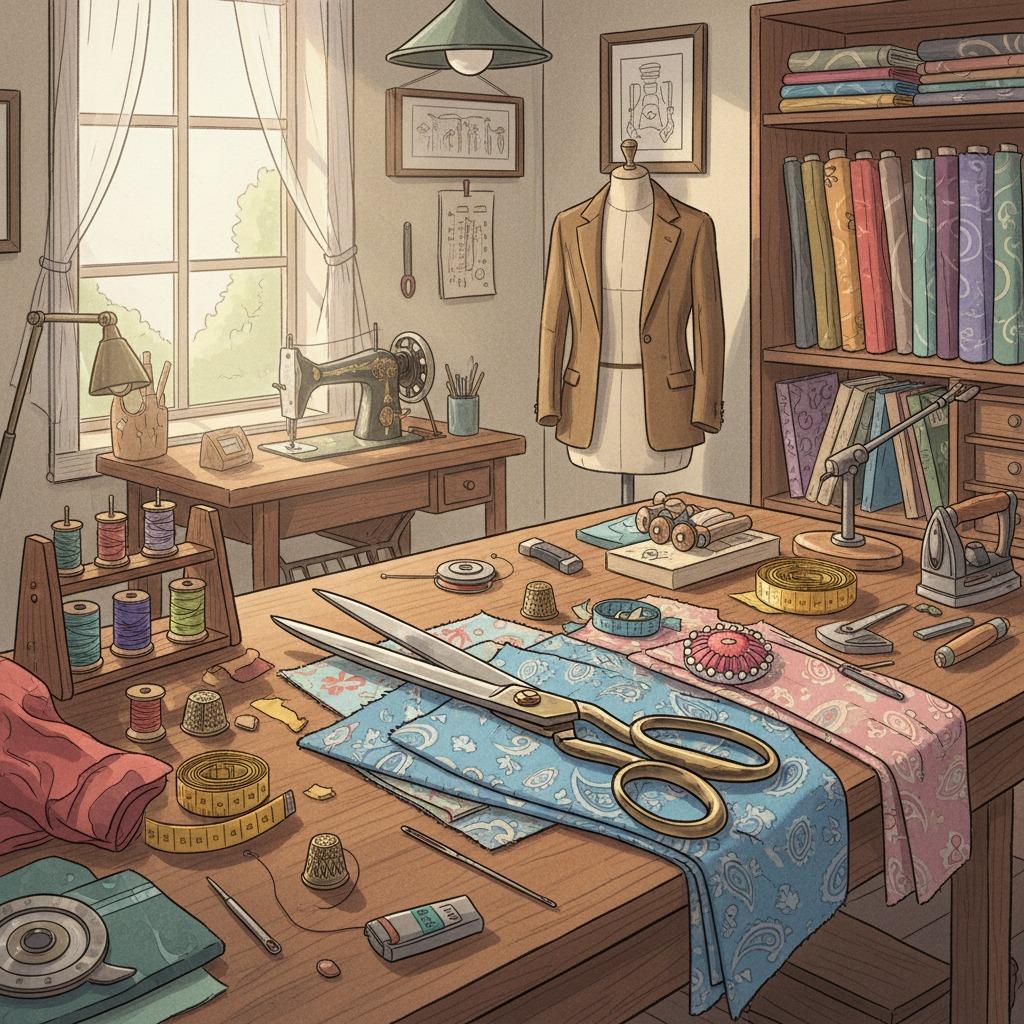
How to Keep Your Shears Sharp: Daily Maintenance Tips for Tailor Scissors
Tailor scissors, also called fabric shears or sewing shears, are precision tools. When they are clean, correctly tensioned, and used only on suitable materials, they make smooth cuts through fabric with less hand strain. When they are neglected, the same pair can start snagging threads, crushing fabric edges, or forcing you to recut lines that should have been clean the first time.
This guide focuses on practical care you can do at the sewing table: wiping, oiling, checking tension, storing correctly, and knowing when sharpening is needed. The habits are simple, but consistency matters. A few minutes after each session can help protect the cutting edge and make your shears more reliable for tailoring, dressmaking, quilting, alterations, and studio work.

Key Takeaways
- Wipe blades after every sewing session to remove lint, dust, and fabric residue.
- Use only a tiny amount of suitable light oil, especially around the pivot, then wipe away excess.
- Reserve fabric shears for fabric; paper, cardboard, wire, and craft materials can dull the edge quickly.
- Check tension regularly because loose or overly tight blades can reduce cutting accuracy.
- Sharpen only when needed, and consider a professional service for valuable or heavily used shears.
Why Sharp Shears Matter for Fabric Work
Sharp tailor scissors do more than cut faster. They help protect the fabric itself. Dull blades can push cloth instead of slicing it, which may cause frayed edges, uneven seam allowances, and inaccurate pattern pieces. Delicate fabrics such as silk can shift or snag, while thicker materials may require extra force that tires the hand and wrist.
Clean cutting is also important in production and alteration settings. If each cut requires correction, the work takes longer and the risk of measurement errors increases. Good maintenance is not just about preserving the tool; it supports consistent results across repeated cutting tasks.
Daily Cleaning Routine After Each Use
The best time to care for tailor scissors is immediately after use, before lint and residue settle around the pivot or blade faces. You do not need an elaborate setup. A soft, lint-free cloth and careful handling are enough for most daily cleaning.
- Open the shears fully. Keep your fingers away from the cutting edge and support the handles on a stable surface.
- Wipe both blade faces. Move from the pivot toward the tip, not back toward your hand.
- Clean near the pivot. Lint often collects where the blades cross. Remove visible debris gently.
- Test the open-and-close motion. The movement should feel smooth, not gritty or sticky.
- Dry the shears before storage. Moisture can encourage corrosion, especially in humid workrooms.
If adhesive, stabilizer, or residue from fabric treatments is present, dampen a cloth with a small amount of isopropyl alcohol and wipe carefully. Do not soak the tool, and do not use abrasive powders or rough pads on the blades.
Oiling the Pivot Without Overdoing It
Oil helps reduce friction at the pivot and can provide light protection against moisture. The common mistake is using too much. Excess oil attracts lint, transfers to fabric, and may create more cleaning work later.
Place one tiny drop of sewing machine oil or light mineral oil near the pivot screw. Open and close the shears several times to distribute it. Then wipe the blades, pivot area, and handles until no visible oil remains. If you can see oil on the tool, there is probably too much. Always make a test cut on scrap fabric before returning to a garment or client material.
Daily and Weekly Maintenance Checklist
| Task | How to Do It | Frequency | Why It Helps |
|---|---|---|---|
| Wipe blades | Use a soft, lint-free cloth from pivot to tip | After each session | Removes lint and residue before buildup forms |
| Oil pivot | Add one tiny drop, work the blades, wipe excess | As needed or after heavy use | Keeps movement smooth and reduces friction |
| Check tension | Open and close slowly; listen and feel for looseness | Daily or weekly | Maintains blade contact for accurate cutting |
| Test sharpness | Cut a scrap of the fabric you use most often | Weekly | Shows early signs of dullness or snagging |
| Deep clean | Remove sticky residue with alcohol on a cloth, then dry | When residue appears | Prevents drag and uneven cuts |
| Sharpen | Use a qualified sharpener or proper scissor tool | When performance drops | Restores cutting ability without unnecessary grinding |
How to Check Blade Tension
Tension affects how the two blades meet. If the pivot is too loose, fabric may fold between the blades instead of being cut. If it is too tight, the shears can feel stiff and tiring, and the blades may wear unevenly.
A simple check is to open the shears halfway and let one handle drop gently. The blades should move with controlled resistance rather than falling shut instantly or staying rigid. This is only a practical check, not a universal rule for every design. If your shears have an adjustable screw, make very small changes and test on scrap fabric after each adjustment. If the pivot uses a rivet or specialized fastener, do not force it; ask a repair or sharpening professional.
Use Rules That Prevent Dulling
Many sharpening problems begin with misuse. Fabric shears should be treated differently from general household scissors. Even a few cuts through paper patterns, cardboard packaging, plastic tags, or wire can change how the edge behaves on cloth.
- Keep one pair dedicated to fabric cutting only.
- Use separate scissors for paper patterns, tape, labels, and craft materials.
- Do not cut over pins; remove pins before the blade reaches them.
- Avoid dropping shears, because impact can nick edges or affect alignment.
- Cut on a stable table so the blades do not scrape hard surfaces.
- Tell other people in the workspace which pair is for fabric only.
For shared sewing rooms, a label or colored handle wrap can prevent accidental misuse. In professional environments, this small step can reduce tool replacement and rework.
Storage Habits That Protect the Edge
Storage is part of maintenance. Tossing shears into a drawer with rulers, seam rippers, clips, or rotary blades can nick the cutting edge. A sheath, case, pouch, or dedicated drawer section is safer. Store them closed, dry, and away from steam, sinks, or damp basements.
If you work in a humid climate, inspect the blades more often for discoloration or rough spots. Wipe and dry them before storage, especially after long sessions where hand moisture may contact the metal. If the shears will not be used for a while, a very light protective oil film can be applied and wiped nearly dry before storing.
When to Sharpen Tailor Scissors
Sharpening should solve a cutting problem, not become a weekly habit. Removing metal unnecessarily can shorten the useful life of the tool. Watch for practical signs: fabric snags near the tip, the blades push material forward, cutting requires more pressure, or clean lines become ragged even after cleaning and tension checks.
Home sharpening tools can help in some cases, but they must match the scissor design and edge angle. Valuable tailor scissors, heavily used studio shears, or blades with alignment issues are better handled by a professional sharpener. Before sending them out, ask whether the service works specifically with fabric shears, how they handle tension adjustment, and whether they test cut fabric after sharpening.
FAQ
How often should I oil tailor scissors?
Oil them when the pivot feels dry, stiff, or slightly gritty, or after a deeper clean. For frequent sewing, this may be often; for occasional use, less frequently. Always wipe away excess oil before cutting fabric.
Can I wash tailor scissors with water?
It is better to avoid soaking them. Use a dry cloth for normal lint and a small amount of alcohol on a cloth for sticky residue. If water contacts the shears, dry them immediately and check the pivot area.
Why do my shears cut near the handle but not at the tip?
This may indicate dull tips, poor blade alignment, or incorrect tension. Clean the blades first, test again on scrap fabric, and then consider adjustment or professional sharpening.
Can I use tailor scissors for leather?
Some users cut leather with suitable shears, but it depends on the thickness, the scissor design, and the edge condition. Test on scrap first and avoid forcing the blades. For regular leather work, a dedicated cutting tool may be better.
Should left-handed users buy special tailor scissors?
Yes, if possible. True left-handed scissors improve blade visibility and cutting control for left-handed users. Comfort and control reduce strain and can improve accuracy.
Final Thoughts
Keeping shears sharp is mostly about prevention: clean them, oil lightly, protect the edge, and use them only for the right materials. When problems appear, check residue and tension before assuming the blades need sharpening. With steady care, tailor scissors can remain dependable tools for clean fabric cutting and accurate sewing work.
