




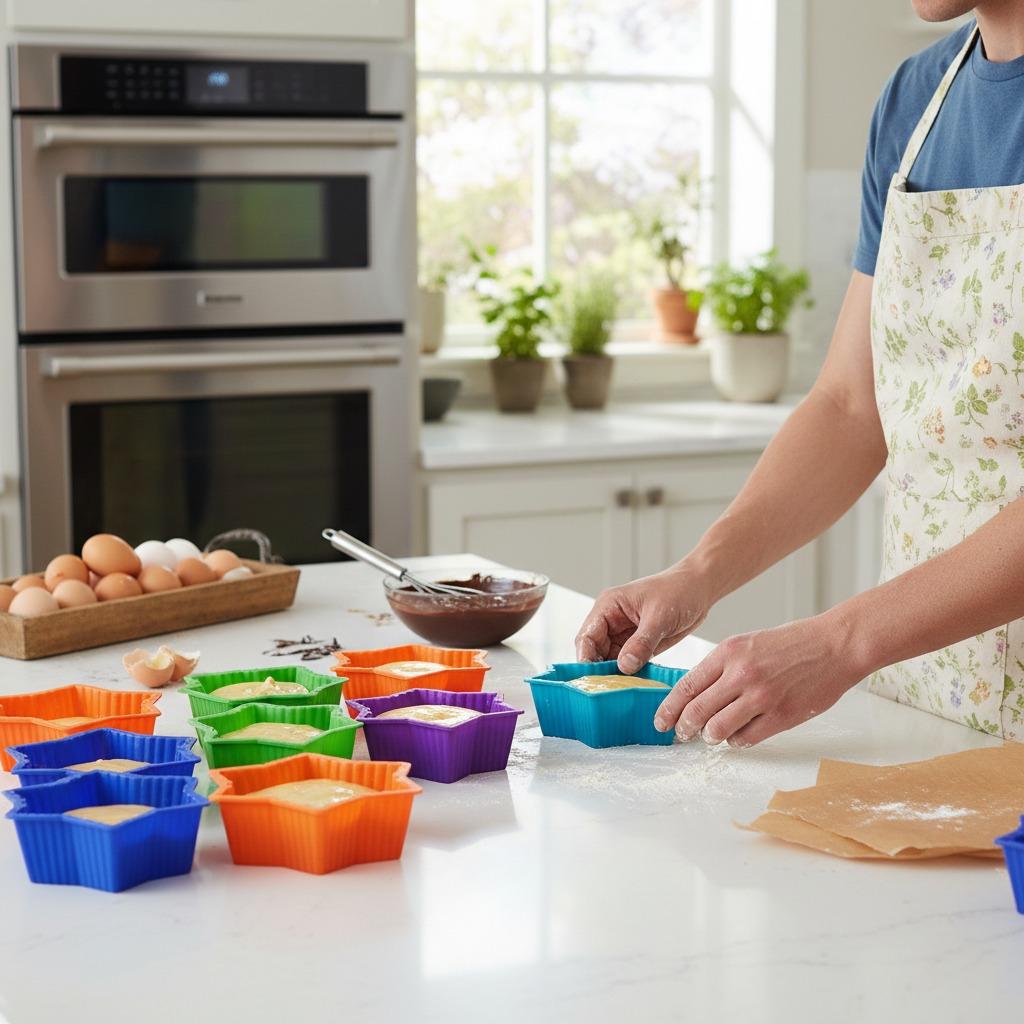
How to Remove White Residue from Silicone Bakeware
Cloudy white residue on silicone bakeware is common, especially on baking mats, muffin molds, loaf pans, spatulas, and other kitchen silicone tools. It can look like powder, haze, or a dull film that remains after washing. In many cases, the residue is not a sign that the item is ruined. It is usually a combination of hard-water minerals, detergent film, soap scum, and oil that has bonded to the silicone surface during repeated washing and baking.
The right cleaning method depends on what caused the film. Mineral deposits respond well to mild acids such as white vinegar or lemon juice. Greasy buildup often needs baking soda, hot water, and dish soap. This guide explains how to identify the residue, clean it safely, and prevent it from returning without harsh abrasives or unnecessary replacement.
Key Takeaways
- White residue on silicone bakeware is most often caused by hard water, detergent, soap scum, or baked-on oils.
- A vinegar soak is the best first step for cloudy mineral film.
- Baking soda helps lift greasy residue and mild odors without scratching the surface.
- Thorough rinsing and complete drying are essential for preventing new buildup.
- Avoid steel wool, harsh scouring pads, and strong chemicals unless the product care instructions specifically allow them.
What Causes White Residue on Silicone Bakeware?
Silicone has a flexible, slightly grippy surface. That texture is useful in the kitchen, but it can hold onto tiny traces of minerals, soap, and cooking oil. If your tap water is hard, calcium and magnesium can dry on the surface and leave a pale film. Dishwasher detergents may also leave residue if the rinse cycle is not strong enough or if too much detergent is used.
Oil is another common reason silicone turns cloudy or sticky. During baking, small amounts of grease can cling to mats and molds. If oil is not fully removed before the next use, heat can make the film more noticeable. The result is a surface that looks dull even after normal washing.
Before You Start: Check the Care Instructions
Before using any cleaning method, check the care information that came with your bakeware or utensils. Not every silicone product is designed for the same temperature range, dishwasher use, or cleaning treatment. If the item is part of a purchased set, review the supplier’s instructions for washing, drying, and oven use.
For general care, avoid sharp tools and abrasive scrubbers. Silicone can be durable, but a scratched surface may trap more residue later. Use a soft sponge, a dishcloth, or a non-abrasive brush. If the bakeware has a strong odor, heavy staining, or damage such as cracks or tackiness that does not improve after cleaning, it may be time to stop using it.
Cleaning Method Comparison
Use the table below to choose a method based on the type of residue you see. Start with the gentlest approach, then repeat if needed.
| Method | Best For | What You Need | Typical Time | Care Note |
|---|---|---|---|---|
| Vinegar soak | Hard-water haze and cloudy white film | White vinegar and hot water | 20-30 minutes | Rinse well to remove vinegar smell |
| Baking soda paste | Light grease and surface residue | Baking soda and water | 10-15 minutes | Rub gently with a soft sponge |
| Lemon and baking soda | Mild odor and oily film | Lemon juice and baking soda | 10 minutes | Useful when vinegar odor is unwanted |
| Hot soapy wash | Routine cleaning after each use | Mild dish soap and hot water | 5 minutes | Rinse until the surface feels clean |
Step-by-Step: Remove White Residue with Vinegar
For most cloudy silicone bakeware, begin with vinegar because it targets mineral deposits directly. Fill a sink, basin, or large bowl with hot water. Add white vinegar; for a small basin, a generous splash may be enough, while a full sink may need more. The exact amount is less important than making a mildly acidic soak.
- Wash the silicone item with mild dish soap to remove loose crumbs and grease.
- Place the bakeware fully under the vinegar-water solution.
- Soak for 20 to 30 minutes.
- Wipe the surface with a soft sponge, paying attention to corners, ridges, and mold cavities.
- Rinse thoroughly under warm running water.
- Dry completely on a clean towel or drying rack before storage.
If the white film is gone but the surface still feels slightly slick, follow with the baking soda method below. That usually means oil, not minerals, was part of the problem.
How to Clean Greasy or Sticky Silicone Bakeware
Greasy silicone needs a cleaner that can absorb and loosen oil. Baking soda is useful because it is mildly abrasive without being as harsh as metal scrubbers. Mix baking soda with a small amount of water to form a paste. Spread it across the cloudy or sticky area and let it sit for 10 to 15 minutes.
After resting, rub gently with a soft sponge using circular motions. Do not press hard; the goal is to lift residue, not scrape the silicone. Wash again with hot water and mild dish soap, then rinse until the water runs clean and the item no longer feels slippery. For odor, lemon juice can be added to the baking soda paste, but rinse carefully so no citrus residue remains.
Prevention Tips for Kitchen Silicone Tools
Preventing residue is easier than removing heavy buildup. Good habits after each use keep silicone bakeware clearer and more pleasant to handle.
- Wash soon after baking, especially when oils, butter, or cheese were used.
- Use hot water and enough dish soap to cut grease, but do not leave soap on the surface.
- Rinse longer than you would with metal or glass bakeware.
- Dry completely before stacking, rolling, or storing.
- If you use a dishwasher, avoid overloading it so water can rinse the silicone properly.
- Store silicone items in a dry cabinet, away from greasy pans or dusty surfaces.
If you use kitchen silicone tools frequently, a vinegar rinse every few weeks can help reduce hard-water deposits before they become visible.
When Cleaning Is Not Enough
White residue is usually cosmetic, but some signs deserve caution. Replace silicone bakeware if it is cracked, torn, permanently sticky after thorough cleaning, or has trapped food in damaged areas. Also stop using an item if it gives off an unusual smell during normal use that does not improve after washing and airing.
For buyers comparing new silicone bakeware or utensils, ask suppliers practical care questions before purchasing: What cleaning methods are recommended? Is dishwasher use allowed? What temperatures are suitable for the intended application? Are there written use-and-care instructions available for end customers? Clear care guidance helps reduce returns and extends the useful life of the product.
FAQ
Is white residue on silicone bakeware dangerous?
It is often caused by mineral deposits, soap film, or oil residue. These are common household cleaning issues, but you should clean the item thoroughly before reuse. If the silicone is damaged, sticky, or smells unusual after cleaning, replace it.
Can I use bleach on silicone bakeware?
Bleach is not usually necessary for white residue. Start with vinegar, baking soda, hot water, and mild dish soap. Always follow the product’s care instructions before using stronger cleaners.
Why does my silicone bakeware look cloudy after the dishwasher?
Dishwashers can leave mineral deposits or detergent film, especially with hard water or crowded racks. Rinse again by hand and try a vinegar soak to remove the haze.
How often should I deep clean silicone baking mats and molds?
For frequent use, clean residue as soon as it appears. A light vinegar soak every few weeks can help if you have hard water or regularly bake oily foods.
Can I scrub silicone with steel wool?
No. Steel wool and harsh scouring pads can damage the surface and make future buildup worse. Use a soft sponge, cloth, or non-abrasive brush instead.
With a simple vinegar soak, a gentle baking soda paste, and better rinsing habits, most silicone bakeware can be restored to a cleaner, clearer appearance. Regular care keeps your baking mats, molds, spatulas, and other kitchen silicone tools ready for everyday use.
