





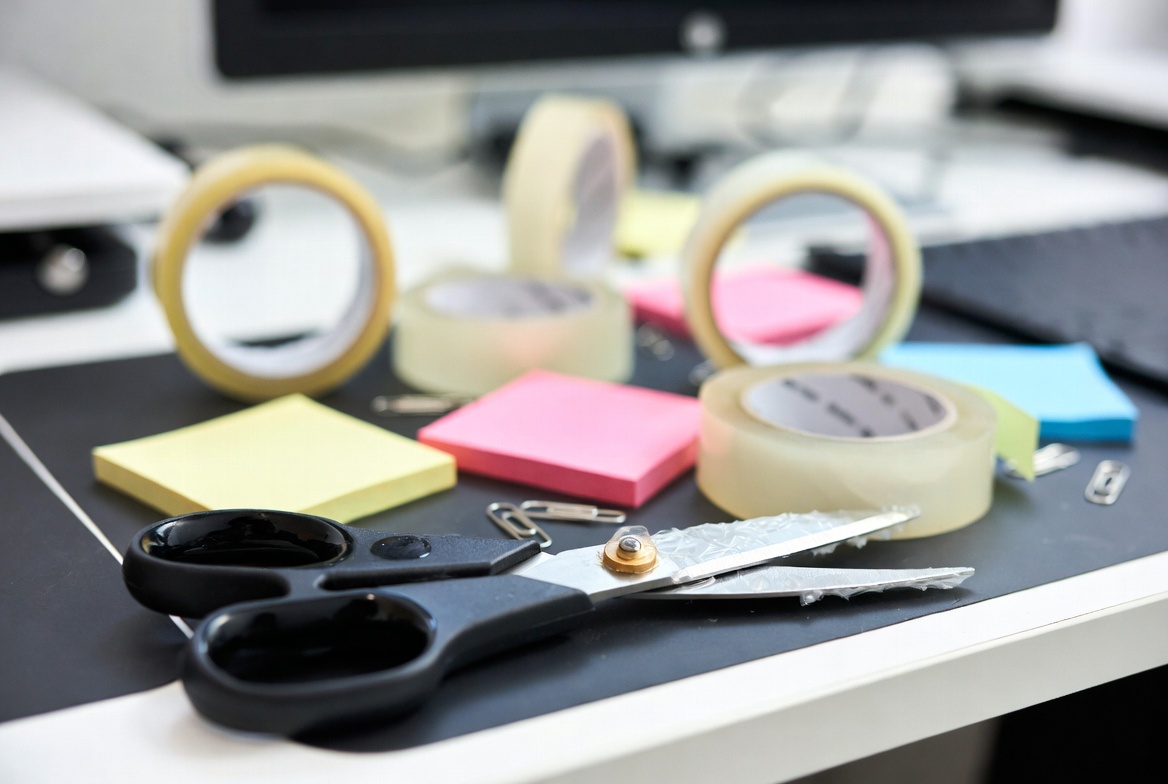
How to Safely Clean Adhesive Residue Off Your Scissors
Office scissors are often used for more than cutting paper. In a typical workplace, school, packing station, or home office, they may cut tape, labels, stickers, envelopes, and packaging film. Over time, adhesive can build up along the blades and near the pivot, making the scissors feel sticky, drag through material, or transfer residue onto documents.
The good news is that most adhesive residue can be removed with simple supplies such as isopropyl alcohol, dish soap, a soft cloth, and cotton swabs. The key is to clean the blades carefully, avoid harsh scraping, and dry the pivot area thoroughly afterward. This guide explains safe methods, what to avoid, and how to keep office scissors working smoothly after repeated use with sticky materials.
Key Takeaways
- Use isopropyl alcohol for most tape, sticker, and label residue because it evaporates quickly and works on many common adhesives.
- For light residue, warm soapy water may be enough; for stubborn spots, a small amount of vegetable oil can help loosen sticky buildup.
- Avoid aggressive scraping, soaking the pivot for long periods, or using strong chemicals without checking whether they may affect handles or coatings.
- Always dry scissors completely after cleaning, especially around the hinge, to reduce the risk of corrosion or stiffness.
Why Adhesive Residue Causes Problems
Sticky buildup does more than make scissors unpleasant to handle. Adhesive on the cutting edge can increase friction, causing paper to tear instead of cutting cleanly. Residue near the pivot can attract dust and fibers, which may make the opening and closing action feel rough. If moisture becomes trapped in the hinge area after cleaning, it can also contribute to rust on susceptible metal parts.
Cleaning scissors regularly is especially important in shared office environments where one pair may be used for many tasks. A quick wipe after cutting packing tape or labels can prevent a small amount of residue from becoming a thick, hardened layer that takes longer to remove.
What You Need Before Cleaning
Prepare your supplies before you start so you can clean safely and avoid spreading adhesive over a larger area of the blade.
| Item | Best For | Use With Care |
|---|---|---|
| Isopropyl alcohol, 70% or higher | Most tape, sticker, and label residue | Test first if handles have printed decoration or unknown coatings |
| Microfiber cloth | Wiping blades without scratching | Use a clean cloth so grit does not mark the surface |
| Cotton swabs | Applying cleaner near edges and pivot | Do not push loose fibers into the hinge |
| Warm water and mild dish soap | Light residue and final cleaning | Do not leave scissors wet after washing |
| Vegetable oil | Softening stubborn sticky patches | Wash and dry afterward to remove oily film |
| Soft toothbrush | Cleaning around the pivot and handle seams | Use gentle pressure only |
Step-by-Step: How to Remove Adhesive from Scissors
- Open the scissors carefully. Place them on a stable surface with the blades open. Keep your fingers away from the cutting edges during cleaning.
- Wipe away loose material. Use a dry microfiber cloth to remove dust, paper fibers, and any adhesive that is already peeling away.
- Apply isopropyl alcohol. Dampen a cotton swab or cloth with alcohol. Do not pour liquid directly onto the scissors. Rub the sticky area in short strokes, working from the spine of the blade toward the edge rather than along the sharpened edge.
- Let the solvent work briefly. For heavier residue, hold the damp cloth against the adhesive for one to two minutes. This helps soften the glue so less force is needed.
- Wipe and repeat. Remove loosened adhesive with the cloth. Repeat the alcohol application until the blade feels smooth.
- Clean the pivot area. Use a cotton swab or soft toothbrush to remove sticky buildup around the hinge. Work gently so residue is lifted out rather than pushed deeper into the joint.
- Wash off remaining cleaner. Wipe with a cloth dampened with mild soapy water, then wipe again with clean water if needed.
- Dry thoroughly. Use a dry towel immediately. Open and close the scissors a few times while drying around the pivot to remove hidden moisture.
Choosing the Right Cleaning Method
Different adhesives respond to different cleaners. Start with the mildest method that is likely to work, then move to stronger options only if necessary.
| Method | Effectiveness | Best Situation | Main Caution |
|---|---|---|---|
| Warm soapy water | Low to medium | Fresh, light residue | Dry immediately to prevent moisture problems |
| Isopropyl alcohol | High | Most office tape and label adhesive | Keep away from flames and test on non-metal parts |
| Vegetable oil | Medium | Thick or gummy residue | Leaves a film unless washed off well |
| Commercial adhesive remover | High | Very stubborn residue | Check label directions and avoid contact with sensitive handles |
What Not to Do When Cleaning Scissors
Some shortcuts can damage scissors or make them less comfortable to use. Avoid scraping blades with knives, screwdrivers, or abrasive pads. These can scratch the surface or affect the cutting edge. Do not soak scissors for an extended period, especially if you do not know how the pivot or handle materials will react. Strong solvents such as acetone may damage certain plastics, painted surfaces, printed branding, or comfort grips, so they should not be the first choice.
If the scissors are part of a workplace tool set, check whether there are internal safety or maintenance rules before using chemical cleaners. In shared offices, it is also helpful to label a separate pair for cutting tape and packaging so general-use scissors stay cleaner for paper tasks.
Maintenance Tips for Cleaner, Smoother Cutting
- Wipe the blades after cutting packing tape, stickers, or labels.
- Store scissors in a dry drawer, cup, or tool organizer instead of leaving them near sinks or damp areas.
- Keep the pivot clean; dust and adhesive in this area can make scissors feel stiff.
- If the pivot is designed to accept lubricant, use only a very small drop of suitable light oil and wipe away excess.
- Use the right cutting tool for the job. Heavy cardboard, wire, or hard plastics can damage ordinary office scissors.
When Cleaning Is Not Enough
If scissors still cut poorly after the adhesive is gone, the issue may be dull or damaged blades, a loose pivot, or misalignment. Cleaning can remove stickiness, but it cannot repair a bent blade or restore a worn cutting edge. For frequently used office scissors, compare the cost and time of sharpening or repair with replacing the tool. For business purchasing, ask suppliers about blade material, handle construction, intended use, packaging options, and care instructions rather than assuming one pair is suitable for every workplace task.
FAQ: Cleaning Sticky Office Scissors
Can I use rubbing alcohol on all scissors?
Rubbing alcohol is suitable for many metal blades, but you should test a small area first if the scissors have coated, printed, painted, or soft-grip handle parts. Apply it with a cloth or swab rather than pouring it over the tool.
Is it safe to use oil to remove adhesive?
Vegetable oil can loosen gummy residue, but it should be used sparingly. Afterward, wash the area with mild soap and water, then dry completely so the blades are not left greasy.
How often should I clean scissors used for tape?
For scissors used regularly on packing tape or labels, wipe the blades at the end of each work session. A quick cleaning prevents heavy buildup and keeps cuts cleaner.
Can sticky scissors be washed under running water?
They can be rinsed briefly if needed, but avoid soaking. The most important step is drying the blades and pivot immediately and thoroughly after any water contact.
Why do my scissors feel stiff after cleaning?
Residue may still be trapped near the pivot, or moisture may have remained in the joint. Clean around the hinge with a cotton swab, dry again, and open and close the scissors several times. If the design allows lubrication, apply a tiny amount of suitable light oil and wipe off the excess.
