




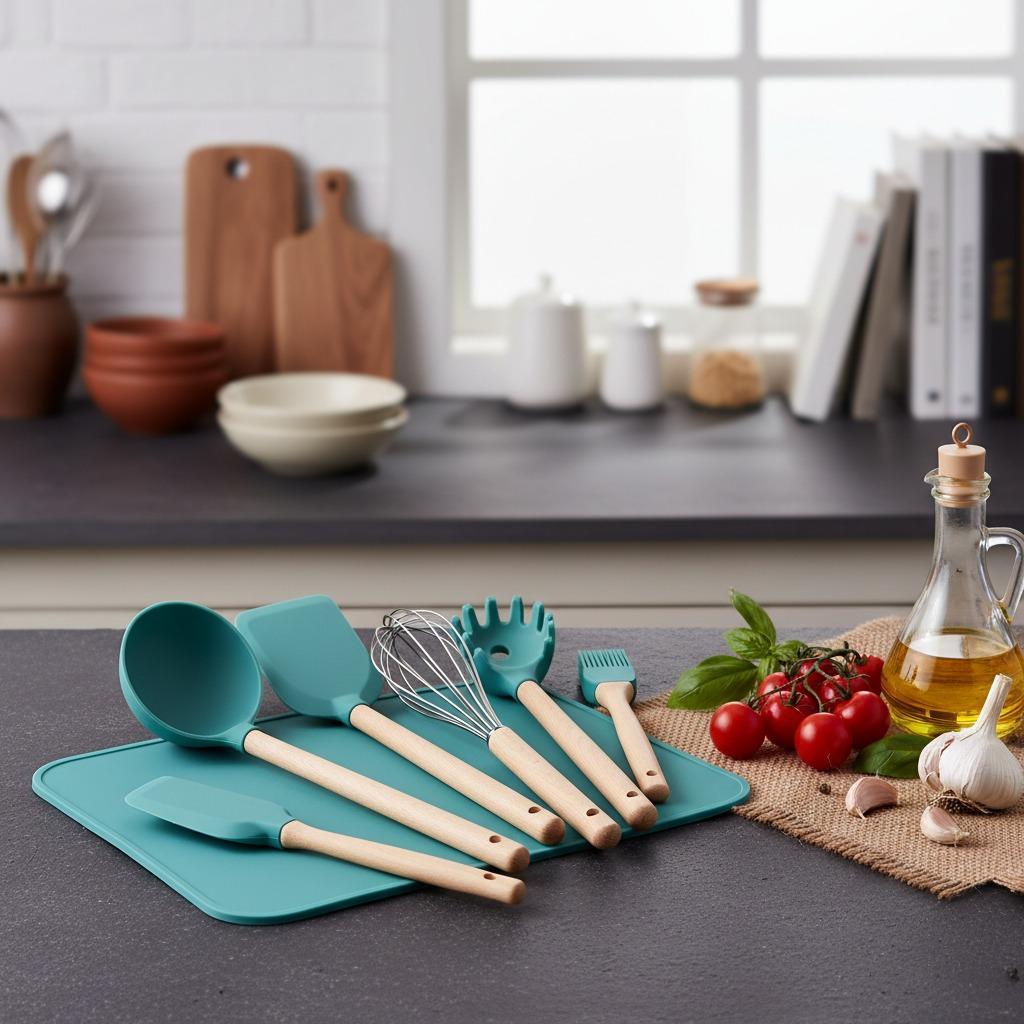
How to Tell High-Quality Silicone from Cheap Fillers
Silicone spatulas, spoons, tongs, baking mats, and brushes are popular because they are flexible, gentle on nonstick cookware, and easy to clean. But the word “silicone” on a label does not tell the whole story. Some low-cost products may contain filler materials or inconsistent curing, which can affect odor, durability, flexibility, and user confidence.
This guide explains practical ways to compare kitchen silicone tools before purchase and during first use. These checks are not laboratory tests, and they cannot replace formal food-contact documentation. They can, however, help consumers and buyers spot warning signs and ask better questions.

Key Takeaways
- Quality silicone should feel flexible, recover its shape, and show a smooth, consistent surface.
- White streaking during a pinch test can be a warning sign, but it is not a complete proof of material quality.
- Strong chemical, rubbery, or plastic-like odors deserve caution, especially after contact with hot water.
- For bulk or OEM buying, request food-contact documents, material details, and sample testing before confirming an order.
Why Silicone Quality Matters
A silicone utensil touches hot pans, sauces, oils, batter, and sometimes baby food. If the material is poorly formulated, it may discolor, crack, absorb odors, or become sticky over time. Handles, seams, and edges can also fail if the product is cheaply made.
For home cooks, quality affects safety perception and replacement cost. For retailers, importers, and private-label buyers, it affects returns, customer reviews, and brand trust. The goal is not to buy the most expensive option automatically, but to separate dependable tools from products that only look similar in photos.
The Pinch Test: A Fast First Check
The pinch test is widely used because it is simple. Pinch, twist, or stretch a flexible part of the utensil head or silicone mat. Then watch the color and surface as the material bends.
- Better sign: the silicone keeps a consistent color and returns to its original shape quickly.
- Warning sign: the pinched area turns noticeably white, chalky, or cloudy.
White stress marks may suggest a higher level of filler or a less resilient formulation. Still, treat this as a screening method, not a final verdict. Pigments, thickness, and product design can influence what you see. If a product fails the pinch test and also has odor, rough edges, or unclear labeling, it is safer to keep looking.
Odor, Surface, and Flexibility Checks
New silicone products may have a faint packaging smell, but a strong chemical odor is a red flag. Rinse the tool with warm water and mild dish soap. If the odor remains strong after washing, or becomes stronger after hot-water contact, consider returning it or avoiding food use.
Next, inspect the surface. A well-made silicone head should look uniform, without bubbles, cracks, sharp flash, sticky patches, or uneven glossy spots. Edges should be smooth enough for comfortable handling and easy cleaning.
Finally, bend the working end. A spatula should flex without creasing permanently. A spoon or turner may be firmer by design, but it should not feel brittle. If the material stays dented, feels powdery, or cracks at the edge, it is unlikely to perform well in daily cooking.
Comparison Checklist: Better Silicone vs Warning Signs
| Check | Better Quality Indicator | Warning Sign |
|---|---|---|
| Pinch or stretch | Color remains mostly consistent; shape recovers | Clear white streaking, chalkiness, or slow recovery |
| Odor | Neutral after washing and airing | Strong rubber, plastic, or chemical smell |
| Surface finish | Smooth, even, and free of visible defects | Bubbles, sticky areas, rough flash, or cracks |
| Edges and seams | Clean edges that are easy to wash | Sharp edges, gaps, trapped residue points |
| Labeling | Clear material and care information | Vague claims with no supporting detail |
| Supplier response | Answers material and compliance questions clearly | Avoids documentation or gives inconsistent answers |
Heat and Care: Test Safely at Home
Silicone utensils are often marketed for heat use, but the exact safe-use temperature should come from the product label or supplier documentation. Do not assume every utensil can sit against a pan edge or rest in a skillet for long periods.
For a practical first-use check, wash the tool and place only the silicone working end in hot water for several minutes. Look for odor, color transfer, deformation, or sticky residue. Avoid open-flame tests; they are unsafe and do not reflect normal kitchen use.
To extend service life, follow these care habits:
- Use silicone tools for stirring, scraping, and serving, not for cutting or scraping burnt residue.
- Keep utensils away from direct flame and exposed heating elements.
- Wash promptly after contact with strong pigments such as tomato sauce, curry, or beet juice.
- Check damaged or cracked tools and replace them if food can collect in the defect.
Questions to Ask When Buying Wholesale or OEM
For sourcing teams, online tests are only the beginning. If you are buying silicone kitchen tools for wholesale, retail, or OEM projects, ask suppliers for specifics before approving samples or packaging copy.
- What silicone material is used, and can the supplier provide a material data sheet?
- Which food-contact standard is the product designed to meet for the target market?
- Can the supplier provide current third-party test reports for the same product or material?
- Are pigments, handles, adhesives, or inserts covered by the same compliance review?
- What heat-use guidance should appear on packaging and instructions?
- How are incoming materials and finished goods checked for odor, appearance, and defects?
Do not rely on words such as “food-grade,” “BPA-free,” or “premium” unless they are supported by documentation relevant to your market. If commercial details such as MOQ, lead time, customization, or packaging options matter, ask the supplier directly and confirm them in writing.
When to Replace Silicone Kitchen Tools
Even good silicone tools do not last forever. Replace a utensil if it develops deep cuts, cracks, sticky surfaces, persistent odor, loose handles, or areas where food residue cannot be cleaned. A single damaged spatula is not worth the risk of contamination or poor cooking performance.
If you are building a home kitchen set, choose fewer tools with better construction rather than a large set with many rarely used pieces. A practical set usually includes a spatula, spoon, turner, brush, and tongs that suit your cookware and cooking habits.
FAQ
Is the pinch test enough to prove silicone is food-grade?
No. It is a helpful warning check, but food-contact suitability should be supported by supplier documentation and appropriate testing.
Should silicone smell when it is new?
A faint packaging odor may disappear after washing and airing. A strong chemical or rubbery smell that remains after cleaning is a reason for caution.
Can silicone utensils be used on nonstick pans?
Silicone is commonly chosen for nonstick cookware because it is softer than metal. Still, avoid sharp edges, trapped grit, or damaged utensils that could scratch coatings.
What should B2B buyers verify before ordering?
Confirm material information, relevant food-contact test reports, packaging claims, heat-use instructions, quality-control process, sample approval terms, MOQ, and lead time with the supplier.
Are wooden handles or mixed-material utensils harder to evaluate?
Yes. The silicone head, handle, adhesive, connector, coating, and packaging claims may all need separate review, especially for wholesale or private-label projects.
