




How to Use Kitchen Shears to Clean Shrimp and Lobster
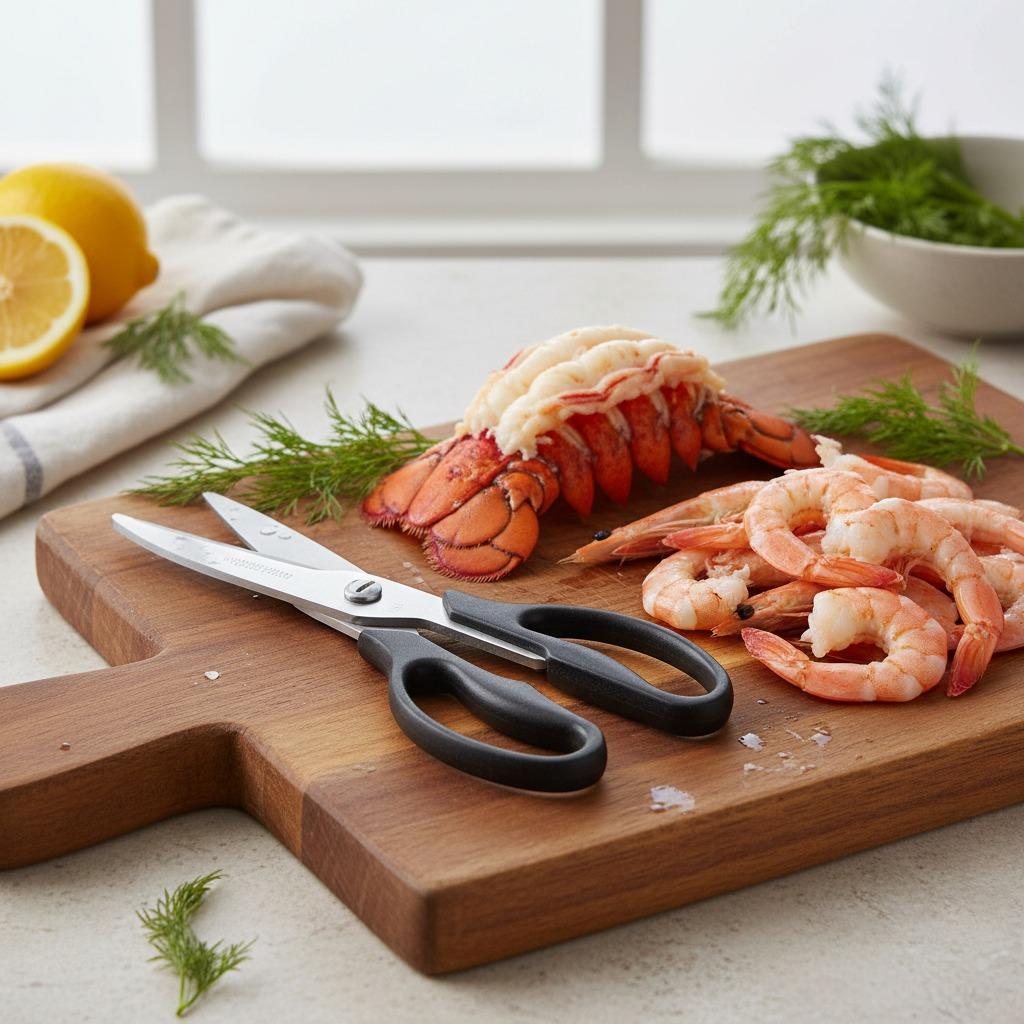
Kitchen shears, also called kitchen scissors, are practical tools for preparing seafood at home. Compared with a knife, shears can give you more control when cutting slippery shrimp shells or the curved shell of a lobster tail. The goal is simple: open the shell cleanly, remove the vein when needed, and keep the meat in good condition for grilling, steaming, boiling, stir-frying, or baking.
This guide explains how to clean shrimp and lobster tails with kitchen shears, what to look for when choosing a pair, and how to wash them after handling raw seafood. It is written for home cooks who want a safer, cleaner workflow without overcomplicating seafood prep.
Key Takeaways
- Use sharp kitchen shears to cut shells; dull blades can crush shell and tear meat.
- For shrimp, cut along the back so you can peel and devein in one motion.
- For lobster tails, cut the top shell down the center, then open the shell gently.
- Wash shears immediately after seafood prep and dry them well before storage.
- Choose shears that feel stable in your hand and are easy to clean.
Why Kitchen Shears Work Well for Seafood
Shrimp and lobster have protective shells that are firm enough to be awkward with a small knife but not so hard that they require heavy equipment. Kitchen shears solve this problem by cutting from above with a controlled snipping motion. This reduces sliding on the cutting board and helps you follow the natural line of the shell.
They are especially useful when you want to leave seafood attractive for presentation. With shrimp, you can keep the tail segment on if desired. With lobster tails, you can open the top shell while keeping the tail shape intact. The shears also let you trim legs, feelers, or ragged shell edges without switching tools.
Before You Start: Tools and Setup
Prepare your workspace before opening the seafood package. Raw seafood can drip, and shells can scatter, so a simple setup makes the job faster and cleaner.
- Kitchen shears that are sharp and comfortable to grip
- Cutting board reserved for seafood or easy to sanitize
- Bowl for shells, legs, and waste
- Cold running water for rinsing
- Paper towels or a clean towel for drying seafood before cooking
- Separate plate or tray for cleaned shrimp or lobster tails
If you are buying kitchen shears mainly for seafood, check whether the handles fit your hand securely, whether the blades close evenly, and whether the design allows thorough cleaning around the hinge. Do not assume any material grade, dishwasher suitability, or special feature unless the supplier clearly states it in the product information.
How to Clean Shrimp with Kitchen Shears
Shrimp are quick to clean once you understand the line to cut. The most common approach is to cut along the back of the shell, where the vein is usually located. Work with fresh or fully thawed shrimp, because partially frozen shrimp are harder to cut neatly.
- Rinse the shrimp. Hold each shrimp under cold water to remove loose grit or shell fragments.
- Remove the head if attached. Snip or twist it off just behind the head area, depending on how the shrimp is sold.
- Cut the shell along the back. Insert the tip of the shears under the shell and cut from the head end toward the tail. Avoid cutting deeply into the meat.
- Peel the shell and legs. Pull the opened shell away with your fingers. Leave the last tail segment on if you want a handle for dipping or presentation.
- Remove the vein. Lift out the dark vein with the tip of the shears or your fingers, then rinse briefly.
- Dry before cooking. Pat the shrimp dry so it sears or browns better in a pan.
For small shrimp, you may prefer to remove the shell by hand after making only a short cut. For larger shrimp, a full cut along the back usually makes peeling and deveining easier.
How to Clean Lobster Tails with Kitchen Shears
Lobster tails are firmer than shrimp, but the method is still straightforward. The key is to cut the top shell, not the underside, and to open the shell slowly so the meat stays in one piece.
- Rinse the tail. Use cold water and pat the outside dry enough that it does not slip.
- Position the tail. Place it shell-side up with the fan tail pointing away from you.
- Cut down the center of the top shell. Start at the open end and cut toward the fan tail. Stop before cutting through the tail fan.
- Open the shell. Use your fingers to gently spread the shell along the cut line.
- Loosen the meat. Lift the meat slightly from the shell if your recipe calls for butterflying, or leave it inside for steaming or boiling.
- Check for a vein. If visible, remove it before cooking.
If the shell feels too hard to cut, do not force the shears with your hand close to the blade. Reposition the tail, make shorter snips, and keep your fingers away from the cutting path.
Shrimp vs. Lobster Tail Prep: Quick Comparison
| Prep Point | Shrimp | Lobster Tail |
|---|---|---|
| Main cut | Along the back of the shell | Down the center of the top shell |
| Typical goal | Peel and devein cleanly | Open shell and loosen meat |
| Best technique | Light, shallow snips | Short, firm snips through shell |
| Common mistake | Cutting too deep into the meat | Cutting through the tail fan |
| Presentation option | Leave tail segment on | Butterfly meat over shell |
| Cleanup concern | Small shells and legs | Sharp shell edges |
How to Choose Kitchen Shears for Seafood Prep
Not every pair of household scissors is suitable for seafood. A seafood-friendly pair should feel strong enough to cut shell without twisting, and the blades should meet cleanly from base to tip. If you are comparing products, look for clear answers to these questions:
- Are the shears intended for food contact and kitchen use?
- Can the hinge area be cleaned thoroughly after raw seafood prep?
- Does the handle provide a secure grip when hands are damp?
- Are care instructions, washing guidance, and safety warnings provided?
- Does the supplier state the blade material and any relevant product features clearly?
Some kitchen shears include features such as serrated blade sections, notches, or built-in openers, but features vary by model. Base your choice on confirmed product information and the type of food you prepare most often.
Cleaning, Hygiene, and Safety Tips
Seafood prep requires careful cleaning because juices can remain around blade edges and hinges. Wash kitchen shears as soon as you finish cutting. Use hot, soapy water, scrub the hinge area, rinse well, and dry completely. If the product instructions allow dishwasher cleaning, follow those instructions; if not, hand washing is the safer default.
- Keep raw seafood tools separate from ready-to-eat foods.
- Do not place dirty shears back in a utensil drawer.
- Use a stable cutting board so shells do not slide.
- Cut away from your fingers, especially with lobster shells.
- Store shears dry to reduce odor and residue buildup.
Practical FAQ
Can I use regular scissors instead of kitchen shears?
Regular craft or office scissors are not designed for food prep and may be difficult to clean safely. Use shears intended for kitchen tasks.
Should I clean shrimp before or after cooking?
Most cooks clean and devein shrimp before cooking, especially for stir-fries, grilling, or sautéing. Some recipes cook shrimp in the shell for flavor, then peel after cooking.
Do I have to remove the shrimp vein?
It is commonly removed for appearance and texture. If the vein is visible or gritty, removing it is recommended.
Can kitchen shears cut whole lobster claws?
Kitchen shears are useful for lobster tails and some thinner shell areas. Hard claws may require a lobster cracker or another appropriate tool.
How do I stop lobster meat from tearing?
Make small cuts through the shell, open it gradually, and avoid pulling the meat forcefully while it is still attached.
Final Thoughts
Kitchen shears make shrimp and lobster prep more controlled and less messy when used correctly. Focus on shallow cuts, steady hand placement, and immediate cleanup. With a little practice, you can prepare seafood neatly while preserving the texture and appearance of the meat.
