




Kitchenware Manufacturer Insights for Importers: How Yangjiang Factories Ensure Quality
For importers, choosing a kitchenware manufacturer is not only about unit price. A delayed shipment, inconsistent finish, weak packaging, or product that does not match the approved sample can affect retail launches and customer trust. This is why buyers sourcing from Yangjiang should evaluate how a factory manages materials, production, inspection, packaging, and communication before placing a bulk order.
Yangjiang is widely recognized as a production center for kitchen tools, scissors, and household products. The area benefits from an established supply chain, experienced labor, and many factories familiar with export orders. Bonet Houseware is connected with a broad range of kitchen and household product categories, including scissors, but importers should still confirm product details, customization scope, lead time, and inspection standards for each project.
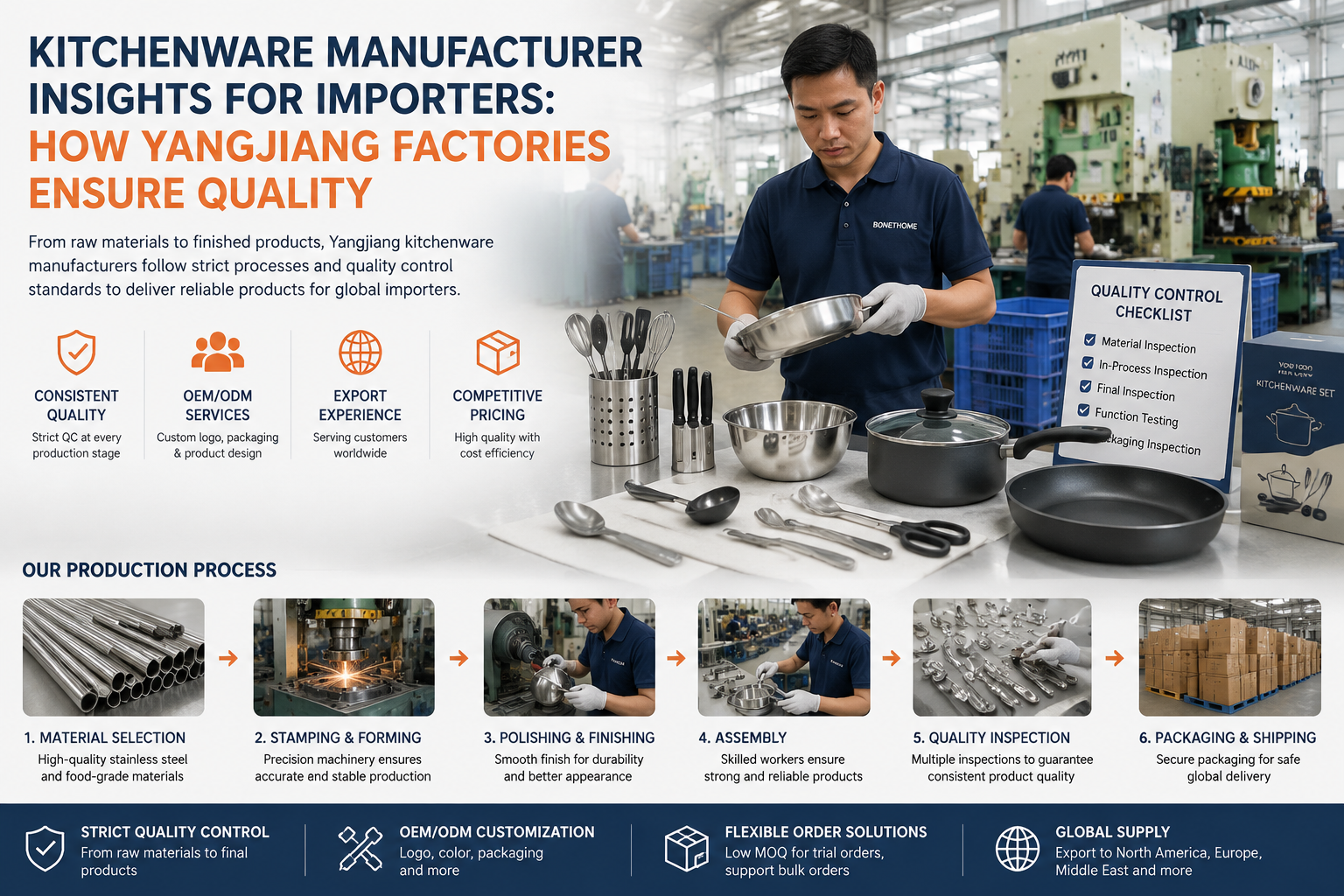
Key Takeaways
- Yangjiang is a mature sourcing base for kitchen tools, scissors, and household products.
- Importers should compare factories by process control, sample accuracy, packaging experience, and communication, not price alone.
- Quality control should cover incoming materials, in-process checks, final inspection, and packaging review.
- For OEM or private label orders, confirm artwork files, logo methods, packaging structure, carton marks, and approval samples in writing.
Why Yangjiang Is Important for Kitchenware Sourcing
Yangjiang remains attractive to overseas buyers because the local supply chain is concentrated. A sourcing project may require metal parts, plastic or silicone components, polishing, assembly, packaging, and export coordination. When these resources are available within a manufacturing cluster, suppliers can often respond more efficiently to changes in product style, packaging requirements, or order planning.
However, location alone does not guarantee quality. Two factories in the same city may have very different management standards. Importers should ask how a supplier controls subcontracted processes, how it records inspection results, and whether it can reproduce the approved sample during mass production. A reliable kitchenware factory for importers should be able to explain its process clearly, even when commercial details such as MOQ or lead time vary by product.
From Material Selection to Finished Kitchenware
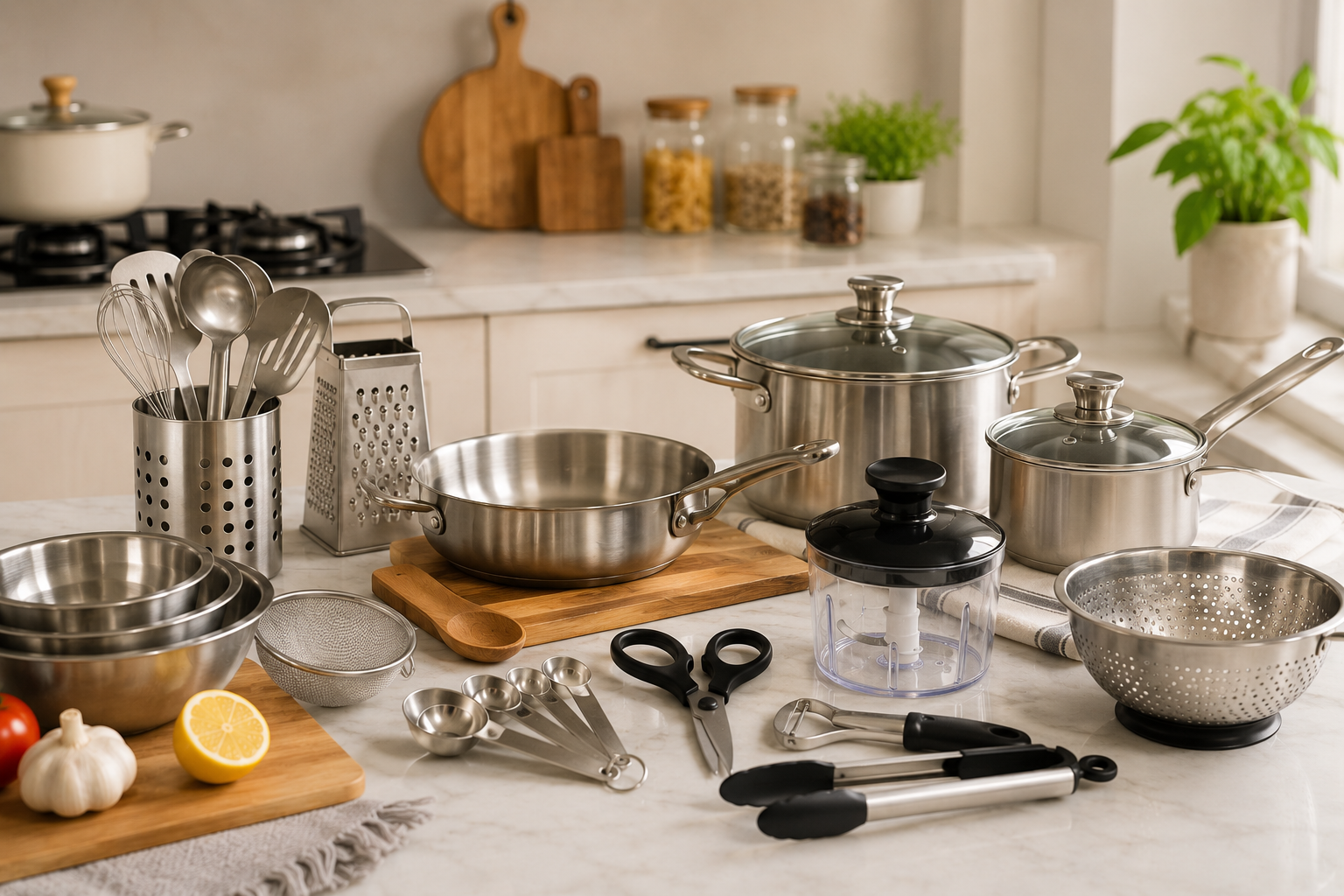
The original sourcing process usually begins with material selection. Kitchenware may involve stainless steel, plastics, silicone components, or aluminum alloys, depending on the item. Importers should avoid assuming that every product uses the same grade or construction. Instead, confirm the material description, finish, thickness, handle design, color tolerance, and intended use before sample approval.
After materials are prepared, production may include stamping, forming, cutting, polishing, surface treatment, riveting, assembly, and functional checking. For products such as kitchen scissors, forming accuracy and cutting performance are especially important. For other tools, the key issue may be handle strength, edge smoothness, balance, or how the product sits in retail packaging.
Before mass production begins, buyers should request a golden sample or signed approval sample. This sample becomes the reference for shape, color, finish, branding, packaging, and basic function. If the sample is changed later, the updated version should be documented so the factory, buyer, and inspection team are checking against the same standard.
Quality Control Stages Importers Should Verify
A strong quality control system reduces the risk that finished goods differ from the approved sample. Importers should ask suppliers to explain each inspection stage in plain terms and identify who is responsible for the decision to release goods.
| QC Stage | What to Check | Questions for the Supplier |
|---|---|---|
| Incoming materials | Material appearance, basic dimensions, color, and supplier consistency | How are materials checked before production starts? |
| In-process inspection | Dimensions, assembly accuracy, surface finish, and function | At which production steps are defects separated or corrected? |
| Final inspection | Appearance, quantity, function, labeling, and packaging | What sampling method or checklist is used before shipment? |
| Packaging review | Retail pack, inner box, master carton, carton marks, and protection | Can packaging be tested or reviewed before mass packing? |
For higher-risk projects, buyers may also arrange third-party inspection before balance payment or shipment. This is especially useful for new suppliers, first production runs, private label launches, or promotional orders with strict delivery windows.
OEM and Private Label Details to Confirm Early
OEM and private label kitchenware orders require more coordination than standard stock items. Logo placement, printing method, packaging artwork, barcode position, instruction language, and carton markings can all cause delays if confirmed too late. Importers should prepare editable artwork files and ask the supplier what file format, color references, and approval steps are needed.
- Confirm whether the supplier can support logo printing or customized packaging for the selected item.
- Ask whether tooling, molds, printing plates, or packaging samples involve separate costs.
- Approve pre-production samples before mass production when branding or packaging is customized.
- Define acceptable tolerances for color, surface finish, and packaging alignment.
- Clarify whether product development support is available for new designs.
Because MOQ, production time, and customization options depend on the item and order requirements, importers should treat these as supplier questions rather than fixed assumptions.
Packaging for International Shipping and Retail
Packaging has two jobs: protect the goods during transport and present the product clearly for resale. Common kitchenware packaging formats include color boxes, blister packs, hanging cards, OEM packaging, and private label packaging. The right choice depends on the sales channel, product weight, sharp edges, retail display method, and destination requirements.
For export orders, buyers should review more than the retail pack. Master carton strength, inner protection, carton size, gross weight, shipping marks, and pallet requirements can all affect damage rates and logistics costs. If products have pointed, sharp, or polished surfaces, ask how the supplier prevents scratches, deformation, or movement inside the carton.
Which Buyers Benefit Most from Factory Direct Sourcing?
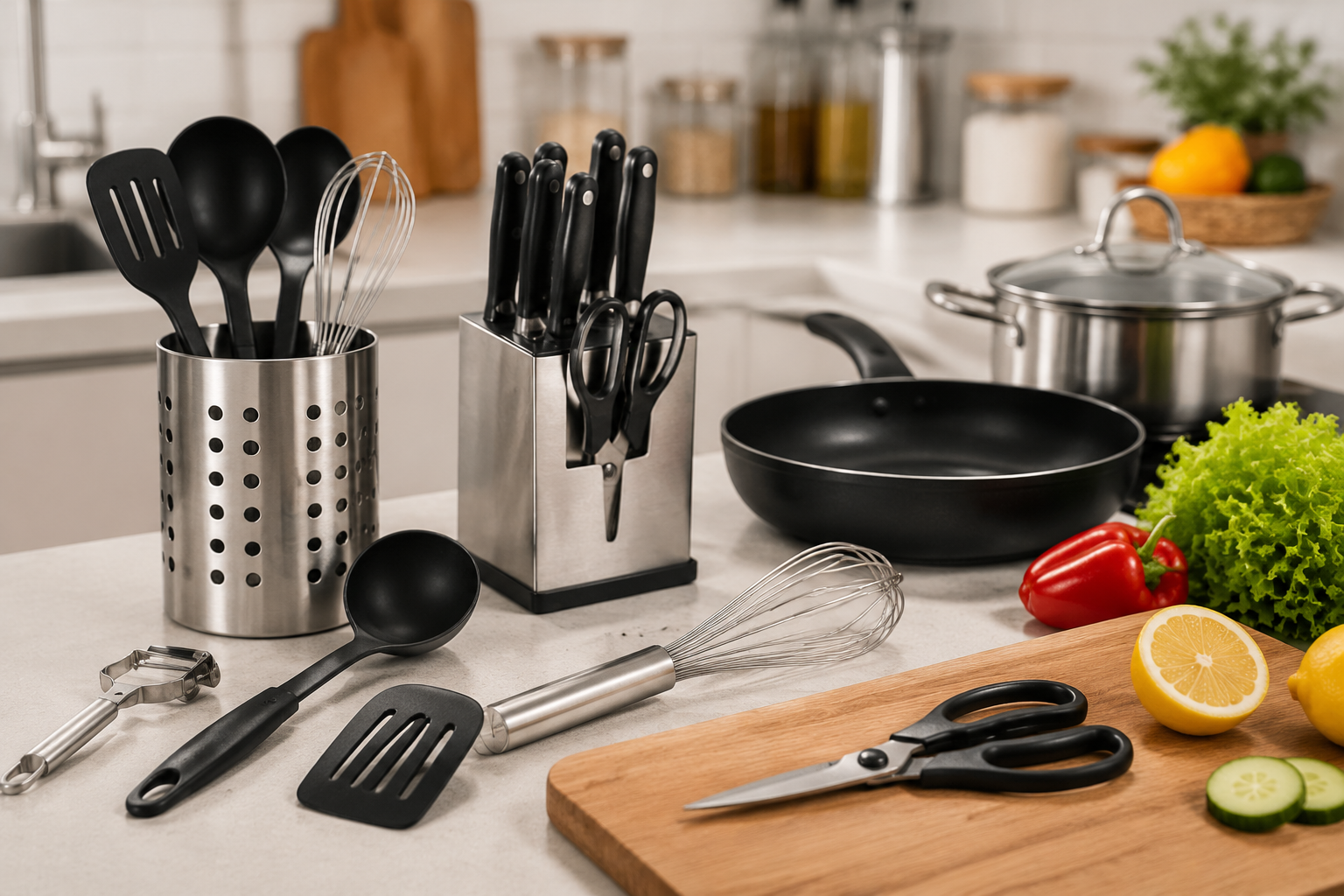
Factory direct sourcing is most useful for importers, distributors, retail chains, e-commerce brands, and OEM buyers that need repeatable quality across product lines. Distributors may focus on stable supply and carton-level consistency. Retail chains often need packaging uniformity and reliable replenishment. Online brands may care most about private label presentation, product photography consistency, and low defect rates after delivery.
Before choosing a supplier, ask for product category experience, sample availability, packaging options, order process, communication workflow, and inspection support. Bonet Houseware product categories and scissors collections can be reviewed through the company website, but project-specific details should be confirmed directly with the sales team.
Practical FAQ for Importers
What should I ask before requesting a quotation?
Provide product photos or drawings, target material, size, packaging type, order quantity, destination market, and branding needs. Then ask the supplier to confirm what is feasible.
Can I request samples before a bulk order?
Yes, samples are commonly used for quality evaluation. Confirm sample cost, freight, preparation time, and whether the sample represents mass production quality.
How do I avoid quality differences between sample and shipment?
Keep an approved sample, create a written specification sheet, confirm packaging artwork, and arrange final inspection against the approved sample before shipment.
Do Yangjiang factories support OEM or ODM projects?
Many suppliers in the region work with OEM or ODM requirements, but capabilities vary. Ask about logo methods, packaging development, product changes, tooling needs, and approval steps.
How can I contact Bonet Houseware?
You can review company information at https://bonethome.com/about-us, browse product categories at https://bonethome.com/, view scissors at https://bonethome.com/scissors, or send an inquiry through https://bonethome.com/contact-us.
