




Ice Tray Manufacturing: From Basic Molds to Silicone Innovations
Ice tray manufacturing has moved far beyond the simple rigid mold found in many home freezers. Buyers now evaluate flexibility, cube release, storage efficiency, design consistency, and the drinking experience created by different ice shapes. For wholesalers, retailers, hospitality buyers, and OEM sourcing teams, the goal is not only to find an attractive tray, but to understand how a supplier controls material selection, mold design, production consistency, and packaging details.
The original market shift is clear: basic molds still serve everyday use, while silicone ice trays have become popular because they are flexible, reusable, and easier to release than many rigid alternatives. Some modern designs also include features such as stackable forms, easy-fill concepts, drainage details, or sphere cavities for slow-melting ice used in cocktails, whiskey, and other beverages. This guide explains what to look for when comparing products and suppliers.
Key Takeaways
- Silicone ice trays are valued for flexible release, reusable performance, and a broad range of shapes.
- Sphere ice molds are popular for beverages because larger ice forms can melt more slowly than small cubes.
- B2B buyers should ask suppliers for material details, production tolerances, packaging options, and compliance documents instead of assuming specifications.
- A good sourcing decision balances user experience, freezer storage, mold durability, price structure, and quality control.
How Ice Tray Manufacturing Has Evolved
Traditional ice trays were mainly designed to freeze water into small cubes as cheaply and efficiently as possible. They were often rigid, easy to stack, and simple to manufacture, but the user experience could be inconsistent. Cubes might crack, stick, or require twisting that eventually weakens the tray.
Modern ice tray manufacturing places more emphasis on release performance and customized shapes. Silicone has become a major material choice because it bends around the frozen cube or sphere, helping users remove ice without aggressive force. This is especially relevant for premium beverage presentation, where customers may want clean cubes, large blocks, or spherical ice balls.
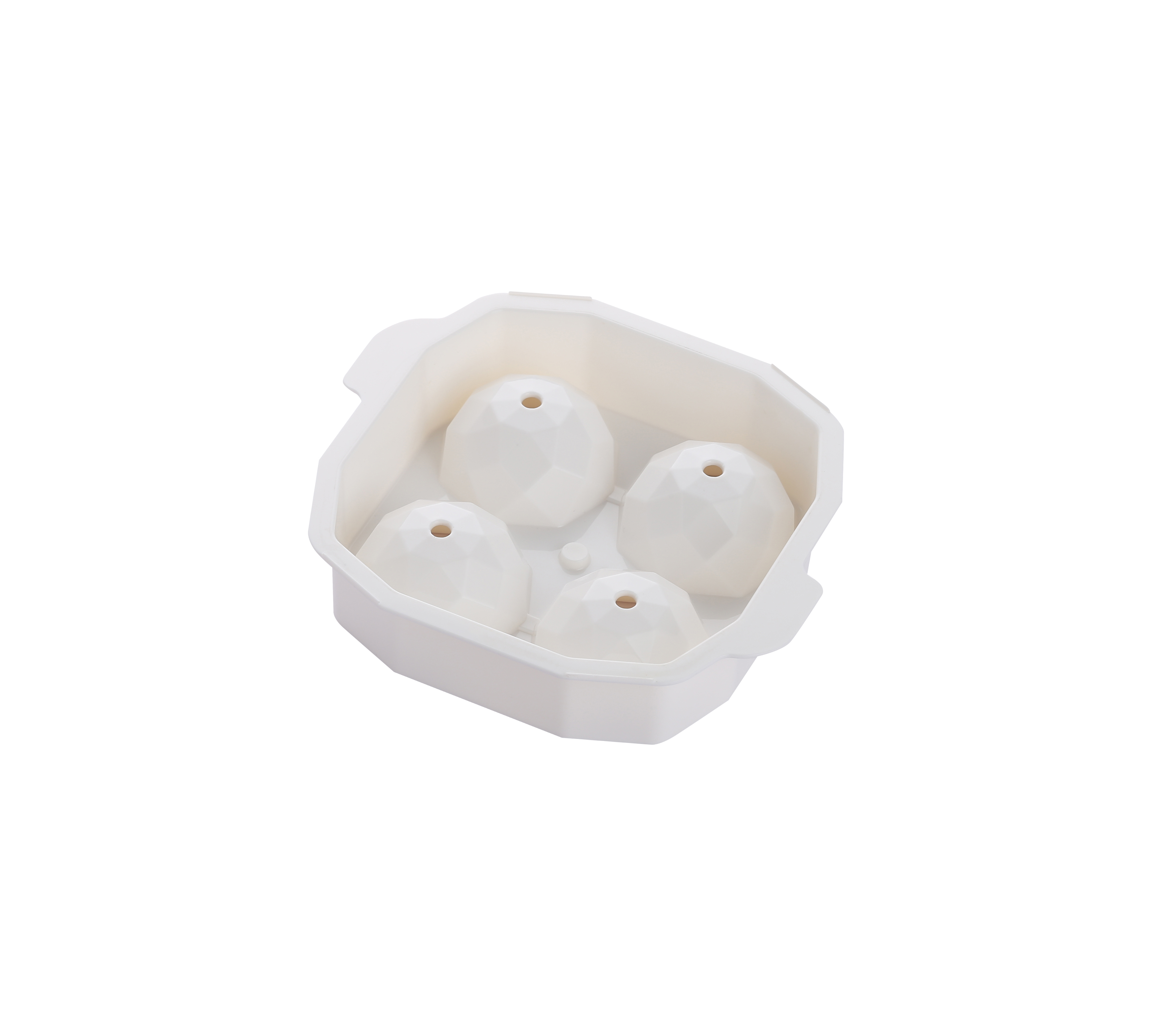
Manufacturers have also explored details such as reinforced rims, lids, compact footprints, and multi-cavity formats. The Quadruple Sphere Ice Mold concept mentioned in the source article reflects this trend: a tray designed to produce multiple spherical ice pieces for slower dilution and improved drink presentation.
Why Silicone Ice Trays Are Popular
Silicone ice trays are widely used because they solve a common problem: removing ice without breaking either the cube or the tray. Their flexibility allows users to press from the bottom or peel the mold away from the ice. This feature is useful for both home users and commercial beverage settings where consistent presentation matters.
Another advantage is design freedom. Silicone can be formed into standard cube cavities, oversized blocks, spheres, novelty shapes, or more complex molds with filling ports. Some designs use hollow ports or fill openings to help water enter and excess water drain, which can support cleaner shapes when used correctly. Stackable layouts can also help save freezer space, although buyers should confirm whether a lid or structural support is included if stacking is important.
When sourcing silicone ice trays, do not rely only on the phrase “food-grade” in a product listing. Ask the supplier which material is used, what documents are available, whether the product is intended for freezer use, and what care instructions should be printed for end users.
Comparing Common Ice Tray Options
| Option | Best Use | Buyer Advantages | Questions to Ask Supplier |
|---|---|---|---|
| Basic rigid cube tray | Everyday household ice | Simple design, easy nesting, often cost-efficient | What material is used, and how is cracking resistance checked? |
| Silicone cube tray | Home, retail, and light hospitality use | Flexible release, reusable, available in many shapes | What material documentation and freezer-use guidance can be provided? |
| Large cube mold | Cocktails, whiskey, slow dilution | Creates larger ice pieces with stronger presentation | What are the cavity dimensions and expected finished ice size? |
| Sphere ice mold | Premium beverages and gifting | Produces rounded ice balls that can melt more slowly | How does the filling method work, and how consistent is the sphere shape? |
| Lidded or stackable tray | Freezers with limited space | Improves storage and may reduce spills | Is the lid rigid or flexible, and is it designed for stacking when filled? |
How to Choose an Ice Cube Trays Supplier
For B2B purchasing, supplier selection should go beyond catalog photos. Ice trays are simple products, but quality problems can appear in surface finish, odor, poor fit between parts, difficult release, weak rims, inconsistent colors, or packaging damage during transport. A reliable supplier should be able to explain how the product is made and what checks are performed before shipment.
Before placing an order, ask practical sourcing questions:
- What material is used, and can the supplier provide relevant documentation for the target market?
- Are samples available for release testing, freezer testing, and packaging review?
- What cavity sizes, shapes, colors, and packaging formats can be customized?
- What tolerances are expected for finished product dimensions and weight?
- How are defects such as flash, deformation, odor, and color variation handled?
- What are the available options for retail packaging, barcode labeling, instructions, and carton packing?
- What lead times, order quantities, and payment terms apply to the specific design?
These questions help prevent misunderstandings. If a product will be sold under your brand, request clear usage instructions and care warnings from the supplier so consumers know how to fill, freeze, release, clean, and store the tray correctly.
Design Details That Affect User Experience
Small design choices make a large difference in how an ice tray performs. A tray that looks good online may be frustrating if the cavities are too deep, the rim is too soft, or the lid does not fit securely. For silicone trays, the balance between flexibility and structure matters. Very soft silicone can release ice easily but may spill when carried to the freezer. A stiffer frame or tray support can improve handling.
For sphere molds, the filling design is especially important. Users need a practical way to fill the mold without trapping too much air or spilling water. Some sphere molds include ports for filling and drainage. Buyers should test whether the port size is easy to use, whether the finished spheres separate cleanly, and whether the mold is simple to clean after repeated use.
Stackability also deserves attention. A tray advertised as stackable should remain stable when filled with water, not only when empty. If stackability depends on a lid, check whether the lid seals, rests loosely, or simply acts as a cover.
OEM and Wholesale Sourcing Considerations
OEM and wholesale buyers often need differentiation without adding unnecessary complexity. Custom colors, logo placement, packaging design, bundle sets, and cavity shape variations may all be possible, but each option can affect tooling, cost, lead time, and inspection criteria. Instead of assuming that a supplier can match a sample exactly, provide drawings, reference samples, color standards, and packaging artwork early in the quotation process.
It is also wise to define acceptance standards before production. For example, confirm what level of color variation is acceptable, how many units will be inspected, how packaging will be drop-tested or checked, and what happens if a batch does not meet the agreed standard. These details are more useful than broad claims of “high quality.”
Practical FAQ
Are silicone ice trays better than plastic trays?
They are better for many users who want easier ice release and more shape options. Rigid trays can still be useful when low cost, nesting, and simple cube production are the main priorities.
Why are sphere ice molds popular?
Large spherical ice pieces have a smaller surface area relative to volume than many small cubes, so they can dilute drinks more slowly. They are also visually appealing for cocktails and whiskey.
What should buyers verify before ordering from an ice tray manufacturer?
Verify material information, sample quality, mold dimensions, packaging structure, customization limits, lead time, order terms, and any documents required for your sales market.
Can ice trays be customized for private label sales?
Many suppliers offer some level of customization, such as color or packaging, but buyers should ask about tooling needs, artwork requirements, minimum quantities, and sample approval steps.
How can consumers extend the life of silicone ice trays?
Follow the supplier’s care instructions, avoid sharp tools when removing ice, clean the tray regularly, let it dry before storage, and do not expose it to conditions outside the stated use range.
Final Thoughts
Ice tray manufacturing now covers a wide range of products, from basic cube trays to flexible silicone molds and sphere ice designs. For buyers, the best choice depends on the target user, beverage application, retail positioning, and required quality controls. A careful sourcing process should include sample testing, clear product specifications, and direct questions about materials, production, packaging, and compliance documents. With that approach, ice cube trays can be selected not only for appearance, but for consistent everyday performance.
