




Identifying Signs of Blade Misalignment in Household Scissors and How to Fix Them
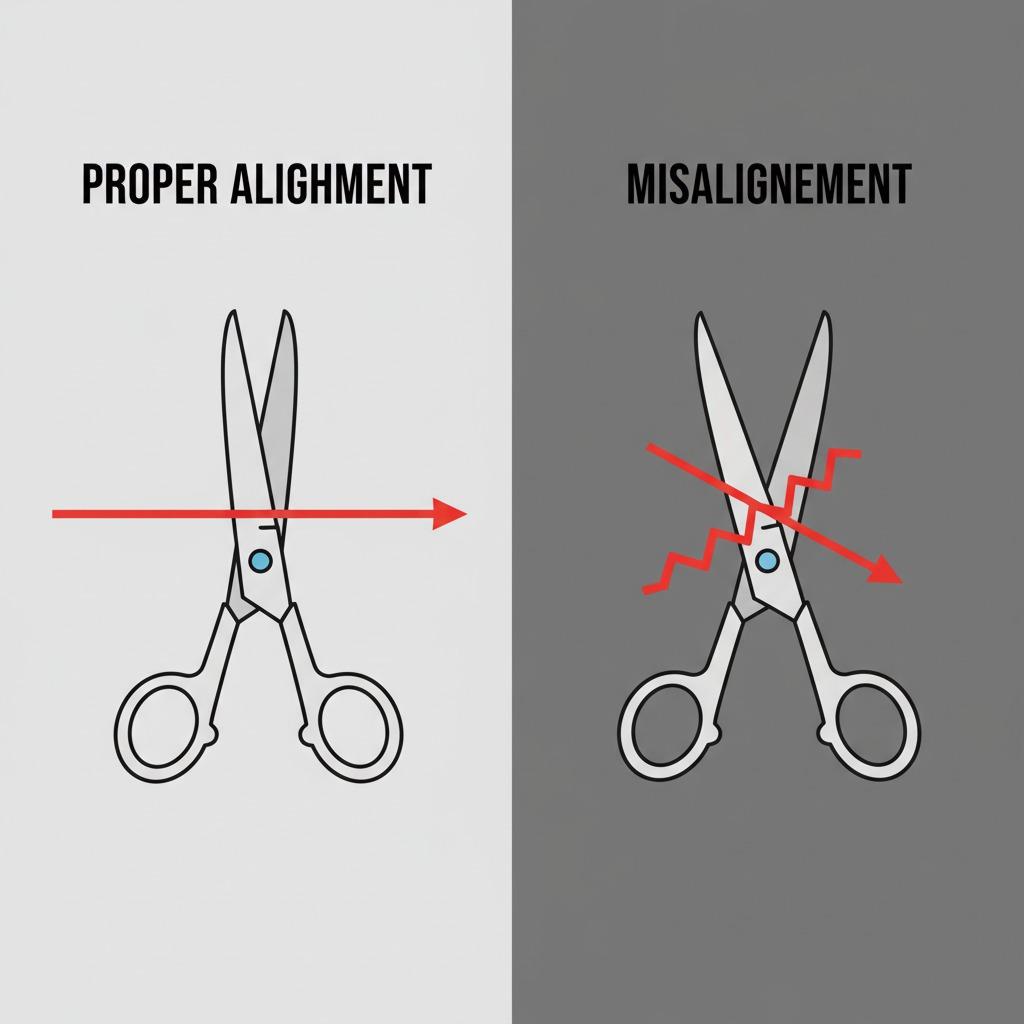
Household scissors are used for paper, packaging, light craft materials, kitchen labels, thread, and many other everyday jobs. When they stop cutting cleanly, the first assumption is often that the blades are dull. Dullness can be part of the issue, but poor blade alignment is just as common. If the two blades no longer meet at the correct angle, they may push material away, tear paper, pinch fabric, or feel stiff in the hand.
This guide explains how to recognize blade misalignment, how to make a careful pivot adjustment when the scissors have a screw, and when repair is not the best option. The goal is practical: cleaner cuts, safer handling, and longer useful life from your household scissors.
Key Takeaways
- Misaligned scissors often tear, fold, or pinch material instead of cutting it.
- A loose or overly tight pivot is one of the most common causes of poor alignment.
- Small adjustments are safer than forcing the blades or over-tightening the screw.
- Scissors with a rivet pivot may not be user-adjustable and may need replacement or professional service.
- Cleaning, dry storage, and using the right tool for the task help prevent alignment problems.
Why Blade Alignment Matters
Scissors cut because the two blades pass closely against each other. They do not work like a single knife edge. Instead, the cutting action depends on controlled contact along the blade length, from the area near the pivot toward the tips. If the blades separate, cross unevenly, or rub too hard, cutting performance drops quickly.
Good alignment helps the scissors grip the material just enough to shear it cleanly. Poor alignment can make even light paper feel difficult to cut. It can also create more hand strain because the user has to squeeze harder to complete a simple cut. For children, older adults, or anyone doing repeated craft or packaging tasks, that extra resistance can become frustrating and unsafe.
Common Causes of Misaligned Household Scissors
Misalignment can develop gradually or happen after one hard impact. Before adjusting anything, consider how the scissors have been used. Common causes include:
- A loose pivot screw: Repeated opening and closing can allow the screw to back out slightly.
- Over-tightening: A pivot that is too tight can make the blades bind and wear unevenly.
- Drops or impacts: Falling onto a hard floor can bend the blade relationship at the pivot or tip.
- Cutting unsuitable materials: Wire, thick plastic, heavy cardboard, or adhesive-backed materials can stress ordinary household scissors.
- Residue on the blades: Tape adhesive, food residue, or paper dust can make the blades feel misaligned even when the pivot is acceptable.
- Wear at the joint: Older scissors may develop play at the pivot that cannot be fully corrected by a simple adjustment.
Signs Your Scissors Are Misaligned
Use the table below as a quick diagnosis checklist. One symptom may have more than one cause, but several symptoms together usually point to an alignment or pivot problem.
| What You Notice | Likely Cause | What to Check First |
|---|---|---|
| Paper folds between the blades | Blades are separating during the cut | Look for a loose pivot or visible gap |
| Cut edges look jagged or torn | Uneven blade contact | Test from heel to tip on scrap paper |
| Scissors feel stiff or gritty | Pivot too tight or dirty | Clean the joint and check screw tension |
| Tips do not meet evenly | Blade twist, impact damage, or pivot play | Close blades slowly and inspect the tips |
| Cut starts well but fails near the tip | Gap toward the front of the blades | Hold closed scissors up to light and check spacing |
| Blades rattle when shaken gently | Loose screw or worn pivot | Confirm whether the pivot is adjustable |
Before You Adjust: Clean and Inspect
Many cutting problems improve after basic cleaning. Wipe the blades with a soft cloth. If adhesive residue is present, remove it carefully using a cleaner suitable for the blade material and handle material. Avoid soaking scissors unless the product instructions say it is safe, because trapped moisture around the pivot can encourage corrosion or stiffness.
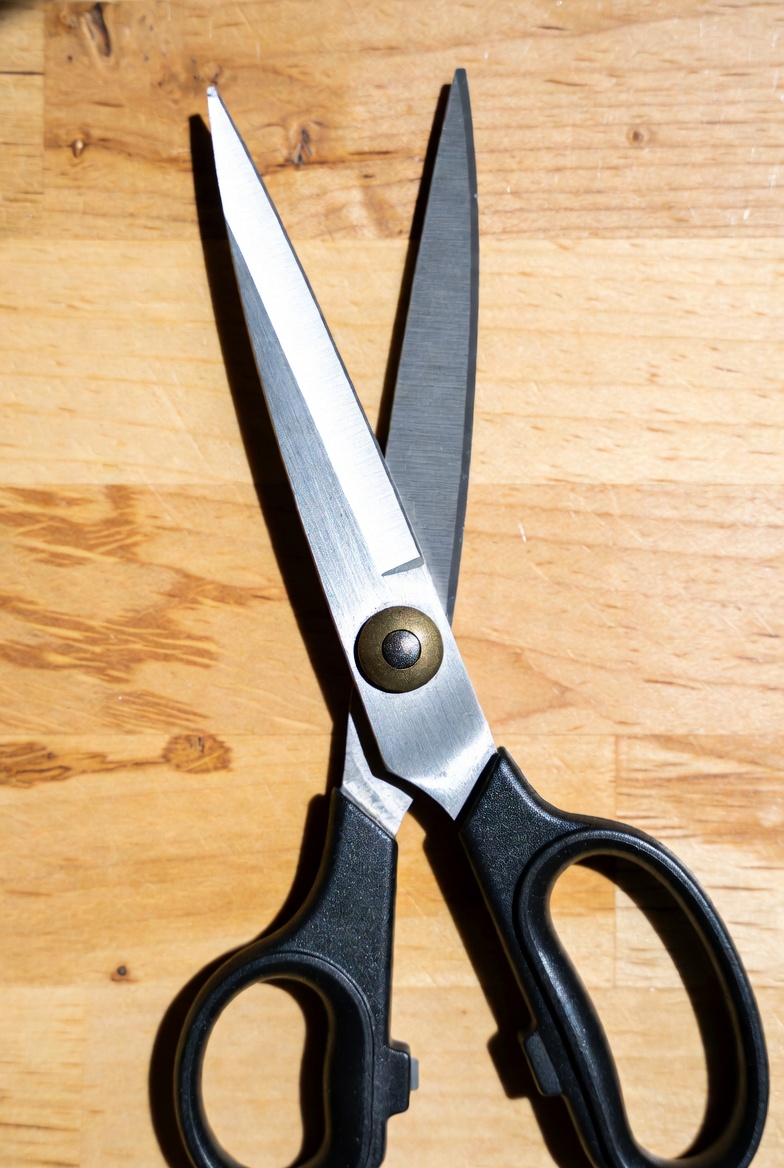
After cleaning, open and close the scissors slowly. Watch the blade movement rather than focusing only on how sharp the edges look. Check whether the pivot is a screw, a rivet, or a fixed fastener. A screw pivot can usually be adjusted at home. A rivet pivot is not designed for easy user adjustment, and forcing it may damage the scissors.
How to Adjust a Screw Pivot Safely
If your household scissors have a visible pivot screw, you can try a careful adjustment. Work slowly and test often. The aim is not to make the screw as tight as possible; the aim is smooth movement with consistent blade contact.
- Choose the correct screwdriver. Use a tip that fits the screw head well. A poor fit can strip the screw.
- Place the scissors on a stable surface. Keep the blades closed or partly open in a controlled position so they cannot slip.
- Turn in small increments. If the blades are loose, tighten clockwise by about one-eighth to one-quarter turn.
- Test the action. Open and close the scissors several times. They should move smoothly without wobbling.
- Make a test cut. Cut scrap paper from the base of the blades to the tips. Do not use your final material for testing.
- Fine-tune if needed. If the scissors still fold paper, tighten slightly. If they bind or feel hard to open, loosen slightly.
If the screw turns freely and will not hold its position, the threads may be worn. Do not add makeshift hardware unless it fits correctly and does not interfere with blade movement. For valuable or specialty scissors, ask a sharpening or repair professional.
When Adjustment Is Not Enough
Some scissors cannot be restored with a pivot adjustment. If a blade is visibly bent, the tips cross incorrectly, or the pivot area is damaged, forcing the tool may make it worse. Scissors used on very hard materials may also have edge damage that feels like misalignment. In that case, sharpening, repair, or replacement may be more practical.
For everyday household use, replacement can be the safer choice when the scissors no longer close reliably or require excessive hand pressure. A tool that slips, catches, or suddenly jumps through material can cause accidental cuts. If you are selecting new household scissors, check that the blades open smoothly, the handles feel comfortable, and the pivot has no obvious looseness before purchase.
Care Tips to Prevent Future Misalignment
Good habits reduce stress on the pivot and help the blades stay in working position. These simple routines are especially useful if the scissors are shared by several people at home.
- Use household scissors for suitable light-duty tasks, not wire, cans, or thick rigid plastic.
- Keep a separate pair for adhesive materials if you often cut tape or labels.
- Wipe the blades after cutting sticky, dusty, or damp materials.
- Store scissors closed in a drawer, holder, or sheath to protect the tips.
- Avoid dropping them onto tile, concrete, or other hard surfaces.
- Check the pivot occasionally and adjust only when there is a real performance issue.
Practical FAQ
How do I know if my scissors are dull or misaligned?
Dull scissors usually struggle across the whole cut and may leave fuzzy edges. Misaligned scissors often fold or pinch the material, especially near the tips, even if part of the blade still cuts. Clean the blades and check the pivot before assuming sharpening is needed.
Can I fix scissors with a rivet instead of a screw?
Most rivet pivots are not intended for simple home adjustment. You can clean the blades and pivot area, but hammering or squeezing the rivet can damage the tool. If the scissors are important or expensive, consult a repair professional.
Should I oil the pivot?
A tiny amount of light oil at the pivot can help if the action feels dry or squeaky. Wipe away excess oil so it does not transfer to paper, fabric, or food packaging.
Why do my scissors cut near the handle but not at the tip?
This often means the blades are not meeting evenly along their full length. Check for a loose pivot, tip damage, or a slight twist caused by dropping the scissors or cutting material that was too thick.
Is it safe to bend the blades back into place?
For ordinary household scissors, bending the blades by hand is risky. It can crack handles, damage the pivot, or create unsafe blade movement. Try cleaning and screw adjustment first. If the blades are bent, replacement is often the safer option.
Final Thoughts
Blade misalignment is a common reason household scissors stop cutting cleanly. The fix may be as simple as cleaning the blades and making a small pivot adjustment, but careful diagnosis matters. Look for folding, gaps, stiffness, uneven tips, and wobble before deciding what to do. With proper use, dry storage, and occasional inspection, a dependable pair of household scissors can remain easier and safer to use for everyday cutting tasks.
