




Stationery Scissors Manufacturing: Style, Quality, and Sourcing
Stationery scissors look simple, but for importers, wholesalers, office supply brands, and OEM buyers, they involve many practical decisions. A good pair must cut paper cleanly, feel comfortable in the hand, suit the target retail channel, and arrive with packaging that matches the buyer’s market. The original article highlighted the role of style, precision, and quality in stationery scissors manufacturing. This expanded guide turns that idea into a sourcing framework buyers can use when comparing a scissors factory, supplier, or ODM partner.
Bonet Houseware presents stationery scissors for office and workspace use, including designs with transparent grips and bold color accents. Before placing a wholesale or OEM order, however, buyers should verify every commercial and technical detail directly with the supplier, including materials, blade finish, packaging options, order quantities, lead time, and export documentation.
Key Takeaways
- Stationery scissors sourcing should balance cutting performance, handle comfort, appearance, packaging, and landed cost.
- Do not rely on product photos alone; request samples and test them on the materials your customers commonly cut.
- Ask the supplier to confirm blade material, handle material, dimensions, packing method, MOQ, lead time, and available OEM options.
- For export orders, clarify labeling, barcode, carton marks, compliance needs, and inspection standards before production begins.
What Makes Stationery Scissors Different from General Scissors?
Stationery scissors are usually designed for daily office, school, craft, and household paper-cutting tasks. Unlike heavy-duty kitchen or industrial scissors, they are expected to be lightweight, easy to control, and visually suitable for desks, pencil cases, retail shelves, or gift sets. Many buyers look for products that can cut paper, envelopes, labels, thin card, and simple craft materials without requiring much hand force.
For B2B sourcing, the main question is not whether a design looks attractive in a catalog. The question is whether that design fits a specific sales channel. A stationery chain may prefer clear retail packaging and bright colors. A corporate office supplier may prefer a more neutral color range and bulk packing. A brand owner may need private-label packaging, logo placement, or coordinated colors across a wider office supply collection.
Design and Style Considerations for Wholesale Buyers
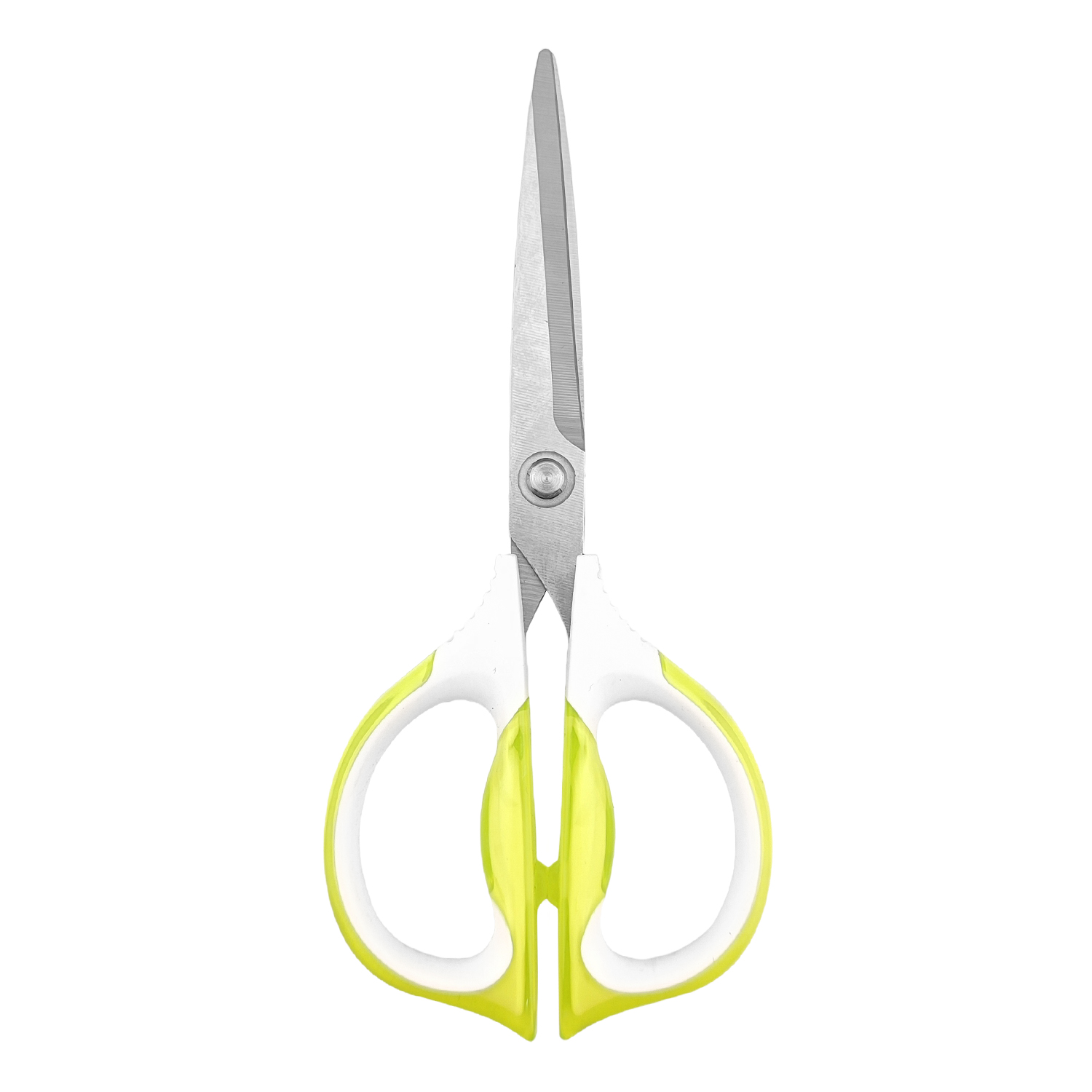
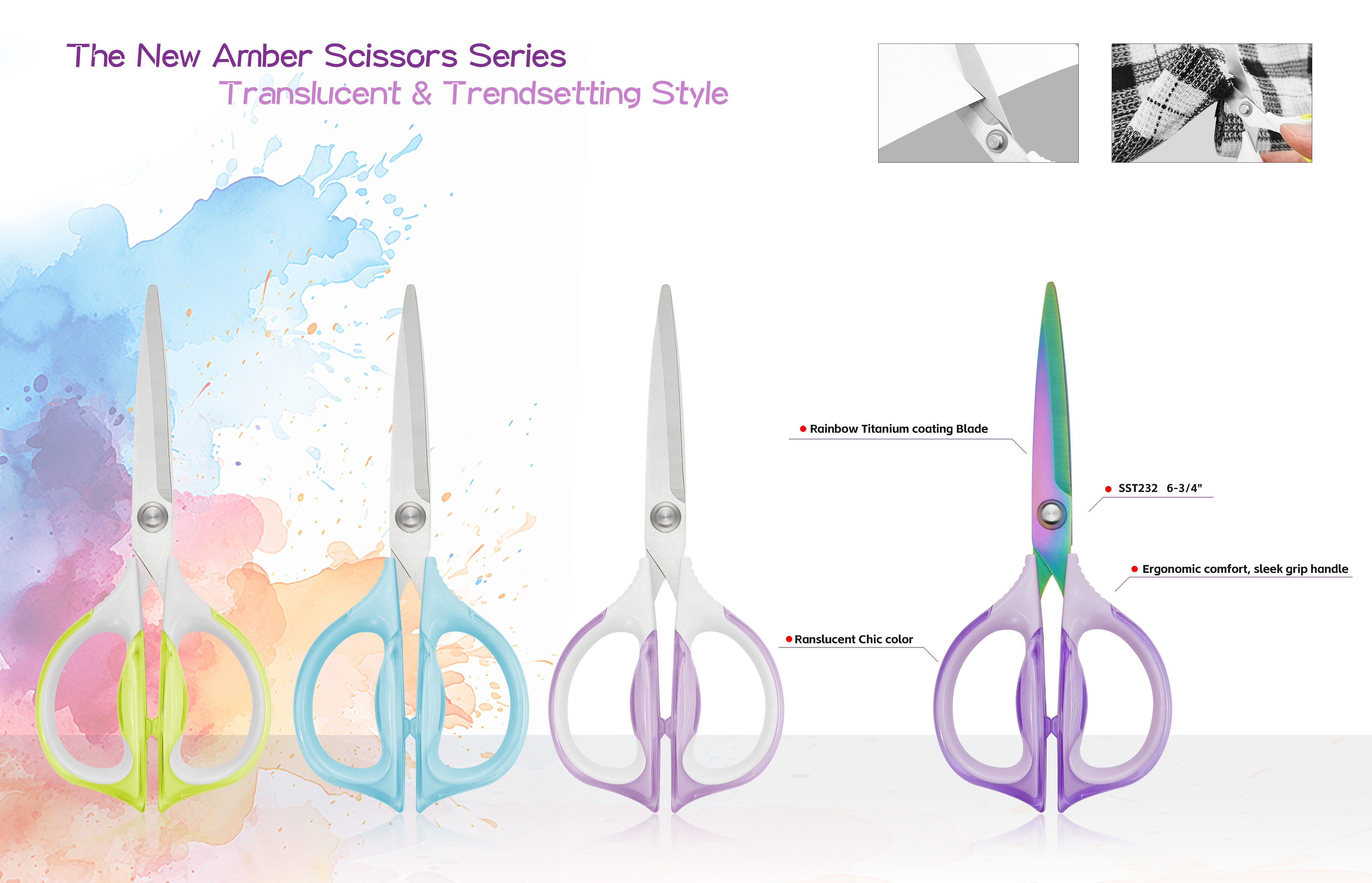
The original article described modern aesthetics, transparent grips, and lemon-yellow accents. Visual design matters because scissors are often impulse-friendly stationery products. Clear handles, color inserts, soft tones, or bold accents can help a product stand out. Still, style should not compromise comfort or usability.
When reviewing a stationery scissors design, check the handle opening size, grip surface, finger comfort, and left-hand or right-hand suitability if that is important for your market. Ask whether the same model can be produced in alternative colors, whether color matching is based on a standard reference system, and whether the supplier can provide pre-production samples before mass production. If the product will be sold online, confirm that the appearance in photos accurately reflects the actual color and transparency of the handle.
Blade Quality, Cutting Performance, and Safety Checks
The source article referred to stainless steel blades, but buyers should always ask the supplier to confirm the exact blade material and finish for the product being quoted. Material grade, blade thickness, hardness, edge treatment, rivet quality, and assembly alignment can all affect cutting feel and service life. If the supplier uses terms such as stainless steel, high quality, or precision, request written specifications and sample testing rather than treating those terms as final proof.
Practical checks can be simple but revealing. Cut standard copy paper, folded paper, thin card, adhesive labels, and packaging tape if those uses match your customers. Look for tearing, blade separation, rough movement, loose pivot points, and uneven tips. Open and close the scissors repeatedly to evaluate smoothness and hand fatigue. For children’s, school, or regulated market products, ask what safety requirements apply and what documents the supplier can provide; do not assume compliance without confirmation.
Supplier Comparison Checklist
| Selection Area | What to Check | Questions to Ask the Supplier |
|---|---|---|
| Product specification | Blade material, handle material, size, weight, tip style | Can you provide a written specification sheet for this exact model? |
| Cutting performance | Clean cuts, blade alignment, smooth opening and closing | Can you send samples for paper, card, and label cutting tests? |
| Design options | Color, transparent grip, logo area, packaging artwork | Which elements are customizable for OEM or private label orders? |
| Quality control | Incoming materials, assembly checks, final inspection | What inspection criteria are used before shipment? |
| Export readiness | Carton packing, labels, barcodes, documents | Which export documents and packing details can be supported? |
| Commercial terms | MOQ, lead time, payment terms, sample cost | What changes if the order includes custom color or packaging? |
OEM and ODM Questions to Clarify Early
For OEM stationery scissors, small details can affect cost and schedule. Before asking for a final quotation, prepare a clear request including target size, handle color, blade finish preference, packaging type, estimated order quantity, delivery market, and any labeling requirements. If you are developing a coordinated stationery range, ask whether the same supplier can keep colors consistent across multiple products.
- Request current product photos, sample availability, and a specification sheet.
- Confirm which parts can be customized: handle color, logo, packaging card, barcode, or carton mark.
- Ask whether tooling changes are needed for any shape or structure modification.
- Clarify sample lead time, production lead time, and approval steps.
- Define acceptable quality limits, inspection method, and responsibility for defects.
Packaging, Export, and Retail Presentation
Packaging is part of the product experience and part of logistics planning. A retail buyer may need a blister card, hanging card, paper card, or display-ready carton. A wholesaler may prefer simpler packing that reduces cost and carton volume. Online sellers should consider protection during parcel delivery and whether the packaging photographs well.
Ask the supplier for carton dimensions, packing quantity, gross weight, net weight, and pallet suggestions if needed. If your market requires specific warnings, recycling marks, importer information, or language versions, provide artwork instructions early. For branded orders, proofread packaging carefully before production, including barcode numbers, model names, color descriptions, and contact information.
How to Evaluate Samples Before Ordering
A sample review should be structured, not based only on first impressions. Create a simple scoring sheet for appearance, cutting performance, handle comfort, blade movement, packaging quality, and consistency between samples. If the scissors will be sold under your brand, compare the sample with competing products in the same price segment.
It is also useful to test several pairs, not only one. Open and close each pair repeatedly, check for burrs or sharp edges where they should not be, and inspect the pivot for looseness. If the handle uses transparent material or bright colors, examine whether the finish is clean and whether any visible marks would be acceptable for your sales channel.
Practical FAQ
What information should I send when requesting a quotation?
Send the target size, intended use, order quantity, destination market, packaging preference, logo or artwork needs, and any required documents. Photos or reference products help the supplier understand your expectations.
Can stationery scissors be customized for private label orders?
Many suppliers offer some level of customization, but available options vary. Ask specifically about logo placement, handle colors, packaging artwork, barcode labels, and whether any customization affects MOQ or lead time.
How can I judge cutting quality before mass production?
Request samples and test them on the materials your customers will cut. Check for clean edges, smooth blade movement, comfortable grip, tip alignment, and consistency across several pairs.
Should I ask about stainless steel grade?
Yes. If blade material is important for your market, ask the supplier to confirm the exact material and finish in writing. Do not rely only on a general product description.
What should be confirmed before shipment?
Confirm approved samples, final artwork, carton marks, packing quantity, inspection criteria, delivery terms, and export documents. Clear confirmation reduces disputes and helps keep the order aligned with buyer expectations.
Final Sourcing Advice
Stationery scissors manufacturing combines practical cutting performance with design and retail presentation. For buyers, the best results come from clear specifications, sample testing, and direct questions about customization and quality control. A transparent grip or bright accent color may attract attention, but long-term value depends on consistent production, comfortable use, suitable packaging, and well-managed communication with the supplier.
