




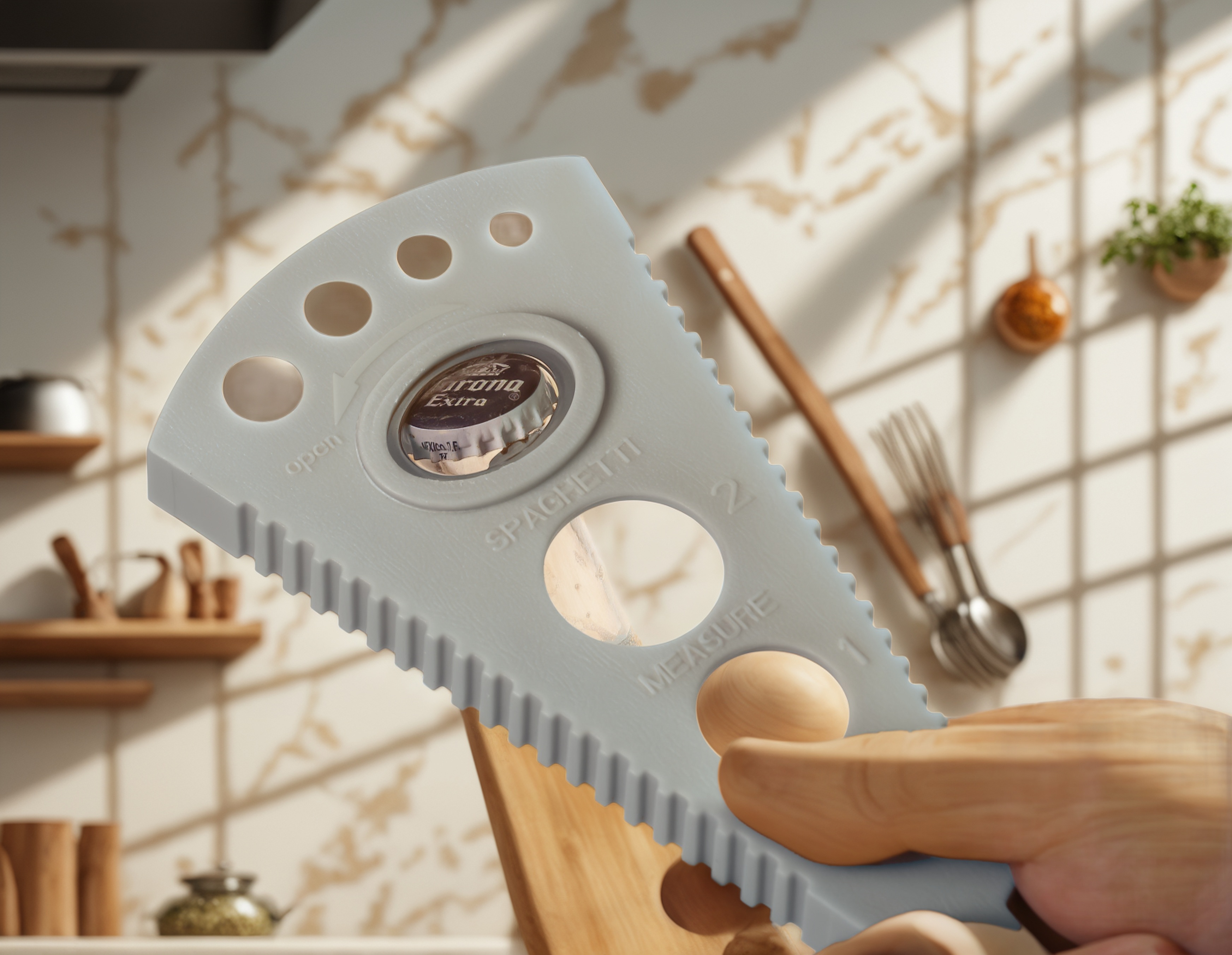
Innovative Multi-Functional Can Opener Factory Insights
Multi-functional can openers sit in a practical category of kitchen tools: small enough to be overlooked, but important enough to affect daily user experience, safety, and retail satisfaction. For importers, distributors, private-label brands, and wholesale buyers, choosing a multi-functional can opener factory is not only about finding a low unit cost. It is about understanding design usability, material choices, consistency, packaging options, and how well a supplier can support your target market.
The original idea behind this product category is straightforward: combine everyday opening tasks into one compact tool. A can opener may also include a bottle opener, cap opener, measuring feature, or other utility function. The best sourcing decisions begin with clear product requirements and a disciplined factory evaluation process.
Key Takeaways
- Evaluate ergonomics first: grip comfort, slip resistance, edge smoothness, and ease of use affect customer satisfaction.
- Do not assume every multi-functional design is useful; confirm that each added function has a real purpose for your market.
- Ask suppliers about materials, production process, quality checks, packaging, and customization before discussing final price.
- Request samples and test them with different users and common container types before placing a larger order.
Why Multi-Functional Kitchen Gadgets Are in Demand
Modern kitchens often have limited drawer space, and many consumers prefer tools that reduce clutter. This has increased interest in compact gadgets that handle more than one task. A multi-functional can opener can appeal to home users, hospitality buyers, promotional gift suppliers, and retailers that need practical, easy-to-explain products.
However, multi-function should not mean complicated. Buyers should look for a design that remains intuitive. If a user cannot quickly identify how to open a can, remove a bottle cap, or use a measuring opening, the added features may become a weakness. When reviewing samples from a can opener supplier, pay attention to how naturally the tool fits into normal food preparation or bartending tasks.
Ergonomic Design: What Buyers Should Check
Ergonomics are central to this product category because a can opener requires grip, pressure, and controlled movement. A tool may look attractive in photos but feel awkward in hand. Before selecting a factory design, test samples with different hand sizes and use scenarios.
Important ergonomic checkpoints include a secure grip, a shape that does not create pressure points, and a surface that is not slippery during use. The original article highlighted the value of a large ergonomic grip and smooth, refined edges. These are useful criteria, but buyers should verify them on physical samples rather than relying only on catalog descriptions.
- Check whether the handle feels stable when hands are dry and slightly wet.
- Inspect all contact edges for roughness, burrs, or sharp unfinished areas.
- Confirm that opening motions are understandable without excessive force.
- Ask whether the supplier can explain how the design reduces slipping or discomfort.
Comparing Common Feature Options
Multi-functional can openers can include several secondary functions, but not every feature suits every sales channel. For example, a bottle opener may be valuable for general household use, while a measuring feature may appeal to cooking-focused customers. Cap-size openings may be useful if they match common bottle or jar formats in the target region.
| Feature or Checkpoint | Why It Matters | Questions to Ask the Factory |
|---|---|---|
| Can opening function | This is the core function and must be reliable, safe, and easy to use. | What container types were used during sample testing? |
| Bottle opener | Adds common household utility without increasing storage needs. | Is the bottle opener part reinforced or separately assembled? |
| Measuring holes or markings | May support cooking or bartending, but must be clear and practical. | What measurement standard is used, and can markings be customized? |
| Cap-size opener | Can improve versatility if sizes match local market needs. | Which cap diameters are intended for the design? |
| Grip and edge finish | Affects comfort, safety, and perceived quality. | How are edges finished and inspected during production? |
How to Assess Factory Quality Without Overclaiming
A sourcing buyer should avoid making assumptions about material grade, compliance, or performance unless the supplier provides verifiable documentation. A responsible multi-functional can opener factory should be able to explain its production workflow, inspection steps, and sample approval process. If a supplier cannot answer basic questions clearly, that is a warning sign.
Ask practical questions rather than relying on broad claims such as high quality or durable. For example: What materials are available? Are there different handle options? How is the cutting or opening component attached? What tolerance checks are performed? What defects are commonly found during inspection? Can the supplier provide pre-production samples for approval?
For OEM or private-label projects, also ask about logo placement, packaging formats, instruction leaflets, color options, and carton labeling. Do not assume that customization is available for every design. Confirm whether customization affects lead time, tooling, packaging cost, or quality control procedures.
Sample Testing Before Wholesale Orders
Sample testing is one of the most useful steps in kitchen tool sourcing. A sample can reveal problems that are not visible in photos, such as poor balance, loose assembly, uncomfortable pressure points, unclear markings, or rough edges. For a multi-functional product, test every advertised function, not just the main can opener function.
- Use the sample with several common cans, bottles, or caps relevant to your market.
- Ask multiple users to operate the tool and report where they feel resistance or confusion.
- Inspect the product after repeated use for loosening, deformation, or surface damage.
- Review the packaging to see whether instructions are clear and suitable for retail display.
- Document feedback and share it with the supplier before approving production.
Balancing Minimalist Aesthetics and Practicality
The original article noted that can opener industry trends often combine minimalist appearance with practical use. This is a useful direction for many retail markets, but appearance should not come before function. A clean shape, simple color choice, and compact design can support shelf appeal, while an uncomfortable grip or unclear feature layout can create returns and negative reviews.
When comparing supplier options, review the product as a complete user experience: how it looks in packaging, how easily a shopper understands the functions, how it feels in the hand, and how well it performs after repeated use. A good design should make the primary task simple while keeping secondary functions accessible.
Choosing a Reliable Manufacturer or Supplier
A reliable manufacturer should communicate clearly, provide consistent samples, and answer technical and commercial questions without exaggeration. Buyers should ask for details that can be verified: available materials, sample process, packaging choices, inspection method, production timeline, and export documentation support where applicable. If certifications or compliance documents are required for your market, request current documents and confirm their relevance to the exact product being ordered.
It is also wise to define acceptable quality levels in writing. Specify finish expectations, functional requirements, packaging standards, and inspection criteria before mass production. This reduces misunderstandings and helps both buyer and factory work from the same standard.
Practical FAQ
What should I ask a multi-functional can opener factory first?
Start with product basics: available designs, materials, functions, customization options, sample availability, packaging choices, and quality inspection steps.
Are more functions always better?
No. Extra functions are useful only if they work well and match customer needs. A simpler tool with reliable performance may outperform a crowded design.
How can I check ergonomic quality?
Request samples and test grip comfort, slip resistance, edge finish, and ease of operation with different users. Photos alone are not enough.
Can I request OEM branding?
Many kitchen tool suppliers may offer branding or packaging customization, but buyers should confirm logo method, artwork requirements, lead time, and any related cost before ordering.
What commercial details should be confirmed before placing an order?
Confirm minimum order quantity, unit pricing, sample cost, lead time, payment terms, packaging specifications, inspection standards, and shipping terms directly with the supplier.
Final Sourcing Advice
A multi-functional can opener can be a strong wholesale or private-label product when its design is practical, comfortable, and easy to understand. The right sourcing approach is to define your market needs, compare real samples, ask specific factory questions, and document requirements before production. By focusing on usability and supplier transparency, buyers can reduce risk and select a product that fits both retail expectations and everyday kitchen use.
