





OEM Household Scissors: Practical Sourcing and Selection Guide
Household scissors are simple tools, but buyers who source them for retail, private label programs, craft kits, sewing accessories, or promotional sets know that small design choices can affect usability, durability, and customer satisfaction. The original product described as Ultimate Precision Scissors is positioned as an OEM household scissors option with stainless steel blades, fine tapered tips, and blue-and-black ambidextrous handles. Those are useful starting points, but a strong sourcing decision should go beyond appearance and basic cutting claims.
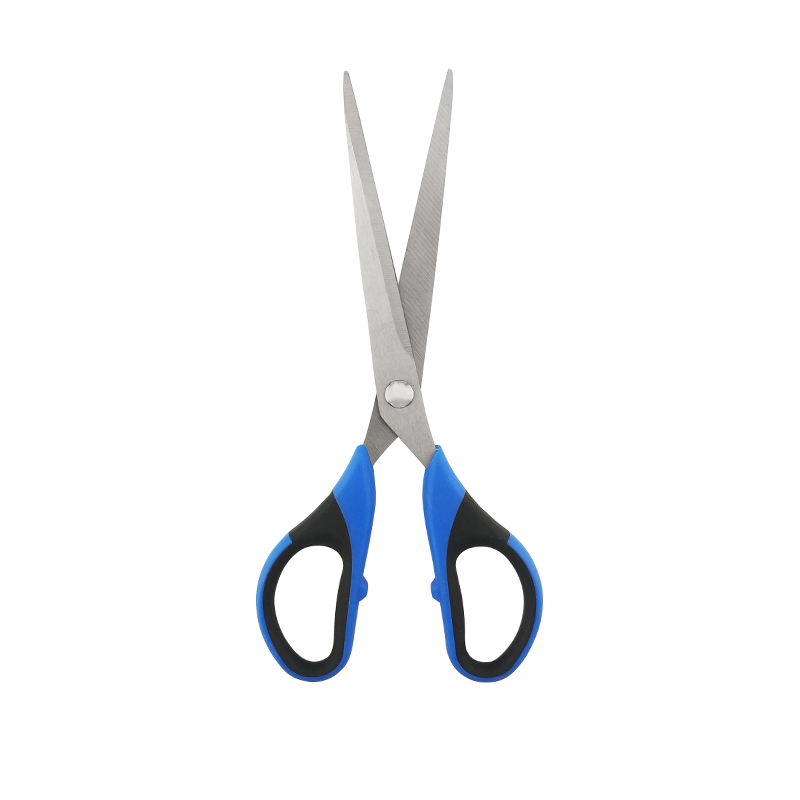
This guide explains how to evaluate OEM household scissors from a B2B perspective: what to check in blade design, how to assess handle comfort, what questions to ask a factory or wholesale supplier, and how to compare samples before placing an order. It avoids assumptions about capacity, certifications, prices, or minimum order quantities; those details should always be confirmed directly with the supplier.
Key Takeaways
- Stainless steel blades, fine tapered tips, and ambidextrous handles are useful features for general-purpose household scissors.
- For OEM sourcing, request samples and compare cutting performance on the same materials before committing to production.
- Ask suppliers about available customization, packaging, inspection processes, lead times, and documentation instead of assuming standard terms.
- Comfort, blade alignment, tip accuracy, and packaging durability can matter as much as the blade material itself.
What Makes Household Scissors Suitable for OEM Projects?
OEM household scissors are usually sourced by companies that want a product made for their own brand, distribution channel, or bundled kit. The buyer may need standard scissors with custom packaging, or a more customized item involving color, handle shape, logo placement, retail cards, or multi-piece sets. In any case, the product must be practical for common cutting tasks such as paper, thread, light packaging, labels, craft materials, and routine home use.
The scissors described in the original article include stainless steel blades. This is a relevant feature because stainless steel is commonly chosen for household scissors due to its resistance to everyday corrosion and its suitability for repeated use in home environments. However, buyers should not stop at the words stainless steel. Ask what grade is used, how the blade is hardened, how the edge is finished, and whether the supplier can provide consistent quality across production batches.
The original description also notes fine tapered tips. This can be valuable for users who need more control in detailed work, including sewing, crafting, trimming, or opening small packages. For safety and shipping, buyers should also consider whether tip protectors, blister packaging, or other protective formats are available.
Blade Design: What Buyers Should Evaluate
A scissor blade must do more than look sharp. Its performance depends on the edge, blade alignment, pivot tension, tip precision, and consistency from one unit to the next. When reviewing OEM household scissors, request several samples rather than only one. A single sample may perform well, while variation across pieces may reveal production issues.
During sample testing, check whether the scissors can cut smoothly from the pivot area to the tip. If the blades separate slightly, bend too much, or fail near the tip, users may experience snagging or incomplete cuts. Fine tapered tips should meet accurately enough to support controlled trimming. The pivot should feel stable, not loose, but not so tight that repeated use becomes tiring.
For B2B buyers, the most useful question is not simply whether the scissors are sharp. Ask how sharpness is controlled during production. Possible questions include: Is there an edge inspection step? Are samples from each batch tested on paper, fabric, or other defined materials? Can the supplier share its normal quality control checklist? These questions help identify whether the factory has a repeatable process.
Handle Comfort and Ambidextrous Use
The original product description highlights blue handles with black accents and an ambidextrous design intended for both left- and right-handed users. For household scissors, this can broaden appeal because families, offices, classrooms, and craft users may share the same tool. However, ambidextrous does not automatically mean equally comfortable for everyone. Handle opening size, edge smoothness, finger pressure points, and overall balance all matter.
When evaluating handles, ask a small group of testers to use the samples for several minutes rather than only making one or two cuts. Repeated cutting reveals whether the handle edges rub, whether the grip position feels natural, and whether the tool causes hand strain. If the product is meant for a craft audience, comfort during longer cutting sessions may be more important than it is for a general drawer scissor.
For OEM orders, confirm whether the handle color combination can be customized, whether logo placement is possible, and whether the supplier can provide color matching standards. Do not assume that a photographed blue-and-black design can be changed without tooling, additional cost, or order quantity requirements. Those terms should be confirmed in writing.
Comparison Checklist for Sample Review
The table below can be used by sourcing teams, importers, brand owners, or wholesalers when comparing samples from different suppliers. It is not a laboratory test, but it helps create a consistent first-stage review before commercial discussions move forward.
| Evaluation Area | What to Check | Questions to Ask the Supplier |
|---|---|---|
| Blade material | Confirm stainless steel description and visible finish consistency. | What stainless steel grade is used, and can documentation be provided? |
| Cutting performance | Test paper, thread, light card, labels, and other target materials. | What cutting tests are used during routine inspection? |
| Tip precision | Check whether fine tapered tips meet cleanly and cut at the end. | How is tip alignment checked before packing? |
| Pivot quality | Open and close repeatedly; feel for looseness, grinding, or stiffness. | Is pivot tension adjustable or fixed during assembly? |
| Handle comfort | Test left- and right-handed use, grip size, and pressure points. | Can handle colors, material, or logo placement be customized? |
| Packaging | Check protection of tips, retail presentation, barcode area, and carton strength. | What packaging formats are available for wholesale or private label orders? |
OEM and Wholesale Sourcing Questions to Ask
Because the topic concerns an OEM and wholesale product, commercial clarity is essential. Buyers should avoid making decisions based only on product photos or short descriptions. A responsible sourcing process includes product questions, production questions, and after-shipment questions.
- What customization options are available for handle color, logo, packaging artwork, and product sets?
- What are the supplier's minimum order quantities for standard and customized versions?
- What is the expected sample lead time and production lead time?
- How are pre-production samples approved before mass production?
- What inspection steps are used for blade alignment, sharpness, appearance, and packaging?
- Can the supplier support your target market's labeling, warning, or packaging requirements?
- How are defective goods handled if issues are found before shipment or after arrival?
These questions do not imply that every supplier will offer all services. They are practical prompts for negotiation and documentation. If the scissors are intended for a regulated market, a children's kit, school channel, or professional sewing category, buyers should verify applicable requirements with qualified compliance advisors and request suitable documentation from the supplier.
Packaging and Private Label Considerations
Packaging can strongly affect the customer experience for household scissors. Sharp or tapered tips must be protected during shipping, handling, and retail display. For wholesale distribution, packaging should also protect the product from scratches and prevent movement inside cartons. For private label retail, the pack may need a hanging hole, barcode, brand information, usage notes, and safety warnings.
Before finalizing artwork, ask the supplier for die lines, print limitations, color tolerances, and packing methods. Confirm whether inner boxes, master cartons, and palletization details are available. If selling through e-commerce, consider drop-test requirements, packaging dimensions, and whether the product can survive parcel handling without the blades damaging the retail card or outer packaging.
Use and Care Guidance for End Users
Even well-made household scissors perform better when used properly. If you are creating private label packaging or product instructions, include simple care guidance that helps reduce returns and complaints. Household scissors should be kept dry after exposure to moisture, stored away from children, and used on suitable materials. They should not be used as screwdrivers, pry tools, wire cutters, or garden shears unless specifically designed for those tasks.
Users should wipe the blades after cutting adhesive labels or tape because residue can cause dragging and uneven cuts. If the pivot becomes stiff, the appropriate maintenance method should come from the supplier's instructions. Buyers should avoid adding care claims that the supplier has not confirmed, especially if the product uses specific coatings, fasteners, or handle materials.
Practical FAQ
Are these scissors only for home use?
No. The original description positions them for both domestic and professional settings. In practice, suitability depends on the cutting tasks, expected use frequency, and sample test results. Buyers should test them against the materials their customers actually cut.
Can OEM household scissors be customized?
Many OEM programs may involve customization such as handle color, branding, or packaging, but availability depends on the supplier. Ask directly about tooling, artwork requirements, minimum order quantities, and approval samples.
What should I check first when receiving samples?
Start with blade alignment, tip cutting, handle comfort, pivot smoothness, and visible defects. Then test the scissors on consistent materials and record results for comparison between suppliers.
Is stainless steel enough to guarantee quality?
No. Stainless steel is a useful material description, but performance also depends on grade, heat treatment, sharpening, assembly, and quality control. Ask the supplier for details and verify through sample testing.
How should wholesalers reduce product return risk?
Use approved samples, define inspection criteria, confirm packaging protection, and request clear production documentation. Include accurate product instructions so customers understand appropriate uses and care.
Final Sourcing Advice
OEM household scissors can be a strong category for retailers, wholesalers, and private label brands because they are practical, widely used, and easy to bundle with home, craft, sewing, school, or office products. The scissors described here offer several explicit features worth evaluating: stainless steel blades, fine tapered tips, and ambidextrous blue-and-black handles. The best sourcing decision, however, comes from structured comparison rather than broad claims.
Request samples, test them consistently, ask detailed supplier questions, and document all agreed specifications before production. For a simple household tool, that discipline is often what separates a reliable product from one that creates avoidable complaints.
