




Innovative Stationery and Office Scissors: A Practical Buying Guide
Stationery and office scissors are small tools, but they affect daily workflow more than many buyers expect. A reliable pair can make quick work of paper, envelopes, labels, light packaging, craft materials, and simple fabric tasks. A poor pair can snag, bend, tire the hand, or disappear into a drawer because nobody wants to use it.
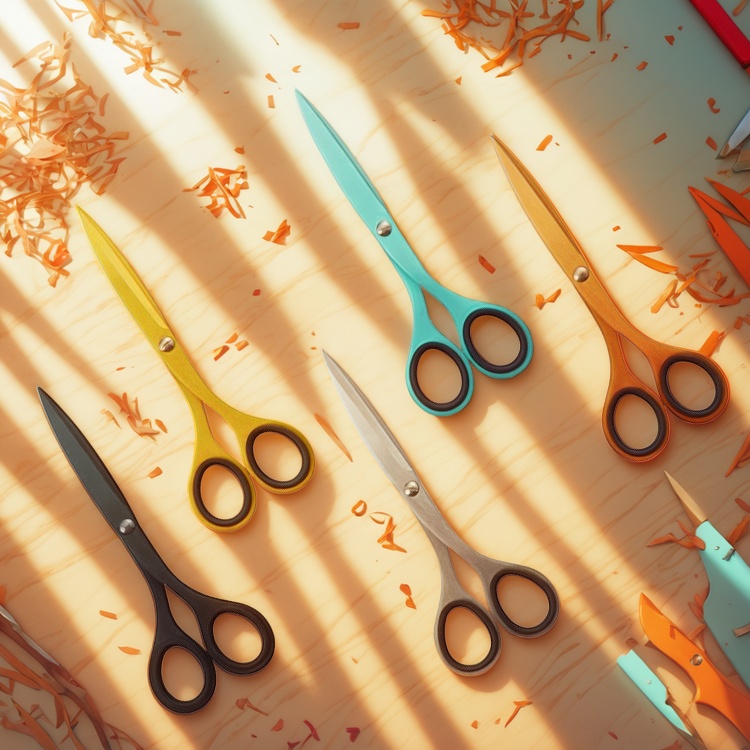
The original product description highlights several useful facts: these office scissors are positioned for office, school, and home use; they are available in colors including classic black, silver, yellow, turquoise, and copper; they are described as having precision-engineered blades, an ergonomic lightweight handle, a soft non-slip grip, and an ambidextrous design for left- and right-handed users. Those details point to a product category where comfort, cutting feel, visibility, and everyday durability all matter.

Key Takeaways
- Choose stationery and office scissors based on the main cutting task, not only color or appearance.
- Comfort features such as a lightweight handle and non-slip grip are important for repeated daily use.
- Ambidextrous scissors can simplify purchasing for shared offices and classrooms.
- For business sourcing, ask suppliers about blade material, quality control, packaging, replacement policy, and customization options instead of assuming specifications.
What Makes Office Scissors Different from Craft or Kitchen Scissors?
Office scissors are designed for frequent light-duty cutting. Their typical workload includes printer paper, file folders, tags, tape, mailing labels, thin cardboard, and occasional craft materials. They are not a substitute for kitchen shears, pruning shears, industrial cutters, or heavy-duty fabric shears.
A good office pair should open smoothly, cut cleanly near the tip, and feel stable when making long straight cuts. For shared workspaces, the scissors should also be easy to identify and comfortable for different hand sizes. Color choices such as black, silver, yellow, turquoise, and copper can help teams organize tools by department, classroom, activity area, or desk location.
Selection Checklist for Offices, Schools, and Home Workspaces
| Selection factor | Why it matters | Questions to ask before buying |
|---|---|---|
| Blade performance | Sharp, smooth cutting reduces tearing and repeated cuts. | What materials are the scissors intended to cut? Do they cut cleanly at the tip? |
| Handle comfort | Repeated cutting can cause hand fatigue if the grip is hard or awkward. | Is the handle lightweight? Does it include a soft, non-slip grip? |
| Hand orientation | Shared spaces need tools that suit more users. | Is the design ambidextrous for both left- and right-handed users? |
| Visibility and color | Distinct colors help prevent loss and make tools easier to assign. | Are colors available for different teams, classrooms, or workstations? |
| Durability expectations | Low-quality scissors loosen, dull, or become uncomfortable quickly. | What quality checks does the supplier perform? Are samples available? |
| Packaging and sourcing | Business buyers may need retail packs, bulk packs, or branded options. | What packaging, labeling, and order quantities can the supplier support? |
Comfort and Ergonomics Matter in Daily Use
Comfort is not only a premium feature; it is a practical requirement when scissors are used repeatedly. An ergonomic, lightweight handle helps reduce strain during long cutting sessions, such as preparing classroom materials, trimming office documents, or assembling mailers. A soft, non-slip grip can also improve control, especially when the hand is moving quickly or when the user is cutting small shapes.
For shared offices, ambidextrous design is especially useful. Instead of purchasing separate left-handed and right-handed models, a purchasing manager can standardize one design for most general workstations. That does not mean every user will prefer the same pair, but it makes inventory simpler and reduces the chance that someone is left using an uncomfortable tool.
How to Match Scissors to the Task
Before choosing stationery and office scissors, define the materials they will cut most often. For standard paper, envelopes, and labels, the priority is clean blade alignment and smooth action. For thicker mailers or light cardboard, buyers should look for a sturdier feel and ask the supplier whether the product is suitable for that type of use. For fabric, only light occasional trimming should be assumed unless the supplier explicitly states that the scissors are intended for textile work.
- List the top three cutting tasks in the office, classroom, or home workspace.
- Decide whether the scissors will be personal desk tools or shared supply-room tools.
- Check handle comfort, grip texture, and whether the design suits both left- and right-handed users.
- Request product details for blade material, recommended use, packaging, and care.
- Test a sample before making a larger purchase for a team or resale program.
B2B Sourcing Guidance for Office Supply Buyers
For wholesalers, distributors, promotional product buyers, and office supply retailers, sourcing office scissors requires more than selecting a color assortment. Start by asking the supplier for written product specifications. Important questions include blade material, handle material, blade thickness, available colors, packaging formats, carton information, labeling options, and recommended use limitations.
Do not assume commercial details that are not stated. If you need a specific MOQ, lead time, private label option, barcode requirement, carton strength, or compliance documentation for your market, ask the supplier directly. If the scissors will be sold through retail channels, request product samples and packaging samples before approving a purchase order. If the scissors will be used in schools, offices, or public institutions, ask about safety-related design features, age suitability, and any applicable documentation required by your customer or local market.
Quality control is another key sourcing topic. Buyers can ask whether the supplier checks blade alignment, opening and closing smoothness, tip finish, handle attachment, surface finish, and packaging condition. For larger orders, it is reasonable to define an inspection standard before shipment rather than waiting until goods arrive.
Use and Care Tips for Longer Service Life
Even a good pair of scissors will perform poorly if it is misused. Keep office scissors dedicated to clean, light materials whenever possible. Cutting adhesive tape frequently can leave residue on the blades, which may cause dragging. If residue appears, clean the blades carefully with an appropriate cleaner and dry them fully afterward. Avoid cutting wire, hard plastic, thick cardboard stacks, or materials beyond the tool's intended use.
Store scissors closed in a drawer, desk organizer, or supply caddy. In classrooms or shared work areas, assign a visible storage point so the scissors are returned after use. If a pair becomes loose, bent, rusty, or difficult to control, remove it from shared use and replace it. Safety and cutting control are more important than extending the life of a damaged tool.
Practical FAQ
Are stationery and office scissors suitable for fabric?
They may handle occasional light fabric trimming if the supplier states or demonstrates that use, but they should not be treated as dedicated fabric shears unless the product specifications support it.
Why choose an ambidextrous design?
An ambidextrous design is useful in shared environments because both left- and right-handed users can generally use the same pair more comfortably.
Do colors matter for office scissors?
Yes, colors can help with organization. For example, different departments, classrooms, or project stations can use different colors to reduce loss and confusion.
What should a wholesale buyer ask before ordering?
Ask for blade and handle materials, packaging options, available colors, sample availability, quality control process, MOQ, lead time, labeling requirements, and any documents needed for your sales market.
How can users keep scissors cutting smoothly?
Use them for appropriate light-duty materials, clean adhesive residue from the blades, store them closed, and replace pairs that become loose, bent, or unsafe.
