




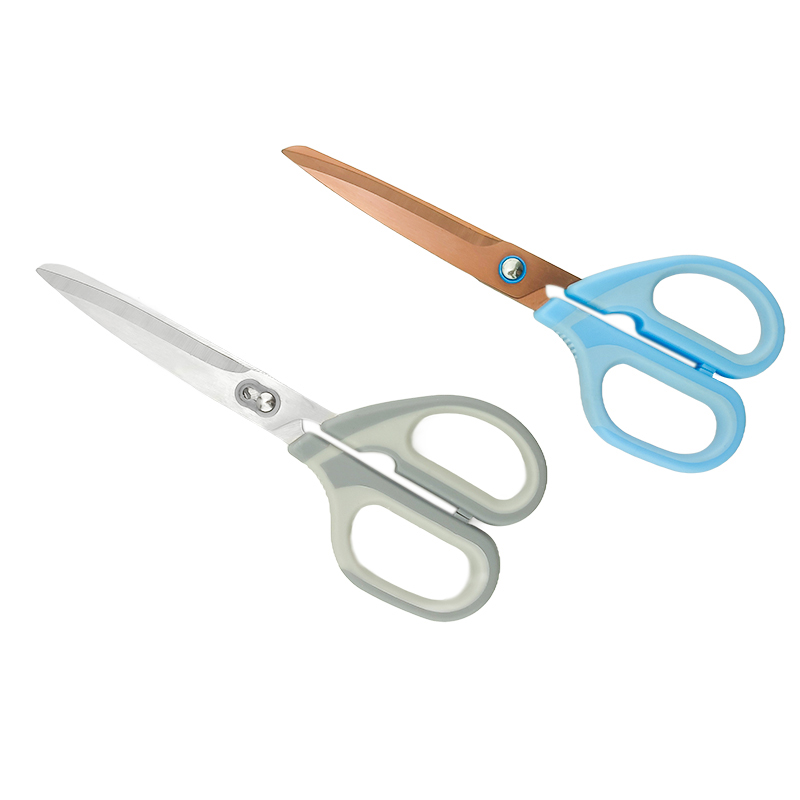
Innovative Titanium Scissors Factory Crafts Precision and Style
For distributors, houseware brands, office supply buyers, and promotional product teams, titanium scissors can be an attractive category because they combine everyday utility with a more distinctive appearance than standard scissors. The original article highlights several clear themes: titanium scissors are valued for strength, longevity, sharpness, corrosion resistance, lightweight handling, precision cutting, ergonomic use, and custom finishes such as rainbow, gold, and black. Those points are useful, but a serious sourcing decision should go further than product descriptions.
When evaluating a titanium scissors factory, buyers should separate confirmed product details from claims that need evidence. A supplier may describe its scissors as durable, sharp, corrosion resistant, or suitable for paper, fabric, and cardboard, but B2B buyers should ask how those qualities are checked, documented, and kept consistent from order to order. The goal is not only to find an attractive product, but to find a factory that can support stable quality, clear communication, and repeatable production.
What Buyers Should Expect From a Titanium Scissors Factory
A qualified scissors supplier should be able to explain the product structure, intended use, available finishes, handle options, packaging choices, and quality-control process in practical terms. If the product is marketed as titanium scissors, ask whether the item is made from titanium, titanium-coated, or uses titanium in a specific component or surface treatment. These are very different commercial meanings, and they affect cost, durability expectations, and marketing language.
Buyers should also clarify whether the scissors are designed for household use, office use, craft use, gift sets, or professional applications. A pair intended mainly for paper and packaging may not be appropriate for heavy fabric or repeated industrial use. Clear positioning helps avoid overpromising in catalogs, online listings, and retail packaging.
Precision Cutting: Claims to Verify Before Ordering
The original article emphasizes precision titanium scissors and clean cutting on paper, fabric, and cardboard. Those are valuable selling points, especially for stationery, crafting, and home organization channels. However, buyers should verify precision through samples, not only through catalog wording.
During sample evaluation, test the scissors on the actual materials your customers are likely to cut. Paper, thin plastic packaging, ribbon, light fabric, and cardboard all create different cutting resistance. Check whether the blades meet cleanly from pivot to tip, whether the scissors chew or fold soft material, and whether the handle remains comfortable after repeated cuts. If the product is intended for detailed craft work, tip alignment matters. If it is intended for household utility, edge stability and grip comfort may matter more.
Customization Options: Finish, Handle, and Function
Custom titanium scissors can help a brand stand out, but customization should be managed carefully. The source article mentions vibrant blade finishes including iridescent rainbow, gold, and black. These finishes can make the product more suitable for gift, lifestyle, or design-led retail channels. Before confirming a finish, ask for physical samples under normal lighting because online images may not represent color accurately.
Customization may also include handle color, ergonomic handle shape, private-label packaging, barcode placement, instruction inserts, or added features such as an integrated box opener. When discussing added functions, confirm whether the feature changes safety labeling, packaging layout, or end-user instructions. For example, a box opener may be useful in office or warehouse settings, but it also needs clear communication so customers understand how to use it safely.
Supplier Comparison Checklist
The following checklist can help buyers compare a titanium scissors factory with other scissors suppliers. It focuses on questions that reduce sourcing risk rather than unsupported claims.
| Evaluation Area | What to Ask the Supplier | Why It Matters |
|---|---|---|
| Material description | Are the scissors titanium, titanium-coated, or titanium-finished? | Prevents inaccurate product claims and pricing confusion. |
| Cutting performance | Which materials are the scissors designed to cut? | Aligns the product with household, office, craft, or packaging use. |
| Finish options | Are rainbow, gold, black, or other finishes available as samples? | Helps confirm appearance before bulk approval. |
| Ergonomics | What handle shapes and sizes are available? | Supports comfort for different end users and usage duration. |
| Quality checks | How are blade alignment, sharpness, and opening action inspected? | Reduces inconsistent cutting and customer complaints. |
| Packaging | Can packaging be adapted for retail, wholesale, or e-commerce? | Improves presentation and protects the product during transport. |
Quality Control Questions for B2B Orders
Before placing a wholesale or OEM order, buyers should request a clear quality-control plan. This does not require the supplier to make broad claims; it simply asks them to explain their process. Important questions include:
- How is blade sharpness checked during production and before shipment?
- How is pivot tension adjusted so the scissors open smoothly without feeling loose?
- How are surface finishes inspected for scratches, color inconsistency, or peeling?
- How are handle defects, rough edges, or molding marks identified?
- What sample approval process is used before mass production begins?
- What information should appear on cartons, inner boxes, or retail packaging?
If the supplier cannot answer these questions clearly, the product may still look good in photos but create problems during repeat orders. For private-label buyers, consistency is often more important than one impressive sample.
Matching Titanium Scissors to Sales Channels
Different customers value different features. A stationery retailer may prioritize clean paper cutting, attractive finishes, and compact packaging. A craft distributor may care more about tip precision and comfort during detailed work. A household goods buyer may want a multipurpose tool for paper, packaging, fabric scraps, and light cardboard. Promotional buyers may focus on appearance, logo placement, and gift-ready presentation.
When briefing a titanium scissors factory, describe the sales channel and target user in plain language. Share expected use cases, packaging format, preferred color range, order forecast, and any retailer requirements you already know. If you do not yet know commercial details such as MOQ, lead time, price tiers, or available packaging formats, ask the supplier directly instead of assuming. These details vary by factory, customization level, and order plan.
Key Takeaways
- Titanium scissors can appeal to buyers looking for precision, durability, corrosion resistance, lightweight handling, and distinctive finishes.
- Do not rely only on broad product claims; verify cutting performance with samples and real-use materials.
- Clarify whether the product is titanium, titanium-coated, or titanium-finished before writing retail copy.
- Custom finishes such as rainbow, gold, and black can support brand differentiation when sample approval is handled carefully.
- For OEM or wholesale sourcing, ask about quality checks, packaging options, sample approval, MOQ, lead time, and shipment standards.
Practical FAQ for Titanium Scissors Buyers
Are titanium scissors suitable for both household and office use?
They can be, depending on the product design. The original article describes titanium scissors for household and office duties, including paper, fabric, and cardboard. Buyers should still test samples against their intended use before making product claims.
What should I confirm before calling a product titanium scissors?
Ask the supplier to explain the material and finish. Some products may be titanium-coated or titanium-colored rather than made entirely from titanium. Accurate wording helps avoid misleading customers.
Can I order custom colors such as rainbow, gold, or black?
The source article mentions these finishes as available in the market. For a specific order, request current finish options, sample photos, physical samples, and any limitations that may apply to color consistency.
What makes precision scissors different from general-purpose scissors?
Precision scissors should show clean blade alignment, smooth opening and closing, consistent cutting from base to tip, and reliable control on the intended material. Sample testing is the best way to confirm this.
What commercial details should I ask the factory for?
Ask about MOQ, lead time, sample cost, packaging options, logo or private-label support, inspection process, payment terms, shipping carton details, and how defects are handled. These details should come from the supplier, not from assumptions.
A well-chosen titanium scissors factory can support a product line that is practical, visually distinctive, and suitable for several sales channels. The strongest sourcing approach is simple: define the intended user, verify the product with samples, document the approved specification, and ask direct questions before moving to bulk production.
