




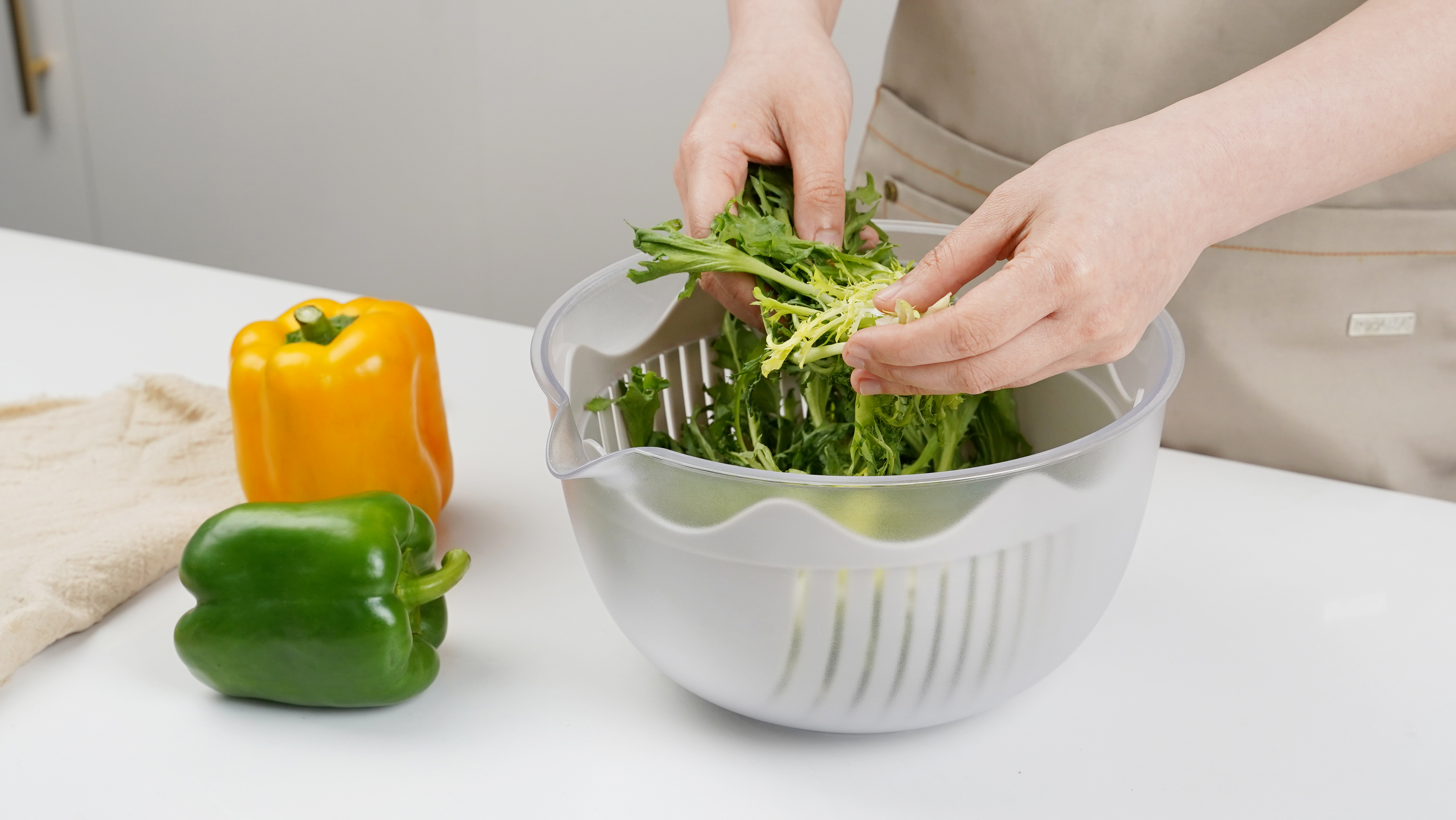
Multi-Functional Vegetable Cutting Basket: Buyer and Sourcing Guide
A multi-functional vegetable cutting basket is a simple kitchen tool designed to help users slice fruits and vegetables more evenly. The concept is straightforward: place produce in a bowl-like basket, align a knife with the uniform slits, and cut through the ingredient while the basket helps guide the motion. For home users, it can make basic prep more consistent. For retailers, wholesalers, and kitchenware buyers, it is a product category worth evaluating carefully because small design choices can affect safety, usability, packaging, and repeat purchases.
The original product concept highlights an ergonomic design, uniform knife-guiding slits, a muted grey body with soft blue accents, and durable materials. Those are useful starting points, but professional buyers should go further than appearance. Before placing an order with any vegetable cutting basket factory or supplier, confirm material details, sample performance, packaging options, quality control process, and after-sales terms.
What Is a Multi-Functional Vegetable Cutting Basket?
A multi-functional vegetable cutting basket combines a holding basket with cutting guides. Unlike a traditional cutting board, it positions the ingredient inside a curved or bowl-like structure. The user then cuts through the open guide slots to create more regular sections. Depending on the design, it may be used for items such as cucumbers, carrots, potatoes, apples, lemons, or other produce that fits securely in the basket.
The main value is not that it replaces every knife skill. Instead, it helps with repetitive prep tasks where consistency matters. It may be especially useful for quick salads, fruit portions, side dishes, and meal prep. Buyers should avoid assuming that every model works well for every ingredient size or hardness. The best evaluation method is to test samples using realistic produce and common kitchen knives.
Core Features to Evaluate
The original article emphasizes uniform slits and an ergonomic design. These are important, but they should be assessed practically. Uniform slits should guide the knife without making the basket difficult to clean. The basket should hold produce steadily without forcing the user into an awkward cutting angle. Edges should feel smooth to the hand, and the overall shape should support safe handling during use.
- Knife guide spacing: Ask whether the spacing is consistent and whether it suits the slice thickness your market expects.
- Basket shape: Confirm whether common produce sizes fit securely without rolling excessively.
- Grip and handling: Check whether users can hold the basket comfortably during cutting and rinsing.
- Cleaning access: Look for areas where food residue may collect, especially around slits and corners.
- Color and finish: The source article notes a muted grey body with soft blue accents; confirm available color options with the supplier if needed.
Use and Care Guidance for End Users
For consumer-facing product pages, instructions should be clear and realistic. A vegetable cutting basket works best when the produce fits the basket and the user applies steady downward pressure with a suitable knife. It should not be presented as a substitute for basic knife safety. Users should keep fingers away from the guide slots, cut on a stable surface, and avoid forcing oversized or very hard ingredients into the basket.
Cleaning guidance should follow the supplier's verified instructions. If dishwasher safety is not confirmed, do not claim it. A safe general recommendation is to rinse food residue promptly and wash according to the care information provided with the product. Buyers planning private label packaging should request approved use-and-care wording from the factory and verify it against the final material and structure.
Comparison Checklist for Product Selection
When comparing suppliers, a structured checklist helps prevent decisions based only on photos or low quotes. The table below outlines practical evaluation points for a multi-functional vegetable cutting basket order.
| Evaluation Area | What to Check | Questions to Ask the Supplier |
|---|---|---|
| Material | Durability, feel, odor, finish, and food-contact suitability | What material is used, and what documentation can be provided? |
| Cutting guides | Slot spacing, consistency, and ease of knife movement | Can samples be tested with common produce and knives? |
| Ergonomics | Grip comfort, balance, and stability during use | Has the design been reviewed for practical kitchen handling? |
| Cleaning | Access to corners, slit edges, and residue-prone areas | What are the recommended cleaning instructions? |
| Packaging | Retail protection, labeling space, barcode needs, and instructions | Can packaging be customized, and what files are required? |
| Quality control | Appearance, dimension consistency, and functional inspection | What inspections are performed before shipment? |
Sourcing from a Vegetable Cutting Basket Factory
For B2B buyers, the phrase vegetable cutting basket factory should mean more than a production source. It should represent a supplier that can explain the product, provide samples, answer compliance-related questions, and support consistent quality. Do not assume manufacturing capacity, minimum order quantity, lead time, certifications, or testing results unless the supplier provides verified information. These details should be requested and documented before confirming an order.
Useful sourcing questions include:
- What material is used for the basket body and accent parts?
- Can the supplier provide current product photos, samples, and packaging examples?
- What private label, color, or packaging options are available?
- What is the stated MOQ, sample policy, production lead time, and payment term?
- What quality checks are completed before shipment?
- Can the supplier provide relevant food-contact or market-entry documentation if required by the destination market?
- How are defects, shortages, or damaged cartons handled after delivery?
For OEM or wholesale projects, request a pre-production sample if any color, packaging, logo, or structural detail is changed. A small adjustment to slot width, wall thickness, or material finish can change the user experience. Final approval should be based on physical samples rather than renderings alone.
Quality Risks Buyers Should Watch For
Simple kitchen tools can still create customer complaints if quality is inconsistent. Common concerns include rough edges around the slits, weak structure, poor fit between components, color variation, unpleasant odor, unclear instructions, and packaging that does not protect the product in transit. Buyers should also examine whether the cutting slots are wide enough for typical knives but not so open that they reduce support.
Functional testing should include real use. Try different produce sizes, rinse the basket, inspect the guide edges, and repeat the cutting process several times. If the product is intended for retail, review how easily a customer can understand its purpose from the packaging. If it is intended for online sales, clear product photos and accurate usage descriptions are essential to reduce returns.
Key Takeaways
- A multi-functional vegetable cutting basket helps guide knives for more consistent fruit and vegetable slices.
- Important features include uniform slits, comfortable handling, stable produce placement, and easy cleaning access.
- Do not rely only on supplier photos; test physical samples before wholesale or OEM orders.
- Ask suppliers to confirm materials, care instructions, packaging options, quality checks, MOQ, lead time, and any required documentation.
- A practical product listing should explain suitable use cases without overstating performance or safety claims.
FAQ
How does a vegetable cutting basket work?
The user places produce inside the basket and cuts through the guide slits with a knife. The slits help create more even sections than freehand cutting in many basic prep tasks.
Is it suitable for all fruits and vegetables?
No single basket design suits every ingredient. Suitability depends on the size, shape, and firmness of the produce. Buyers should test samples with the foods most common in their target market.
What should wholesale buyers confirm before ordering?
Confirm material details, sample quality, packaging requirements, available customization, MOQ, production lead time, inspection process, and any documents needed for your sales market.
Can it be used for private label or OEM projects?
Possibly, but this depends on the supplier. Ask whether logo printing, color changes, packaging design, or structural adjustments are available, and approve a physical sample before mass production.
What should be included in retail instructions?
Instructions should explain how to place produce, align the knife with the guide slots, keep fingers away from cutting areas, use the tool on a stable surface, and clean it according to verified care guidance.
