




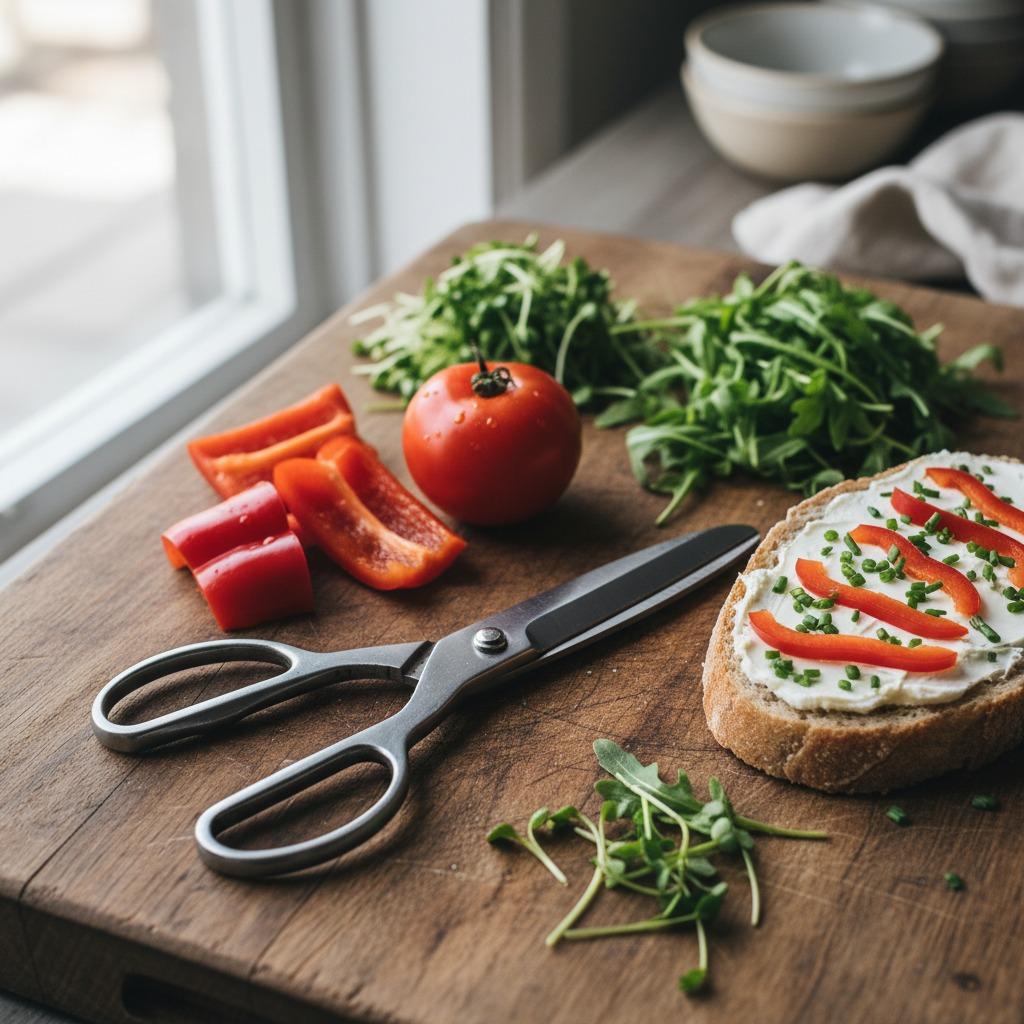
Kitchen Hack: How to Prep a Whole Meal with Just Kitchen Shears
When you want a homemade dinner but do not want to wash a knife, cutting board, peeler and several prep bowls, kitchen shears can make meal prep simpler. Also called kitchen scissors, they are useful for trimming poultry, snipping herbs, cutting greens and portioning soft vegetables directly over a pan or bowl.
This guide shows how to prepare a realistic one-pan chicken and vegetable meal using kitchen shears for most cutting tasks. It is not about replacing every knife in your kitchen. It is about knowing when scissors are faster, cleaner and easier to control.

Key Takeaways
- Kitchen shears are especially helpful for poultry trimming, herbs, scallions, leafy greens and small vegetables.
- For safe food prep, use separate cleaning steps after cutting raw chicken or meat.
- A shears-first method can reduce cutting-board mess and speed up weeknight cooking.
- Choose shears that feel secure in your hand and ask about care instructions before dishwashing.
Why Kitchen Shears Work Well for Meal Prep
Kitchen shears give you direct control because the ingredient is held in one hand and cut in the other. For slippery chicken skin, fresh herbs or green onions, that control can be more comfortable than chasing food across a cutting board with a knife.
They also let you cut directly into a skillet, baking dish or mixing bowl. That reduces the number of surfaces touching raw ingredients and can make cleanup faster. However, hygiene still matters: once the shears touch raw poultry or meat, wash them thoroughly before using them on ready-to-eat foods.
Sample Meal: One-Pan Lemon Herb Chicken and Vegetables
This meal uses common ingredients and keeps prep straightforward. The quantities are flexible, so adjust them to your household size and pan.
- 4 to 6 bone-in, skin-on chicken thighs or drumsticks
- 2 medium carrots
- 1 large zucchini
- 1 red bell pepper
- 1 bunch green onions or scallions
- 3 to 4 garlic cloves
- Fresh parsley, rosemary and thyme
- 1 lemon
- Olive oil, salt, pepper and paprika
Boneless chicken pieces also work, but bone-in pieces are a good example because shears can help trim excess fat and loose skin before cooking. If your shears are not designed for tougher poultry tasks, avoid forcing them through hard bone.
Step-by-Step Shears-Only Prep Method
- Prep the chicken first. Pat the chicken dry with a paper towel. Use kitchen shears to trim loose skin or excess fat around the edges. If desired, snip a few shallow cuts into thick areas so seasoning can reach more surface area.
- Season in the pan or bowl. Add olive oil, salt, pepper and paprika. Turn the chicken with tongs or clean hands. Set it aside while you prep vegetables.
- Cut carrots carefully. For thin carrots, hold them over a bowl and snip into small rounds. For thicker carrots, a knife may be safer and more efficient. Do not force the shears if the vegetable is too hard.
- Snip zucchini and bell pepper. Zucchini can be cut into half-moons or chunks. For bell pepper, remove the stem and seeds, then snip the flesh into strips and bite-size pieces.
- Add aromatics. Snip green onions directly into the pan. Peel garlic, then use the shears for rough slices if the cloves are not too small to hold safely.
- Finish with herbs and lemon. Hold herbs over the bowl and snip them finely. Cut lemon into wedges with a knife if the peel feels too tough; otherwise, use shears for small slices and squeeze by hand.
Knife vs. Kitchen Shears: Quick Comparison
| Prep task | Knife method | Kitchen shears method | Best choice |
|---|---|---|---|
| Trimming chicken skin | Requires board and careful slicing | Snip loose edges directly | Shears |
| Cutting herbs | Mince on board | Snip over bowl or pan | Shears |
| Bell pepper pieces | Core, slice and dice | Snip strips, then pieces | Either |
| Thick carrots | Stable cuts with a sharp knife | May require too much pressure | Knife |
| Cleanup | Knife, board and prep scraps | Often one bowl plus shears | Shears |
Cooking the Meal with Minimal Dishes
Heat olive oil in a large skillet over medium-high heat. Place the chicken skin-side down and cook until the skin is browned. Turn the pieces over, then add the snipped vegetables, garlic, herbs and lemon. Cover partially and cook until the chicken is fully cooked. For poultry safety, use a food thermometer and follow the safe internal temperature guidance used in your region.
If the vegetables are cooking faster than the chicken, remove them to a bowl and return them near the end. If the pan becomes dry, add a splash of water or stock. The goal is simple weeknight cooking, not complicated technique.
Safety and Hygiene Tips
Kitchen shears are convenient, but they need the same food-safety attention as knives. Raw poultry juices can transfer to herbs, salad greens or cooked food if the tool is not washed between tasks.
- Cut raw meat or poultry before vegetables only if everything will be cooked together.
- Wash shears with hot water and dish soap after contact with raw meat.
- Dry the hinge area well to reduce trapped moisture.
- Check the supplier’s care instructions before placing shears in a dishwasher.
- Store shears closed or in a safe holder to protect the cutting edges and fingers.
How to Choose Kitchen Shears for Everyday Cooking
For consumer use, comfort and cleanability are more important than flashy claims. Look for handles that feel stable when wet, blades that align cleanly, and a size that matches your hand. If you plan to cut poultry often, ask whether the shears are intended for heavier kitchen tasks. If you mainly snip herbs, scallions, greens and packaging, a lighter pair may be enough.
Before buying, check practical details: Can the shears be separated for cleaning? Are replacement or care instructions provided? What foods are they intended to cut? Are there any restrictions on dishwasher use? These questions help you choose a tool that fits how you actually cook.
FAQ
Can kitchen shears replace a chef’s knife?
No. They are best as a complementary tool. Use shears for trimming, snipping and small cuts; use a knife for dense vegetables, large fruit and precise slicing.
Can I cut chicken bones with kitchen shears?
Only if the shears are designed for that task. Do not force ordinary kitchen scissors through hard bone, as this can damage the blades or cause slipping.
Should I use the same shears for raw chicken and herbs?
Only if the herbs will be cooked with the chicken, or if you wash the shears thoroughly between tasks. For raw garnishes, use clean shears.
How do I keep kitchen shears sharp?
Avoid cutting hard non-food items unless the product instructions allow it. Wash, dry and store them properly. If they become dull or misaligned, follow the manufacturer’s sharpening or replacement guidance.
What is the easiest meal to start with?
Try a sheet-pan or skillet meal with chicken pieces, zucchini, bell pepper, scallions and herbs. These ingredients are easier to snip than dense vegetables and show where kitchen shears save time.
