




Choosing a kitchen knife manufacturer China partner is a product and supply-chain decision, not just a search for the lowest unit price. This guide covers kitchen knife factory China checks, China kitchen knife manufacturer comparison, OEM kitchen knife manufacturer routes, custom kitchen knife manufacturer projects, private label kitchen knives, stainless steel evidence, supplier review and wholesale planning.
China has a deep knife-making supply base, but a kitchen knife is not a single standard product. A chef knife, utility knife, paring knife, cleaver, bread knife and knife set place different demands on blade profile, edge angle, thickness, balance, handle assembly and packaging. A private-label brand may also ask for a matching color system, logo, sheath, block or gift box. Those decisions affect material, tooling, production flow, inspection and freight volume.
This article is for importers, brand owners, retailers, distributors, food-service buyers and product teams. It follows the questions that make a factory comparison useful: what the supplier actually controls, how a knife specification becomes a sample, how custom changes affect the commercial file, and how a wholesale order can be repeated without relying on memory. BONET HOUSEWARE pages are used as public references; project-specific quantities, tests, prices and timing still require written confirmation.
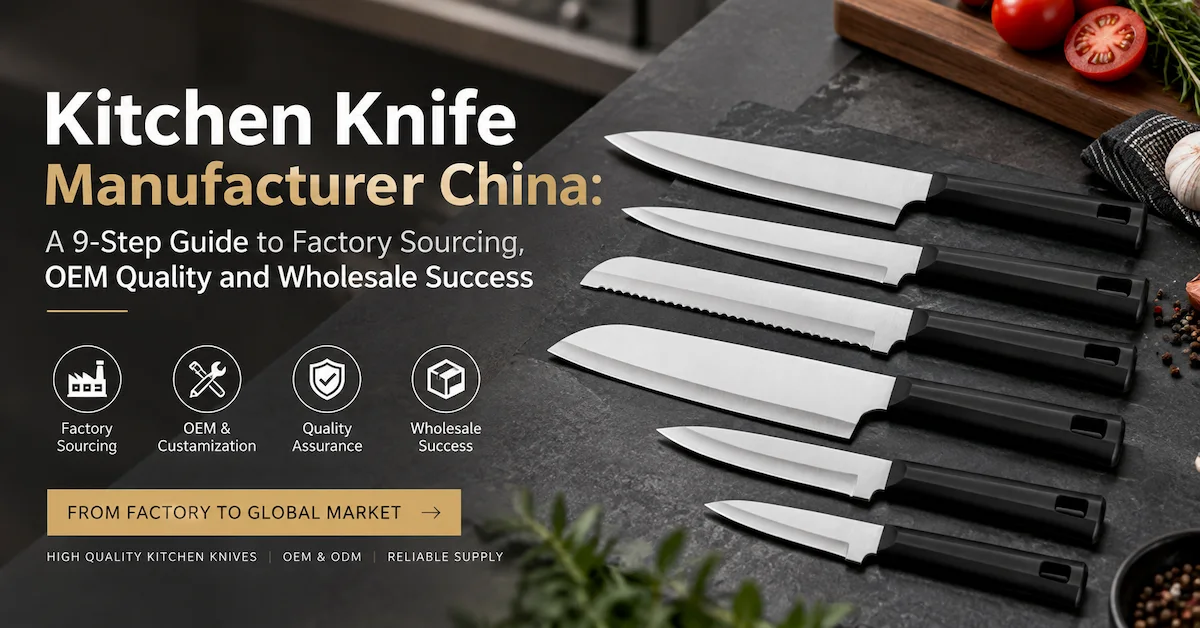
1. Define the Knife Job Before You Compare Factories
Begin with the work the knife must perform. A chef knife used for vegetables has a different brief from a compact utility knife for lunch preparation. A cleaver used for heavier food preparation needs a different balance and edge discussion. A bread knife is judged by serration and slicing behavior. A knife set must also work as a group: the handles, block or insert, visual hierarchy and pack contents should make sense together.
Write the intended foods, cutting motions, user type, frequency and prohibited uses. Note whether the buyer wants a broad retail item, a premium gift product, a food-service tool or a private-label range. The destination market and channel matter early because they can change labeling, packaging, documentation and testing questions. A supermarket peg pack, a gift box and an e-commerce parcel do not protect or explain a knife in the same way.
| Brief field | What the buyer should state | Why the factory needs it |
|---|---|---|
| Knife type | Chef, utility, paring, cleaver, bread, specialty or set | Sets the relevant blade, balance, handle and pack discussion. |
| Primary use | Food, cutting motion, frequency, user and prohibited use | Guides geometry, edge, grip, care and claim wording. |
| Market and channel | Destination, retail format, food-service or e-commerce route | Shapes labels, protection, cartons and documentation. |
| Positioning | Everyday, premium, gift, professional, value or sustainable | Influences finish, handle, packaging and presentation choices. |
| Commercial frame | Trial quantity, reorder expectation, target date and destination | Enables project-specific feasibility and quotation review. |
A candidate China kitchen knife manufacturer should repeat the brief and identify missing information. If the reply jumps directly to a price without clarifying knife type, steel direction, handle, pack or market, the quote is probably based on assumptions that different suppliers will interpret differently.
2. Choose the Knife Architecture and Assortment
Knife architecture starts with the blade and extends through the handle, bolster, tang, sheath, block and retail pack. A full-tang construction creates one set of assembly and balance questions. A hidden tang or molded handle creates another. A hollow handle, riveted handle or soft-touch insert may change the user experience, appearance, cleaning discussion and cost.
Build the assortment around distinct jobs rather than duplicate silhouettes. A compact three-piece set might serve daily prep, while a larger collection may add bread, carving or specialty blades. If several knives share a handle system, confirm that the smallest and largest models remain comfortable. If a block or sheath is included, check that every blade is protected and easy to remove.
| Architecture decision | Buyer question | Evidence to request |
|---|---|---|
| Blade profile | What food and motion define the shape? | Drawing, profile reference and sample cutting observation. |
| Handle construction | How are tang, scales, inserts or molded parts joined? | Section view, assembly sample and fit review. |
| Bolster and balance | Where does the hand sit, and how is weight distributed? | Physical sample handled in the intended grip. |
| Storage | Is the knife packed with sheath, insert, block or guard? | Fit, point protection and removal observation. |
| Set logic | Do sizes, functions and presentation make a coherent range? | Assortment map and packed set sample. |
Use BONET's public kitchen knife category page as a starting point for product direction, then ask the factory to identify the closest model and what would change for your brand. A category page is useful evidence of product scope; it is not a substitute for a model number and controlled specification.
3. Evaluate Stainless Steel and Edge Performance Together
“Stainless steel” is a material direction, not a complete quality claim. A stainless steel kitchen knife manufacturer should identify the proposed grade for the exact model and explain how it is recorded. The buyer should then review geometry, heat-treatment direction where relevant, edge preparation, finish, corrosion considerations, pivot-free handle assembly and cutting performance together.
Do not approve steel from a certificate or data line alone. Put the production-intent sample in the hand and on the intended cutting surface. Inspect the blade for flatness, profile, burrs, scratches, inconsistent polish and edge continuity. Check whether the blade enters the handle cleanly and whether the bolster or heel creates the intended control. Keep the material statement attached to the model and revision.
| Knife specification | What to record | What the sample should demonstrate |
|---|---|---|
| Steel grade | Proposed grade and model reference | Surface, edge condition and documented project result. |
| Geometry | Profile, thickness, grind direction and edge description | Expected cutting motion and food release. |
| Heat treatment | Requirement tied to the selected material and process | Available process record or agreed technical evidence. |
| Finish | Polish, coating, texture and uncoated areas | Consistent appearance without unsafe burrs or points. |
| Handle junction | Tang, bolster, scales, fasteners and seal areas | Fit, balance, comfort and cleanable surfaces. |
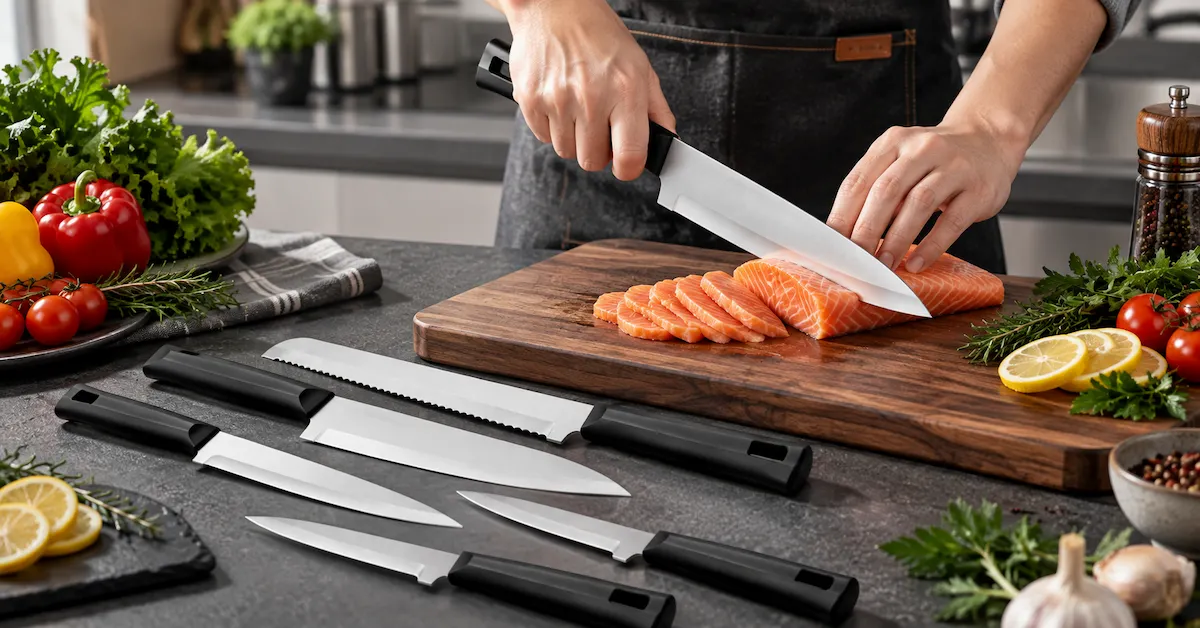
4. Verify the China Kitchen Knife Manufacturer Process
A factory visit, process page or audit report should answer a practical question: where is quality created for this model? Relevant stages may include blanking or forging, straight adjustment, heat treatment, rough grinding, fine grinding, polishing, handle preparation, assembly, cleaning, inspection and packing. Not every knife uses every stage, and the buyer should ask the supplier to mark the applicable route.
Process ownership matters when work is coordinated between sites. Ask who owns the drawing, incoming check, approved sample, nonconforming product decision and corrective action. A kitchen knife factory China partner should be able to connect a process stage with a check and a record, not only show machinery or a general quality slogan.
| Process area | Buyer question | Project evidence |
|---|---|---|
| Forming and straightening | How are blade profile, flatness and hole position controlled? | Drawing reference, work standard or in-process check. |
| Heat treatment | What requirement is linked to the selected steel and process? | Agreed specification and available process record. |
| Grinding and polishing | Where are geometry, edge and surface appearance reviewed? | Visual standard, sample reference and inspection result. |
| Handle assembly | How are tang, scales, rivets, bolster and fit checked? | Assembly sample, defect criteria and checklist. |
| Cleaning and packing | How are points, blades, labels and pack contents confirmed? | Packed sample, artwork revision and carton record. |
5. Decide the OEM or Customization Route
A buyer may want a catalog knife with a logo, a modified handle, a new blade profile or a complete custom knife set. These are different projects. For an OEM kitchen knife manufacturer request, list the exact model, dimensions, steel direction, handle, finish, accessories, logo and packaging. Mark each item as fixed, preferred or open for recommendation.
A custom kitchen knife manufacturer should explain how a change affects tooling, sample rounds, assembly, inspection, pack fit and quotation assumptions. A new handle color may be a molding and artwork change. A new blade profile may affect forming, grinding, balance and packaging. A new set may create a completely new insert and carton arrangement.
| Route | Buyer input | Supplier response | Gate |
|---|---|---|---|
| Existing model | Model reference, logo, color and pack direction | Confirmed construction and branding options | Identified sample and packed presentation. |
| Modified model | Reference plus marked changes | Feasibility, tooling and sample impact | Revision-specific sample. |
| Drawing-led OEM | Drawing, tolerances, materials and acceptance criteria | Technical review and open-question list | Approved drawing and first article. |
| New custom set | User jobs, assortment, target position and concept | Structure options, prototype and pack plan | Defined set before production quote. |
Have a knife drawing, sample or assortment idea?
Have a knife drawing, sample or assortment idea?
Send Your Kitchen Knife Brief to BONET6. Plan Private Label Kitchen Knives for a Real Retail Position
Private label kitchen knives work when the product, brand and channel tell one story. Decide whether the range is everyday, premium, gift-led, professional or value-focused. Then choose the blade finish, handle color, logo placement, packaging hierarchy and set size that support that position. A premium claim is weakened by a loose insert or an exposed point. A value pack is weakened by a complicated presentation that adds volume without helping the shopper.
For private label kitchen knives, keep logo artwork, color reference, blade specification, packaging dieline, barcode and care wording in one controlled record. Approve the actual logo on the intended surface. If the brand uses one mark across several handles or boxes, review scale and contrast on each SKU rather than assuming that one artwork proof covers the entire range.
| Brand decision | Question to resolve | Evidence to approve |
|---|---|---|
| Logo surface | Handle, blade, bolster, sheath, insert or carton? | Physical logo sample on the actual surface. |
| Color system | Which colors are fixed across handles, packs and accessories? | Color reference and approved appearance sample. |
| Range hierarchy | Which knife is entry, core, premium or specialty? | Assortment map and shelf-facing presentation. |
| Care and claims | What care, use and safety wording is supported? | Product-specific review against construction and market. |
7. Design Knife Packaging Around Protection and Handling
Packaging is part of knife quality because it controls the first handling experience. The pack must protect the edge and point, keep the product from moving, show the useful features and provide the information required by the destination market. A sleeve, blister-style format, color box, gift box, sheath, tray, block or insert can all be appropriate, but each creates different material, assembly, storage and freight assumptions.
Ask the supplier to place the production-intent knife in the actual pack. Check pressure marks, exposed points, loose movement, awkward removal and whether the blade can contact the printed panel. For knife sets, confirm that the insert keeps every item in the intended position and that the shopper can identify each size. BONET's public OEM/ODM information describes retail, gift and export packaging support; the project file should add the exact pack construction, labels, barcode, carton marks and quantity.
| Packaging element | Buyer decision | Evidence to keep |
|---|---|---|
| Point and edge protection | Guard, sheath, tray, insert or sleeve | Packed sample and handling observation. |
| Retail information | Knife name, use, care, warnings, barcode and language | Approved artwork and market review. |
| Set presentation | Order, visibility and removal of every knife | Pack-out sample and component checklist. |
| Outer carton | Quantity, orientation, SKU, color and handling marks | Carton specification and shipping record. |
8. Sample, Inspect and Approve the Knife Before Production
Sampling should answer whether the product can do its intended job, not whether it looks attractive in a photograph. Give every sample an ID, model, revision, date, component list and pack status. Photograph the blade, heel, spine, handle junction, logo, sheath, insert and carton. Record the cutting material, hand position, result and any visible damage.
Use a gate review. Identity comes first. Then inspect blade geometry, edge, balance, handle fit, rivets or molded parts, cleaning access, protective elements and packaging. If one issue remains conditional, state what must be shown again and who owns the next decision. “Looks good” is not a production instruction. A short, dated approval record is more useful for the next order.
| Sample gate | Practical review | Record | Stop condition |
|---|---|---|---|
| Identity | Model, revision, dimensions, components and pack contents | Sample ID, photos and received date | Unit cannot be tied to the brief. |
| Blade | Profile, flatness, edge, finish and cutting result | Test method and observation | Result or geometry is outside the intended use. |
| Handle | Balance, grip, fit, rivets, bolster and appearance | Defect notes and approved reference | Comfort, fit or assembly misses the brief. |
| Protection | Sheath, guard, insert, point and edge coverage | Fit and removal observation | Point is exposed or product moves. |
| Packaging | Labels, barcode, artwork, carton and contents | Packed photos and revision log | Information is incomplete or pack is unsafe. |
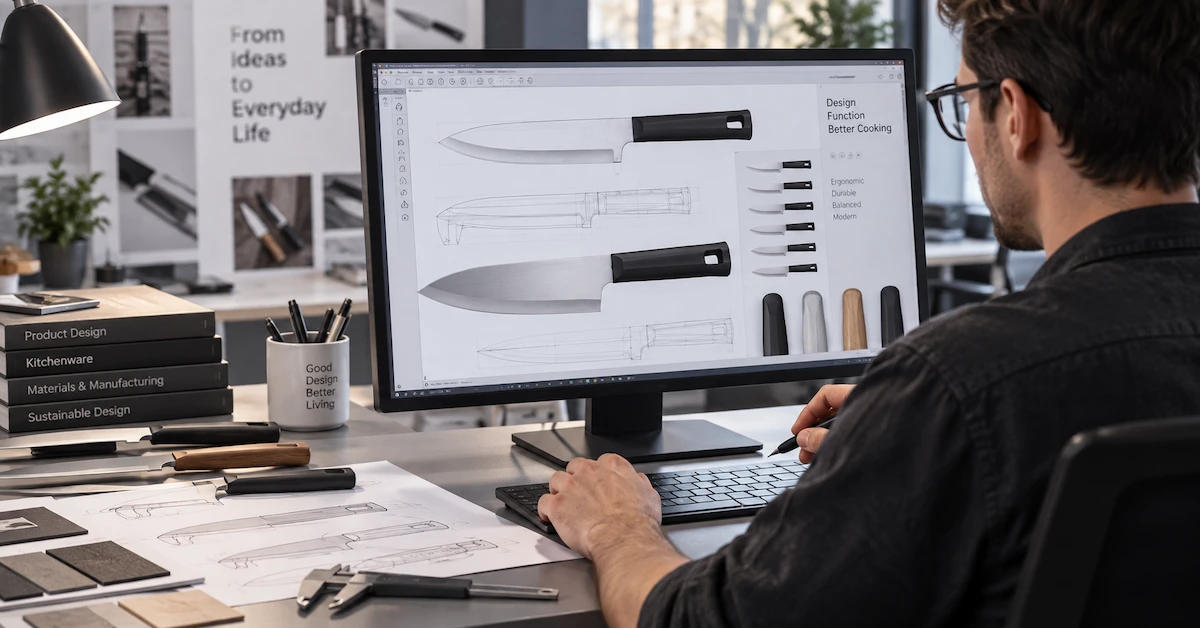
9. Compare Wholesale Kitchen Knives China Quotes and Protect Reorders
Search results for wholesale kitchen knives China can produce prices that describe different products. A buyer comparing a kitchen knife supplier China should normalize model, blade, handle, finish, logo, sheath, packaging, set quantity, inspection, currency, commercial term, destination and timing. Ask every supplier to mark included, excluded, provisional and separately priced lines.
Create an item master before the first order is released. Include the approved sample ID, drawing revision, steel direction, blade profile, handle material and color, logo artwork, pack contents, barcode, carton arrangement and inspection method. When a new color, blade or box is proposed, issue a new revision and link it to the quote and sample. This is how a China kitchen knife manufacturer becomes a repeat-order partner rather than a one-time source.
| Quotation line | Normalize | Question to ask |
|---|---|---|
| Knife construction | Model, blade, steel, handle, finish and accessories | Does the quote refer to the approved sample? |
| Branding | Logo method, location, colors and setup | Which costs are one-time or recurring? |
| Packaging | Individual pack, set insert, labels, barcode and carton | Is the price based on the packed sample? |
| Development | Prototype, tooling, sample rounds and artwork changes | What happens if the revision changes? |
| Delivery | Quantity, destination, timing and commercial term | Which assumptions sit outside the unit price? |
MOQ, tooling, sample timing, production timing, testing and delivery dates are project-specific. They can change with knife type, steel, handle, set size, packaging, quantity and factory schedule. Request written values for the selected revision instead of publishing a universal promise.
Need a product-specific knife quotation?
Need a product-specific knife quotation?
Request a BONET Knife QuoteWhat to Ask a Kitchen Knife Factory China Before Approval
- Which named model is closest to the requested knife and why?
- Which forming, heat-treatment, grinding, polishing, assembly and packing stages apply?
- How are blade profile, flatness, edge, handle fit and balance checked?
- Which steel grade is proposed, and does the evidence belong to this SKU?
- How are logo artwork, color references, packaging files and obsolete revisions controlled?
- Who owns corrective action when a component or finish is coordinated outside the factory?
- Which sample ID, specification and packaging revision does the quotation use?
- Which MOQ, tooling, timing, inspection and delivery values are confirmed for this project?
FAQ About Kitchen Knife Manufacturer China Sourcing
How do I choose a kitchen knife manufacturer China partner?
Start with knife type, intended use, market and channel. Shortlist factories that can identify a relevant model, explain the applicable process and provide a sample tied to a specification. Compare traceable evidence rather than catalog size or a headline price.
What should I send to an OEM kitchen knife manufacturer?
Send the knife type, intended foods, drawing or reference, dimensions, steel direction, blade profile, handle construction, finish, logo, packaging, quantity, destination and timing. Mark fixed requirements separately from open recommendations.
Can a custom kitchen knife manufacturer make a new handle or set?
Potentially. A new color, insert, molded grip, tang construction, blade profile or set pack creates different feasibility and tooling questions. Ask the supplier to classify the change and confirm sample, cost, MOQ and timing for the selected design.
How should I evaluate a stainless steel kitchen knife manufacturer?
Confirm the exact grade for the model, then review blade geometry, heat-treatment direction where relevant, edge, finish, handle junction, balance and cutting result. Material wording should remain tied to the named SKU and approved sample.
What is the difference between private label kitchen knives and OEM knives?
Private label describes the brand and market presentation. OEM usually describes reproduction of a buyer's drawing, sample or controlled specification. One project can combine both: an existing knife with a private-label logo and packaging, or a new OEM design sold under the buyer's brand.
How do I compare wholesale kitchen knives China offers?
Normalize the same model, blade, handle, accessories, logo, packaging, quantity, inspection, destination and delivery term. Separate development and tooling from recurring unit cost. The lowest number is not comparable if its pack or specification is different.
What does ISO 9001 tell a knife buyer?
It informs a review of a quality-management system. The certificate cited for Yangjiang Master Scissor & Knife Manufacture Co., Ltd. is scoped to the production and sale of scissors, so it should not be presented as blanket certification for kitchen knives. The buyer still needs model-specific sample, specification and inspection evidence.
Final RFQ Checklist
- Knife type, intended job, user, market and sales channel are stated.
- Blade profile, dimensions, steel direction, finish and edge expectations are defined.
- Handle, tang, bolster, fasteners, balance and accessories are described.
- OEM, private-label or custom route is identified for each SKU.
- Logo, color, packaging, barcode and artwork revisions are controlled.
- Sample ID, test method, cutting result and approval owner are recorded.
- Applicable manufacturing stages and quality checkpoints are understood.
- Quotation lines separate product, branding, packaging, development, quality and delivery.
- MOQ, tooling, sample timing, production timing and shipping assumptions are confirmed in writing.
- An item master and approved packed sample are ready for the repeat order.
The strongest kitchen knife sourcing programs are built from details people can inspect. Define the cutting job, choose the right architecture, read steel and edge claims at SKU level, verify the China factory process, sample the physical knife, approve the real package and compare wholesale offers against one revision. That discipline turns a search for a kitchen knife manufacturer China into a product system that a brand can explain, inspect and reorder.
Ready to compare a kitchen knife project on one controlled brief?
Ready to compare a kitchen knife project on one controlled brief?
Send Your Kitchen Knife RFQ to BONET