




Kitchen Scissors Manufacturer: Practical OEM and Wholesale Sourcing Guide
Choosing a kitchen scissors manufacturer is not only a product decision. For retailers, importers, distributors, and private label brands, it affects customer satisfaction, packaging quality, repeat orders, and after-sales risk. Kitchen scissors are small tools, but buyers often expect them to cut food packaging, trim herbs, portion poultry, open bottles, and stay comfortable during daily use. That combination makes sourcing more detailed than simply comparing price lists.
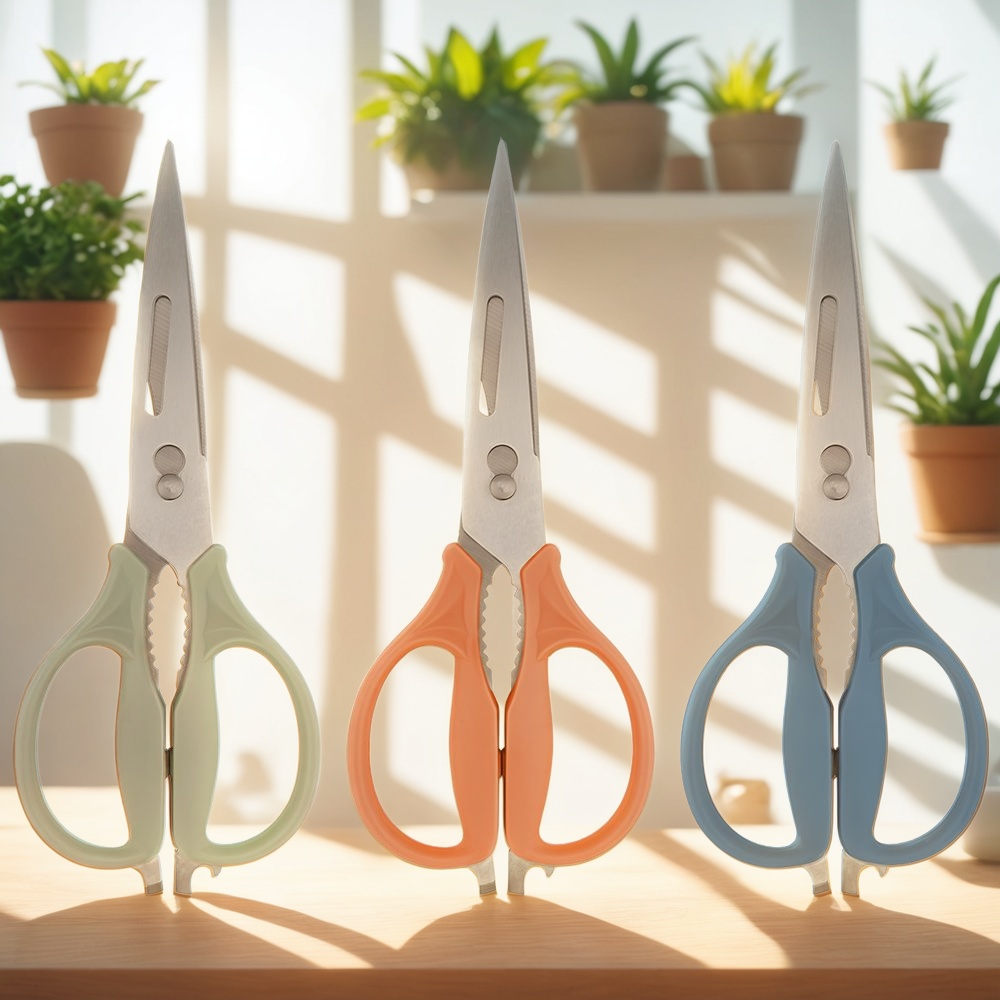
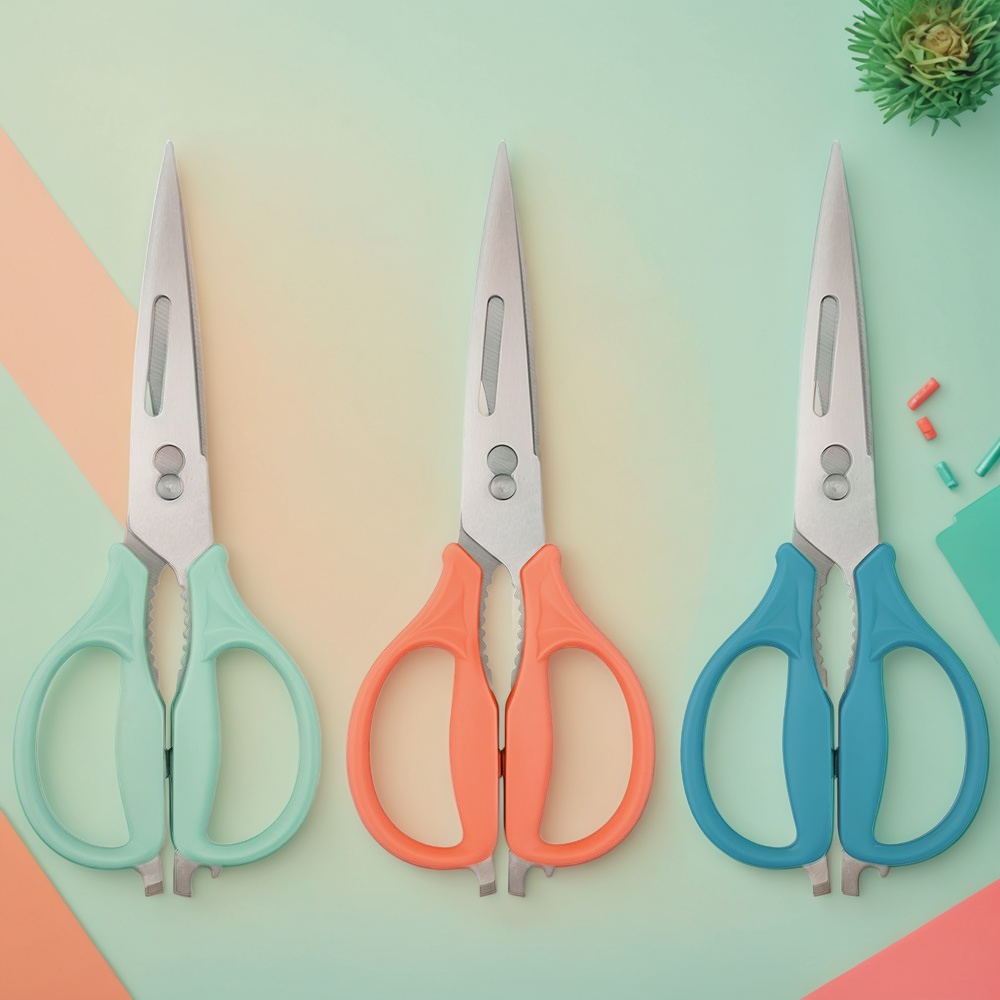
The original product presentation highlights multi-function kitchen scissors in modern colors, including mint green, coral orange, and ocean blue. It also mentions stainless steel blades, ergonomic non-slip handles, and a built-in bottle opener. Those are useful starting points, but B2B buyers should verify every commercial and technical detail before confirming an OEM or wholesale order.
Key Takeaways
- Evaluate kitchen scissors by blade performance, handle comfort, cleaning convenience, packaging, and consistency across batches.
- For OEM kitchen scissors, confirm logo placement, color options, packaging artwork, sample lead time, and approval process before ordering.
- Do not rely on product photos alone; request samples and check cutting performance, grip comfort, finish, and packaging durability.
- Ask the supplier direct questions about materials, testing, certifications, MOQ, pricing, and production timing rather than assuming details.
What Buyers Should Look for in Kitchen Scissors
Kitchen scissors are used in practical, sometimes messy, everyday tasks. A good pair should feel stable in the hand and cut cleanly without requiring excessive pressure. The source article describes stainless steel blades and ergonomic non-slip grips, which are relevant features for buyers to inspect during sampling. However, a buyer should still ask what blade material is used, how the edge is finished, and whether the handle material meets the requirements of the target market.
Multi-function features can add value when they are well executed. The built-in bottle opener mentioned in the original article may help position the item as a versatile kitchen tool, but buyers should check whether the added function affects handle comfort, product weight, or packaging layout. A feature is only useful if the end user can understand it quickly and use it safely.
OEM Kitchen Scissors: Branding and Customization Questions
OEM sourcing can help a brand build a consistent kitchen tool range without setting up its own production line. For kitchen scissors, customization often involves logo printing, handle color selection, retail packaging, instructions, barcode labels, and carton marks. The original article refers to branding with company logos and color options such as mint green, coral orange, and ocean blue. Those details can support a private label program, but they should be confirmed with current supplier documentation.
Before placing an OEM order, buyers should prepare clear artwork and ask how the supplier handles approval. Important questions include whether logo samples are available, what printing method is used, whether color matching is based on a standard reference, and how packaging proofs are checked. Buyers should also ask whether changes to handle color, packaging, or accessories affect MOQ, cost, or lead time.
Wholesale Kitchen Scissors for Retail and Distribution
Wholesale buyers usually care about dependable stock, sell-through, carton efficiency, and low return rates. Kitchen scissors can fit cookware stores, supermarkets, online marketplaces, promotional channels, and kitchen supply distributors. The product should be easy to explain in a product listing or on shelf packaging: what it cuts, how it is held, whether it includes a bottle opener, and how it should be cleaned and stored.
For wholesale programs, ask the supplier for case packing details, inner box information, gross weight, carton dimensions, and labeling options. These details affect freight planning and warehouse handling. If the supplier offers different colors, ask whether colors can be mixed in one order and how color ratios are controlled. If the product will be sold online, request high-quality product photos, but also create your own inspection records from real samples.
Comparison Checklist for Supplier Evaluation
| Evaluation Area | What to Check | Questions to Ask the Supplier |
|---|---|---|
| Blade and cutting | Sharpness, alignment, opening and closing feel | What blade material and edge process are used? |
| Handle design | Grip comfort, non-slip feel, hand fit | What handle material is used, and can colors be customized? |
| Multi-function use | Bottle opener usability and overall balance | Are all functions included in the standard model? |
| OEM branding | Logo location, packaging artwork, color matching | What sample approval steps are required before mass production? |
| Wholesale supply | Carton packing, mixed colors, labeling | What are the current MOQ, lead time, and packing details? |
| Quality control | Finish consistency, loose parts, packaging damage | What inspections are performed, and can reports be provided? |
Product Details Worth Verifying During Sampling
Samples are essential because kitchen scissors are judged by feel as much as by appearance. Open and close the scissors repeatedly. Check whether the blades rub, wobble, or leave uncut sections. Try common tasks such as cutting paper packaging, trimming herbs, and opening a sealed pouch. If the product includes a bottle opener, test whether it can be used without awkward hand positioning.
Inspect the handles carefully. The original article describes ergonomic, non-slip grips, so buyers should confirm whether the grip surface feels secure when hands are dry and slightly wet. Also check for sharp plastic edges, uneven seams, color differences, or printing defects. If the scissors will be sold as a giftable kitchen tool, packaging finish and product cleanliness are especially important.
Commercial Details to Confirm Before an Order
A responsible kitchen scissors manufacturer or supplier should be able to answer practical sourcing questions clearly. Buyers should not assume MOQ, price, delivery time, certificates, or testing results unless they are documented. Commercial details may vary by model, color, packaging type, order quantity, and destination market.
- Request the latest quotation with product description, packaging method, and quotation validity.
- Ask for current MOQ by standard product, custom color, logo printing, and custom packaging.
- Confirm sample cost, sample lead time, and whether pre-production samples are available.
- Clarify inspection standards for blade alignment, handle finish, printing, and packaging.
- Ask what documents, test reports, or compliance information can be provided for your market.
Use-and-Care Information Buyers Can Share with Customers
Even a well-made kitchen scissors product needs clear consumer guidance. Retailers and brands should consider adding simple care instructions to packaging or product pages. Users should clean scissors after contact with food, dry them before storage, and avoid using kitchen scissors for unsuitable heavy-duty tasks unless the supplier confirms that use. If the product has a bottle opener or other integrated function, show that function with a clear diagram or short instruction line.
Good instructions reduce misuse and help customers understand the product. They also support better reviews because buyers know what the scissors are designed to do. For online listings, include close-up images of the blade, handle, and bottle opener, along with dimensions and material information only after those details have been verified by the supplier.
FAQ
What should I ask a kitchen scissors manufacturer first?
Start with the product specification, blade material, handle material, available colors, packaging options, MOQ, lead time, sample policy, and quality inspection process.
Can OEM kitchen scissors include my logo?
Many OEM programs support logo branding, but the method, location, cost, and minimum quantity should be confirmed with the supplier before artwork is finalized.
Are wholesale kitchen scissors suitable for online retail?
They can be, especially when the listing clearly explains the cutting uses, handle design, color options, and built-in bottle opener. Samples should be tested before large orders.
How do I compare two kitchen shear suppliers?
Compare real samples, not only quotations. Review cutting feel, handle comfort, finish consistency, packaging strength, communication speed, and the clarity of commercial terms.
Should I request testing or compliance documents?
Yes. Ask what documents are available for your destination market. Do not assume certifications or test results unless the supplier provides current, relevant records.
