




Kitchen Scissors Manufacturer: Style & Precision
Choosing a kitchen scissors manufacturer is not only about finding a sharp tool. For importers, wholesalers, private-label brands, and kitchenware distributors, the real task is to identify a supplier that can consistently deliver practical cutting performance, comfortable handling, safe storage, and clear communication throughout the OEM process. A good pair of kitchen scissors may be used for poultry, herbs, food packaging, trimming vegetables, or everyday prep work, so small design decisions can affect customer satisfaction.
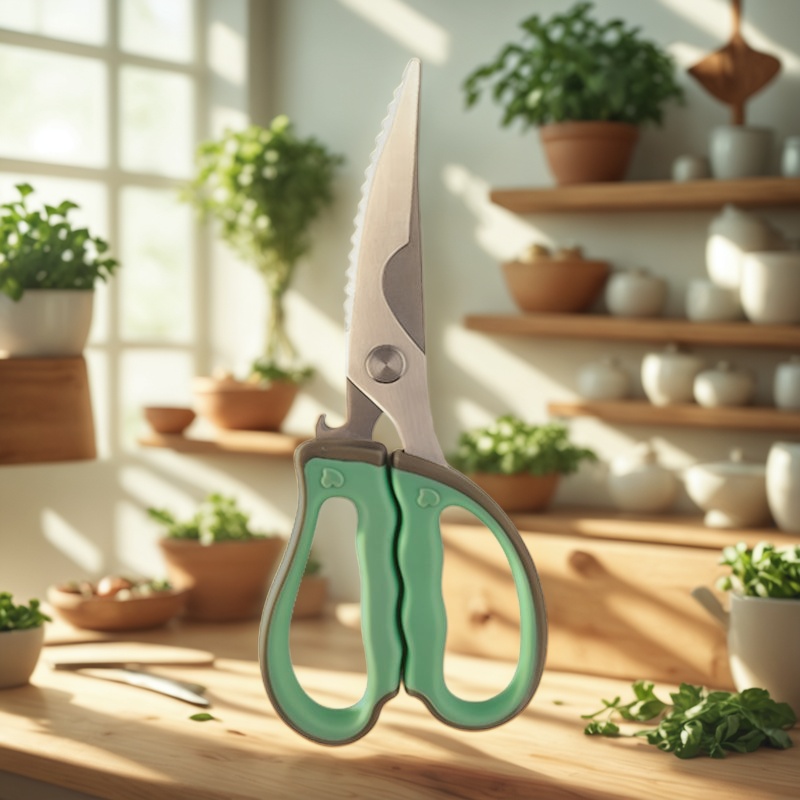
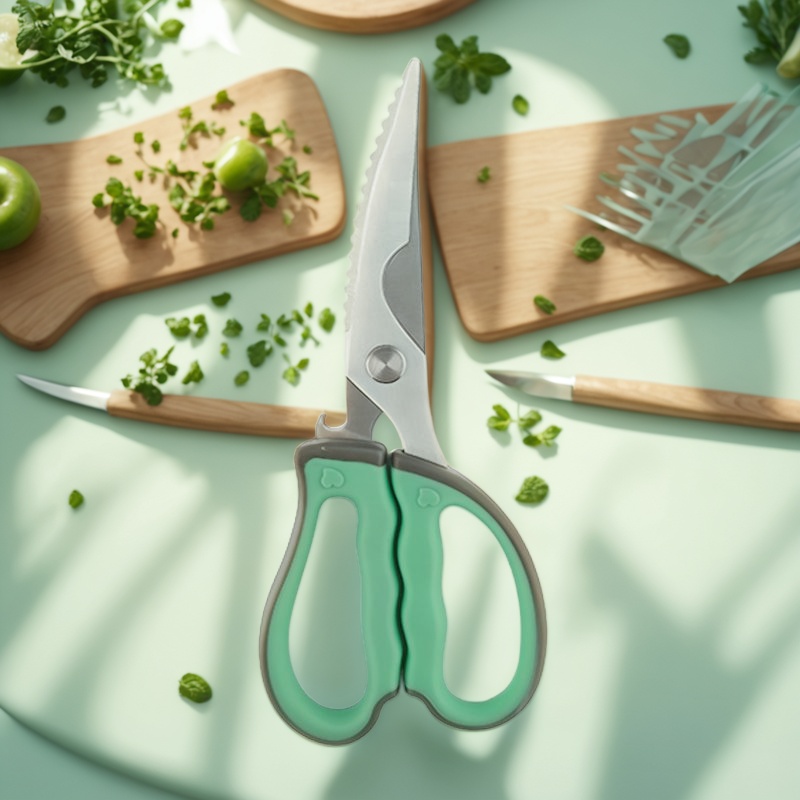
The original product information highlights stainless-steel blades, finely serrated edges, ergonomic handles with a soft non-slip rubber grip, a mint green color, a heart motif, and an integrated safety lock. These are useful starting points for a sourcing conversation, but buyers should still verify technical details, production controls, packaging options, and commercial terms directly with the supplier before placing an order.
Key Takeaways
- Evaluate kitchen scissors by cutting performance, handle comfort, safety features, cleaning needs, and packaging suitability.
- Ask the manufacturer to confirm the stainless-steel type, blade hardness, edge treatment, and any testing methods used.
- For OEM projects, clarify logo placement, handle color options, packaging artwork, sampling process, lead time, and minimum order requirements.
- Do not rely only on appearance; request samples and test them on realistic kitchen tasks before approving bulk production.
What Buyers Should Look For in Kitchen Scissors
Kitchen scissors are different from office scissors because they need to handle food preparation and kitchen packaging while remaining comfortable and safe to store. When reviewing samples, start with the blade action. The blades should open and close smoothly without feeling loose or unstable. Serrated edges, when present, can help grip slippery ingredients or packaging materials, but the supplier should explain how the serration is formed and how it affects sharpening or long-term use.
Next, check how the scissors feel in the hand. The source article describes ergonomic handles with a soft, non-slip rubber grip. This is valuable for users who may cut repeatedly during meal prep. However, buyers should test the handle with different hand sizes and ask whether the grip material, color, and finish can be customized for private-label orders.
Blade Performance and Material Questions
The original article states that the blades are stainless steel. That is a useful fact, but it is not enough for a procurement decision. Stainless steel can vary by grade, hardness, corrosion resistance, and finishing method. Buyers should ask the manufacturer which stainless-steel grade is used, whether the grade can be documented, and how the factory checks blade sharpness and durability during production.
For kitchen scissors intended for poultry or tougher food tasks, edge retention and blade alignment matter. For scissors marketed mainly for herbs or packaging, precision and easy control may be more important. If the product is described as multi-purpose, buyers should define the target use clearly in the specification sheet so that the supplier can recommend an appropriate blade thickness, edge style, and handle construction.
Ergonomics, Safety, and Everyday Use
Comfort is a major reason consumers choose one pair of kitchen scissors over another. The mentioned soft, non-slip rubber grip can support control during wet or greasy kitchen tasks, while the mint green color and heart motif create a recognizable visual identity. These design elements may work well for a retail kitchenware line, giftable product range, or coordinated kitchen tool collection.
The integrated safety lock is also important. A lock helps keep blades closed in drawers or during storage, reducing the chance of accidental contact. Buyers should still inspect the lock carefully: it should be easy to operate, secure when closed, and durable enough for repeated use. If the scissors are intended for family kitchens, drawer storage, or e-commerce shipping, ask whether the supplier can provide protective packaging or blade covers if needed.
OEM Sourcing in Yangjiang: Practical Evaluation Steps
Yangjiang is widely associated with knife and cutting tool production, so many buyers search for Yangjiang kitchen scissors OEM suppliers when developing private-label kitchenware. A location can be helpful, but it should not replace due diligence. Instead of accepting broad claims, build a checklist and use it consistently across suppliers.
Before production, request product drawings or a specification sheet that covers blade material, handle material, color, surface finish, safety lock design, packaging format, carton details, logo method, and labeling requirements. Ask how samples are approved and how changes are recorded. If your market has specific compliance requirements, ask the supplier what documents they can provide and what third-party testing you may need to arrange. Avoid assuming that a product automatically meets a regulation unless documentation confirms it.
Comparison Checklist for Supplier Selection
| Evaluation Area | What to Check | Questions to Ask the Supplier |
|---|---|---|
| Blade construction | Stainless-steel type, blade alignment, serrated edge quality | Which stainless-steel grade is used, and how is sharpness checked? |
| Handle design | Grip comfort, non-slip feel, color consistency | Can the handle color, grip texture, or logo position be customized? |
| Safety feature | Integrated lock strength and ease of use | How many lock cycles are tested, if any, during quality control? |
| OEM process | Sample approval, artwork handling, packaging options | What files are needed for logo and packaging development? |
| Quality control | Incoming material checks, in-process inspection, final inspection | Can the inspection standard be shared before mass production? |
| Commercial terms | MOQ, lead time, payment terms, shipping support | What are the current MOQ and lead time for this model and custom versions? |
How to Test Samples Before Ordering
Sample testing should reflect real use, not only a quick visual inspection. Prepare a small test plan before samples arrive. Cut herbs, food packaging, parchment, thin plastic, and poultry skin if those uses match your target customer. Check whether the scissors pull, slip, or require excessive force. Wash and dry the sample several times, then inspect the pivot, lock, grip, and blade surface.
- Check the opening and closing action for smoothness and stability.
- Test the serrated edge on slippery and flexible materials.
- Hold the scissors with dry and slightly wet hands to evaluate grip control.
- Use the safety lock repeatedly and confirm that it remains secure.
- Review the product after cleaning for water traps, loose parts, or visible wear.
For wholesale or OEM programs, keep approved samples with clear labels. These become reference samples for production comparison and help reduce misunderstandings during later inspections.
Use-and-Care Guidance for End Customers
If you plan to sell kitchen scissors under your own brand, include practical care instructions. Even strong scissors can perform poorly if users cut unsuitable materials or store them wet. Recommend washing after contact with food, drying before storage, and keeping the safety lock engaged when the scissors are placed in a drawer. If the scissors are not designed for bones, frozen food, or non-kitchen materials, say so clearly in the packaging or product page.
Good instructions reduce complaints and help customers understand the intended use. They also support better product reviews because buyers know how to maintain sharpness, hygiene, and safe storage.
FAQ
What should I ask a kitchen scissors manufacturer first?
Start with the product specification: blade material, handle material, edge type, lock design, packaging, logo options, MOQ, sample cost, and current production lead time.
Are serrated kitchen scissors better than smooth-edge scissors?
Serrated edges can help grip slippery foods and packaging, while smooth edges may feel cleaner on certain cuts. The better choice depends on the intended use and target customer.
Can kitchen scissors be customized for OEM orders?
Many suppliers offer some customization, but the available options vary. Ask about handle color, logo method, packaging design, and whether changes require new tooling or higher minimum orders.
How can buyers verify quality before bulk production?
Request samples, create a written test checklist, approve a reference sample, and discuss inspection standards before placing a mass production order.
Should I request compliance documents?
Yes, especially if you sell into markets with food-contact, labeling, or safety requirements. Ask what documents the supplier can provide and confirm whether third-party testing is needed.
