





Kitchen Scissors OEM: Finding the Best Manufacturer
Choosing a kitchen scissors OEM partner is not just a purchasing decision. For retailers, importers, private-label brands, and kitchenware distributors, the manufacturer you select affects product consistency, packaging quality, delivery reliability, and customer satisfaction. Kitchen scissors are simple in appearance, but buyers still need to evaluate blade performance, handle comfort, safety details, and the supplier's ability to support repeat orders.
The original article introduced several useful ideas: kitchen scissors can serve home cooks and professional kitchens, buyers may want multi-functional designs, and direct factory cooperation can support customization. This rewritten guide turns those points into a practical sourcing framework. It also preserves the original product image for reference: 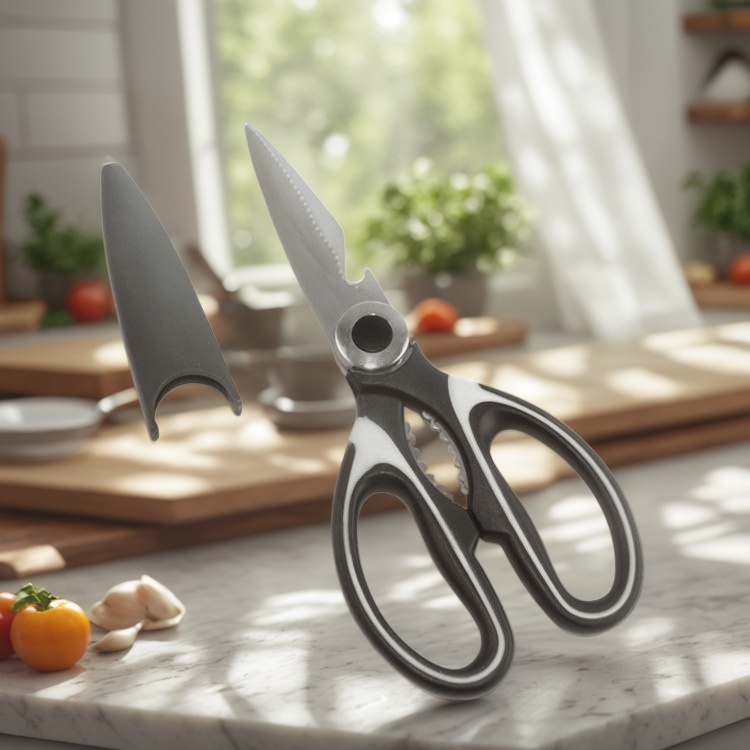
Key Takeaways
- A good kitchen scissors OEM should be evaluated on product quality, communication, customization ability, and order control.
- Do not rely only on catalog photos; request samples and confirm blade, handle, packaging, and safety details in writing.
- Useful customization may include handle color, packaging, logo placement, blade shape, or accessory options, depending on the factory's capabilities.
- Ask direct questions about inspection standards, production lead time, documentation, and after-sales handling before committing to bulk orders.
What Buyers Usually Need from a Kitchen Scissors OEM
Kitchen scissors, also called kitchen shears, are used for cutting herbs, food packaging, meat, poultry, vegetables, and other everyday kitchen tasks. Some designs may include extra functions such as a bottle opener, nutcracker, or protective sheath, but these should be confirmed with the supplier for each model. The best OEM choice depends on the market you serve: supermarket buyers may prioritize cost and packaging efficiency, while premium kitchenware brands may focus more on hand feel, finish, and gift-ready presentation.
Before contacting a factory, prepare a short product brief. Include your target customer, expected retail channel, preferred price position, packaging style, annual forecast if available, and any required market documents. This helps the supplier understand whether you need an existing model with branding or a more customized OEM project.
How to Evaluate Product Quality
Product quality should be judged from several angles. Blade sharpness matters, but so do balance, grip comfort, hinge stability, surface finish, and cleaning convenience. The original article mentions stainless steel, serrated blades, ergonomic handles, multi-functional features, and a protective sheath as qualities to consider. When sourcing, avoid assuming these details are included in every item. Ask the factory to confirm which features apply to the specific kitchen scissors model you are reviewing.
For sample evaluation, use a consistent checklist. Test cutting on common kitchen materials such as herbs, food packaging, thin cardboard, and poultry skin if relevant to your market. Open and close the scissors repeatedly to check smoothness. Review whether the handles suit different hand sizes. Inspect edges, joints, and packaging for defects. If the product includes a sheath or extra functions, check whether they are practical and safely finished.
OEM Customization Options to Discuss
Working directly with a factory for kitchen scissors can give buyers more control over brand presentation. However, customization levels vary by supplier. Some factories may only support logo and packaging changes, while others may support handle color, mold changes, blade details, or product sets. Ask early which options are available for your order quantity and timeline.
- Logo placement: confirm whether printing, engraving, labeling, or packaging branding is available.
- Handle design: ask about available colors, materials, surface texture, and whether custom molds are possible.
- Blade configuration: confirm blade shape, serration, thickness, finish, and intended cutting use.
- Packaging: compare blister cards, paper boxes, display boxes, hang tags, or other retail formats.
- Accessories: ask whether a protective sheath or other add-ons are available for the selected model.
Comparison Checklist for Shortlisting Suppliers
A structured comparison helps buyers avoid choosing only by the lowest quotation. Use the table below when reviewing several kitchen scissors OEM candidates.
| Evaluation Area | What to Check | Questions to Ask the Supplier |
|---|---|---|
| Product sample | Cutting performance, grip comfort, finish, hinge movement | Can you send a current production sample and confirm the sample matches bulk production? |
| Materials and features | Blade material, handle material, sheath, extra functions | Which features are included in this exact model, and can they be documented in the quotation? |
| Customization | Logo, color, packaging, blade or handle changes | What customization is available for my expected order quantity? |
| Quality control | Inspection steps, defect handling, sample approval process | What checks are performed before shipment, and how are nonconforming goods handled? |
| Commercial terms | Lead time, MOQ, payment terms, shipping support | What are the current MOQ, production time, and packing details for this item? |
Factory Communication and Project Control
Clear communication is a major sign of a reliable OEM partner. A professional supplier should answer technical and commercial questions directly, provide photos or videos when useful, and confirm details in writing. If answers are vague, ask again before moving forward. Misunderstandings around color, logo size, packaging layout, or carton markings can create costly problems later.
For OEM kitchen scissors projects, consider using a written specification sheet. It should include model reference, product dimensions if confirmed, approved sample photos, logo position, packaging artwork, carton marks, inspection requirements, and agreed shipment terms. Keep the final approved sample as the reference for bulk production when possible.
Quality Assurance Questions Before Bulk Orders
Because this article should not invent certifications, testing results, or production capacity, buyers should request current evidence directly from the supplier. The correct questions depend on your market and sales channel. For example, a retailer may require packaging barcode rules, warning labels, or documentation. An importer may need shipping marks, packing lists, and product descriptions that match customs requirements.
- What inspection process is used for blade sharpness, handle assembly, and appearance?
- Can the factory provide pre-production and mass-production samples for approval?
- What packaging artwork format is required, and who checks spelling, barcode, and layout?
- Which documents can the supplier provide for your destination market?
- How does the supplier handle defects, shortages, or shipment damage claims?
Balancing Price, Function, and Market Position
Kitchen scissors can be positioned as an entry-level household item, a practical multi-functional tool, or part of a branded kitchenware range. The lowest price may work for some promotional channels, but it can also limit material options, finishing quality, and packaging. A higher-cost item may be justified if the product feels better in hand, cuts more consistently, and presents well on the shelf.
When comparing quotes, make sure every supplier is pricing the same request. Small differences in blade thickness, handle material, packaging type, or included accessories can change the final cost. Ask suppliers to itemize options so you can decide where to save and where to invest.
Practical FAQ for Kitchen Scissors OEM Sourcing
What is the difference between OEM and wholesale kitchen scissors?
Wholesale usually means buying an existing product as offered. OEM may involve branding, packaging, color changes, or deeper customization based on your requirements and the factory's ability.
Should I start with an existing factory model?
For many buyers, yes. Existing models can reduce development complexity and make sampling faster. Custom molds or major design changes should be considered only when the sales volume and brand strategy justify the extra work.
How many samples should I test?
Test enough samples to check consistency, not just one perfect unit. Ask whether the sample comes from current stock, pilot production, or a previous batch.
Can I request a protective sheath or multi-functional features?
You can ask, but do not assume they are standard. Confirm whether the selected model includes a sheath, bottle opener, nutcracker, serrated blade, or other functions.
What should be confirmed before paying for bulk production?
Confirm the final specification, approved sample, packaging artwork, carton details, lead time, inspection method, payment terms, and responsibility for any changes after approval.
Final Sourcing Advice
The best kitchen scissors OEM is the one that can match your product brief, communicate clearly, provide reliable samples, and control quality from production to packaging. Treat the process as a structured sourcing project rather than a quick catalog purchase. By asking detailed questions and recording decisions in writing, buyers can reduce risk and build a more dependable kitchenware supply chain.
