




Kitchen Scissors OEM: A Practical Sourcing Guide for Multi-Functional Kitchen Shears
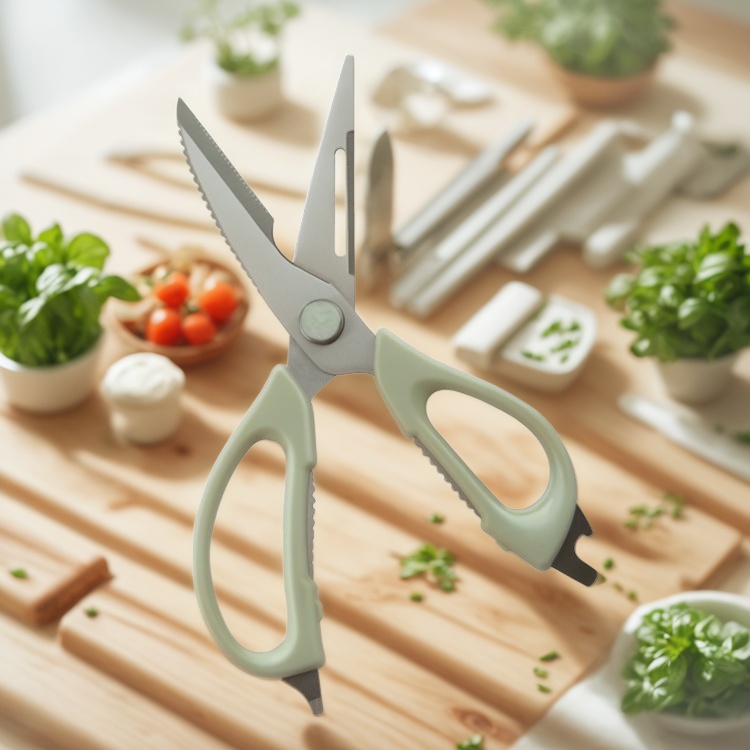
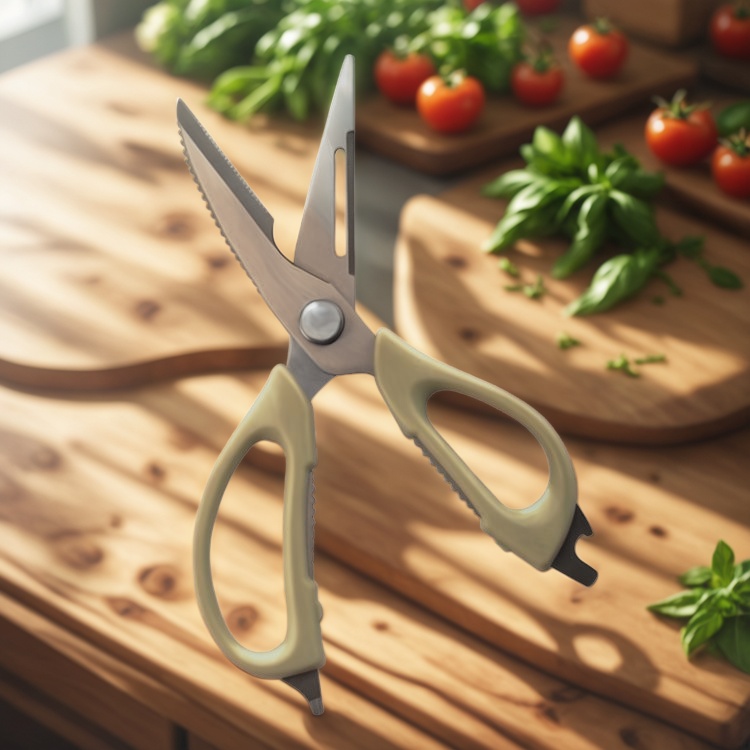
Kitchen scissors are small tools, but they can influence how efficiently people prepare food every day. For retailers, importers, promotional buyers, and private-label brands, an OEM kitchen scissors project should be evaluated as both a product-design decision and a supplier-management decision. The original product description highlights stainless steel construction, a fine serrated edge, ergonomic green handles, an integrated notch for opening bottles or cracking nuts, and a bottle opener in the handle. Those are useful starting points, but B2B buyers should still verify every detail through samples, drawings, testing questions, and written specifications before placing an order.
Key Takeaways
- OEM kitchen scissors should be assessed for blade sharpness, comfort, cleaning convenience, and realistic multi-function use.
- Stainless steel is stated in the source, but buyers should ask the supplier to confirm the specific grade, hardness target, and corrosion-resistance expectations.
- Features such as serrated edges, nut-cracking notches, and bottle openers can add value only when they are safe, durable, and easy to explain on packaging.
- Before confirming bulk production, request samples, packaging mockups, inspection criteria, and answers to compliance questions for the destination market.
What Makes OEM Kitchen Scissors Different?
Standard kitchen scissors are usually bought as ready-made products. OEM kitchen scissors, by contrast, may allow a buyer to request changes such as handle color, packaging format, logo placement, instruction wording, or feature combinations. The goal is not simply to add a logo; it is to create a product that fits the buyer's retail channel, price position, and end-user expectations.
For a kitchenware brand, the scissors should feel reliable in the hand, cut cleanly through common food-preparation tasks, and be simple to clean after use. For a distributor or wholesaler, consistency matters just as much. A product that looks good in a sample but varies in blade alignment, handle finish, or packaging quality during mass production can create after-sales problems. That is why OEM sourcing should begin with clear technical and commercial questions, not only product photos.
Core Functions to Review Before Ordering
The source article describes the scissors as multi-functional, with a fine serrated edge for grip, a blade notch that can help open bottles or crack nuts, and a bottle opener in the handle. These functions can make the item more attractive, especially for consumers who want one compact tool for several kitchen tasks. However, buyers should check whether each function works comfortably and safely in real use.
- Cutting performance: Ask for samples and test them on herbs, packaging, poultry skin, and other intended materials.
- Serrated edge quality: Confirm whether the serration grips food without tearing excessively or making cleaning difficult.
- Notch function: Test the notch on appropriate items and confirm that the design does not weaken the blade area.
- Bottle opener position: Make sure users can apply force without the handle slipping or creating sharp pressure points.
- Cleaning access: Check whether food residue can collect around pivots, serrations, or handle joints.
Materials, Blade Design, and Buyer Questions
The original article states that the scissors are crafted from robust stainless steel and are designed to maintain sharpness over time. That is useful, but for procurement purposes, the phrase "stainless steel" is not enough. Buyers should ask what stainless steel grade is used, whether the blades receive heat treatment, what hardness range is targeted, and how corrosion resistance is checked. If the supplier cannot provide a clear answer, the buyer should treat the specification as unconfirmed.
Blade alignment is another important factor. Scissors do not cut well because of sharpness alone; the two blades must meet with the right tension. Too loose, and they may bend or fail to cut cleanly. Too tight, and users may experience hand fatigue. If the scissors are intended for tougher kitchen tasks such as cutting small bones or dense packaging, the buyer should ask what use cases the supplier recommends and what limitations should appear in user instructions.
Comfort, Handle Color, and User Experience
The source mentions ergonomic handles designed to reduce hand fatigue, along with a soft green color. Ergonomic claims should be checked through actual handling. A handle may look comfortable in a photo but feel narrow, slippery, or awkward when wet. For OEM buyers, handle design is also a branding decision. Green may communicate freshness and kitchen use, but the buyer should confirm whether color matching is available and what tolerance applies between samples and bulk goods.
For private-label projects, consider who will use the scissors most often. A household consumer may prioritize comfort and easy storage. A cooking-school kit may need durability and clear instructions. A promotional set may require simple packaging and consistent appearance. The best design choice depends on the channel, not only on the number of functions listed.
OEM Comparison Checklist
| Evaluation Area | What to Check | Questions to Ask the Supplier |
|---|---|---|
| Blade material | Stainless steel type, finish, corrosion resistance | What grade is used, and can it be written in the specification? |
| Cutting performance | Sharpness, serration grip, blade alignment | What cutting tests are performed before shipment? |
| Multi-function parts | Notch, nut-cracking use, bottle opener | Which functions are recommended for normal consumer use? |
| Handle design | Grip comfort, color, durability, wet-hand feel | Can handle color, logo, or texture be customized? |
| Packaging | Retail display, instructions, warnings, barcode space | Can packaging artwork and language be adapted for the market? |
| Quality control | Inspection standard, defect definitions, sample approval | What defects are considered critical, major, and minor? |
Packaging and Retail Presentation
Kitchen scissors are often sold in hanging cards, blister packs, paper boxes, or kitchenware sets. Packaging should show the main functions clearly without overpromising. If the product includes a serrated blade, bottle opener, and cracking notch, the packaging can explain those uses with concise icons and safe-use instructions. Buyers should avoid unclear claims such as "cuts everything" or "professional grade" unless they have documentation and a defined meaning for the destination market.
Instruction wording is especially important for multi-functional tools. Consumers should understand how to clean the scissors, what materials are suitable for cutting, and what tasks are not recommended. If the scissors will be sold internationally, buyers should confirm language requirements, warning-label expectations, recycling marks, and barcode placement with their own compliance or retail team.
Sample Approval and Quality Control
Before bulk production, request pre-production samples that match the intended material, color, function, logo method, and packaging. A sample is not only for appearance; it should become the approved reference for production. Buyers can record simple inspection points such as blade opening smoothness, visible scratches, rust marks, handle defects, cutting performance, package printing, and carton labeling.
It is also helpful to define acceptable and unacceptable issues in writing. For example, small color variation may be acceptable within an agreed range, while loose blade assembly, sharp burrs on the handle, or incorrect packaging language should be treated as serious defects. If third-party inspection is required, the inspection checklist should be shared with the supplier before production begins.
FAQ
What should I confirm first when sourcing OEM kitchen scissors?
Start with the product specification: blade material, handle material, size, functions, logo position, packaging type, and target market. Then request samples that match those details as closely as possible.
Can the handle color be customized?
The source product is described with soft green handles. For OEM orders, color customization may be possible, but buyers should ask about available colors, color-matching process, tolerance, and whether custom color affects cost or lead time.
Are serrated kitchen scissors better than straight-edge scissors?
Serrated edges can improve grip on slippery or tough materials, but they may require more attention during cleaning. The better choice depends on the intended food-preparation tasks and user preference.
What commercial details should buyers ask a supplier?
Ask about MOQ, sample policy, lead time, packaging options, logo methods, quality-control process, payment terms, export documents, and any compliance information needed for your market. Do not assume these details until the supplier confirms them in writing.
How can I reduce risk before placing a bulk order?
Use approved samples, written specifications, packaging proofs, inspection criteria, and clear communication about defects. For larger orders, consider pre-shipment inspection based on agreed quality standards.
