








Kitchenware Manufacturer for Importers: Material Control, Processing Stability, and Retail-Ready Supply
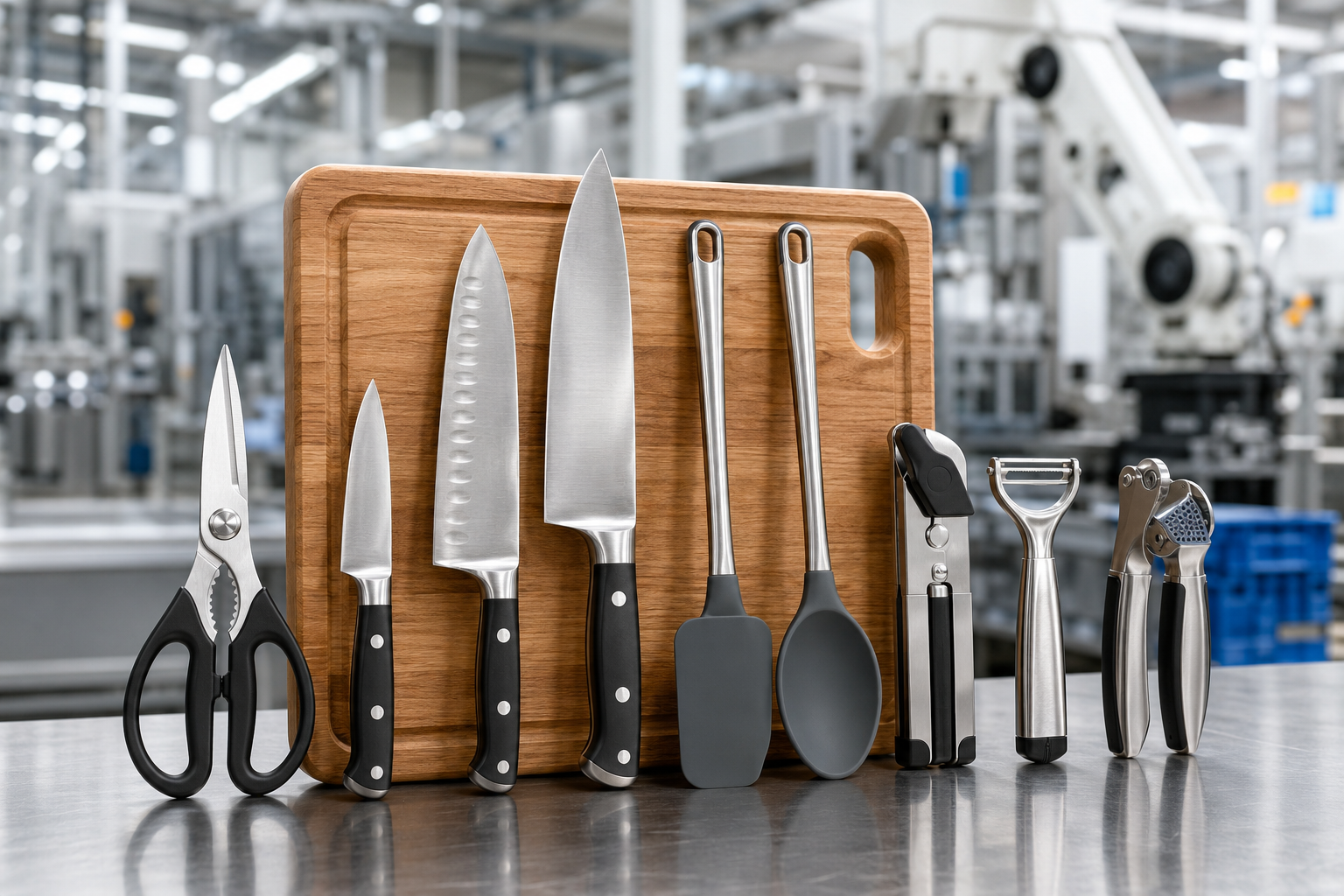
Choosing a kitchenware manufacturer is not as simple as comparing catalogs and unit prices. Importers often face the same hidden problems after the order is placed: scissors lose cutting power too quickly, knife handles feel loose after repeated use, silicone tools smell unpleasant, packaging arrives crushed, or a retail buyer suddenly asks for compliance documents before approving the product line. These are not small details. For kitchenware that touches food, cuts ingredients, sits on shelves, and carries a buyer’s brand name, the supplier must control materials, processing, assembly, inspection, and packaging as one complete system. BONET HOUSEWARE CO.,LTD is based in Yangjiang, a city widely associated with knife and scissors manufacturing, and its public product range covers kitchenware, professional scissors, kitchen knives, utensils, chopping boards, and multi-functional kitchen tools.
Material Decisions Shape the Product Before Production Starts
A kitchen tool may look simple, but every useful product starts with material judgment. For kitchen scissors and knives, stainless steel affects edge retention, corrosion resistance, cleaning performance, and long-term appearance. For handles, materials such as PP, TPR, ABS, or soft-touch plastics influence grip comfort, anti-slip feeling, hand fatigue, and color stability. For silicone utensils, buyers need to consider flexibility, odor control, heat resistance, and whether the material is appropriate for repeated food-preparation use.
This is especially important because kitchenware often falls into food-contact use. The U.S. FDA explains that food contact substances may include cookware, food preparation surfaces, packaging components, and processing equipment. That means importers should not treat material selection as a decoration issue; it is part of product safety, market access, and buyer confidence.
What a Kitchenware Manufacturer Must Control in Processing
A reliable kitchenware manufacturer does not depend only on a good sample. It depends on repeatable production. For cutting tools, production consistency usually begins with stamping or blade forming, followed by straightening, heat treatment, rough grinding, fine grinding, polishing, cleaning, assembly, inspection, and packing. If blade forming is inaccurate, later polishing cannot fully correct the shape. If heat treatment is unstable, one shipment may perform differently from the next. If handle molding is poorly controlled, the product may look acceptable but feel uncomfortable during real use.
This is where factory process discipline becomes visible. BONET’s manufacturing information highlights procedures such as stamping, line straightening, heat treatment, grinding, water grinding, polishing, injection molding, ultrasonic cleaning, assembl
y, quality inspection, final cleaning, anti-rust oil treatment, and packing. For importers, that workflow matters because each stage reduces a different type of risk: blade deformation, poor cutting feel, surface defects, weak handle grip, rust marks, unstable assembly, or damaged packaging.
Why Professional Experience Matters for Retail Programs
Retail kitchenware is not sold in a vacuum. A supermarket buyer, Amazon seller, homeware distributor, or private-label brand needs a product that looks clear, feels reliable, and can be explained quickly. A capable kitchenware manufacturer should help buyers think beyond one SKU. For example, a basic kitchen scissors model may serve mass retail, a detachable stainless steel version may target hygiene-conscious users, and a multi-functional shear with opener or nutcracker features may work better for online product pages.
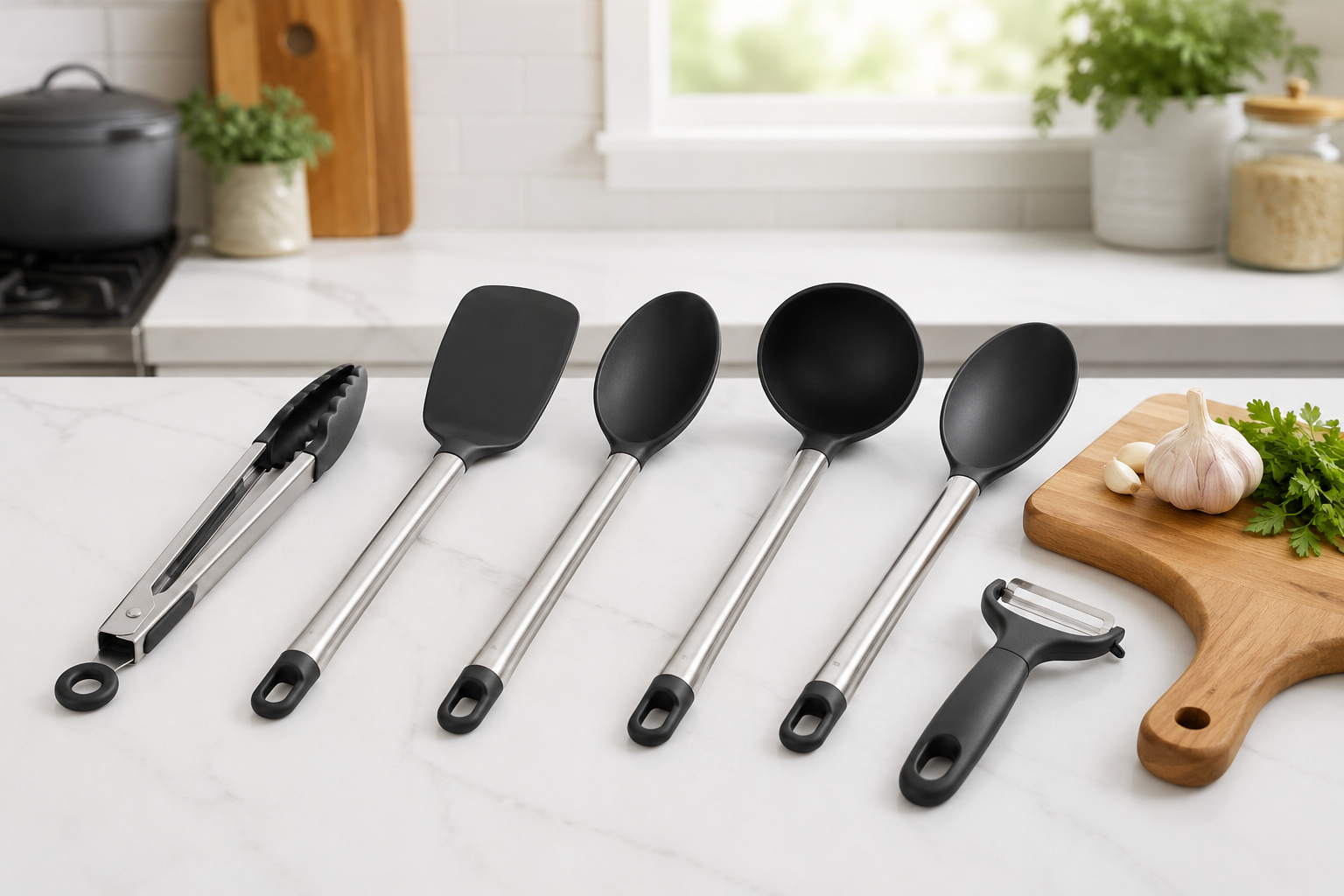
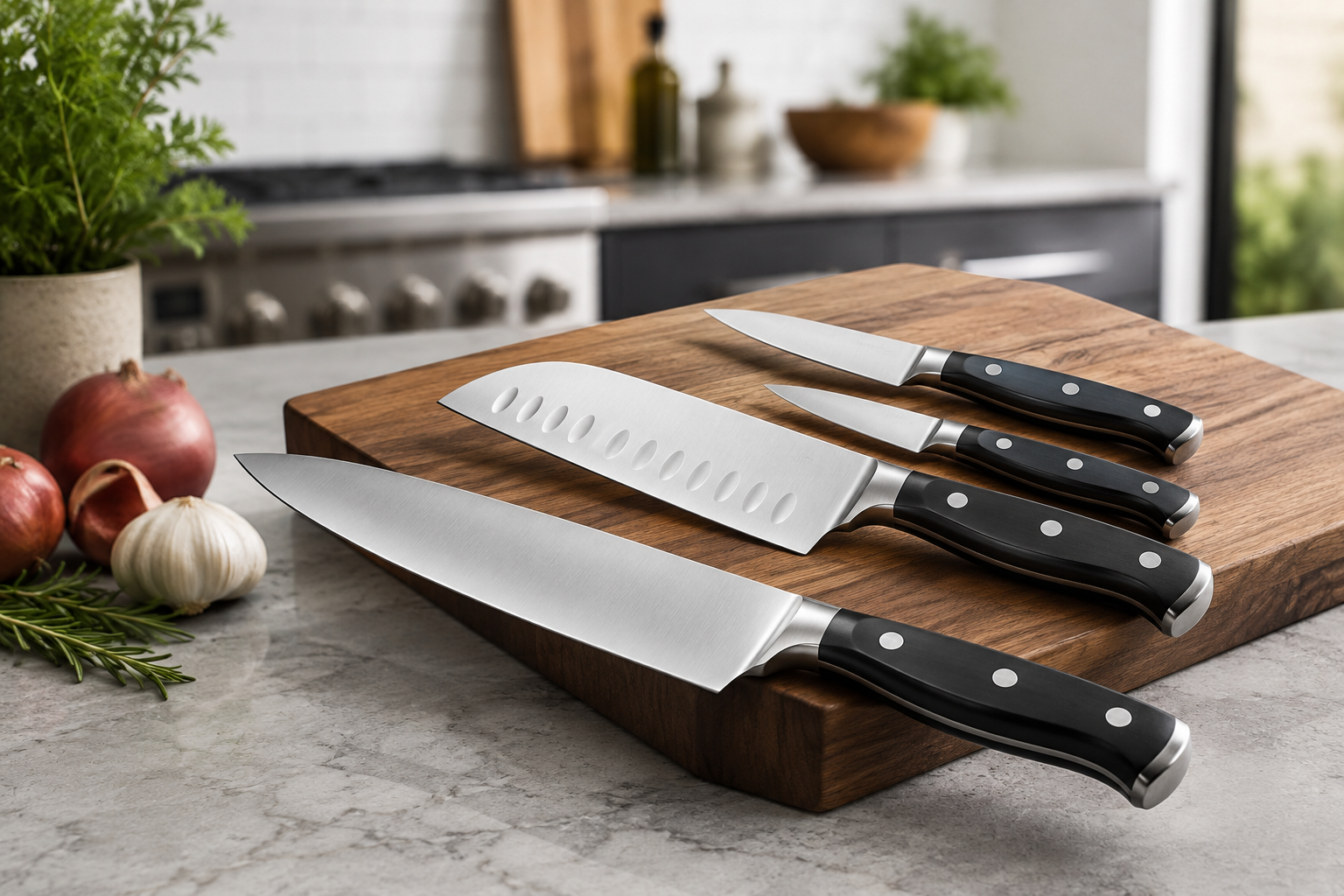
The same logic applies to kitchen knives and silicone tools. A knife set needs the right blade combination: chef knife, bread knife, utility knife, paring knife, or santoku knife depending on the market. A silicone utensil set needs practical daily-use pieces, not random shapes. A chopping board should match the knife category in size, color, and positioning. When these products are planned together, the buyer gets a line that feels structured rather than scattered.
ISO describes its work as bringing experts together to agree on better ways of doing things, including quality management and safer, more consistent systems. For kitchenware sourcing, that mindset is useful: buyers need repeatable standards, not one impressive sample followed by inconsistent bulk production.
Product Structure: From Cutting Performance to Hand Feel
The strongest kitchenware products usually combine three things: a clear function, a reliable material, and a comfortable user experience. Kitchen scissors need sharp blades, stable pivot structure, clean cutting action, and handles that do not punish the hand during repeated use. Kitchen knives need blade geometry, balance, and edge finishing that support daily food preparation. Silicone spatulas and spoons need soft contact with cookware and enough rigidity to handle stirring, scraping, and serving. Chopping boards need a surface that feels safe, clean, and appropriate for the target market.
This is where industrial design and manufacturing intersect. A product can be technically strong but unpleasant to use. It can also look attractive but fail under repeated kitchen tasks. For B2B buyers, the right balance is practical: enough material strength for durability, enough visual value for retail, and enough ergonomic detail to make users feel the difference.
Packaging Is Part of the Product, Not the Final Step
Many sourcing problems appear at the packaging stage because packaging is treated too late. For kitchen scissors and knives, packaging must protect sharp edges, reduce movement during transport, and explain product function clearly. For small kitchen gadgets, the package must make the use case obvious within seconds. For multi-functional tools, icons, short claims, and visible structures often work better than long descriptions.
A retail-ready kitchenware program should consider hanging cards, blister packs, gift boxes, color labels, barcode areas, instruction placement, carton strength, and shelf display. Packaging also affects returns. If the product arrives scratched, bent, or poorly presented, the end customer does not care that the factory made the blade well. The buyer simply loses margin and trust.
A Practical Case: Building a Kitchen Scissors Line for Retail Buyers
Consider a mid-size importer preparing a kitchen scissors program for supermarkets and online retail. The buyer does not need just one product. They need a small line: a basic kitchen shear for entry-level shelves, a detachable stainless steel shear for hygiene-focused shoppers, and a multi-functional model with bottle opener or nutcracker details for higher-margin retail.
A practical solution would start with stainless steel blade selection, handle material confirmation, pivot structure testing, and cutting performance checks on food-preparation tasks such as herbs, poultry, vegetable stems, packaging, and light household use. Then the supplier would align the packaging: simple function icons for retail shelves, stronger visual claims for online images, and carton protection for export shipping. This type of case is realistic because most importers are not trying to buy “a tool.” They are trying to reduce complaints, simplify category planning, and make each SKU easier for their customers to understand.
Responsible Sourcing Is Becoming a Buyer Requirement
Kitchenware buyers are paying more attention to supplier transparency, not only product price. Large retailers and brand owners may ask about social responsibility, ethical sourcing, documentation, and supply chain visibility. Sedex states that it helps procurement, compliance, supply chain, and sustainability teams build resilient, transparent, and ethical supply chains. amfori BSCI also focuses on responsible business practices, supplier engagement, social risk assessment, and risk mitigation.
For kitchenware importers, this means supplier evaluation should include more than product appearance. Buyers should check material documentation, production workflow, quality inspection, packaging reliability, audit readiness, and communication speed. A low price becomes expensive when the supplier cannot support a retailer’s compliance questions or repeat the same quality in the next order.
Buyer Checklist Before Placing Bulk Orders
Before confirming a bulk kitchenware order, importers should review several points carefully. First, check whether the material matches the target market: stainless steel for cutting tools, suitable handle materials for grip, and appropriate silicone for utensils. Second, confirm whether the product function is easy to understand. A multi-functional tool must solve real kitchen tasks, not simply carry extra features. Third, review the production process: stamping, heat treatment, grinding, polishing, injection molding, assembly, and inspection. Fourth, examine packaging strength and shelf communication. Finally, ask whether the supplier can support private-label needs such as color, logo, packaging, product combination, and sample adjustment.
The right kitchenware manufacturer should be able to discuss these details before mass production begins. That conversation is often the difference between a smooth order and months of correction.
FAQ
Q1: What type of buyers are best suited for BONET kitchenware products?
BONET is suitable for importers, distributors, supermarkets, homeware retailers, online sellers, and private-label brands looking for kitchen scissors, kitchen knives, multi-functional kitchen tools, silicone utensils, and chopping boards.
Q2: What should buyers compare before selecting a supplier?
Buyers should compare material selection, processing workflow, blade performance, handle comfort, packaging options, quality inspection, compliance support, and whether the supplier can provide stable bulk production rather than only attractive samples.
Q3: Why are kitchen scissors and knife sets good product categories for B2B buyers?
They are practical, repeat-use kitchen products with clear retail value. When designed with durable materials, comfortable handles, good packaging, and clear function points, they can serve supermarkets, online stores, gift channels, and wholesale programs.
Building a More Reliable Kitchenware Supply Chain
The right kitchenware manufacturer helps importers reduce sourcing risk before production problems appear. BONET combines Yangjiang’s knife-and-scissors manufacturing background with a practical product range covering kitchen scissors, kitchen knives, multi-functional tools, silicone utensils, and chopping boards. For buyers who want to review available product directions and build a stronger retail kitchenware line, start from the BONET kitchenware product range.
For long-term cooperation, supplier selection should include factory experience, material control, processing stability, quality inspection, packaging planning, and responsible sourcing awareness. To learn more about BONET’s company background and manufacturing positioning, visit the BONET About Us page.
