




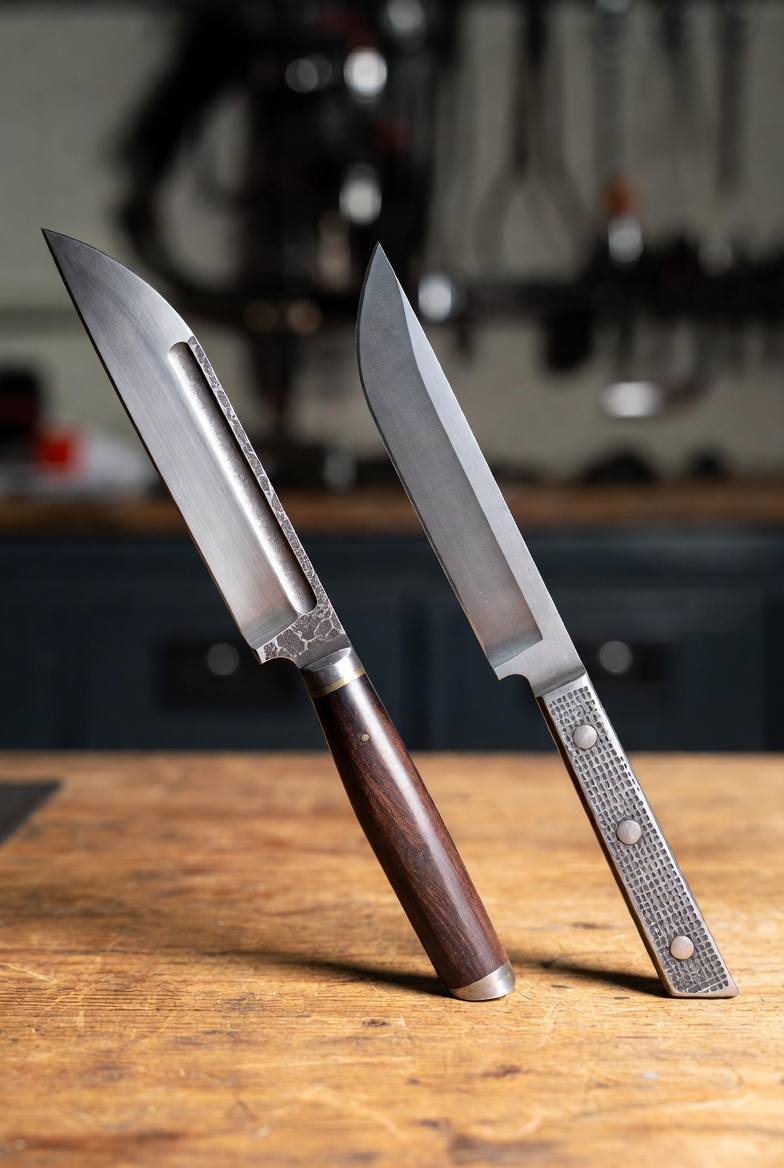
Knife Comparison: Forged vs Stamped and Performance
Choosing a kitchen knife is easier when you compare how it is made, how it feels in the hand, and how it performs on everyday ingredients. A Santoku knife is a useful reference point because it is commonly used for slicing, dicing, and chopping vegetables, meat, and fish. The Bonet Houseware Santoku knife shown here is described with a stainless steel blade, a scalloped edge, and an ergonomic black handle, which are all features worth evaluating in any knife comparison.
This guide explains forged vs stamped knife construction, what blade performance really means, and how buyers can assess a knife before adding it to a home kitchen, retail range, or hospitality purchasing list. It avoids assuming specifications that should be verified with the supplier, such as steel grade, hardness, blade thickness, testing data, packaging, or commercial terms.
Key Takeaways
- Forged and stamped knives can both perform well, but they differ in production method, weight, balance, and cost expectations.
- A Santoku knife is best judged by cutting control, edge feel, handle comfort, and ease of maintenance.
- A scalloped edge can help reduce friction and limit food sticking during slicing.
- For sourcing or wholesale purchases, ask for confirmed specifications instead of relying on generic knife claims.
Forged vs Stamped Knives: What Is the Difference?
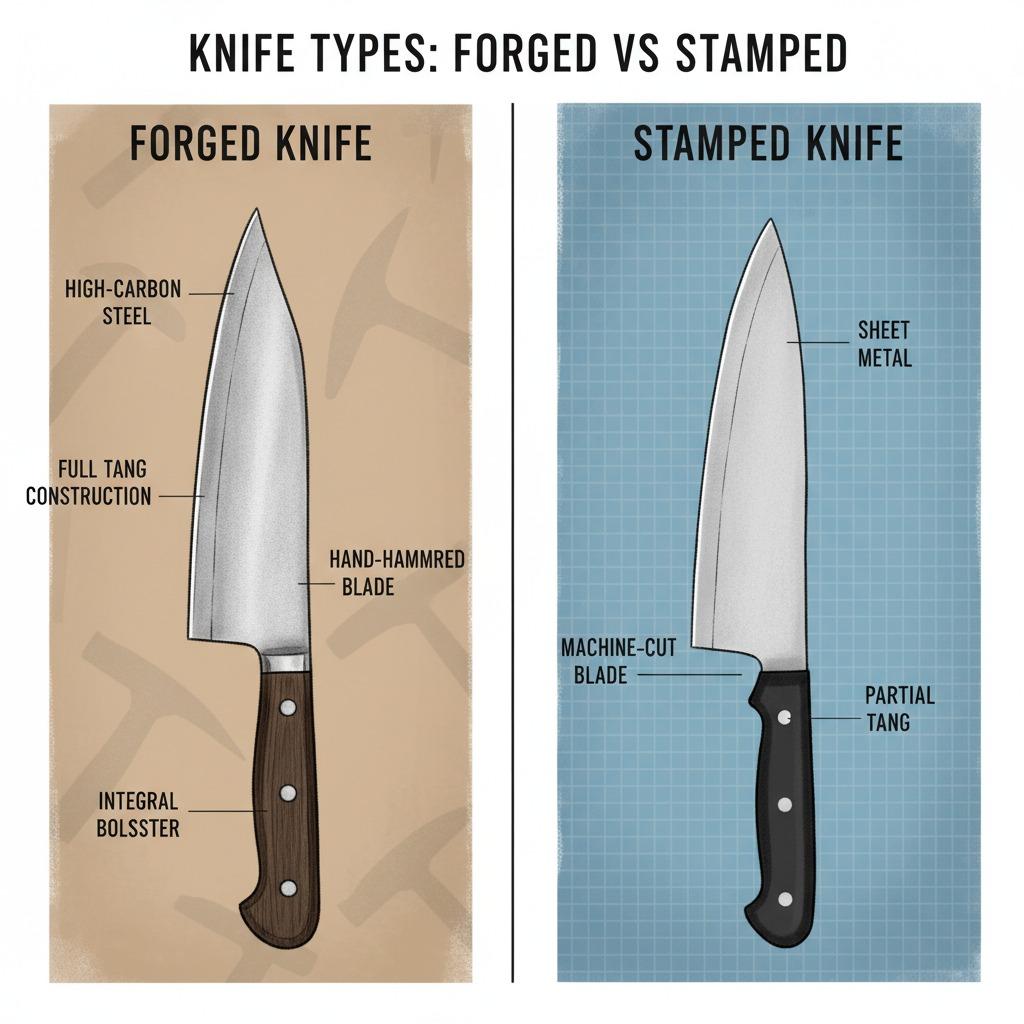
A forged knife is typically shaped from a heated piece of steel and formed under pressure before grinding, finishing, and sharpening. This process often produces a knife with more weight and a solid feel, although the final result depends on design and quality control. Some forged knives include a bolster or fuller tang construction, but those details should be confirmed for the specific product.
A stamped knife is cut from a sheet of steel, then heat treated, ground, polished, and sharpened. Stamped knives are often lighter and can be more cost-efficient to produce. A good stamped knife can still be sharp, practical, and durable when made with suitable steel and proper heat treatment.
The important point is that “forged” is not automatically better for every user, and “stamped” is not automatically low quality. Performance depends on steel, heat treatment, edge geometry, handle design, balance, sharpening, and care.
Comparison Checklist: Forged, Stamped, and Santoku Features
| Feature to Compare | Forged Knife | Stamped Knife | Why It Matters |
|---|---|---|---|
| Weight and balance | Often heavier with a substantial feel | Often lighter and easy to maneuver | Affects comfort during long prep sessions |
| Blade construction | Formed from heated steel | Cut from steel sheet | Influences production cost and feel |
| Edge performance | Can hold an edge well if heat treated properly | Can be sharp and efficient with good finishing | Determines cutting precision and maintenance frequency |
| Scalloped edge | May be included depending on design | May be included depending on design | Helps reduce friction and food sticking |
| Best use case | Users who prefer stability and weight | Users who prefer light handling and value | Matches the knife to the cook’s habits |
How to Judge Santoku Blade Performance
Blade performance is not just about sharpness on day one. A practical kitchen knife should cut cleanly, guide easily, and feel predictable. For a Santoku knife, look at how it handles common prep tasks: thin vegetable slices, controlled downward chopping, mincing herbs, and portioning boneless proteins.
The stainless steel blade noted in the original product information is a useful feature for everyday kitchen environments because stainless steel is generally selected for corrosion resistance and easy cleaning. However, stainless steel varies widely by grade and treatment, so buyers should ask the supplier to confirm the exact steel type, hardness range, and recommended maintenance practices if those details are important to their market.
The scalloped edge is another practical feature. Small indentations along the blade surface can reduce contact between food and steel, which may help slices release more easily. This is especially useful when cutting potatoes, cucumbers, onions, or other ingredients that tend to cling to a flat blade.
Handle Comfort, Grip, and Safety
A knife that feels sharp but uncomfortable will not perform well in real kitchen use. The Bonet Houseware Santoku knife is described with an ergonomic black handle intended to provide a comfortable, secure grip. When evaluating any knife, hold it in a pinch grip and a handle grip if possible. The handle should not twist, feel slippery, or create pressure points.
For household use, comfort matters because food preparation is repetitive. For restaurants, caterers, and retail buyers, handle comfort affects user satisfaction and repeat purchase potential. If sourcing for resale or hospitality, ask whether sample testing is available and whether the supplier can provide handle material details, packaging information, labeling options, and care instructions.
Product Selection Guidance for Different Buyers
Different buyers should prioritize different factors. A home cook may focus on comfort, easy cleaning, and an all-purpose blade profile. A professional kitchen may prioritize repeatable performance, durability, and easy replacement. A retailer or distributor should evaluate not only the knife itself but also the consistency of supply and the accuracy of product documentation.
- For home kitchens: choose a Santoku if you want one general-purpose knife for vegetables, boneless meat, fish, and daily prep.
- For frequent cooks: compare balance, handle shape, and cutting comfort before focusing only on appearance.
- For wholesale buyers: request confirmed specifications, sample units, packaging details, barcode options, and after-sales terms.
- For OEM inquiries: ask which features can be customized and which claims require supplier documentation.
Use and Care Tips for Better Knife Life
Even a well-made knife performs poorly if it is stored loose in a drawer or used on hard surfaces. Use wood or plastic cutting boards instead of glass, stone, or ceramic boards. Wash the knife by hand, dry it promptly, and store it in a knife block, sheath, magnetic strip, or tray insert.
Maintain the edge with regular honing if appropriate, and sharpen when cutting requires extra pressure. Do not use a Santoku as a cleaver for bones or frozen food unless the supplier specifically states that it is designed for that use. Avoid twisting the blade during cutting, as this can damage the edge.
Questions to Ask Before Buying or Sourcing
Before placing a consumer order, wholesale order, or OEM inquiry, ask clear questions rather than relying on broad marketing language. Useful questions include: What is the blade steel grade? Is the knife forged or stamped? What is the blade hardness range? What is the handle material? Is the scalloped edge on one side or both sides? What packaging is supplied? Are care instructions included? For B2B purchases, also ask about sample availability, lead time, labeling, carton details, and quality inspection process.
These questions help buyers compare knives fairly and avoid confusion between general category benefits and confirmed product specifications.
FAQ
Is a forged knife always better than a stamped knife?
No. Forged knives often feel heavier and more substantial, but a stamped knife can also be sharp, comfortable, and reliable. Compare the actual steel, heat treatment, balance, and edge quality.
What is a Santoku knife best used for?
A Santoku is commonly used for slicing, dicing, and chopping vegetables, boneless meat, and fish. It is a versatile everyday prep knife rather than a bone-cutting tool.
Why choose a scalloped edge?
A scalloped edge can reduce friction between the blade and food, helping slices release more easily. This is helpful with sticky or moist ingredients.
What should wholesale buyers confirm?
Wholesale buyers should confirm steel grade, construction method, handle material, packaging, labeling, sample policy, lead time, and any test or compliance documents required for their market.
How should I clean and store a Santoku knife?
Hand wash it, dry it promptly, and store it safely in a block, sheath, tray, or magnetic holder. Use a suitable cutting board and sharpen as needed.
