




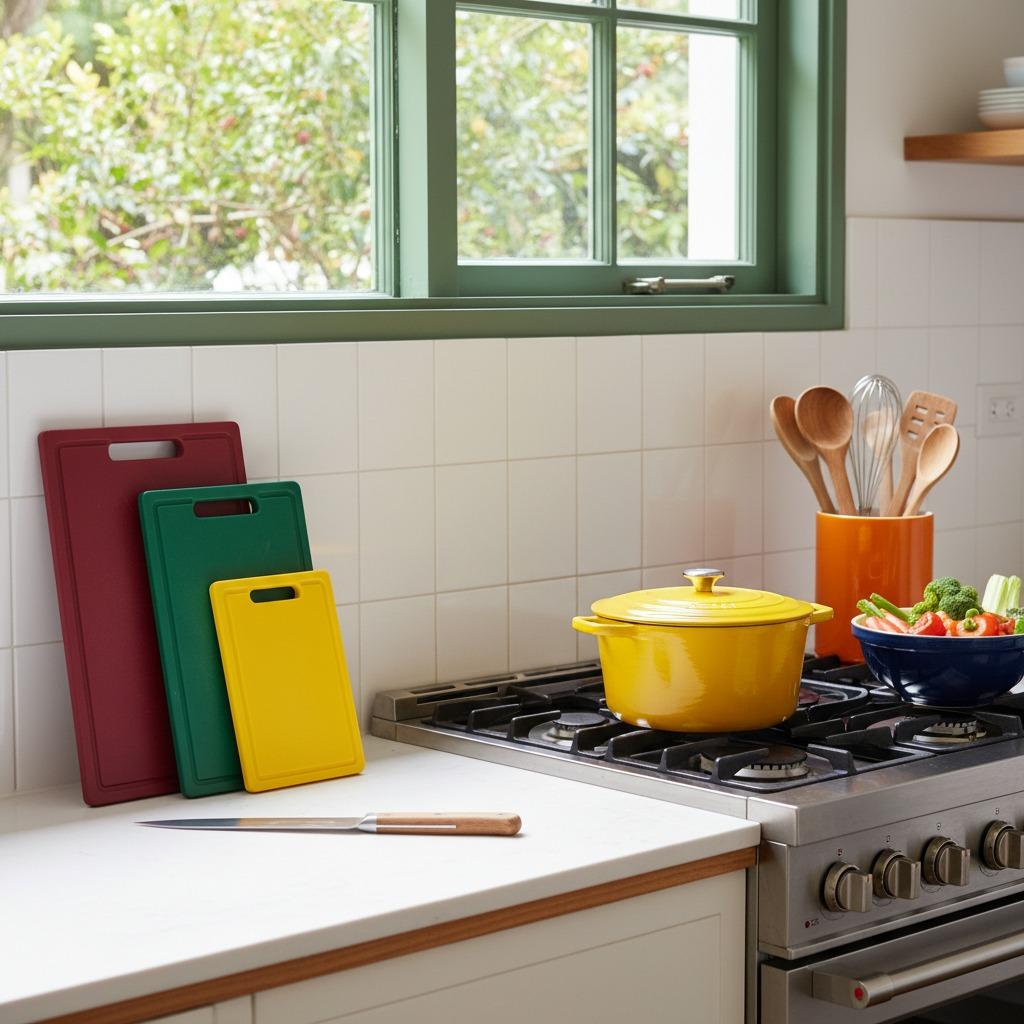
Large vs. Small: Finding the Perfect Plastic Board Fit
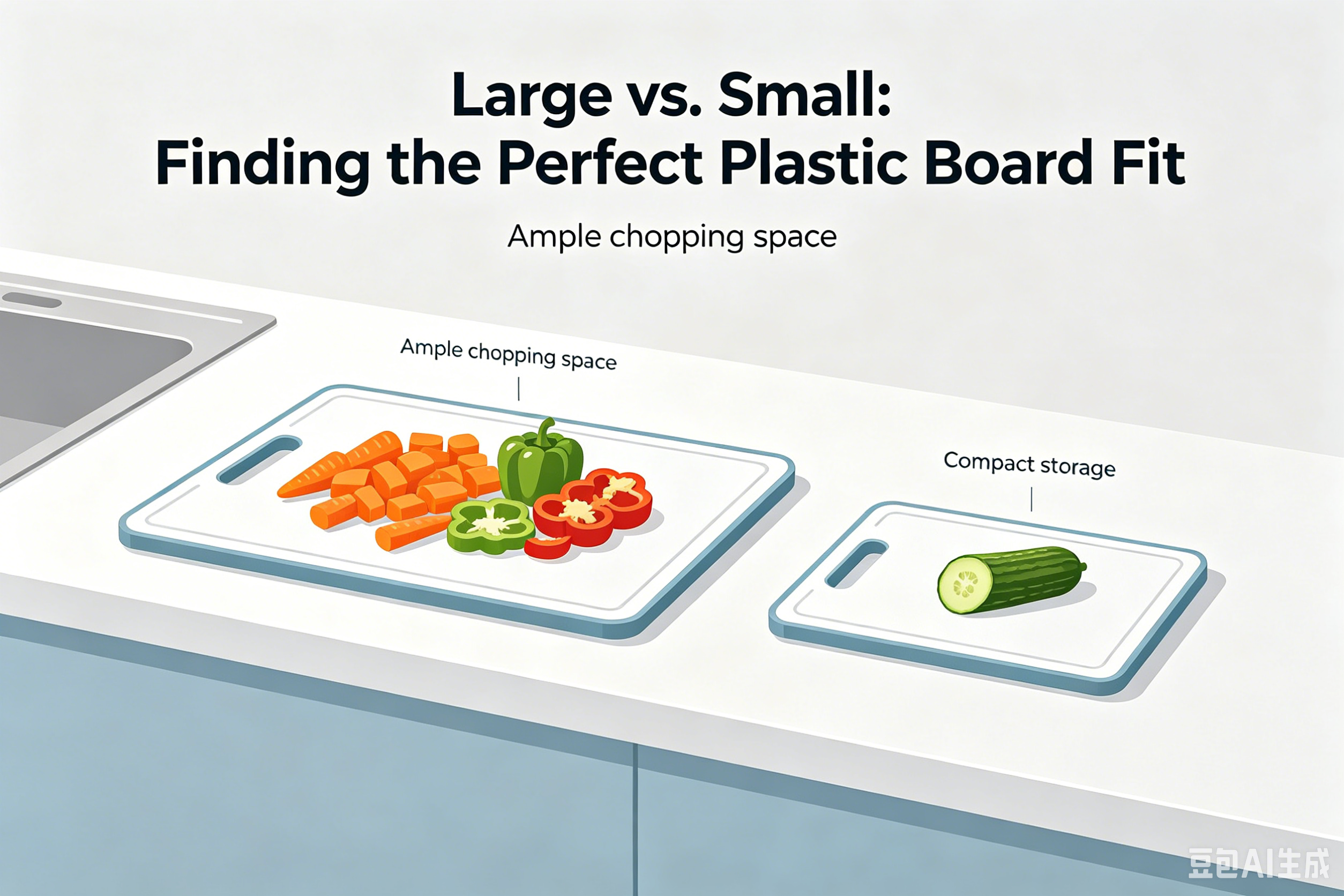
Plastic cutting boards are used for everything from slicing fruit to preparing raw ingredients for a full dinner. Size looks like a simple preference, but it affects safety, cleanup, storage, and how smoothly food prep moves across the counter. A board that is too small can feel crowded and unstable. A board that is too large may be awkward to wash or store, especially in a compact kitchen.
This guide compares large and small plastic cutting boards in practical terms, so you can choose the best fit for your cooking habits rather than buying only by appearance or price.
Key Takeaways
- Large plastic cutting boards are best for batch prep, meat handling, and ingredients that need room to spread out.
- Small plastic cutting boards are convenient for quick tasks, snacks, garnishes, and kitchens with limited storage.
- Most homes benefit from a mixed set: one larger board plus one or two smaller boards for daily use.
- Before choosing a large board, measure your sink, dishwasher space, drawer, or cabinet slot.
- Replace any plastic board when deep knife grooves become difficult to clean.
Why Cutting Board Size Matters
A cutting board is not just a flat surface. It defines your working area. When the board is large enough, chopped vegetables, trimmed ends, and prepared ingredients can stay separated. That reduces clutter and helps prevent food from rolling onto the counter. A larger surface also gives your knife hand and guide hand more room, which can improve control during repetitive chopping.
Small boards solve a different problem: convenience. If you only need to cut a lemon, mince garlic, slice cheese, or prepare a sandwich ingredient, pulling out a large board can feel unnecessary. A compact plastic board is easier to rinse, lighter to move, and simple to store in a drawer or upright rack.
The right answer depends on the task. The best kitchen setup usually includes more than one size, because no single board is ideal for every job.
Large Plastic Cutting Boards: Best Uses and Trade-Offs
Large plastic cutting boards are useful when food prep requires space and stability. They are especially helpful for family cooking, meal prep, vegetables with long stems, large fruit, dough handling, or breaking down bigger ingredients. With more surface area, you can keep raw ingredients on one side and cut pieces on the other without constantly transferring food to a bowl.
Large boards also tend to feel steadier simply because they cover more counter space. However, they are not always easy to manage. A large plastic board may not fit comfortably in a small sink. It may be too tall for a dishwasher rack, depending on the board and appliance. It also needs a practical storage location, such as a wide cabinet, vertical organizer, or wall hook if the board has a hanging hole.
Choose a large board when you regularly cook full meals, cut many ingredients at once, or want fewer interruptions during prep. Avoid oversizing if the board will be difficult to wash properly after each use.
Small Plastic Cutting Boards: Best Uses and Limits
Small plastic cutting boards are popular because they reduce friction in everyday cooking. They are lightweight, quick to rinse, and easy to grab. For apartments, office kitchens, dorm-style cooking areas, RVs, and small households, a small board can handle many routine tasks without taking up much space.
The limitation is working room. When a board is too small, chopped food can pile up near the knife, skins and scraps can fall onto the counter, and ingredients may slide off the edge. Small boards are also less suitable for forceful chopping or large ingredients. If you use one for bigger prep jobs, you may need to stop often to clear the surface.
Small boards work best for controlled, low-volume tasks: cutting fruit for one serving, slicing a tomato, preparing herbs, trimming small vegetables, or setting up garnishes. They are useful additions, but they should not be the only board in a kitchen that handles regular meal prep.
Large vs. Small Plastic Cutting Boards Comparison
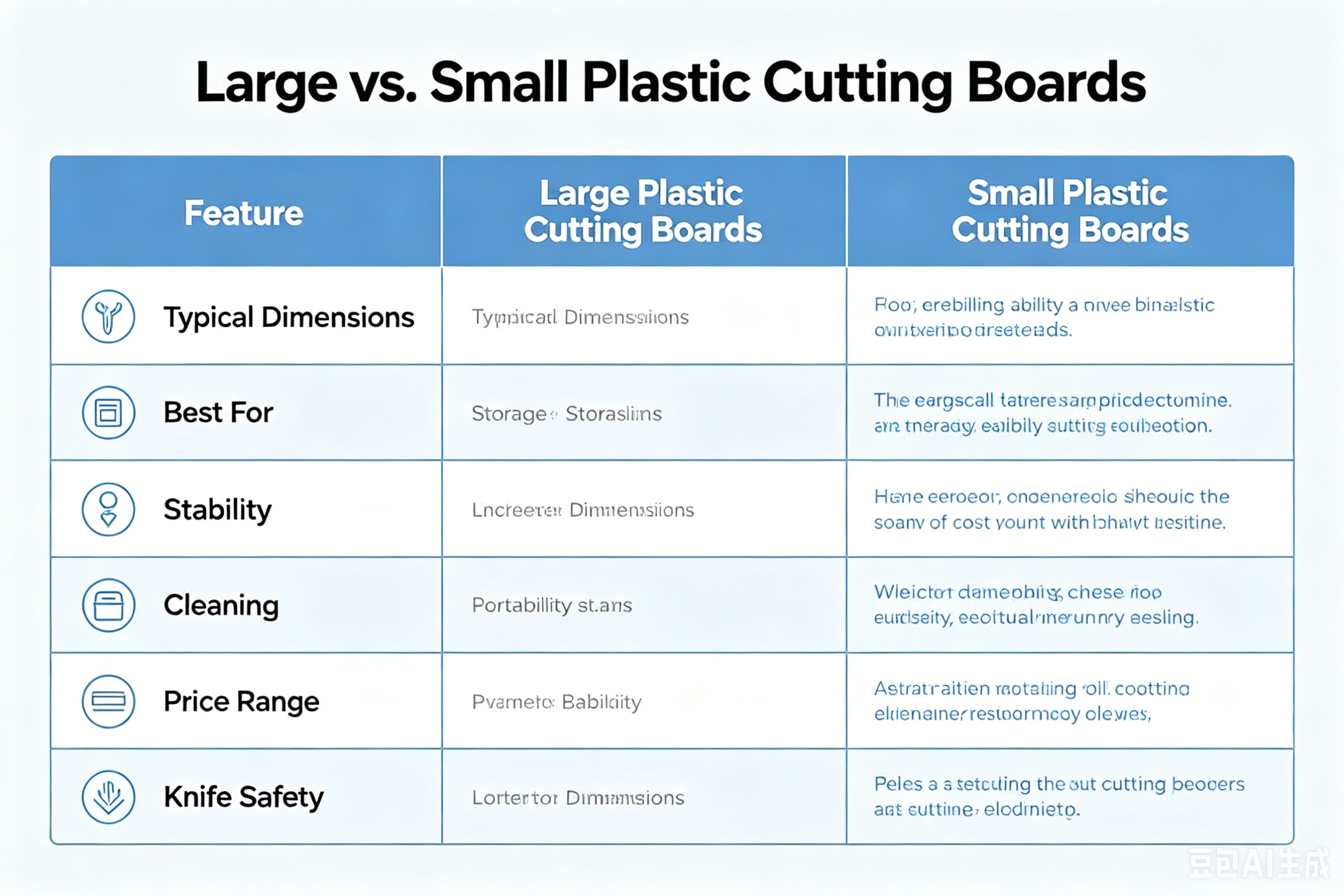
| Selection Point | Large Plastic Board | Small Plastic Board |
|---|---|---|
| Best for | Meal prep, large vegetables, raw ingredient prep, family cooking | Quick snacks, fruit, herbs, garnishes, small portions |
| Counter space needed | Higher; needs a stable open area | Low; works in compact kitchens |
| Cleaning | May be awkward in small sinks; check dishwasher fit if relevant | Easy to rinse and handle |
| Storage | Needs a wide drawer, cabinet, rack, or hanging space | Fits most drawers or narrow organizers |
| Workflow | Allows sorting ingredients and scraps on the same surface | Good for single-task prep but fills quickly |
| Stability | Generally more stable because of larger contact area | Can shift more easily; use a damp towel underneath if needed |
| Best buyer question | Will it fit my sink, counter, and storage area? | Is it large enough for the tasks I do every day? |
How to Choose the Right Plastic Board Size
Start with your actual cooking routine. A person who cooks once or twice a week has different needs from someone preparing lunches, dinners, and batch meals. Think about the foods you cut most often and the space available around your sink and prep area.
- Measure your storage space. Check drawer depth, cabinet height, or vertical rack width before buying a large board.
- Measure your sink. If the board cannot be washed comfortably, it may not be used often.
- Consider ingredient size. Cabbage, melon, leafy greens, and whole poultry require more surface area than herbs or citrus.
- Plan for separation. Many cooks keep different boards for different food categories to support cleaner workflow.
- Check product details. Ask whether the board is dishwasher-safe, what plastic material is used, and whether care instructions are provided.
If you are comparing products online, look beyond the main photo. Dimensions, thickness, weight, edge design, hanging holes, juice grooves, and non-slip details can all affect daily use. Do not assume that every plastic board has the same features.
Use and Care Tips for Plastic Cutting Boards
Plastic cutting boards are valued because they are practical and easy to clean, but they still need proper care. Wash boards soon after use, especially after cutting raw meat, poultry, seafood, or strongly colored foods. Follow the care label for dishwasher use; not every board should be exposed to the same heat level.
For safer prep, place a damp towel or non-slip mat under any board that moves on the counter. This is especially helpful with smaller plastic boards. Avoid using a board that rocks, bends excessively, or slides while cutting.
Inspect the surface regularly. Fine knife marks are normal, but deep grooves can trap food residue and become difficult to clean. When a board is heavily scored, stained beyond cleaning, warped, or unstable, replacement is the practical choice.
Recommended Setup for Most Kitchens
For many households, the most flexible choice is a small set rather than a single board. One large plastic cutting board can handle main prep work, while one or two smaller boards can stay available for fast jobs. A medium board can be useful if your counter or sink cannot handle a very large size.
- Large board: vegetables, meal prep, bigger ingredients, and recipes with multiple components.
- Small board: fruit, herbs, bread rolls, garnishes, and quick single-ingredient tasks.
- Backup board: useful when preparing different food categories or when one board is being washed.
This approach keeps prep efficient without forcing one board to do every job. It also makes it easier to maintain cleaner habits during busy cooking.
FAQ
Is a large plastic cutting board always better?
No. A large board is better for spacious prep, but it can be inconvenient if it does not fit your sink, dishwasher, or storage area. Choose the largest size you can clean and store comfortably.
How many plastic cutting boards should I keep?
Most home kitchens work well with at least two: one larger board for main prep and one smaller board for quick tasks. More boards may help if you cook often or separate food categories.
Can I use a small board for raw meat?
You can, if the board provides enough room to keep juices and pieces contained and you clean it properly afterward. For larger cuts, a bigger board is usually safer and less messy.
When should I replace a plastic cutting board?
Replace it when deep grooves, warping, persistent odors, or hard-to-clean stains make normal washing ineffective. A stable, cleanable surface is more important than keeping an old board in service.
What should I ask before buying plastic cutting boards online?
Check the exact dimensions, thickness, material description, care instructions, dishwasher guidance, non-slip features, and whether the size fits your storage and cleaning setup.
