




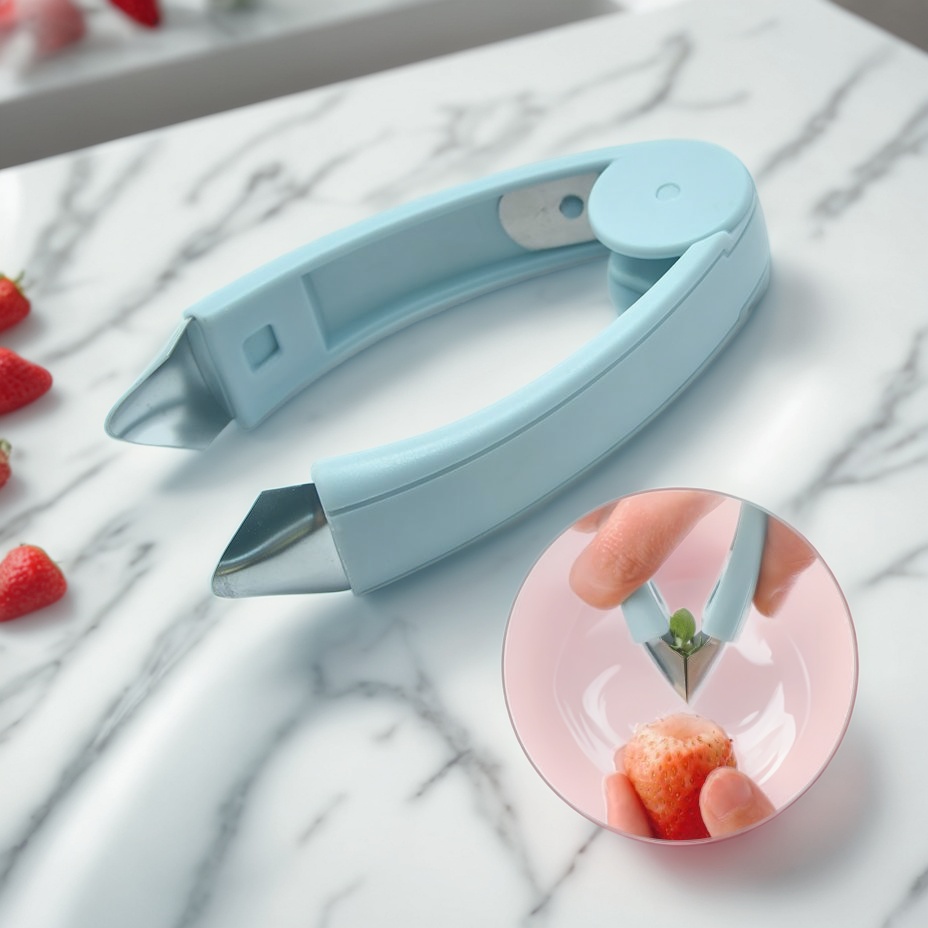
Fruit Huller Factory China: Practical Sourcing Guide
For food processors, commercial kitchens, canneries, frozen fruit producers, and ingredient manufacturers, a fruit huller is not just a small preparation tool. It can be part of a larger production flow where consistency, labor efficiency, yield, and cleaning time all affect operating costs. Searching for a fruit huller factory China often means the buyer is comparing equipment manufacturers, OEM options, and export-ready suppliers rather than looking for a single retail product.
The original article highlights three useful points: China is an important source for fruit processing equipment, industrial fruit hullers are designed for higher volume than household tools, and manufacturers may offer different models for different fruits and capacities. This rewritten guide expands those ideas into a practical sourcing framework so buyers can ask better questions before requesting a quotation.
Key Takeaways
- Match the machine to the exact fruit, cut style, and downstream process before discussing price.
- Ask suppliers to confirm capacity, compatible fruit size range, cleaning method, contact materials, spare parts, and customization limits.
- Do not rely only on catalog photos; request videos, sample testing, drawings, and after-sales details.
- Compare total sourcing risk, not only the machine cost.
What an Industrial Fruit Huller Does
A fruit huller removes unwanted portions such as hulls, stems, cores, or similar sections from produce before freezing, canning, puree production, drying, or fresh-cut packaging. Depending on the fruit and machine design, the action may involve specialized blades, scooping tools, positioning fixtures, or semi-automatic feeding. Common examples include strawberries, pineapples, tomatoes, and other fruits where manual trimming becomes slow or inconsistent at scale.
Industrial machines differ from small kitchen gadgets because they must process larger volumes with repeatable results. However, buyers should avoid assuming that every machine can handle every fruit. A huller optimized for strawberries may not be suitable for pineapples, and a machine intended for uniform produce may struggle with highly variable shapes. The best first step is to define the application in detail.
Define Your Processing Requirements First
Before contacting a factory, prepare a clear process brief. This reduces misunderstanding and helps the supplier recommend an appropriate model or advise whether customization is needed. Include the fruit type, average and maximum fruit size, whether the produce arrives fresh, chilled, or prewashed, and the acceptable level of product loss. If the fruit will go into canning, freezing, puree, or fresh-cut packs, explain that downstream process because it affects cut quality requirements.
Capacity is another key point. Instead of asking only for the largest machine, calculate the real hourly output you need based on shifts, peak season volume, worker availability, and cleaning time. Ask whether the stated capacity depends on fruit size, operator speed, feeding method, or ideal test conditions. If your operation uses an existing conveyor, washer, grader, or packing line, provide layout information and ask how the huller can be integrated.
How to Compare Fruit Huller Factories in China
Chinese fruit hulling machine manufacturers can range from small workshops to broader food processing equipment suppliers. A good sourcing process looks beyond a product photo and checks how the supplier supports specification, production, inspection, and service. If OEM or private-label sourcing is involved, ask which parts of the machine can be adapted, what documentation is available, and what information the factory needs before confirming feasibility.
Useful supplier questions include: What fruits has this model been used for? Can the factory share an operation video using fruit similar to yours? Which components are food-contact parts? What materials are used, and can they be confirmed in writing? How is the machine cleaned? Which wearing parts should be stocked? What electrical configuration is available for the destination market? What information is needed for a customized feeding or discharge solution?
Comparison Checklist for Buyers
| Item to Check | Why It Matters | Questions to Ask the Supplier |
|---|---|---|
| Fruit compatibility | Different fruits require different positioning and cutting methods. | Has the machine processed this fruit before? Can you test samples? |
| Capacity claim | Output may vary with fruit size, operator skill, and feeding speed. | What conditions were used to measure capacity? |
| Cut quality and yield | Over-cutting can increase waste; under-cutting can create rework. | Can you provide close-up results after hulling? |
| Cleaning access | Food equipment must be practical to clean between batches. | Which parts are removable, and how long does cleaning normally take? |
| Materials and contact parts | Buyers may require specific food-contact materials. | What materials are used, and can they be documented? |
| Spare parts | Blades, scoops, belts, and seals may need replacement over time. | Which parts wear fastest, and how are replacements ordered? |
| After-sales support | Installation and troubleshooting can affect startup time. | What manuals, videos, remote support, or training can be provided? |
OEM, Wholesale, and Customization Considerations
If you are sourcing for resale, distribution, or an OEM project, commercial details should be clarified early. Do not assume minimum order quantity, branding options, packaging, warranty terms, lead time, or documentation unless the supplier confirms them. Ask whether the factory manufactures the full machine, assembles purchased components, or acts as a trading supplier. Each model can work, but buyers should understand responsibility for quality control and technical support.
- Send a written specification with fruit samples, target output, voltage, and layout needs.
- Request a quotation that separates machine cost, optional tooling, spare parts, packing, and shipping terms.
- Ask for drawings or dimensions before arranging a production line layout.
- Confirm inspection steps before shipment, especially if the machine is customized.
- Clarify how troubleshooting will be handled after installation.
Inspection and Sample Testing Before Purchase
For a first order, sample testing is often more useful than a polished brochure. If sending fresh fruit is difficult, provide precise measurements, photos, videos, and acceptable hulling results. When possible, ask the supplier to run a trial with similar fruit and record the process from feeding through discharge. The video should show real operating speed, not only a close-up of the final result.
Buyers should also consider pre-shipment inspection. Depending on order value and complexity, this may include checking dimensions, power configuration, spare parts, surface finish, labeling, packing, and a functional run. If compliance with destination-market rules is required, ask what documents the supplier can provide and verify requirements independently. Avoid relying on broad claims unless they are supported by specific paperwork relevant to the machine and market.
Practical FAQ
Can one fruit huller handle strawberries, pineapples, and tomatoes?
Not necessarily. These fruits differ in size, firmness, shape, and the part that must be removed. Ask the factory to confirm compatibility for each fruit and provide testing evidence where possible.
Is stainless steel always used for industrial fruit hullers?
Many food processing machines use stainless steel in relevant areas, but buyers should not assume the exact material. Ask the supplier to state the material for food-contact parts, frame, blades, guards, and fasteners.
What information should I send for an accurate quotation?
Send fruit type, size range, expected hourly output, power requirements, preferred automation level, factory layout limits, downstream process, cleaning expectations, and any OEM or branding needs.
How can I reduce sourcing risk when buying from China?
Use a written specification, request sample videos or tests, compare more than one supplier, confirm spare parts and support, and consider inspection before shipment. Focus on suitability and service, not price alone.
When is customization worth considering?
Customization may be useful when fruit size is unusual, the line needs special infeed or discharge, or cut quality requirements are strict. Ask what changes are feasible, how they affect cost and lead time, and whether the modified design can be tested.
