




Local Tailor Scissors Manufacturers for Precision Tools
For tailoring shops, garment workshops, sewing schools, repair studios, and distributors, tailor scissors are not a casual purchase. They are daily-use cutting tools that affect fabric waste, operator comfort, cutting accuracy, and repeat orders from customers. When buyers search for local tailor scissors manufacturers, they are usually looking for a supplier that can provide consistent quality, practical size options, and clear product information for wholesale or OEM purchasing.
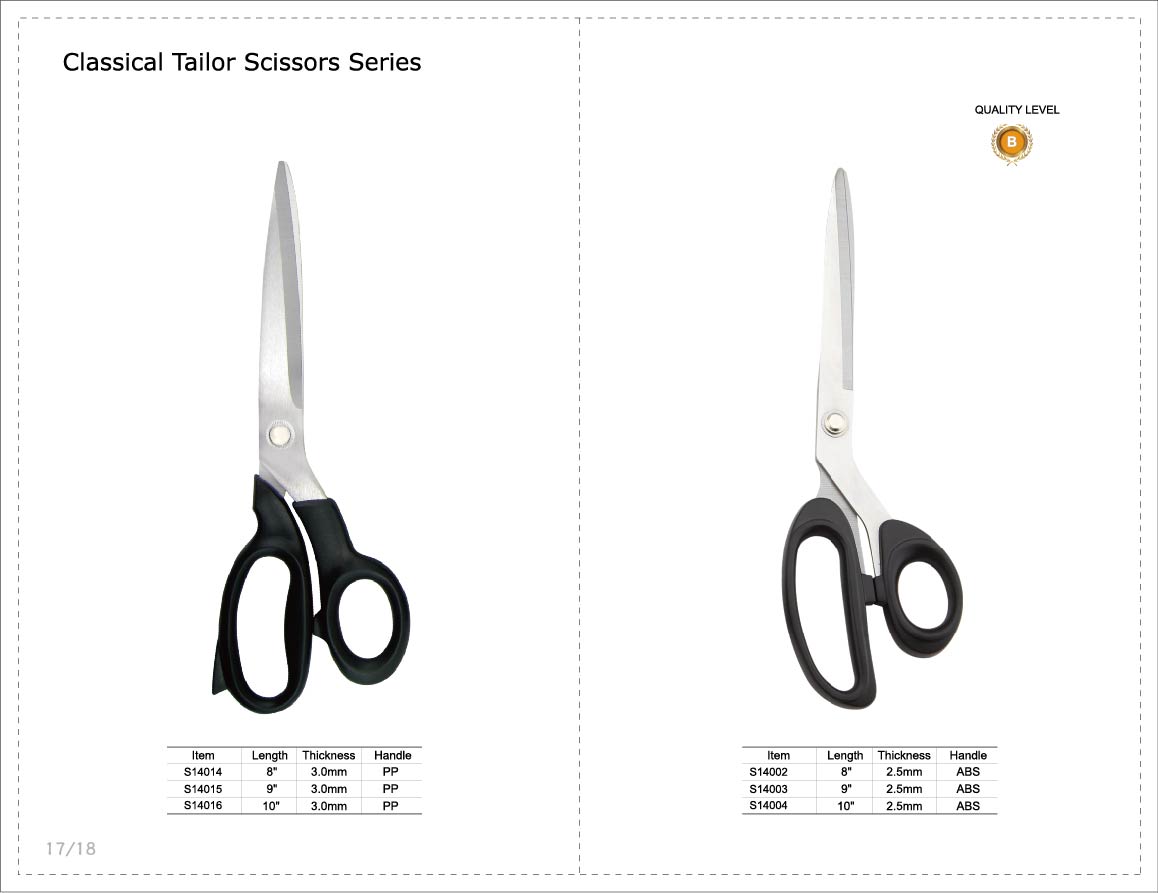
The Classical Tailor Scissors Series from Bonet Houseware is presented as a range of tailor cutting tools for professional sewing and fabric work. The original product information highlights two handle options, PP and ABS, with different model numbers, sizes, and blade thicknesses. This guide rewrites those details into a practical sourcing framework so buyers can compare options and prepare better questions before placing an order.
Key Takeaways
- Tailor scissors should be evaluated by comfort, cutting control, blade thickness, size range, and supplier consistency.
- The available PP handle models listed are 8-inch S14014, 9-inch S14015, and 10-inch S14016, each with a 3.0mm blade.
- The available ABS handle models listed are 8-inch S14002, 9-inch S14003, and 10-inch S14004, each with a 2.5mm blade.
- A stated Quality Level B rating appears in the source information; buyers should ask what this rating means in the supplier's inspection system.
- For wholesale sourcing, confirm packaging, sample policy, lead time, quality checks, and OEM options directly with the manufacturer.
Why Tailor Scissors Matter in Professional Cutting
In professional tailoring, a poor cutting tool can slow production and create uneven edges. Fabric scissors must open smoothly, close accurately, and give the operator enough control to cut long straight lines, curves, notches, and pattern pieces. A pair that feels acceptable for occasional home sewing may not be comfortable after repeated use in a workshop.
For B2B buyers, the goal is not only to choose a sharp pair of scissors. It is to source a repeatable product line that can be supplied in the right size mix, packed appropriately, and inspected consistently. Retailers may need attractive and durable packaging. Uniform suppliers may need stable model availability. Sewing training centers may prefer a balanced, lower-risk option for daily student use. Each buying case should be matched to the handle material, blade thickness, and expected user environment.
Product Range: PP and ABS Handle Options
The original article identifies two main handle constructions in the Classical Tailor Scissors Series: polypropylene, commonly referred to as PP, and ABS. Both are plastic handle materials, but buyers should avoid assuming performance claims beyond what is stated. Instead, request samples and compare comfort, grip feel, and durability under actual use.
The PP handle group is listed in three sizes: 8-inch model S14014, 9-inch model S14015, and 10-inch model S14016. Each is described with a 3.0mm thick blade. The ABS handle group is also listed in three sizes: 8-inch model S14002, 9-inch model S14003, and 10-inch model S14004. These models are described with a 2.5mm blade.
For buyers building an assortment, this is useful because the same general product family offers multiple sizes. Smaller sizes may suit trimming, smaller fabric pieces, and general sewing kits, while larger sizes are often preferred for longer fabric cuts. Before ordering, ask the supplier which models are recommended for your target customer group and whether all listed sizes are currently available.
Comparison Table for B2B Buyers
| Option | Models and sizes | Blade thickness stated | Buyer checklist |
|---|---|---|---|
| PP handle tailor scissors | S14014 8-inch, S14015 9-inch, S14016 10-inch | 3.0mm | Check grip comfort, cutting balance, packaging, and sample availability. |
| ABS handle tailor scissors | S14002 8-inch, S14003 9-inch, S14004 10-inch | 2.5mm | Check handle feel, blade alignment, edge consistency, and model availability. |
| Quality reference | Classical Tailor Scissors Series | Quality Level B stated | Ask how Quality Level B is defined, inspected, documented, and controlled. |
How to Choose Sizes for Wholesale Assortments
Size planning is an important part of sourcing tailor scissors. A distributor may not want equal quantities of every model. An 8-inch option can be suitable for general sewing counters, sewing kits, and users with smaller hands. A 9-inch option may work as a balanced middle size for many fabric cutting tasks. A 10-inch option can be positioned toward workshops and users who prefer a longer cutting stroke.
When discussing a wholesale order with local tailor scissors manufacturers, prepare a forecast by sales channel. For example, online retail packs may need clear model labels and photography. Sewing schools may want one size for simplified inventory. Tailoring shops may prefer a mix so workers can choose according to task. If you are unsure, request samples in all listed sizes and run a short user trial before confirming the purchase mix.
Supplier Questions Before Placing an Order
Because the original information does not state manufacturing capacity, MOQ, certifications, compliance details, or test results, buyers should not assume them. A good sourcing process turns these unknowns into direct questions. This is especially important for importers, private-label buyers, and brand owners who need documentation for internal approval.
- What is the current minimum order quantity for each model and size?
- Are PP and ABS handle models both available for wholesale orders now?
- Can the supplier provide samples before bulk production?
- What inspection steps are used for blade alignment, sharpness, handle fit, and appearance?
- What does the stated Quality Level B mean in measurable terms?
- What packaging options are available for retail, workshop, or bulk distribution?
- Are logo, color, label, or OEM packaging options available, and what are the requirements?
- What lead time applies after order confirmation and artwork approval?
Quality Checks for Tailor Scissors Samples
Before approving a production order, evaluate samples in a structured way. Open and close each pair several times to check smoothness. Cut different fabric layers that represent your target market, such as lightweight fabric, medium fabric, or heavier material if relevant. Inspect whether the cut edge is clean or if the scissors push fabric instead of cutting it.
Also check the handle edges, screw area, blade tips, and overall finish. If the scissors will be sold under your own brand, compare several samples from the same model to see whether quality is consistent. Record results by model number so feedback is precise. Instead of saying a sample feels wrong, explain whether the issue is stiffness, blade gap, handle comfort, tip alignment, or packaging damage.
Use and Care Guidance for End Users
Even well-selected tailor scissors need proper care. Buyers who resell scissors can reduce customer complaints by providing simple use instructions. Fabric scissors should be kept for fabric cutting rather than paper, wire, plastic sheet, or other hard materials unless the supplier confirms the tool is designed for those uses. Using them on unsuitable materials can reduce cutting performance.
Scissors should be stored dry, wiped after use, and kept away from unnecessary impact. In shared workshops, labeling fabric-only scissors helps prevent misuse. If the pivot becomes loose or stiff, users should follow supplier guidance rather than forcing adjustment. Clear care instructions are especially useful for sewing schools, rental workshops, and retailers serving first-time sewing customers.
FAQ
What sizes are listed for the Classical Tailor Scissors Series?
The listed sizes are 8-inch, 9-inch, and 10-inch. PP handle models are S14014, S14015, and S14016. ABS handle models are S14002, S14003, and S14004.
What blade thicknesses are stated?
The PP handle models are described with a 3.0mm blade, while the ABS handle models are described with a 2.5mm blade.
Does the source confirm stainless steel grade or special coating?
No. The supplied article does not state a material grade, coating, hardness, or test result. Buyers should request these details directly if they are required for purchasing or marketing.
What does Quality Level B mean?
The source states a Quality Level B rating but does not define the inspection standard. Wholesale buyers should ask the supplier how this level is measured and documented.
Can these scissors be ordered as OEM products?
The source does not confirm OEM terms. Buyers interested in branding, packaging, color changes, or private label supply should ask the manufacturer about available options, MOQ, artwork requirements, and lead time.
Final Sourcing Advice
Choosing local tailor scissors manufacturers is about balancing product details with supplier reliability. The Classical Tailor Scissors Series gives buyers a clear starting point: two handle options, three sizes in each option, stated blade thicknesses, and model numbers that can be used for inquiry and sample comparison. The next step is to verify commercial terms and quality procedures instead of relying on assumptions.
For the best sourcing result, request samples, test them in realistic cutting conditions, confirm the meaning of quality ratings, and document every approved model number before placing a wholesale order. This approach helps buyers select tailor scissors that are practical for end users and manageable for long-term inventory planning.
