




Luxury Tailor Scissors: Craftsmanship and Style
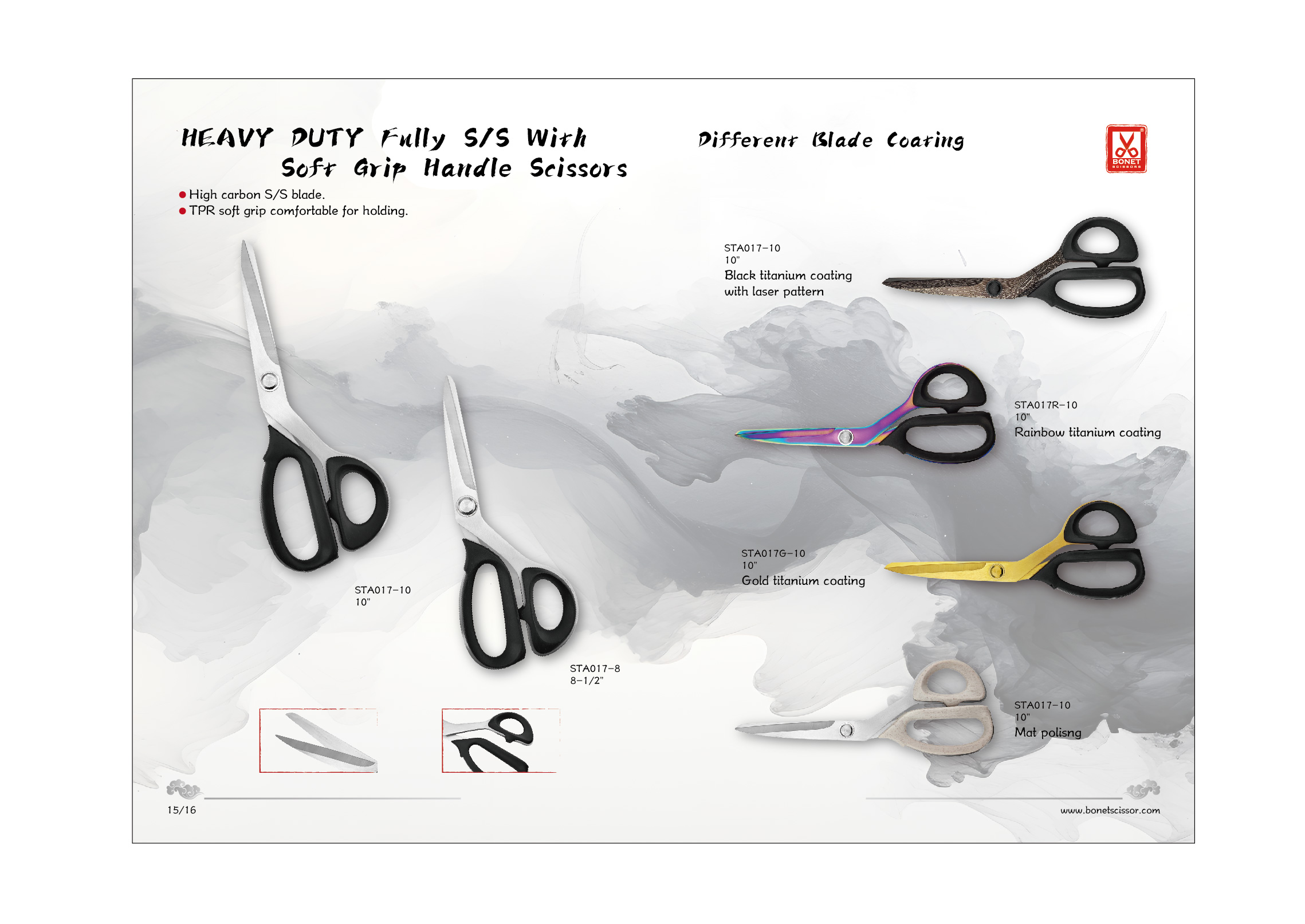
Luxury tailor scissors are purchased for more than appearance. For a tailor, alteration studio, craft brand, fabric shop, or wholesale buyer, the value of a premium scissor is measured by cutting control, hand comfort, durability, and consistent presentation at the point of sale. A polished finish may attract attention, but the tool still has to perform through repeated cutting tasks on fabric, lining, thread, and craft materials.
This guide explains how to evaluate Heavy Duty Fully S/S Scissors for professional and retail use, using the explicit product details available: high carbon stainless steel blades, an ergonomic TPR soft grip handle, 8-1/2 inch and 10 inch size options, and several finish choices including Black Titanium with a laser-etched pattern, Rainbow Titanium, Gold Titanium, and Mat Polishing. It also outlines practical questions B2B buyers should ask before placing a wholesale or OEM inquiry.
Key Takeaways
- Luxury tailor scissors should be judged by cutting feel, blade alignment, handle comfort, and finish quality, not appearance alone.
- High carbon stainless steel blades and a TPR soft grip handle are useful features for professional cutting comfort and control.
- The 8-1/2 inch size is often suited to controlled work, while the 10 inch size is useful when longer cuts are needed.
- Wholesale buyers should confirm packaging, branding options, inspection standards, lead time, MOQ, and after-sales support directly with the supplier.
What Makes Tailor Scissors “Luxury”?
In the tailoring and craft market, “luxury” should not be used as a vague label. A higher-end scissor normally earns that positioning through refined finishing, balanced handling, reliable cutting performance, and a product presentation suitable for professional users or premium retail shelves. For studios, the goal is a tool that helps reduce strain and supports precise work. For distributors and retailers, the goal is a product that looks premium while still meeting the functional expectations of serious users.
Luxury tailor scissors may also support a wider range of customer preferences. Some buyers want a classic matte appearance, while others prefer a coated finish that stands out in a gift set, sewing kit, or retail display. When comparing options, the buyer should look at the full product experience: how the scissors feel in the hand, how smoothly they open and close, how cleanly the blades meet, and how the finish holds up under normal handling.
Blade Material and Cutting Performance
The original product information states that these scissors use high carbon stainless steel blades. This is an important detail because buyers often look for a balance between sharpness, toughness, and resistance to everyday wear. The actual performance, however, still depends on blade geometry, sharpening quality, alignment, pivot adjustment, and quality control during production.
For B2B sourcing, do not rely only on a material description. Ask the supplier how the blades are sharpened, whether sample pieces can be tested before bulk purchase, and what inspection criteria are used for cutting performance. If your customers work with heavy fabrics, layered materials, or delicate textiles, request sample testing on the specific materials most relevant to your market.
Handle Comfort for Long Cutting Sessions
The scissors are described with an ergonomic TPR soft grip handle. For professional users, this can be a meaningful feature because tailoring and craft work often involve repeated cutting over long periods. A comfortable grip may help reduce pressure points and improve control, especially when users need to maintain accuracy over many cuts.
When evaluating handle design, check the opening size, finger clearance, grip texture, and whether the tool feels secure in different hand sizes. Wholesale buyers should remember that comfort is subjective. If possible, collect feedback from tailors, sewing teachers, fabric shop staff, or sample customers before committing to a larger order. A scissor that feels excellent to one user may feel too large, too small, or too heavy to another.
Finish Options and Visual Positioning
The available finish choices include Black Titanium with a laser-etched pattern, Rainbow Titanium, Gold Titanium, and Mat Polishing. These options allow a supplier, retailer, or brand owner to position the same general product family for different customers. A matte finish may appeal to practical users who prefer a classic look. Gold or rainbow finishes may work better for retail gift sets, craft boutiques, online sewing shops, or buyers seeking a more decorative tool.
The original description notes that the coatings add personality and protection, with enhanced resistance to corrosion and wear. Buyers should still ask how the coating is applied, what care instructions are recommended, and whether finish samples can be reviewed under normal lighting. For online sales, accurate photography is important because metallic and rainbow finishes can look different depending on the angle and light source.
Size Selection: 8-1/2 Inch vs. 10 Inch
These luxury tailor scissors are available in 8-1/2 inch and 10 inch sizes. Size affects cutting length, control, portability, and user comfort. A smaller size is often easier to manage for controlled cutting, pattern work, and detail tasks. A larger size can be useful for longer, straighter cuts and may appeal to users who regularly cut larger fabric sections.
| Selection Point | 8-1/2 Inch | 10 Inch | Buyer Check |
|---|---|---|---|
| Typical use | Controlled cutting and general sewing tasks | Longer fabric cuts and larger work surfaces | Ask which size your target users already prefer |
| Handling | May feel easier to control for some users | May require more hand strength and space | Test with different hand sizes |
| Retail positioning | Good for broad sewing and craft customers | Good for professional tailoring or fabric cutting | Consider selling both sizes as options |
| Sourcing risk | Lower risk if your market favors compact tools | Higher risk if customers dislike larger scissors | Order samples before bulk selection |
Wholesale and OEM Sourcing Questions
For distributors, sewing supply shops, brand owners, and studio buyers, sourcing luxury tailor scissors requires more than choosing a finish. Commercial details vary by supplier and should be confirmed in writing. Avoid assuming manufacturing capacity, MOQ, pricing, certification status, or custom branding availability unless the supplier provides clear documentation.
- What are the available sizes, finishes, and packaging options for wholesale orders?
- Can the supplier provide pre-production samples for cutting, grip, and finish review?
- What is the minimum order quantity for standard products and for any customized packaging or branding?
- How are sharpness, blade alignment, coating appearance, and handle condition inspected before shipment?
- What lead time applies for samples, repeat orders, and seasonal bulk orders?
- Are replacement, defect-handling, or after-sales procedures available for business buyers?
If you are building a private-label sewing tool line, also ask whether logo placement, color consistency, barcode labeling, instruction inserts, and carton markings can be supported. These points affect retail readiness and can reduce extra handling after delivery.
Care and Use Guidance for End Customers
Even well-made tailor scissors need proper care. Retailers and wholesalers can improve customer satisfaction by providing simple use instructions. Recommend that end users keep tailor scissors for fabric and sewing materials rather than using them on paper, wire, plastic packaging, or other hard items. After use, the blades should be wiped clean and stored dry. Users should avoid dropping the scissors because impact can affect blade alignment or damage the tip.
For coated finishes, advise customers to avoid abrasive cleaning pads and harsh chemicals unless the supplier specifically approves them. If the scissors become stiff, users should follow the supplier’s care instructions for pivot maintenance rather than forcing the blades. Clear care guidance helps protect the user experience and reduces avoidable complaints.
Practical FAQ
Are luxury tailor scissors only for professional tailors?
No. They can be used by professional tailors, sewing studios, craft makers, fashion students, fabric shops, and serious home sewing users. The best choice depends on hand comfort, size preference, and cutting needs.
Which size should a retailer stock first?
If the customer base is broad, stocking both 8-1/2 inch and 10 inch options provides more flexibility. If you must choose one, base the decision on sample feedback from your target buyers.
Do coated blades require special care?
They should be kept clean and dry, and users should avoid abrasive cleaning methods. Ask the supplier for specific coating care guidance before printing instructions or product pages.
What should wholesale buyers test before ordering?
Test cutting smoothness, blade alignment, handle comfort, finish consistency, packaging quality, and size preference. For business purchases, also confirm MOQ, lead time, inspection process, and branding options directly with the supplier.
