




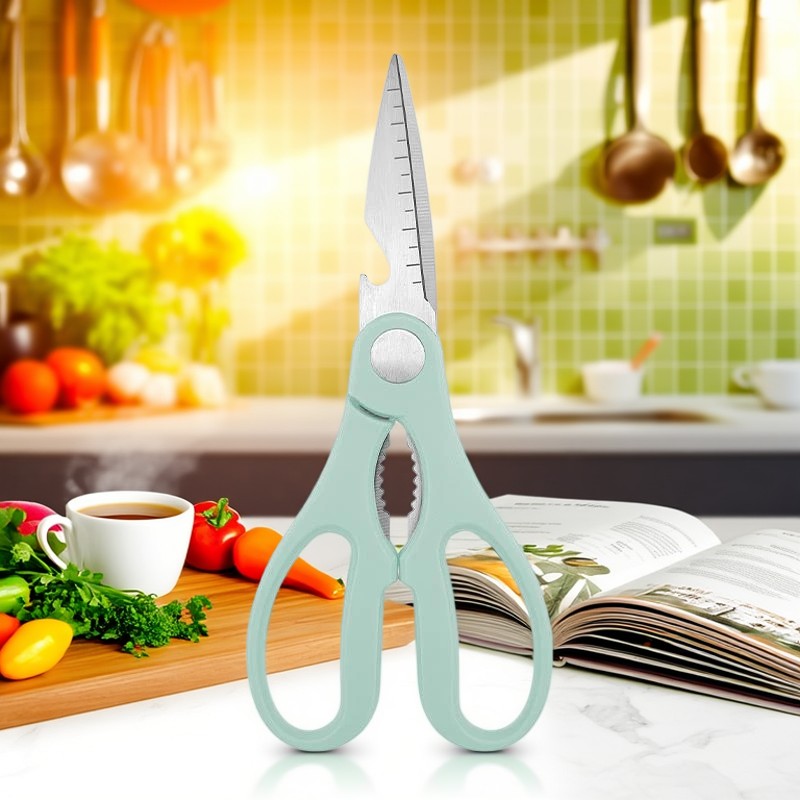
Magnetic Kitchen Scissors: A Practical Guide for Everyday Food Prep
Magnetic kitchen scissors are designed for cooks who want a cutting tool that is easy to reach, simple to store, and useful for more than opening packaging. The original product concept highlights a pair of kitchen scissors with sharp blades, a magnetic protective sheath, an ergonomic handle, and an integrated center gripping area that may help with tasks such as cracking nuts. It is also presented as suitable for common prep jobs including cutting herbs and vegetables, handling tougher kitchen tasks, and scaling fish.
This guide explains how to evaluate magnetic kitchen scissors for home use, what the magnetic sheath does, which features are worth checking before purchase, and how to clean and care for the tool safely.
Key Takeaways
- Magnetic kitchen scissors are most useful when they combine reliable cutting performance with safe, visible storage.
- A protective magnetic sheath can help keep blades covered and within reach, but it should still be placed away from children.
- Check comfort, blade alignment, cleaning access, and task suitability before buying.
- Do not assume dishwasher safety, material grade, or rust resistance unless the supplier clearly states it.
What Are Magnetic Kitchen Scissors?
Magnetic kitchen scissors are multipurpose kitchen shears paired with a sheath or holder that includes a magnet. The purpose is not just appearance. A magnetic sheath can help keep the scissors stored in a consistent location, such as on a suitable metal surface or inside a controlled kitchen storage area, depending on the design.
Unlike standard scissors kept loose in a drawer, kitchen scissors with a sheath can reduce accidental contact with sharp edges. This matters in busy kitchens where tools are often reached for quickly. The sheath also helps protect the blades from rubbing against other utensils, which can dull edges over time.
Common Tasks They Can Handle
Kitchen scissors are not a replacement for every knife, but they can make many small cutting jobs faster and cleaner. Based on the original article, these magnetic kitchen scissors are positioned for tasks such as trimming herbs, cutting vegetables, helping with tougher prep work, cracking nuts through an integrated grip area, and scaling fish.
In everyday use, cooks may also use kitchen scissors to snip green onions, portion thin foods, cut parchment, trim food packaging, or divide soft cooked ingredients. For hygiene, avoid using the same unwashed scissors across raw meat, cooked food, and ready-to-eat ingredients.
Feature Comparison Checklist
Before choosing magnetic kitchen scissors, compare the practical details rather than relying only on the product photo. The best choice depends on your cooking habits, storage space, and cleaning routine.
| Feature to Check | Why It Matters | Question to Ask |
|---|---|---|
| Magnetic sheath | Helps cover blades and supports convenient storage. | Where can the sheath be safely placed in my kitchen? |
| Blade sharpness and alignment | Affects clean cutting of herbs, vegetables, and packaging. | Do the blades meet evenly from pivot to tip? |
| Handle comfort | Reduces hand strain during repeated prep tasks. | Does the grip fit my hand without pressure points? |
| Integrated nutcracker area | Adds versatility for cracking nuts or gripping certain foods. | Is this feature useful for my cooking style? |
| Cleaning access | Food can collect near pivots and handle joints. | Can I clean the hinge and inner surfaces thoroughly? |
| Finish and appearance | The original article notes a modern metal gray finish. | Will the finish suit my kitchen and resist visible wear? |
Why the Magnetic Sheath Matters
The sheath is one of the main reasons to choose this style of scissors. A protective cover helps reduce blade exposure in storage and makes the tool easier to identify. If the sheath is magnetic, it may also help keep the scissors close to a preparation area, provided the surface and placement are suitable.
However, magnetic storage should not be treated as childproof storage. Keep all sharp tools out of reach of children and avoid placing scissors where they can be knocked down. If the sheath is attached to a refrigerator, cabinet side, or metal rack, check that it holds securely during normal kitchen movement.
How to Use Kitchen Scissors Safely
Kitchen scissors are straightforward, but safe habits make a difference. Hold the food steady on a cutting board when possible, and cut away from your hand. Do not force the blades through hard materials if they begin to twist or slip. For nuts, use the integrated gripping area only as intended and avoid excessive pressure that could damage the hinge or handle.
When cutting wet herbs or vegetables, dry your hands first so the handle does not slip. After cutting fish or other strong-smelling foods, wash the scissors promptly. If you use them for raw ingredients, clean them before any contact with cooked or ready-to-eat food.
Cleaning and Care Tips
Proper cleaning protects both food safety and cutting performance. Unless the supplier clearly states dishwasher suitability, hand washing is the safer default. Wash the blades and handle with warm water and mild dish soap, paying close attention to the pivot area and any textured handle surfaces where residue can collect.
- Rinse off food particles immediately after use.
- Wash both sides of the blades carefully with a sponge or brush.
- Clean the hinge area and the inside of the handle loops.
- Dry thoroughly before returning the scissors to the sheath.
- Store with the blade covered and the magnetic sheath secured.
If the scissors become stiff, stained, or difficult to close, inspect the hinge for trapped debris. Do not use abrasive pads on decorative finishes unless the manufacturer confirms they are safe for that surface.
Who Should Consider This Tool?
Magnetic kitchen scissors are especially useful for home cooks who prepare quick meals, use fresh herbs often, or want a compact cutting tool near the main prep area. They can also be helpful in kitchens with limited drawer space because the sheath provides a dedicated storage method.
They may not be the right choice if you prefer all tools hidden in drawers, have no safe magnetic storage location, or need specialized poultry shears or heavy-duty seafood tools. For demanding tasks, choose scissors specifically rated by the supplier for that use.
Practical FAQ
Can magnetic kitchen scissors replace a chef’s knife?
No. They are better viewed as a companion tool for snipping, trimming, opening, and small prep tasks. A chef’s knife is still better for chopping, slicing large vegetables, and precise board work.
Is the magnetic sheath safe?
It can improve blade coverage and storage convenience, but placement matters. Keep the scissors away from children, avoid unstable surfaces, and check that the sheath holds securely before relying on magnetic storage.
Can I wash kitchen scissors in the dishwasher?
Only if the supplier clearly says they are dishwasher safe. When that information is not provided, hand washing and thorough drying are the safer routine.
What should I check before buying?
Look at blade alignment, handle comfort, sheath design, cleaning access, and whether the integrated features match your cooking habits. Ask the supplier for any missing details about materials, care instructions, and intended uses.
How do I keep the blades sharp longer?
Use the scissors on food and appropriate kitchen materials only, avoid cutting hard non-food items, wash and dry them after use, and store them in the protective sheath rather than loose in a drawer.
