




Manual Textile Scissors: Sourcing and Selection Guide
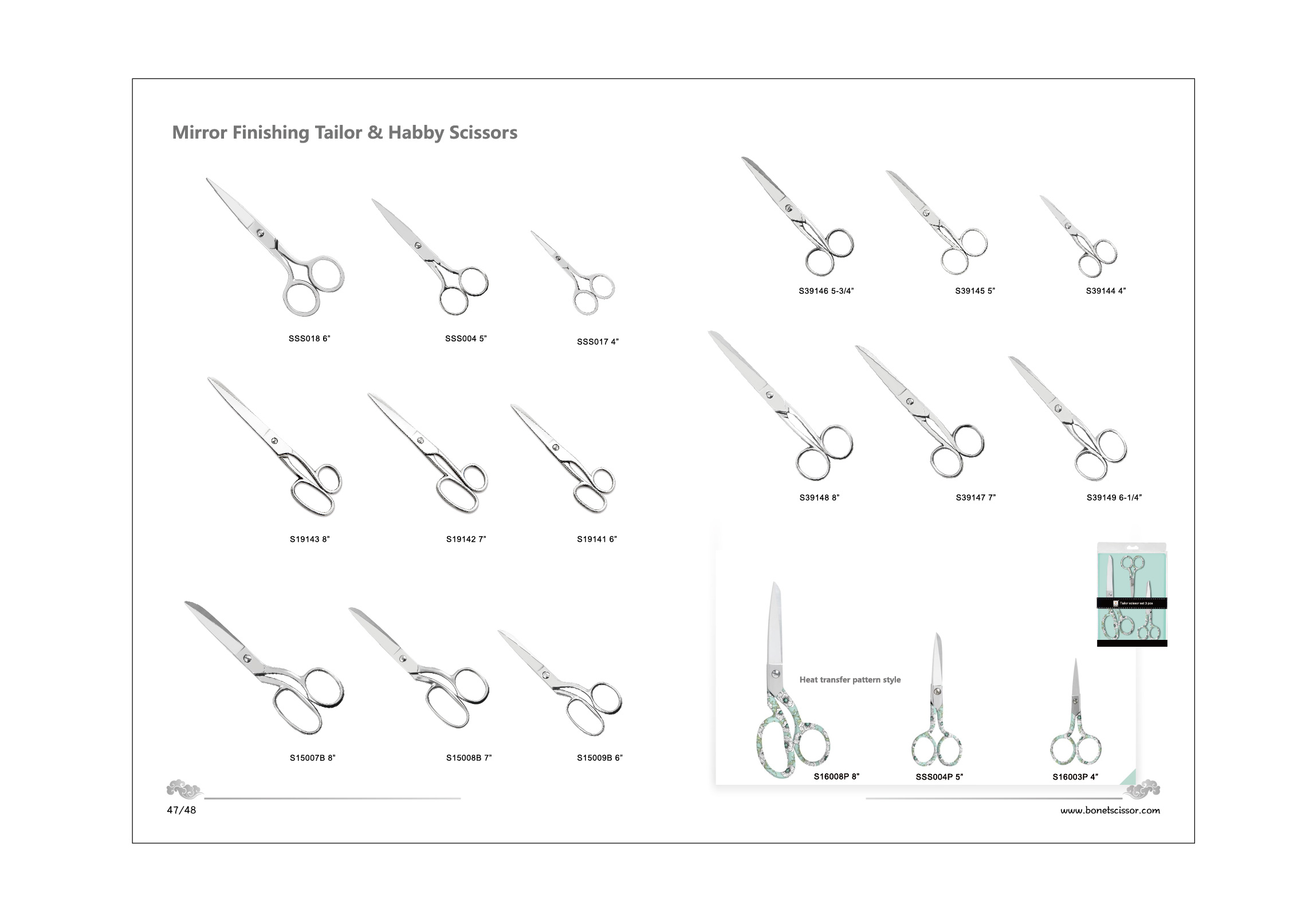
Manual textile scissors remain one of the most important hand tools in garment making, alterations, upholstery, sample rooms, craft workshops, and fabric retail. A clean cut affects seam accuracy, fabric waste, production speed, and the final appearance of a textile product. For hobby users, the right pair makes cutting easier and more controlled. For wholesalers, distributors, and OEM buyers, the decision also involves consistency, packaging, handle comfort, finish options, and supplier communication.
The original product information highlights several useful points: manual textile scissors are used for precision cutting, may be available in different sizes such as 4-inch detail scissors and 8-inch shears, can feature stainless steel blades, mirror finishes, and decorative heat transfer patterns on handles. This guide expands those ideas into practical selection and sourcing advice without assuming unconfirmed specifications.
Key Takeaways
- Choose textile scissors by fabric type, cutting task, hand comfort, and blade size rather than appearance alone.
- Small scissors can help with thread trimming and detail work, while larger shears are better suited to long fabric cuts.
- For B2B sourcing, ask suppliers about blade material, finish, size range, packaging, labeling, samples, and inspection standards.
- Do not use fabric scissors on paper, wire, plastic sheets, or other materials that may dull the edge quickly.
Why Manual Textile Scissors Still Matter
Electric cutters and rotary tools are useful in some production environments, but manual textile scissors continue to offer control, portability, and low setup effort. They are especially valuable when cutting single layers, making quick adjustments, shaping curves, trimming seam allowances, or working in small studios where heavy cutting equipment is unnecessary.
Good garment cutting shears should open and close smoothly, follow marked lines without pushing the fabric, and reduce strain during repetitive use. In fashion design and sample making, small differences in cutting accuracy can affect pattern matching, seam balance, and fit. In retail or wholesale settings, scissors that feel reliable in the hand are easier to recommend and reorder.
How to Match Scissor Size to the Cutting Task
Size is one of the first decisions. The source article mentions options from smaller 4-inch scissors to robust 8-inch models. In general, compact scissors are easier to maneuver in tight areas, while longer shears can cover more distance with each stroke. A mixed range is often better for distributors because different customers buy for different applications.
| Selection point | Best for | Questions to ask a supplier |
|---|---|---|
| 4-inch scissors | Thread trimming, applique, small curves, detail craft work | Are the tips fine enough for close trimming? Is the opening comfortable for repeated use? |
| 6-inch scissors | General sewing kits, home craft, light fabric cutting | What fabrics are they intended for? Are replacement or assorted colors available? |
| 8-inch shears | Longer cuts, garment panels, heavier textile work | How is blade sharpness checked before shipment? What packaging protects the tips? |
| Mirror finish | Buyers seeking a polished retail appearance | How is the finish protected during packing and transport? |
| Patterned handles | Retail assortments, gift sets, differentiated product lines | Can handle patterns be selected, customized, or kept consistent by batch? |
Blade Material, Sharpness, and Finish
The original article refers to high-grade stainless steel blades. Stainless steel is commonly valued for its resistance to rust in normal use and its clean appearance. However, buyers should not assume all stainless steel scissors perform the same. Blade thickness, edge grinding, heat treatment, pivot fit, and quality control can all affect cutting performance.
When evaluating samples, test the scissors on the fabrics your customers actually use. Try cotton, polyester, denim, felt, lining, or knit fabric if those are relevant to your market. A good test is to cut from the base of the blade through the tip and check whether the tool snags, folds, or pushes the fabric. Also inspect whether the blades meet evenly along the full cutting length.
A mirror finish can add a cleaner, more polished appearance. It may also be easier to wipe after use, although care instructions should come from the supplier. Decorative heat transfer patterns on handles can help a product stand out in retail displays, but they should not compromise grip, comfort, or durability.
Comfort and Ergonomics for Daily Use
Comfort matters because textile cutting is repetitive. A handle that looks attractive may still cause fatigue if the finger holes are too small, the edges are sharp, or the pivot tension is poorly adjusted. Tailors and sewing technicians often use scissors for long sessions, so the feel of the tool should be tested before placing a wholesale order.
Check the following during sample review:
- Open and close the scissors repeatedly to feel for smooth movement.
- Hold them in a natural cutting position and check pressure points on the fingers.
- Cut straight lines and curves to see whether control feels stable.
- Inspect the pivot area for looseness, roughness, or uneven movement.
- Confirm that left-hand or right-hand suitability is clear if your customers require it.
B2B Sourcing Guidance for Wholesale and OEM Buyers
For importers, retailers, promotional product buyers, and brand owners, sourcing manual textile scissors is not only about choosing a good-looking model. It is about reducing returns, keeping product descriptions accurate, and ensuring the supplier can maintain consistency from order to order.
Before confirming an order, ask practical commercial and technical questions. What blade material is used? What sizes are available? Can the supplier provide samples from current production? What packaging options are offered for retail, e-commerce, or bulk shipment? Are barcodes, private labels, instruction cards, or color assortments available? How are sharp tips protected during transport? What inspection steps are used for blade alignment, surface finish, handle appearance, and cutting performance?
If you need OEM or branded products, provide artwork, packaging requirements, target market, and any applicable regulatory or labeling expectations. Do not assume that a supplier automatically meets every market requirement. Instead, request documentation relevant to your destination country and product category, and verify it through your own compliance process when necessary.
Care Tips for Longer Service Life
Whether the scissors are used in a sewing room or sold to consumers, basic care helps preserve cutting quality. Fabric scissors should be reserved for textiles. Cutting cardboard, adhesive materials, plastic sheets, or wire can dull the edge or damage the alignment. After use, wipe lint from the blades and store the scissors in a dry place. If a protective sleeve or box is supplied, use it to protect the tips and reduce accidental damage.
Users should avoid forcing scissors through fabric that is too thick for the tool. If cutting becomes difficult, the problem may be dull blades, loose pivot tension, unsuitable size, or fabric that requires another cutting method. For retail sellers, clear care instructions can reduce misuse and improve customer satisfaction.
FAQ
What are manual textile scissors used for?
They are used for cutting fabric, trimming threads, shaping garment pieces, craft work, tailoring, and sewing preparation. Different sizes suit different tasks.
Are 4-inch or 8-inch scissors better?
Neither is universally better. A 4-inch pair is useful for detail work and trimming, while an 8-inch shear is more efficient for longer fabric cuts and larger panels.
What should wholesale buyers check before ordering?
Request samples and check cutting performance, blade alignment, handle comfort, finish quality, packaging strength, labeling options, and consistency across multiple pieces.
Can textile scissors be customized?
Some suppliers may offer handle patterns, packaging, or branding options, but buyers should confirm available customization methods, artwork requirements, sample lead time, and any minimum order requirements directly with the supplier.
How should fabric scissors be maintained?
Use them only on fabric, keep them clean and dry, protect the tips during storage, and avoid cutting hard or adhesive materials that can damage the edge.
