




Custom Pepper Grinders: Practical Sourcing Guidance for Wholesale and OEM Buyers
Custom pepper grinders can be a useful product for retailers, hospitality groups, gift companies, kitchenware brands, and foodservice distributors. The appeal is straightforward: freshly ground pepper is widely used, and a grinder can be adapted through size, appearance, packaging, and grind adjustment style to suit different sales channels. However, choosing a pepper grinder for bulk or OEM supply is not only a design decision. Buyers also need to understand mechanisms, usability, materials, refill access, quality checks, and the questions that should be clarified with a manufacturer before purchase.
The original article highlighted several common features found in this category, including adjustable settings, ceramic mechanisms, transparent bodies for easy refilling, ergonomic operation, and a top nut used for grind adjustment. Those details are useful starting points, but professional sourcing requires more than a feature list. The guide below explains how to evaluate custom pepper grinders in a practical B2B context without assuming unverified specifications, certifications, prices, or production capacity.
Key Takeaways
- Custom pepper grinders should be evaluated by grinding performance, refill convenience, mechanism durability, packaging needs, and supplier reliability.
- Wholesale buyers should confirm exact materials, mechanism type, adjustment method, dimensions, packing details, lead time, and sample process before committing to a bulk order.
- Clear bodies, adjustable top nuts, ceramic mechanisms, and ergonomic shapes can be useful, but buyers should request samples and test them with real peppercorns.
- For OEM projects, document branding, color, logo placement, packaging artwork, inspection standards, and acceptable tolerances in writing.
What Custom Pepper Grinders Can Include
A custom pepper grinder may involve small branding changes or a more complete product development process. Simple customization often includes logo printing, packaging design, color selection, or choosing from existing shapes. More complex OEM work may involve a specific body profile, special cap design, particular grind adjustment structure, or retail-ready packaging. The right level of customization depends on budget, launch timeline, sales channel, and order size.
For restaurant or catering use, function usually matters more than decorative details. Staff need a grinder that is easy to grip, refill, clean on the outside, and operate repeatedly during service. For retail kitchenware, shelf appearance and packaging communication become more important. For gift sets, the buyer may need consistent color matching, protective packaging, and room for barcodes or label information. In each case, the supplier should be asked which customization options are standard and which require tooling, artwork setup, or additional sampling.
How to Evaluate the Grinding Mechanism
The mechanism is one of the most important parts of a pepper mill. The original article mentions ceramic mechanisms and adjustable settings. Ceramic mechanisms are commonly valued because they can be suitable for grinding pepper and may offer resistance to wear in normal use. Still, buyers should not rely on a general statement alone. Ask the supplier to identify the mechanism material, show close-up photos, and provide a sample for testing.
During sample review, test both coarse and fine settings if the model is adjustable. A top nut or similar adjustment component should turn smoothly and hold its setting during use. Check whether the grinder produces a reasonably consistent grind, whether peppercorns feed into the mechanism without frequent shaking, and whether the handle or turning head feels stable. If the grinder will be marketed for pepper only, avoid implying that it is suitable for salt, spices, or wet ingredients unless the supplier confirms this and provides appropriate supporting information.
Body Materials, Transparency, and Refill Design
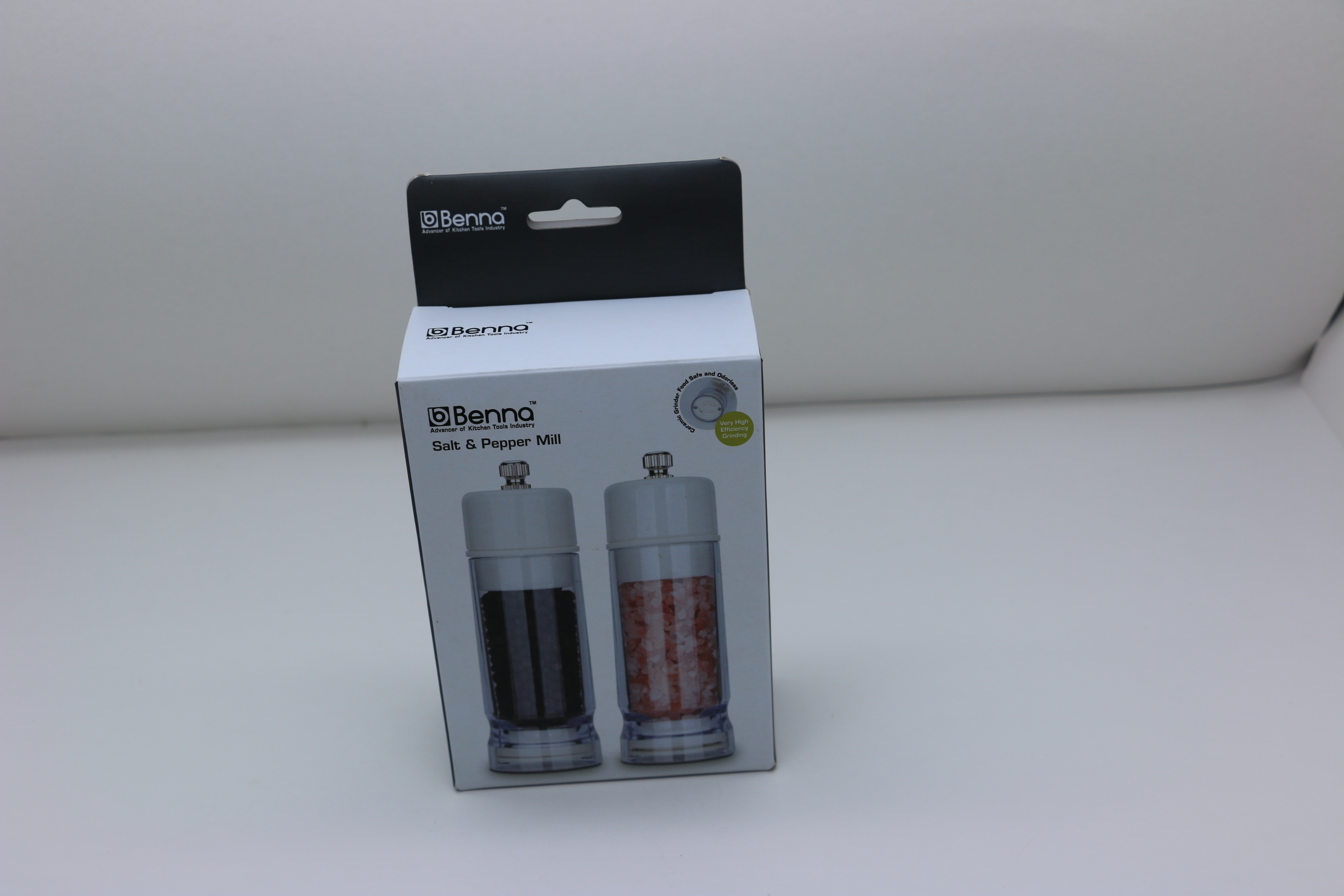
The source text refers to clear acrylic bodies that show peppercorns and make refilling easier. A transparent body can be valuable for retail display and for users who want to see when the grinder is running low. However, buyers should confirm the actual body material rather than assume it is acrylic, glass, plastic, or another material. Each material affects weight, breakage risk, appearance, and packaging requirements.
Refill design is also important. Some grinders open from the top, others from the base, and some require removing a nut or cap. A refill opening should be wide enough for normal use and should close securely afterward. For wholesale programs, request instructions or diagrams that can be included in packaging if the refill method is not obvious. A product that looks attractive but frustrates users during refilling may generate returns or poor reviews.
Comparison Checklist for Wholesale Pepper Grinders
Before choosing a model, compare options using the same criteria. This helps purchasing teams avoid selecting only by appearance or unit cost.
| Evaluation Area | What to Check | Questions to Ask the Supplier |
|---|---|---|
| Grinding mechanism | Material, adjustment range, smooth operation, consistency | What is the mechanism made from, and is the model intended for pepper only? |
| Body and container | Transparency, weight, finish, refill visibility | What is the exact body material, and can samples be tested before ordering? |
| Adjustment design | Top nut or other setting control, stability after adjustment | Does the grind setting stay in place during repeated use? |
| Ergonomics | Grip comfort, turning force, balance, suitability for frequent use | Is the design recommended for home, retail, restaurant, or promotional use? |
| Packaging | Protection, labels, barcodes, instructions, retail presentation | Can packaging be customized, and what artwork files are required? |
| Quality control | Visual inspection, function testing, defect limits | What inspection steps are used before shipment, and can criteria be agreed in advance? |
Wholesale and OEM Sourcing Questions to Clarify
Bulk buyers should gather commercial and technical details early. Do not assume minimum order quantity, pricing, lead time, certifications, or test results unless the supplier provides them directly. For a professional sourcing process, prepare a written request that includes the target market, intended sales channel, preferred grinder size, packaging needs, branding requirements, and expected delivery schedule.
- What existing pepper grinder models are available for customization?
- Which parts can be customized: color, logo, body shape, cap, mechanism, or packaging?
- What are the sample cost, sample lead time, and revision process?
- What is the minimum order quantity for standard models and for customized versions?
- What materials are used for each component, including body, cap, handle, and mechanism?
- What quality checks are performed before shipping?
- Can the supplier provide packing dimensions, carton weight, and product care instructions?
- Are any market-specific compliance documents available if required by the buyer?
These questions help prevent misunderstandings and create a basis for comparing suppliers. If the supplier cannot answer a critical question clearly, ask for photos, drawings, samples, or written confirmation before proceeding.
Sample Testing Before a Bulk Order
Samples are essential for custom pepper grinders because small design differences affect daily use. Test the sample with common dry peppercorns and record observations. Check the first use, repeated grinding, refill process, and adjustment range. If the body is clear, check whether pepper dust makes it look untidy after use. If the grinder has a smooth surface, test whether it becomes slippery with slightly damp hands. If it is intended for table service, check whether it stands upright securely.
For OEM or private label orders, review decoration quality as well. Logo placement should be aligned, colors should match approved artwork as closely as possible, and packaging should protect the grinder during normal handling. Keep an approved sample as a reference for later production inspection.
Practical FAQ
What makes a pepper grinder custom?
A pepper grinder may be considered custom when it includes buyer-specific branding, color, packaging, shape, component selection, or other design choices. The exact scope should be confirmed with the supplier.
Are ceramic mechanisms always the best choice?
Ceramic mechanisms are common and can be useful, but the best choice depends on the product purpose, construction quality, and intended use. Always test samples and confirm the exact mechanism material.
Can wholesale pepper grinders be used in restaurants?
Some models may be suitable for restaurants, especially if they are comfortable, easy to refill, and consistent in grinding. Buyers should test durability and usability under realistic service conditions.
What should be included in an OEM request?
Include target market, order quantity estimate, preferred dimensions, material expectations, logo requirements, packaging format, inspection needs, and delivery timeline. Ask the supplier which details require confirmation through samples.
How can buyers reduce quality risks?
Use approved samples, written specifications, packaging artwork approval, pre-shipment inspection criteria, and clear communication about acceptable defects. Avoid relying only on catalog photos.
Final Sourcing Advice
Custom pepper grinders can serve many B2B channels, from retail shelves to hospitality use, but careful selection matters. Focus on the mechanism, adjustment method, refill experience, body material, and packaging before making design decisions. Treat supplier claims as items to verify through samples and documentation. A well-prepared sourcing brief and a consistent evaluation checklist will help buyers choose a pepper grinder that fits the market, performs reliably, and avoids unnecessary confusion during production.
