




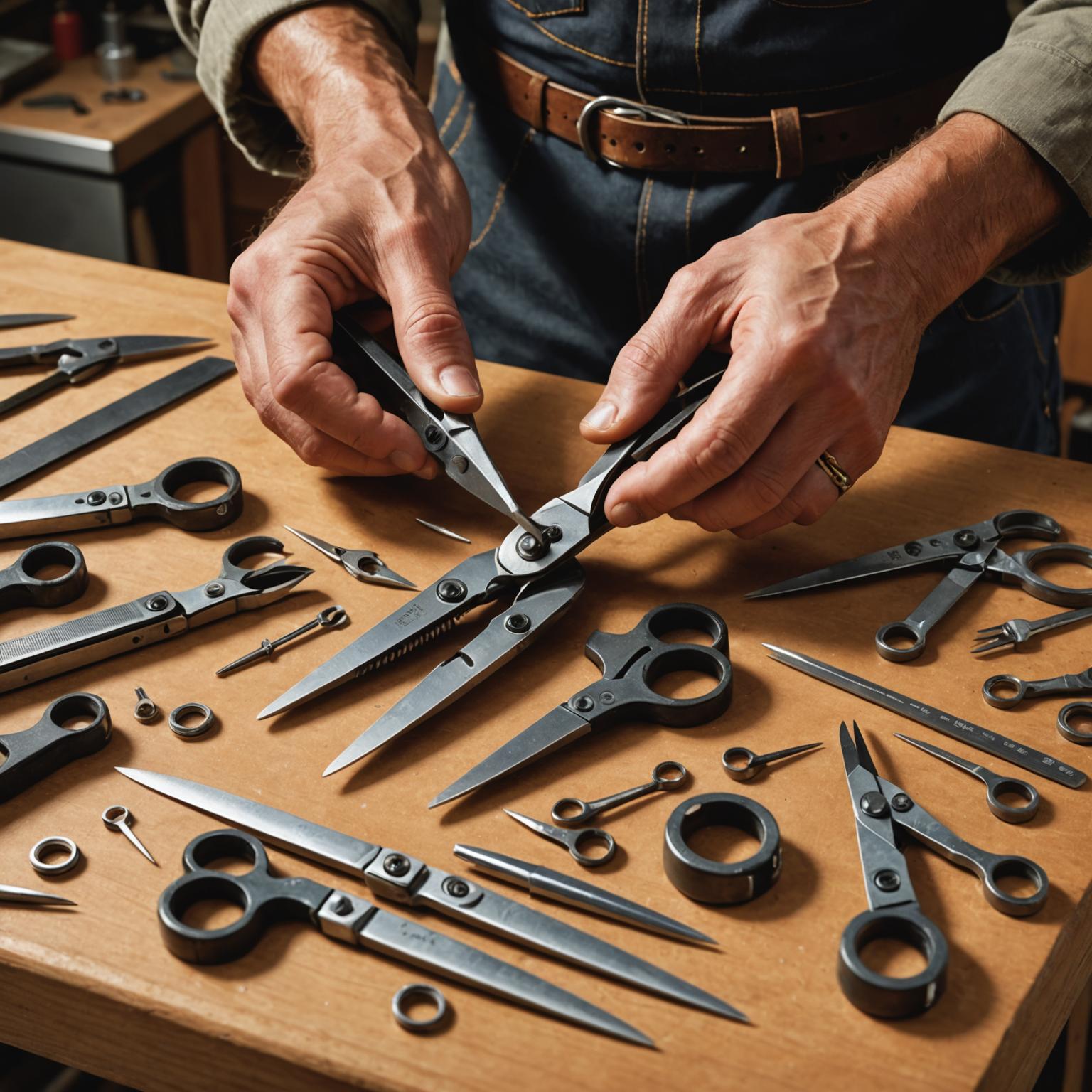
Mastering Scissors Parts and Assembly Techniques Precisely
Scissors look simple from the outside, but their performance depends on how several small parts work together. A sharp blade is only one part of the story. Alignment, pivot tension, handle stability, washers, screws, finishing, and final inspection all influence whether a pair of shears cuts cleanly or feels rough after repeated use.
For buyers evaluating Premium Multi-functional Shears or similar products, understanding scissors parts and assembly helps separate useful product claims from details that should be verified with a supplier. This guide explains the main components, the assembly process, common quality checks, and practical sourcing questions for wholesale, OEM, or retail purchasing.
Key Takeaways
- Scissors performance depends on blade geometry, pivot control, handle fit, and final adjustment—not blade sharpness alone.
- The original product description refers to high-carbon stainless steel blades, ergonomic handles, screws, springs, washers, an anti-slip handle, and adjustable tension systems.
- Buyers should ask suppliers how blade alignment, screw torque, cutting feel, and surface finish are checked before shipment.
- For OEM or wholesale sourcing, request samples and written specifications before discussing large orders.
Main Scissors Parts and What They Do
Most scissors and shears are built around two blades joined at a pivot. The blades create the cutting action, while the pivot controls how closely the edges meet. If the blades are too loose, material may fold instead of cutting. If they are too tight, the shears can feel stiff and wear faster.
The original article identifies several parts used in the assembly of scissors: high-carbon stainless steel blades, ergonomic handles, screws, springs, and washers. It also describes an anti-slip handle and an adjustable tension system for Premium Multi-functional Shears. Those details are useful starting points, but buyers should still confirm exact material grade, hardness, finish, handle material, and adjustment method with the supplier.
Handles are more than a comfort feature. They transfer hand pressure to the blades and affect control during cutting. A poorly fitted handle can create wobble or uneven force. Washers help manage friction around the pivot, while screws secure the joint and allow tension adjustment in some designs. Springs, when included, may help the tool reopen or reduce hand fatigue depending on the shear style.
How Scissors Assembly Usually Works
Scissors assembly begins after the individual components are formed, finished, and prepared for fitting. In a typical process, blades are paired so their cutting edges match properly. The handle sections are attached or integrated according to the design. The pivot screw, washer, or related hardware is then installed to bring the two sides together.
After the main assembly, the important work is adjustment. The assembler checks whether the blades cross correctly from the pivot to the tip. The pivot must hold the blades close enough for clean cutting while still allowing smooth movement. On scissors with adjustable tension, this step is especially important because the setting affects both cutting performance and user comfort.
Final finishing may include cleaning, polishing, deburring, and checking for sharp edges on non-cutting surfaces. A polished finish was mentioned in the original text, but buyers should ask what finish is standard and whether it changes by model or order requirement.
Comparison Checklist for Evaluating Assembly Quality
| Area to Check | Why It Matters | Question to Ask a Supplier |
|---|---|---|
| Blade alignment | Controls whether the blades meet evenly from base to tip. | How is blade alignment inspected during final QC? |
| Pivot tension | Affects smoothness, cutting force, and long-term wear. | Is tension adjustable, fixed, or set by a defined torque range? |
| Washer and screw fit | Helps reduce looseness and uneven movement. | What hardware materials and dimensions are used? |
| Handle stability | Supports control and comfort during repeated use. | How do you test handle attachment or grip consistency? |
| Surface finish | Influences feel, appearance, and ease of cleaning. | What finish is applied, and what defects are rejected? |
| Sample cutting test | Shows real performance better than appearance alone. | What materials are used for functional cutting checks? |
Assembly Techniques That Influence Cutting Performance
Good scissors assembly is precise because small errors are noticeable to the user. One key technique is careful blade pairing. Even if both blades look correct separately, they must work as a matched set. The angle of contact, blade curve, and pivot position all affect how the cutting edges engage.
Another important technique is controlled tightening at the pivot. A screw that is tightened without a standard method may create inconsistent results across a production batch. For B2B buyers, it is reasonable to ask whether the supplier uses a defined process for pivot adjustment and whether operators perform functional checks after tightening.
Deburring and edge finishing also matter. Burrs near the pivot or handle can create a rough feel. Burrs near the cutting edge can affect cutting performance or make the product feel unfinished. A supplier should be able to explain how parts are cleaned and inspected before packaging.
Sourcing Guidance for Wholesale and OEM Buyers
If the purchasing goal is wholesale supply, private label, or OEM development, do not rely only on product photos. Request a physical sample and review it in the way end users will actually use the tool. For multi-functional shears, that may include testing different materials, checking grip comfort, and opening and closing the shears repeatedly.
Useful sourcing questions include:
- What blade material and hardness are used for this model?
- Is the handle material fixed, or can it be customized?
- How is anti-slip performance designed and inspected?
- Does the model use an adjustable tension system, and how should users adjust it?
- What inspection steps are performed before packing?
- Can the supplier provide drawings, packaging options, or labeling requirements for OEM projects?
- What are the lead time, MOQ, sample policy, and defect handling process?
A trustworthy sourcing process should document specifications in writing. If a supplier claims a particular stainless steel grade, coating, test standard, or certification, ask for supporting documentation instead of assuming it applies to all models.
Use and Care Tips After Purchase
Even well-assembled scissors need proper care. Users should clean the blades after use, especially when cutting sticky, wet, or fibrous materials. Drying the pivot area helps reduce buildup. If the scissors are designed with an adjustable screw, small tension adjustments may restore smooth cutting, but overtightening can make the tool difficult to use.
Store shears closed and away from hard objects that can damage the blade edges. Avoid using general-purpose scissors on materials that exceed their intended function. Multi-functional shears may handle tougher tasks than basic household scissors, but buyers and users should still follow the supplier’s use recommendations.
Practical FAQ
What is the most important part of scissors assembly?
The pivot area is often the most critical because it controls blade contact and movement. However, the best results come from the combination of blade alignment, proper tension, secure handles, and clean finishing.
Are adjustable tension scissors better than fixed tension scissors?
Not always. Adjustable tension can be useful because it allows fine-tuning, but it must be well designed and clearly explained. Fixed tension can also perform well if assembly is consistent.
What should buyers check in a scissors sample?
Check cutting smoothness, blade alignment, handle comfort, screw stability, surface finish, packaging protection, and whether the delivered sample matches the written specification.
Can I assume all stainless steel scissors have the same performance?
No. Stainless steel performance depends on the specific grade, heat treatment, blade geometry, finishing, and assembly. Ask the supplier for exact specifications.
How can OEM buyers reduce quality risks?
Confirm specifications before production, approve samples, define inspection criteria, and ask how the supplier manages blade alignment, pivot tension, and final functional testing.
Final Thoughts
Scissors assembly is a detailed process where small parts create a noticeable difference in daily use. For buyers, the goal is not to find the most impressive claim, but to verify how the blades, handles, washers, screws, springs, and tension system are built and checked. A careful sample review and clear supplier questions can lead to more consistent sourcing decisions.
