





OEM Multi-Functional Kitchen Scissors: A Practical Sourcing Guide
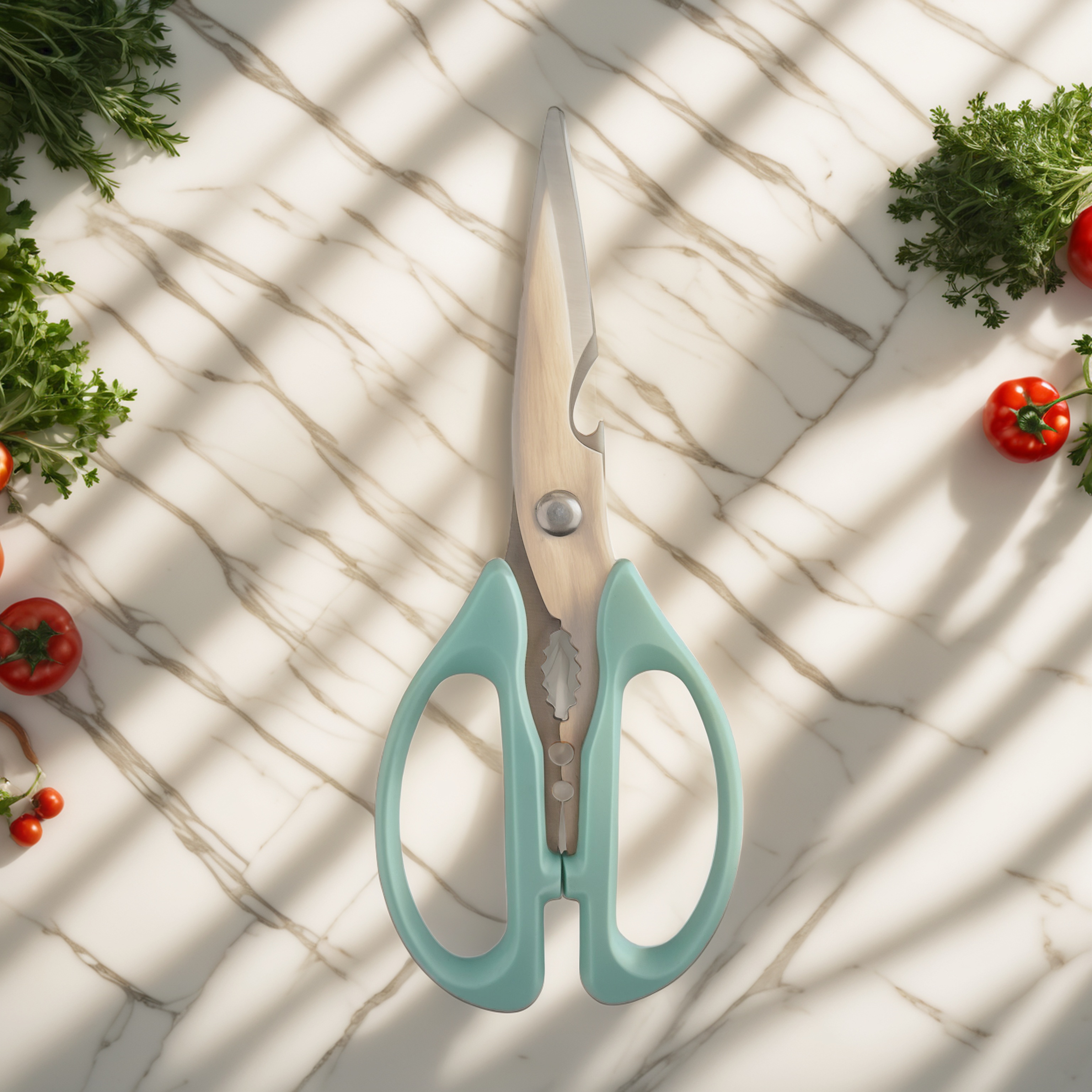
Multi-functional kitchen scissors are popular because they solve several everyday preparation tasks with one compact tool. The original Bonet Houseware article highlights a model with a mint green handle, stainless steel construction, cutting blades, a serrated nutcracker section between the handles, and a built-in bottle opener. It also positions Yangjiang as an important cutlery production region and mentions OEM opportunities for brands.
For importers, wholesalers, private-label kitchenware brands, and promotional product buyers, the real question is not only whether the scissors look useful. The stronger question is whether the product, supplier process, packaging, and quality controls fit your target market. This guide explains how to evaluate OEM multi-functional kitchen scissors without relying on vague claims or unnecessary features.
Key Takeaways
- Confirm the actual functions included, such as cutting, nut cracking, bottle opening, fish scaling, poultry trimming, or package opening.
- Do not assume blade grade, hardness, dishwasher safety, or compliance details unless the supplier provides written confirmation.
- OEM buyers should request samples, packaging options, artwork requirements, quality checks, and lead-time details before placing bulk orders.
- Comfort, cleaning, blade alignment, and safety are as important as the number of advertised functions.
What Makes Kitchen Scissors Multi-Functional?
A standard pair of kitchen scissors is mainly designed for cutting food packaging, herbs, paper towels, twine, or light food preparation tasks. A multi-functional design adds extra utility, usually through blade shaping, handle structure, or built-in notches. In the source article, the described product includes a serrated section between the handles for cracking nuts and an integrated bottle opener on the blade. It is also described as suitable for snipping herbs, trimming fat from meat, cutting poultry, scaling fish, and opening packages.
These functions can be useful, but B2B buyers should separate practical value from marketing language. A function is only useful if the tool performs it safely and consistently. For example, a bottle opener should not interfere with cutting comfort, and a nutcracker section should not create sharp pressure points in the handle. Before approving an OEM order, ask the supplier to demonstrate each function with normal kitchen use cases and provide a physical sample for review.
Feature Checklist for OEM Buyers
The best sourcing discussions are specific. Instead of asking whether the scissors are “high quality,” use a checklist that compares function, construction, user comfort, and packaging readiness. The table below can help buyers evaluate samples from one or more kitchen scissors suppliers.
| Evaluation Point | What to Check | Questions to Ask the Supplier |
|---|---|---|
| Blade material | The original article states stainless steel, but not the grade. | What stainless steel grade is used, and can it be documented? |
| Cutting performance | Blade alignment, sharpness, clean cutting, and smooth opening. | What cutting tests are done before shipment? |
| Multi-use functions | Nutcracker, bottle opener, fish scaling, poultry trimming, and package opening. | Which functions are included in this exact model? |
| Handle comfort | Grip size, pressure points, balance, and control when wet. | Are alternative handle colors or materials available for OEM orders? |
| Cleaning and hygiene | Food-trap areas, separable blades if applicable, and washing guidance. | How should users clean and dry the scissors? |
| Packaging | Retail card, box, insert, barcode placement, and warning text. | What packaging formats and artwork files are required? |
Why Yangjiang Matters for Kitchen Scissors Sourcing
The original article identifies Yangjiang as a global hub for blade production and cutlery manufacturing. That regional background can be useful for buyers searching for OEM kitchen scissors in Yangjiang, because many factories and trading companies in the area focus on knives, scissors, and related kitchen tools. However, location alone does not prove that a supplier is suitable for your order.
When evaluating a Yangjiang kitchen scissors supplier, focus on verifiable details. Ask whether the company manufactures in-house or sources from partner workshops. Request photos or videos of the production process if a factory visit is not practical. Clarify who controls blade grinding, handle assembly, surface finishing, inspection, and packaging. Also ask who will be responsible for corrective action if a pre-shipment inspection finds blade looseness, poor cutting, packaging damage, or mixed colors.
OEM Customization Points to Clarify
OEM projects often fail because buyers and suppliers use the same words differently. “Custom logo,” for example, can mean laser marking, pad printing, printed packaging only, or a hang tag. Before confirming a multi-functional kitchen scissors order, define every visible and functional element in writing.
- Confirm the exact model, handle color, blade finish, and included functions.
- Ask where a logo can be placed and which marking method is suitable.
- Review packaging dielines, product warnings, barcode location, and instruction text.
- Request a pre-production sample before mass production begins.
- Clarify inspection standards, acceptable defect limits, and sample retention.
- Ask about carton packing, shipping marks, gross weight, and pallet requirements if needed.
Commercial details such as MOQ, unit price, payment terms, production time, and available certificates should be requested directly from the supplier. They should not be assumed from a product description.
Quality and Safety Questions Before Wholesale Orders
Kitchen scissors are handled near food, fingers, packaging, and sometimes bones or shells. That means a poor-quality pair can create customer complaints quickly. For wholesale and private-label programs, ask for a sample from the same production process intended for the bulk order, not just a showroom piece.
Check whether the blades open and close smoothly without wobble. Test the scissors on common materials that match your market, such as herbs, food bags, soft packaging, poultry skin, or twine. If the product is advertised for cracking nuts or opening bottles, test those functions repeatedly and inspect the handle and blade area afterward. Buyers should also ask about corrosion resistance testing, cleaning recommendations, sharp edge protection during packing, and whether any market-specific compliance documents are available for review.
Use and Care Guidance for End Users
Even strong kitchen scissors last longer when used correctly. Retailers and brands can reduce returns by including simple care guidance with the product. Users should cut appropriate food and packaging materials only, avoid twisting the blades sideways, and clean the scissors soon after contact with acidic, salty, or oily ingredients. If the supplier does not confirm dishwasher safety, hand washing and immediate drying are the safer default instructions.
Storage also matters. A blade guard, retail sleeve, drawer divider, or magnetic strip can help prevent accidental cuts and protect blade edges. If the scissors include a bottle opener or nutcracker, the user instructions should explain how to hold the tool securely and when to avoid excessive force.
FAQ
What functions are mentioned for these multi-functional kitchen scissors?
The source article mentions cutting, snipping herbs, trimming fat from meat, cutting poultry, scaling fish, opening packages, cracking nuts with a serrated handle section, and opening bottles with a built-in opener.
Are the blades stainless steel?
The original article describes the scissors as stainless steel, but it does not specify the stainless steel grade. Buyers should ask the supplier for the exact grade and any supporting documentation.
Can the scissors be customized for OEM orders?
The original article mentions OEM kitchen scissors from Yangjiang. For a real order, buyers should confirm logo method, handle color, packaging format, sample approval, MOQ, price, and lead time directly with the supplier.
What should buyers test before placing a wholesale order?
Buyers should test cutting smoothness, blade alignment, grip comfort, cleaning ease, package opening, nut cracking, bottle opening, and the durability of any logo or packaging.
Is Yangjiang a relevant sourcing location?
Yes. The source article describes Yangjiang as a cutlery manufacturing hub. Still, buyers should verify the supplier’s role, production process, inspection system, and commercial terms before ordering.
