




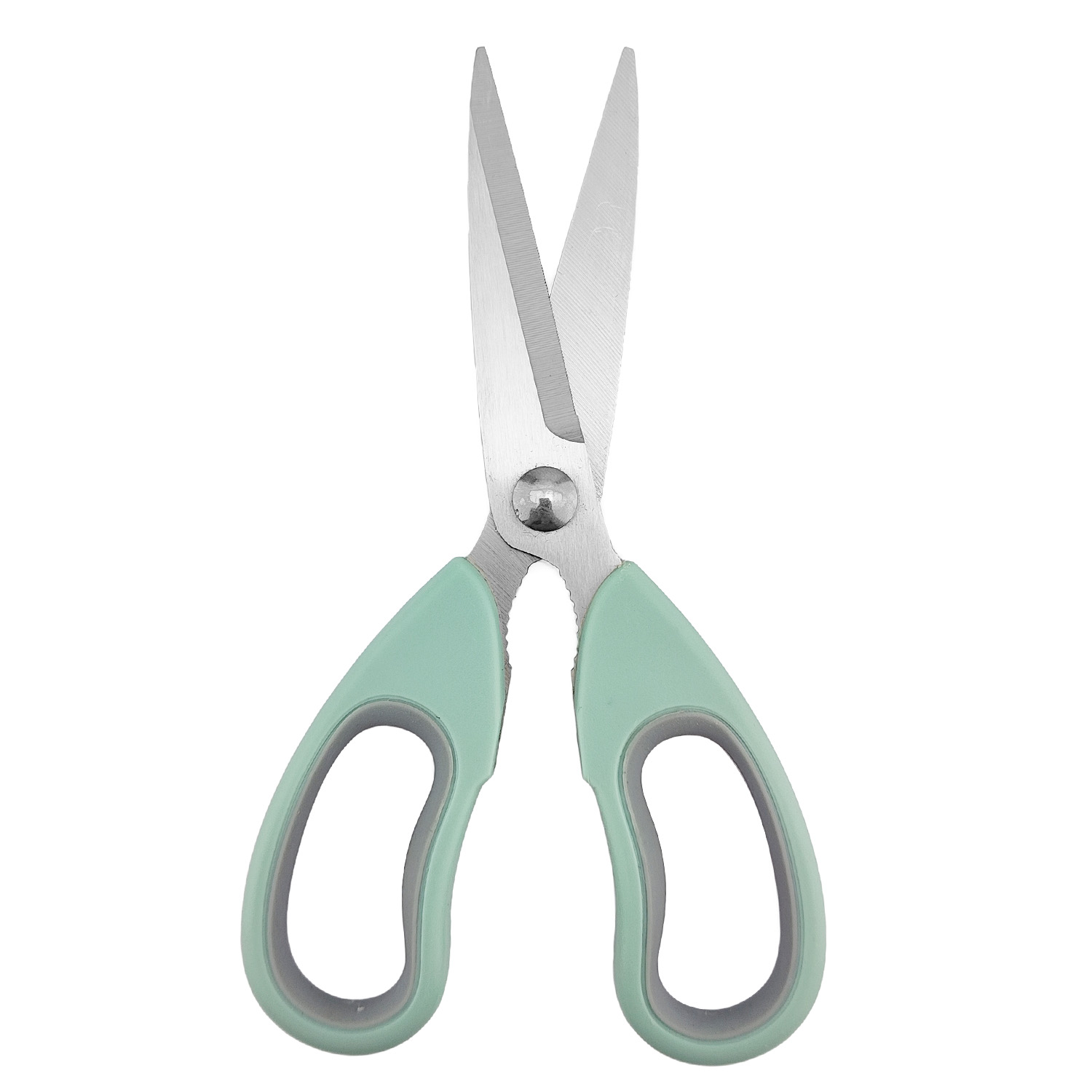
Multi-Functional Kitchen Scissors: Versatile, High-Quality, New Design
Multi-functional kitchen scissors are a practical tool for meal preparation, small household jobs, and light craft tasks. Unlike ordinary scissors kept in a drawer for paper or packaging, kitchen scissors are expected to handle varied cutting needs around food preparation and daily use. The original Bonet Houseware article highlights a new design, ergonomic contour, soft rubber grip, sharp blades, and stainless steel blade construction. Those are useful starting points, but buyers should also look at comfort, cleaning, packaging, replacement planning, and supplier communication before choosing a model for personal use, retail programs, or wholesale sourcing.
Key Takeaways
- Multi-functional kitchen scissors should be evaluated by cutting comfort, blade sharpness, handle grip, cleaning ease, and intended use.
- The original product description explicitly mentions stainless steel blades, ergonomic contour, and a soft rubber grip.
- Wholesale and OEM buyers should ask suppliers for material grade, test reports, packaging options, lead time, and quality-control procedures rather than assuming them.
- For consumer use, safe washing, drying, and storage help maintain performance and reduce corrosion risk.
What Multi-Functional Kitchen Scissors Are Used For
A well-designed pair of kitchen scissors can reduce reliance on knives for certain everyday tasks. Common uses include trimming herbs, cutting food packaging, portioning soft foods, opening bags, and handling light household cutting jobs. Some users also keep a separate pair for craft or decoration work, especially when a clean straight cut is needed.
The key word is "appropriate." Kitchen scissors should not be treated as a universal replacement for knives, shears, or heavy-duty tools. Cutting bones, frozen foods, metal wire, or very hard materials may damage the edge or hinge unless the supplier specifically states that the scissors are made for those applications. When product details are limited, buyers should request written specifications and usage guidance from the supplier.
Why the New Design Matters
The original article points to a new design with attention to the handles and blade sharpness. In daily use, handle shape can matter as much as blade performance. An ergonomic contour helps the hand stay aligned during repeated cutting, while a soft rubber grip can improve comfort and reduce slipping when hands are slightly damp. These features are especially relevant for users who prepare meals frequently or perform repeated cutting tasks in retail demonstration, catering, or light production settings.
Design should also support control. A pair of scissors that feels too loose may give uneven cuts, while a pair that feels too tight can cause hand fatigue. Retail buyers should consider ordering samples and testing them with several hand sizes before placing a larger order. For OEM projects, it is reasonable to ask whether handle color, packaging, logo placement, or surface finish can be customized, but final possibilities should be confirmed directly with the supplier.
Blade Material and Cutting Performance
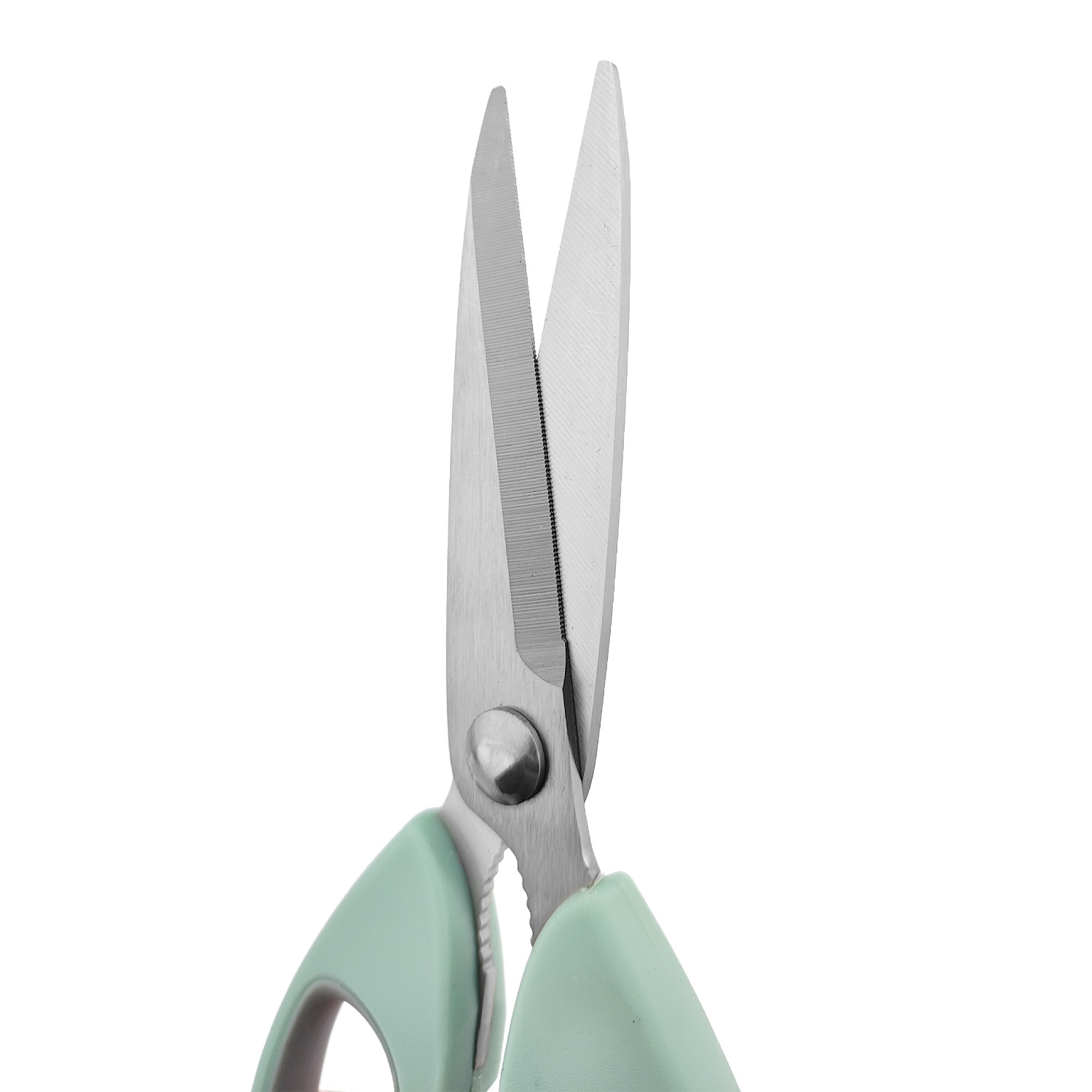
The source article states that the blades are made from stainless steel. Stainless steel is widely used for kitchen tools because it can resist ordinary kitchen moisture better than many non-stainless materials, but not all stainless steel grades perform the same. A responsible sourcing decision should not stop at the phrase "stainless steel." Buyers should ask what grade is used, whether hardness data is available, how the edge is finished, and what care instructions are recommended.
For consumers, the practical test is simple: scissors should open and close smoothly, cut cleanly without tearing softer items, and feel stable at the pivot point. For business buyers, sample testing should include repeated opening and closing, cutting different common materials, checking handle comfort, and inspecting whether the blade edge remains consistent after use. If the product will be sold in a regulated market, ask the supplier which documents are available and verify requirements with your own compliance adviser.
Selection Checklist for Buyers
The table below can help consumers, retailers, and wholesale buyers compare kitchen scissors without relying only on appearance or marketing copy.
| Selection Point | What to Check | Questions to Ask a Supplier |
|---|---|---|
| Blade construction | Stainless steel blades are stated in the original description. | What stainless steel grade is used, and is hardness information available? |
| Handle comfort | Look for ergonomic contour and a soft rubber grip. | Can samples be tested for different hand sizes and grip comfort? |
| Cutting use | Match the scissors to food prep, packaging, herbs, or light household tasks. | What materials or tasks should users avoid cutting? |
| Cleaning and care | Confirm whether the product should be hand washed and dried immediately. | Are care instructions included on packaging or user materials? |
| Retail or OEM program | Review packaging, labeling, barcode needs, and logo placement. | What customization, sample, lead time, MOQ, and inspection options are available? |
Use and Care Guidance
Good care keeps kitchen scissors more reliable. After contact with food, wash the scissors promptly according to the supplier's instructions. If instructions are not available, hand washing with mild detergent and immediate drying is a cautious approach. Do not leave scissors soaking in a sink, because moisture and food residue around the hinge can affect movement over time.
- Use separate scissors for food and non-food tasks when hygiene matters.
- Dry the blades and handle area after washing, especially near the pivot.
- Store scissors in a dry drawer, knife block, or protective holder to protect the edge.
- Avoid twisting the blades while cutting, as this can stress the hinge and edge.
- Stop using scissors if the blades loosen, chip, or no longer close safely.
For commercial kitchens or food-service settings, buyers should also confirm cleaning policies and local hygiene requirements. A household product may not automatically meet the needs of professional food handling environments.
B2B Sourcing Guidance for Wholesale and OEM Buyers
For importers, distributors, supermarket buyers, and brand owners, multi-functional kitchen scissors should be reviewed as both a tool and a retail product. The scissors must feel good in hand, but the project also depends on consistent finishing, carton packing, labeling, documentation, and communication. Because the original article does not provide capacity, MOQ, certification, price, or test-result details, these should be treated as open questions rather than assumptions.
Before placing an order, ask the supplier for product drawings or specifications, material information, packaging dimensions, sample policy, production lead time, inspection process, and after-sales handling. If you plan to sell under your own brand, clarify whether OEM or private-label packaging is available and request a pre-production sample for approval. For online retail, ask for accurate product dimensions, weight, care instructions, and product photography permissions.
Practical FAQ
Are multi-functional kitchen scissors only for food preparation?
No. They can also be useful for opening packaging, trimming light materials, or doing simple household cutting tasks. For hygiene, many users prefer to keep one pair for food and another for non-food use.
What features are confirmed in the original product description?
The source text explicitly mentions stainless steel blades, sharpness, an ergonomic contour, and a soft rubber grip. Other technical details, such as steel grade, exact dimensions, or test data, should be requested from the supplier.
Can wholesale buyers request OEM customization?
Possibly, but the available options are not stated in the original article. Buyers should ask about logo placement, handle color, packaging design, barcode labeling, carton requirements, samples, MOQ, lead time, and approval procedures.
How should kitchen scissors be cleaned?
Follow the supplier's care instructions first. If no instructions are provided, hand wash, remove food residue, dry immediately, and store in a dry place. Avoid soaking for long periods.
What should I check before buying samples in bulk?
Test cutting performance, grip comfort, blade alignment, hinge smoothness, packaging quality, and consistency across multiple samples. Also confirm commercial terms and documentation before committing to a larger order.
