








Multi-Functional Kitchen Scissors: Practical Buying and Use Guide
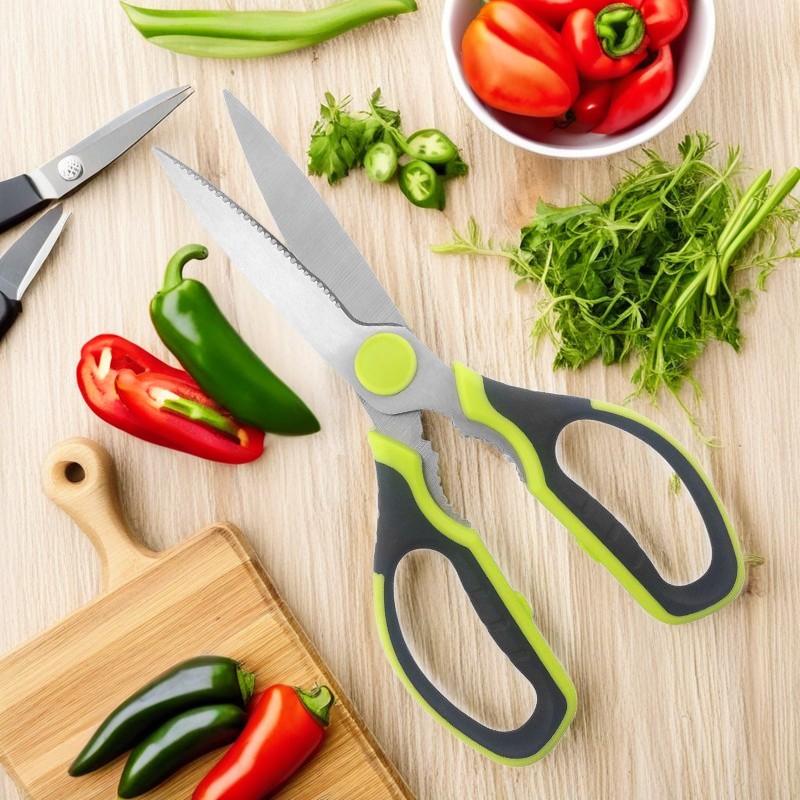
Multi-functional kitchen scissors are a small tool with a wide range of everyday uses. For many home cooks, they can be faster than a knife and cutting board for trimming herbs, opening food packaging, cutting cooked meat into portions or snipping vegetables directly into a bowl. The original product shown here features stainless steel blades, a serrated edge, dual-tone lime green and black handles, soft-grip non-slip surfaces, and built-in functions such as a bottle opener and nutcracker between the handles.
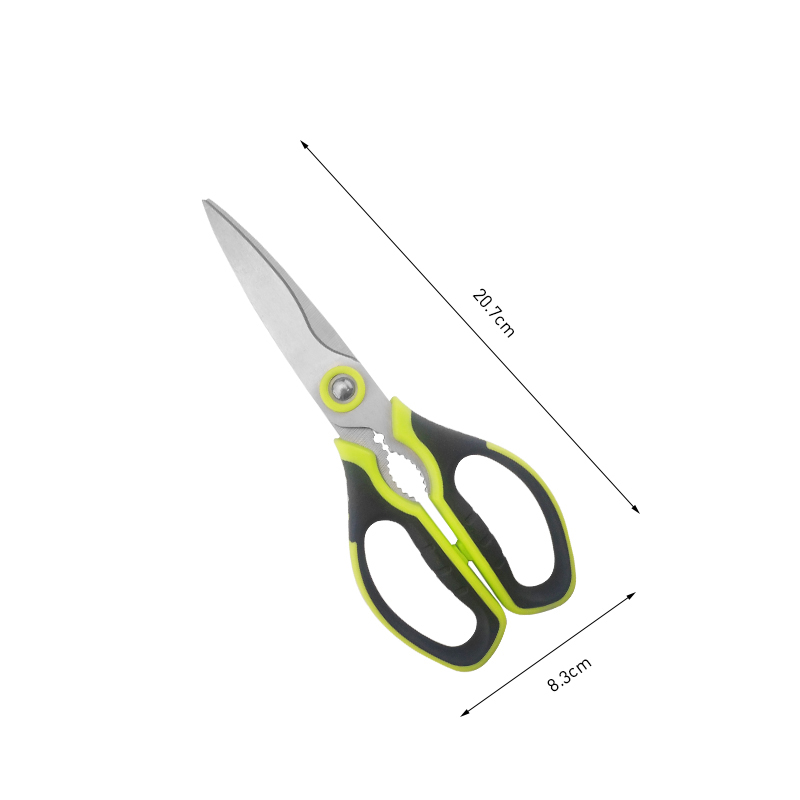
Because kitchen scissors touch food, packaging and sometimes hard shells, the best choice is not only about sharpness. Comfort, cleanability, control, storage and safe handling matter just as much. This guide explains how to evaluate multi-purpose kitchen shears, what tasks they are suitable for, and how to keep them working reliably without turning them into a catch-all tool for jobs they were not designed to handle.
Key Takeaways
- Multi-functional kitchen scissors are useful for food preparation, package opening and quick kitchen tasks, but they should still be used within reasonable limits.
- Stainless steel blades and a serrated cutting edge can help with grip and cutting control, especially on slippery foods.
- Soft-grip, non-slip handles improve comfort when hands are wet or when repeated cutting is required.
- Built-in tools such as a bottle opener and nutcracker can reduce drawer clutter, but buyers should check how comfortable and sturdy those features feel in use.
- Cleaning and drying after use are important, especially around the pivot and between the handles.
What Makes Kitchen Scissors Different from Office Scissors?
Kitchen scissors, also called kitchen shears, are designed for food-related tasks rather than paper, craft or desk use. Their blades are typically stronger and more compact than ordinary household scissors, and the handles are shaped to provide better leverage. In this product, the stainless steel blades are described as durable, while the serrated edge is intended to help grip the item being cut. That can be useful when trimming herbs, cutting poultry skin, slicing cooked meats or snipping through flexible packaging.
The other major difference is hygiene. Office scissors are not designed to be washed frequently or used around moisture, oil and food residue. Kitchen scissors should be cleaned after contact with raw foods, sticky sauces or packaging. If a pair includes extra functions such as a nutcracker or bottle opener, those recessed areas also need attention during washing because crumbs, liquids or grease can collect around them.
Best Everyday Uses for Multi-Functional Kitchen Scissors
A good pair of kitchen scissors can save time during simple prep work. Instead of setting up a cutting board for every small ingredient, you can snip directly into a pan, salad bowl or serving dish. They are especially helpful for small repetitive cuts where a chef's knife may feel excessive.
- Herbs: Cut chives, parsley, cilantro or scallions directly over food for quick finishing.
- Meat and poultry: Trim fat, cut cooked chicken into strips or portion thinner pieces of meat. For raw meat, clean the scissors immediately after use.
- Vegetables: Snip leafy greens, spring onions or softened dried vegetables into smaller pieces.
- Packaging: Open food bags, pouches and vacuum packs more cleanly than tearing by hand.
- Serving tasks: Cut pizza slices, flatbread, noodles or bacon into manageable pieces when appropriate.
- Secondary tasks: Use the built-in bottle opener or nutcracker when those features are suitable for the item and comfortable to control.
These uses do not mean one tool should replace every knife. Thick bones, frozen foods, very hard shells or non-food materials can stress the pivot and dull the blades. For demanding jobs, choose a dedicated tool designed for that purpose.
Comfort and Control: Why Handle Design Matters
The original article highlights an ergonomic handle design with lime green and black accents and a non-slip, soft-grip surface. This is more than a visual detail. Handle comfort affects how safely and accurately the scissors perform. When cutting slippery foods or working with wet hands, a handle that feels secure reduces the chance of twisting, slipping or applying uneven pressure.
When evaluating kitchen shears, hold them as you would during real food prep. Check whether your fingers fit naturally in the loops, whether the handle edges press into your hand, and whether the pivot opens smoothly without feeling loose. A handle that feels fine for one quick cut may become uncomfortable after trimming a larger batch of herbs or cutting meat into many portions.
Left-handed users should also check usability. Some scissors are shaped primarily for right-handed use, while others are more neutral. If multiple people in the same kitchen will use the tool, comfort for different hand sizes is worth considering before purchase.
Comparison and Selection Checklist
The table below can help compare multi-functional kitchen scissors before buying or when evaluating a sample product in person. It focuses on practical questions rather than decorative claims.
| Feature to Check | Why It Matters | What to Look For |
|---|---|---|
| Blade material | Food prep requires a blade that can handle moisture and repeated washing. | Stainless steel blades are stated for this product; ask the seller for care instructions and any material details they can document. |
| Cutting edge | A serrated edge can help hold slippery foods in place while cutting. | Check that the serrations feel even and that the blades meet cleanly from base to tip. |
| Handle grip | Wet or oily hands can reduce control during prep. | Look for non-slip, soft-grip handles that remain comfortable under pressure. |
| Built-in tools | A bottle opener or nutcracker can be convenient, but only if placed well. | Test whether the opener and nutcracker are easy to access without awkward hand positions. |
| Cleaning access | Food residue can collect near the pivot and built-in tool areas. | Inspect whether the shape is easy to rinse, scrub and dry thoroughly. |
| Storage safety | Sharp blades in a drawer can damage other tools or cause injury. | Consider whether you need a blade cover, drawer tray or hanging storage. |
How to Use Kitchen Scissors Safely
Even compact scissors can cause injury if handled casually. Keep your fingers clear of the blades, cut away from your body, and use controlled pressure rather than forcing the tool through hard materials. If the scissors stall, stop and reposition the food instead of twisting the blades.
- Use the right section of the blade. The area near the pivot provides more leverage for tougher foods, while the tips are better for detailed trimming.
- Stabilize the food. Place meat, herbs or packaging on a steady surface when possible, especially if the item is slippery.
- Avoid cross-contamination. Do not cut raw poultry and then use the same unwashed scissors on ready-to-eat salad ingredients.
- Keep the pivot clean. Sticky residue can make the scissors harder to open and close, reducing control.
- Store with the blades closed. A drawer organizer or blade guard helps protect both the scissors and the user.
For households with children, store kitchen scissors out of reach or in a controlled drawer. Their colorful handles may make them look less sharp than they are, but they should be treated like any other cutting tool.
Cleaning and Care Tips
Kitchen scissors should be cleaned after every food-related use. Warm water and mild dish soap are usually suitable for everyday washing, followed by thorough drying with a clean towel. Pay close attention to the hinge, serrated areas and the built-in nutcracker or bottle opener because these surfaces can hold small particles.
If the scissors were used on raw meat or poultry, wash them immediately and follow your normal food-safety routine for utensils that contact raw proteins. Avoid leaving scissors soaking for long periods, especially if the handle includes soft-grip materials or if water can sit around the pivot. Drying is important because trapped moisture may affect appearance, movement and long-term usability.
Dishwasher use depends on the product's specific care instructions. If instructions are not provided, hand washing is the safer default because dishwasher heat, detergents and long wet cycles can affect handles, pivots and blade edges over time. If the blades begin to feel dull, consider whether they can be sharpened professionally or whether replacement is more practical.
When Built-In Tools Are Useful—and When They Are Not
The bottle opener and nutcracker functions are convenient for occasional use. They can help reduce the number of separate tools needed for simple kitchen tasks, and they are easy to appreciate when preparing snacks or drinks. However, built-in functions should be judged by comfort and leverage. If opening a cap or cracking a shell requires excessive force, a dedicated opener or nutcracker may be safer and more effective.
Do not assume every hard shell or lid is suitable. Very hard nuts, oversized caps or tightly sealed containers can place stress on the handle and pivot. The value of a multi-functional tool is convenience, not replacing all specialized tools in the kitchen.
Practical FAQ
Can I use multi-functional kitchen scissors for raw chicken?
Yes, kitchen scissors are often used for trimming or portioning raw chicken, but they must be washed thoroughly immediately afterward. Avoid using them on ready-to-eat foods until they have been properly cleaned.
Are serrated kitchen scissors better than smooth blades?
A serrated edge can help grip slippery foods and packaging, which improves control for many everyday tasks. Smooth blades may feel easier to wipe clean, so the best choice depends on your main use.
Can these scissors replace a chef's knife?
No. They are a helpful companion tool for snipping, trimming and small cutting jobs, but a knife and cutting board are still better for large vegetables, precise slicing and heavy prep work.
How should I store kitchen scissors?
Store them closed in a drawer tray, on a magnetic strip if suitable, or with a blade cover. Keep them dry and separated from tools that could damage the cutting edge.
What should I ask before buying online?
Ask about care instructions, whether the scissors are dishwasher-safe, how the built-in opener and nutcracker are intended to be used, and whether replacement or warranty support is available. If material details are important to you, request clear documentation from the seller.
Final Thoughts
Multi-functional kitchen scissors are most valuable when they make ordinary cooking tasks quicker without compromising safety or cleanliness. The combination of stainless steel blades, a serrated edge, soft-grip non-slip handles, and built-in bottle opener and nutcracker functions gives this type of tool broad everyday appeal. To choose well, focus on comfort in hand, ease of cleaning, smooth blade action and realistic use. With proper care, a well-chosen pair can become one of the most frequently reached-for tools in a busy kitchen drawer.
