




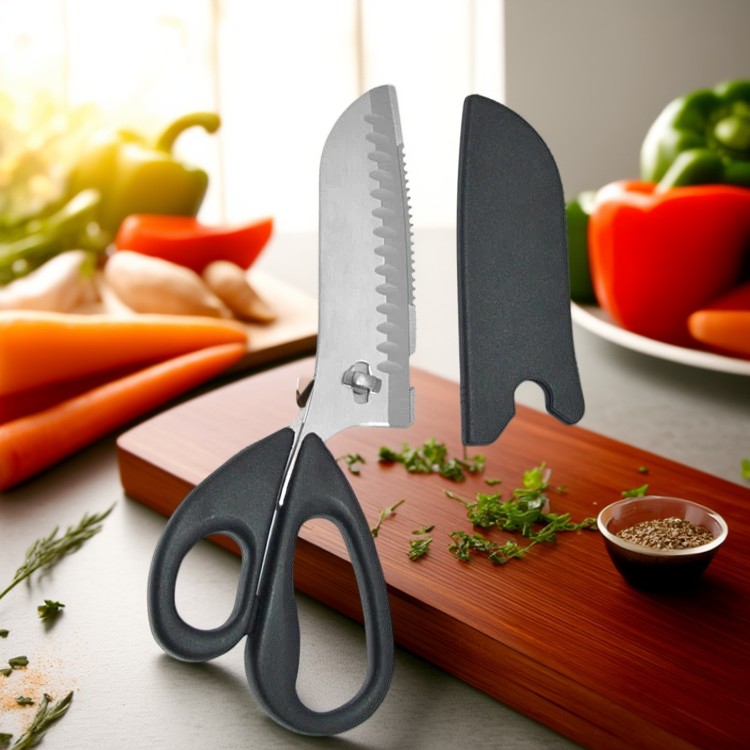
Multi-Functional Kitchen Scissors: A Practical Guide for Everyday Kitchens
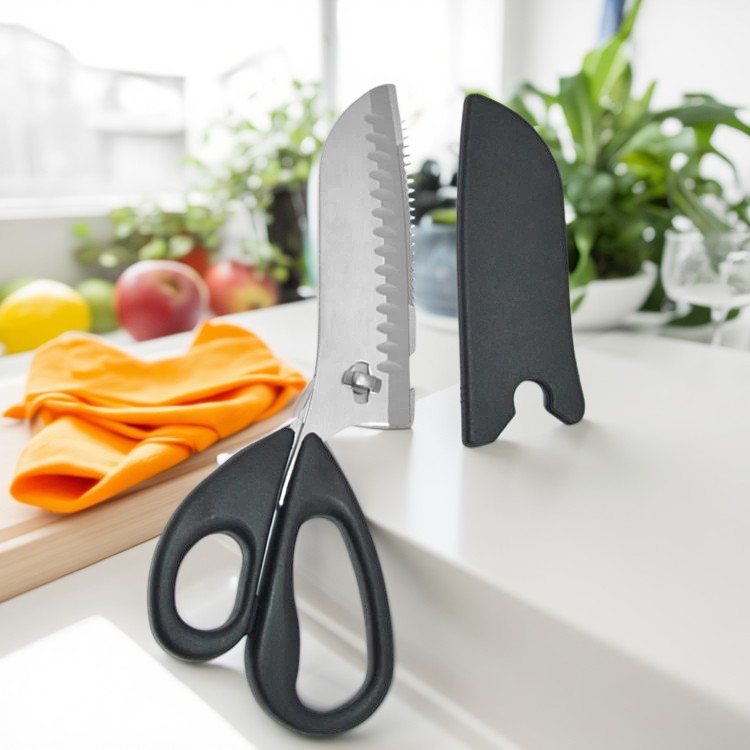
Multi-functional kitchen scissors are useful because they handle small cutting jobs that are awkward with a knife and cutting board. The original product description highlights several practical features: heavy-duty stainless steel blades, a sawtooth cutting edge, a detachable two-piece design, ergonomic black handles, a protective black blade cover, and an integrated hook design. Those details make this type of kitchen tool relevant for home cooks who want faster prep, easier cleaning, and safer storage.
This guide explains how to evaluate kitchen scissors without relying on vague claims. It covers real cooking tasks, feature comparisons, cleaning routines, storage considerations, and questions to ask before buying. The goal is simple: choose scissors that match how you actually cook.
Key Takeaways
- Choose multi-functional kitchen scissors based on tasks, not just appearance.
- Detachable blades can make cleaning easier, especially after cutting raw poultry or seafood.
- A sawtooth edge can help grip slippery foods, but it still needs careful handling.
- A blade cover and secure storage location reduce the risk of accidental cuts.
- Ask the seller clear questions about care instructions, replacement parts, and warranty terms before purchasing.
What Multi-Functional Kitchen Scissors Are Best Used For
Kitchen scissors are not a replacement for every knife task, but they can save time during everyday preparation. They are especially helpful when cutting herbs directly into a bowl, trimming packaging, portioning cooked noodles, cutting flatbread, snipping dried fruit, or preparing small garnishes. The source article also notes use for raw poultry and seafood, including tougher materials such as bones and slippery textures.
For safety, use separate preparation areas when handling raw meat, poultry, or seafood. If the same scissors are used for multiple foods, clean and dry them thoroughly between tasks. Detachable kitchen scissors are particularly useful here because food residue can collect near the pivot area on fixed-blade designs.
Feature Comparison Checklist
Before buying, compare features against your cooking habits. The table below helps translate common product details into practical selection criteria.
| Feature | Why It Matters | What to Check Before Buying |
|---|---|---|
| Heavy-duty stainless steel blades | Supports cutting through tougher foods and helps maintain a sharp working edge. | Ask how the blades should be cleaned, dried, and sharpened. |
| Sawtooth blade design | Can improve grip on slippery items such as seafood or smooth-skinned foods. | Check whether the serrations suit your main tasks or make fine cutting harder. |
| Detachable two-piece design | Makes it easier to clean the pivot area and dry each blade surface. | Confirm how the blades separate and reconnect securely. |
| Ergonomic black handles | Improves comfort during repeated cutting and trimming jobs. | Check handle size, grip feel, and whether it suits right- and left-handed users. |
| Protective blade cover | Helps reduce accidental contact during drawer storage. | Make sure the cover fits firmly and is easy to remove safely. |
| Integrated hook design | Adds a hanging or handling option, depending on kitchen setup. | Confirm whether the hook fits your storage rail, rack, or drawer routine. |
How to Choose the Right Kitchen Scissors
Start with your most frequent cooking tasks. If you mainly cut herbs, vegetable tops, and food packaging, comfort and precision may matter more than cutting strength. If you regularly prepare poultry or seafood, detachable blades and a secure grip become more important. The product described in the original article includes heavy-duty stainless steel blades and a sawtooth design, which are useful features for demanding cutting jobs, but buyers should still assess whether the tool feels balanced in the hand.
Look closely at the handle shape. Ergonomic handles can reduce hand fatigue, but comfort depends on palm size, finger opening, grip texture, and cutting angle. If multiple people in the household will use the scissors, a design suitable for both right-handed and left-handed users is helpful.
- List the foods you cut most often.
- Decide whether detachable blades are necessary for your cleaning routine.
- Check that the handle openings are comfortable for your hand size.
- Confirm that the blade cover is included and fits properly.
- Ask about care instructions before putting the scissors in a dishwasher.
Cleaning and Hygiene Tips for Detachable Kitchen Scissors
Good hygiene is one of the main reasons to choose detachable kitchen scissors. When scissors are used for raw poultry, meat, or seafood, small particles and juices can settle around the joint. A detachable two-piece design allows each blade to be washed more directly, reducing hidden residue.
After use, separate the blades according to the maker's instructions. Wash with warm water and dish soap, paying attention to the pivot area, serrated sections, and handle edges. Rinse thoroughly and dry immediately with a clean towel. Do not store the scissors while damp, because moisture trapped under a cover or in a drawer can shorten the working life of metal tools. If a seller recommends dishwasher cleaning, follow the stated guidance; if no guidance is provided, hand washing is the safer default.
Safe Storage and Daily Handling
A sharp kitchen tool should be easy to access but not loose in a drawer. The original article mentions a black protective blade cover, which is a useful safety feature when the scissors are stored with other utensils. A cover can also help protect the edge from unnecessary contact with metal tools.
If your kitchen has a rail or hook system, the integrated hook design may offer another storage option. However, hanging tools should be positioned where children cannot reach them and where the blades will not swing or fall. For drawer storage, place the covered scissors in a consistent location so they can be picked up without searching by touch.
When Scissors Are Better Than a Knife
Kitchen scissors work well when the food is small, flexible, or difficult to stabilize on a board. Cutting herbs over a pot, trimming excess fat from poultry, opening food packaging, or snipping cooked noodles can be faster with scissors. They also reduce the need to move ingredients between a bowl and a cutting board for minor trimming.
Still, knives remain better for large vegetables, clean slicing, and tasks that require a flat, controlled cutting surface. Use the right tool for the job. Scissors are most valuable as a companion tool, not as a complete replacement for a chef's knife.
Questions to Ask Before You Buy
Product pages often focus on broad benefits, so it is useful to ask specific questions. Ask whether the scissors are designed for dishwasher use or hand washing only. Ask how the detachable mechanism locks in place during cutting. Ask whether replacement covers are available if the original blade cover is lost. Ask how the seller recommends maintaining sharpness over time. If buying for a shared kitchen, ask for clear information about handle size and left-handed usability.
A careful purchase decision should be based on verified product details, not assumptions. If a listing does not state a material grade, test result, warranty period, or compliance certification, do not assume it. Request that information from the seller if it matters for your use case.
FAQ
Are multi-functional kitchen scissors suitable for cutting raw poultry?
The original description states that these scissors can be used for raw poultry and tough materials such as bones. After cutting raw poultry, separate the detachable blades if applicable, wash thoroughly, and dry completely before storage.
Why choose detachable kitchen scissors?
Detachable scissors make it easier to clean the pivot area, which is important when cutting meat, seafood, sticky foods, or herbs. They can also be dried more thoroughly than fixed designs.
What does a sawtooth blade do?
A sawtooth edge helps grip slippery textures, such as seafood, during cutting. It may also improve control on foods that slide away from smooth blades.
Do kitchen scissors need a blade cover?
A cover is helpful for drawer storage because it reduces accidental contact with the cutting edge and helps protect the blade from other utensils.
Can these scissors be used by left-handed cooks?
The original article states that the ergonomic handles are designed for both right-handed and left-handed users. Buyers should still check handle comfort and cutting feel whenever possible.
How should I maintain sharpness?
Use the scissors only on appropriate foods, avoid cutting hard non-food materials, clean and dry them after use, and ask the seller whether sharpening is recommended for the blade design.
Multi-functional kitchen scissors are most effective when chosen for real cooking habits and maintained with care. Look for comfortable handling, detachable construction, safe storage, and clear cleaning guidance. With those basics covered, they can become a reliable tool for quick trimming, snipping, and everyday prep.
