




Multi-Functional Kitchen Shears: Practical Buying and Use Guide
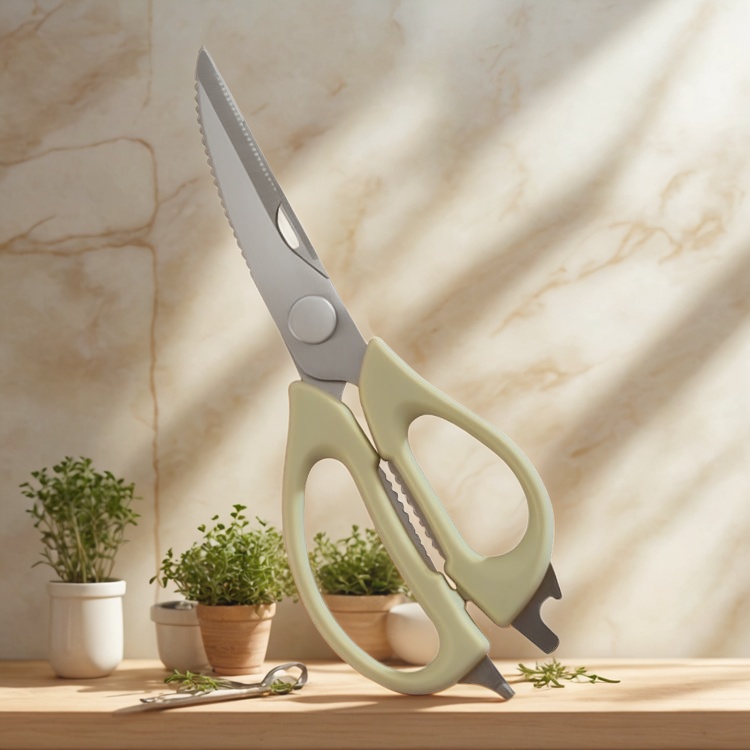
Multi-functional kitchen shears are designed to do more than trim herbs. In many kitchens, they are used for cutting vegetables, portioning food, opening packaging, and handling quick prep tasks that would otherwise require a knife and cutting board. For importers, wholesalers, retail buyers, and OEM kitchen tool brands, the category is also attractive because one compact product can answer several consumer needs.
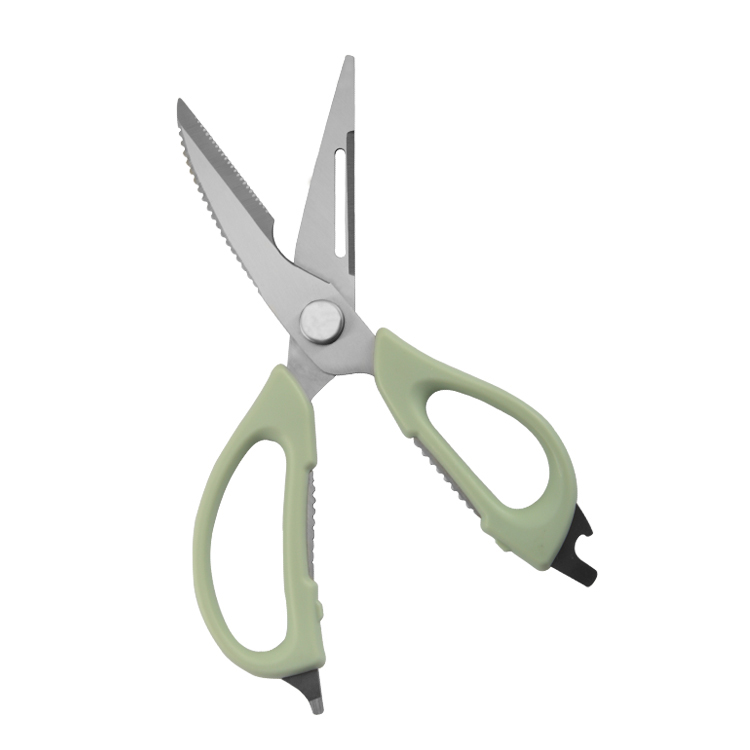
The original product description highlights several explicit features: stainless steel blades, a serrated edge, olive green handles, a built-in bottle opener, nutcracker, can opener, and soft-grip non-slip handles. Those details make this type of kitchen scissors relevant for both consumer use and B2B sourcing discussions. However, buyers should still verify commercial details with the supplier before placing an order, including material grade, packaging, testing expectations, MOQ, lead time, and customization options.
What Multi-Functional Kitchen Shears Are Used For
Kitchen shears are different from general household scissors because they are intended for food-prep environments. A well-designed pair should feel stable in the hand, cut cleanly, and be easy to clean after contact with food. Multi-functional versions add secondary functions so users can reduce the number of small tools they reach for during daily cooking.
Typical use cases include:
- Snipping herbs, scallions, and leafy vegetables directly into a bowl or pan.
- Cutting food packaging, twine, parchment, or small bags.
- Trimming meat or poultry where appropriate for the blade design.
- Using the serrated section for tougher skins, stems, or packaging.
- Opening bottles, cracking nuts, or opening cans when these functions are built into the model.
For retailers, these use cases are easy to explain on packaging and product pages. For OEM buyers, they help define the product brief: whether the shears should be positioned as everyday household scissors, heavier kitchen prep shears, or a promotional multi-tool for kitchenware ranges.
Key Features to Review Before Buying
The most important feature is the cutting performance. Stainless steel blades are mentioned in the source article, but the exact grade is not specified. Buyers should ask the supplier what stainless steel is used, whether the blade is hardened, and how sharpness consistency is controlled during production. These questions matter because two products can both be described as stainless steel yet perform differently in daily use.
The serrated edge is another useful detail. Serration can help grip slippery or tougher surfaces, but the tooth pattern should not tear soft ingredients excessively. Handle design also deserves attention. The original article describes olive green handles with a soft-grip, non-slip feel. For consumer products, comfort can influence reviews, repeat purchases, and return rates, especially if the shears are used for longer prep sessions.
Integrated tools should be evaluated carefully. A bottle opener, nutcracker, and can opener can add value, but only if they are practical and do not weaken the main scissor function. Buyers should test whether the extra functions are intuitive, safe to use, and clearly explained on packaging or instructions.
Comparison Checklist for Sourcing Decisions
When sourcing from a kitchen scissors manufacturer or discussing an OEM scissors project, use a structured checklist instead of relying only on photos. Samples should be reviewed by the same criteria that end users will notice: cut quality, comfort, cleaning, and durability.
| Check Item | Why It Matters | Questions to Ask the Supplier |
|---|---|---|
| Blade material | Affects cutting, corrosion resistance, and long-term use. | What stainless steel grade is used, and can it be documented? |
| Blade finish and edge | Influences sharpness, smooth cutting, and food contact cleaning. | How is sharpness checked during production? |
| Serrated section | Helps with tougher tasks but must still cut cleanly. | What foods or materials is the serrated edge designed for? |
| Handle grip | Comfort and control affect safety and user satisfaction. | What handle material is used, and are color options available? |
| Integrated tools | Adds consumer value if functions are reliable. | Can the bottle opener, nutcracker, and can opener be demonstrated on samples? |
| Cleaning method | Food tools need clear care guidance. | Are there cleaning instructions, and is dishwasher use recommended or not? |
| Packaging | Important for retail presentation and compliance information. | Can packaging artwork, barcode placement, and instructions be customized? |
Use and Care Tips for Better Performance
For consumers, correct use can make a simple kitchen tool last longer. Multi-functional kitchen shears should be washed after use, especially after cutting meat, herbs, citrus, or oily foods. If the product has a pivot area or integrated tool sections, food residue can collect in small gaps, so careful cleaning is important.
General care guidance includes:
- Rinse soon after use rather than allowing food residue to dry on the blades.
- Wash with mild detergent and a sponge, taking care around the sharp edges.
- Dry thoroughly before storage to reduce the risk of stains or corrosion.
- Store closed in a drawer, sheath, or tool rack away from children.
- Use the integrated bottle opener, nutcracker, or can opener only as intended.
Unless the supplier specifically confirms dishwasher suitability, hand washing is usually the safer recommendation for preserving handles, blade edges, and any moving parts. Retailers should make care instructions visible because unclear cleaning guidance can lead to poor user experience.
B2B Sourcing Guidance for OEM and Wholesale Buyers
Yangjiang is widely associated with knife and scissor manufacturing, and the original article refers to a scissors factory Yangjiang context. For B2B buyers, location alone is not enough to qualify a supplier. A better approach is to compare sample quality, communication speed, customization capability, production consistency, and after-sales handling.
Before confirming an OEM kitchen scissors order, ask for clear answers on practical points: available blade materials, handle materials, color matching process, logo methods, packaging formats, carton details, sample timing, mass production lead time, MOQ, payment terms, and inspection process. If you need specific market compliance, food-contact documentation, or retailer testing, state those requirements at the quotation stage and request supporting documents instead of assuming they are included.
It is also useful to request pre-production samples and compare them with bulk shipment samples. Check blade alignment, screw or pivot tightness, handle molding quality, surface finish, and whether the integrated tools work consistently. For private-label buyers, packaging copy should avoid exaggerated claims and should clearly explain safe uses, cleaning methods, and any limitations.
Key Takeaways
- Multi-functional kitchen shears combine cutting tasks with added tools such as a bottle opener, nutcracker, and can opener.
- Stainless steel blades, a serrated edge, and non-slip handles are useful features, but buyers should verify material and performance details.
- Retail and OEM buyers should test samples for cut quality, grip comfort, cleaning ease, and consistency.
- Clear care instructions help consumers use the shears safely and maintain performance.
- Commercial details such as MOQ, lead time, certifications, and customization should be confirmed directly with the supplier.
FAQ
Are multi-functional kitchen shears better than a kitchen knife?
They are not a complete replacement for a knife, but they are useful for quick cutting tasks, trimming herbs, opening packaging, and handling small prep jobs with less setup.
Can these shears be used for meat and poultry?
Kitchen shears are often used for meat prep, but buyers should confirm the intended use and blade strength with the supplier. Consumers should wash and dry the shears thoroughly after contact with raw food.
What should OEM buyers ask a kitchen scissors manufacturer?
Ask about blade material, handle material, logo options, packaging, MOQ, sample timing, production lead time, inspection standards, and any documents required for the target market.
Is the product dishwasher safe?
The original information does not state dishwasher suitability. Unless the supplier confirms it, hand washing and thorough drying are the safer care recommendations.
How should retailers describe multi-functional kitchen shears online?
Focus on verified features and practical use cases, such as stainless steel blades, serrated cutting, non-slip handles, and built-in opening tools. Avoid claims that have not been confirmed by the supplier.
