




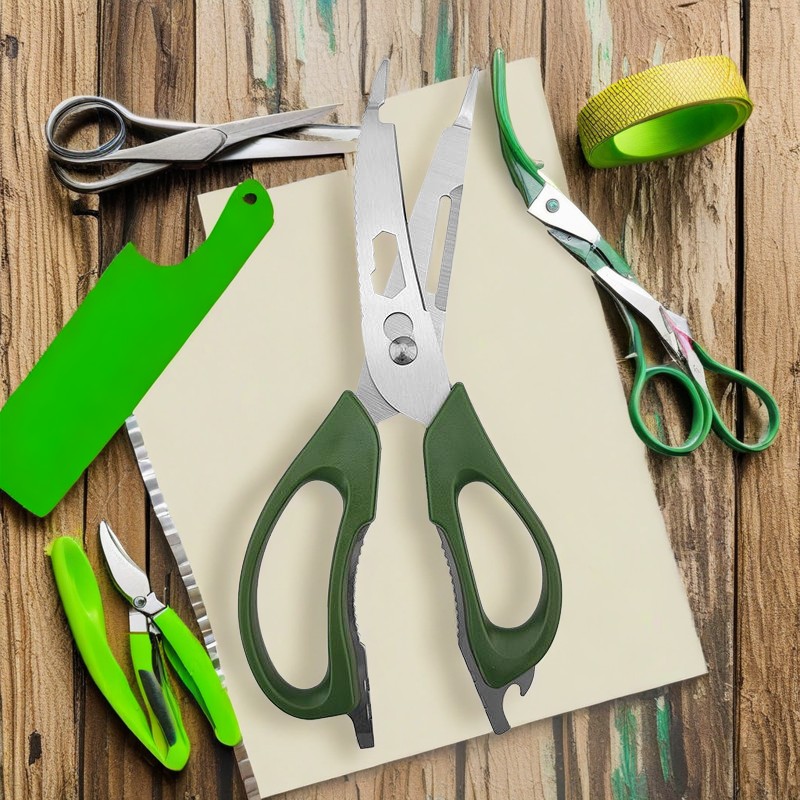
Multifunction Outdoor Scissors for Camping and Everyday Field Tasks
When packing for a camping trip, hiking weekend, fishing day, or family picnic, cutting tools often get less attention than tents, stoves, and cookware. Yet a reliable pair of multifunction outdoor scissors can save time on many small jobs: opening food packs, trimming cord, cutting tape, preparing ingredients, or helping with light campsite repairs. The original product description highlights several useful features: sharp stainless steel blades, a serrated edge for grip on slippery surfaces, an integrated bottle opener on the blade, and an ergonomic non-slip handle. This guide explains how to evaluate those features in practical terms so buyers can choose, use, and maintain outdoor scissors with confidence.
Key Takeaways
- Multifunction outdoor scissors are best for light to medium campsite cutting tasks, not heavy chopping or survival work.
- Look for sharp stainless steel blades, secure handles, and task-specific details such as serration or a bottle opener.
- Comfort matters because wet hands, cold weather, and repetitive cutting can make poorly designed handles difficult to control.
- Good care is simple: clean, dry, store safely, and avoid using scissors on materials beyond their intended limits.
What Makes Outdoor Scissors Different?
Ordinary household scissors may work well indoors, but outdoor use adds challenges. Materials can be damp, muddy, tough, or awkward to hold. A camp tool may need to cut food packaging in the morning, trim rope at noon, and help prepare dinner in the evening. Multifunction outdoor scissors are designed to handle a broader range of practical jobs while remaining compact enough to carry in a camp kitchen box, backpack pocket, vehicle kit, or fishing bag.
The most useful designs balance cutting ability, grip security, cleaning convenience, and portability. Stainless steel blades are commonly valued because they help resist corrosion when exposed to moisture. A serrated edge can improve grip on slippery materials such as plastic packaging, fish skin, or wet cord. A bottle opener is a small but convenient addition when packing fewer separate tools is important.
Best Uses Around Camp
Outdoor scissors are not a replacement for every tool. A knife, saw, or multi-tool may still be better for wood processing, heavy rope, or mechanical work. However, scissors are often safer and more controlled for quick cutting tasks, especially around food preparation or shared campsites.
- Opening sealed food bags, dehydrated meal packs, and plastic wrapping.
- Cutting herbs, vegetables, or cooked food during simple camp kitchen prep.
- Trimming light cord, twine, tape, bandage wrap, or packaging straps.
- Helping with craft tasks, fishing line management, or picnic supplies.
- Using the integrated bottle opener when appropriate, reducing the need for a separate opener.
For families or group camping, scissors can be easier to pass around than a knife because the cutting action is familiar. Even so, they should still be treated as sharp tools and stored away from children when not in use.
Feature Checklist Before You Buy
Product listings for outdoor scissors can look similar, so it helps to compare features by use case rather than by appearance alone. The table below provides a practical checklist for shoppers, retailers, or procurement teams evaluating this type of product.
| Feature | Why It Matters Outdoors | Questions to Ask Before Buying |
|---|---|---|
| Stainless steel blades | Helps support sharp cutting and resistance to moisture-related corrosion. | What stainless steel type is used, and what care is recommended after wet use? |
| Serrated edge | Improves grip on slippery or flexible materials during cutting. | Is the serration suitable for food, packaging, cord, or all light-duty tasks? |
| Non-slip handle | Improves control when hands are wet, cold, or oily from cooking. | What handle material is used, and is it comfortable for repeated cutting? |
| Integrated bottle opener | Adds convenience and reduces the number of separate camp kitchen tools. | Where is it positioned, and can it be used safely without contacting the cutting edge? |
| Cleaning and storage | Outdoor tools collect food residue, moisture, sand, and dirt. | Can the scissors be cleaned easily, and is a sheath or safe storage method included? |
How to Use Outdoor Scissors Safely
Safe use starts with matching the tool to the task. Use scissors for controlled cutting, not prying, twisting, or cutting extremely hard materials. If the blades are forced through wire, thick branches, or rigid plastic, the edge may dull or the pivot may loosen. For camping, it is better to carry the right tool for each job than to overload one tool.
- Check the blades and handle before use, especially after transport.
- Keep fingers clear of the cutting path and avoid cutting toward your body.
- Use the serrated edge for slippery materials when extra grip is needed.
- Clean food residue promptly to reduce odor and contamination risk.
- Dry the scissors before storage, particularly after rain, washing, or use near water.
If the scissors include an integrated bottle opener, use it on a stable surface and keep the blade direction under control. Multifunction features are helpful, but they should not distract from basic tool safety.
Care and Maintenance for Longer Service
Outdoor gear often fails early because it is packed away wet or dirty. After each trip, rinse away food residue, sap, sand, or salt if present. Dry the blades thoroughly with a towel and allow the pivot area to air dry before storage. If the supplier recommends a food-safe oil or other maintenance step, follow that guidance. Avoid harsh cleaning methods unless the manufacturer confirms they are suitable for the handle and blade materials.
Storage also matters. Keep the scissors in a dry pouch, camp kitchen organizer, or protected compartment. If a sheath is provided, use it to protect both the blade edge and other packed items. Before the next trip, open and close the scissors to confirm smooth movement and check for any looseness, rust spots, or damage.
Choosing for Retail, Wholesale, or OEM Sourcing
For B2B buyers sourcing multifunction outdoor scissors, avoid relying only on product photos. Request clear details from the supplier and confirm whether the product matches the intended market: camping retail, promotional outdoor kits, kitchenware assortments, or private-label outdoor accessories. Important commercial and technical details should be verified directly rather than assumed.
Ask the supplier about available materials, blade finish, handle options, packaging formats, branding methods, sample availability, lead times, and quality inspection procedures. If selling into a regulated market, ask what documentation may be available and whether any testing is relevant to your product category and sales region. Do not assume food-contact suitability, compliance status, or performance claims unless the supplier provides documentation that supports them.
Who Should Consider This Tool?
Multifunction outdoor scissors make sense for campers who cook outdoors, hikers who carry compact repair items, anglers who manage line and packaging, picnic users, and households that want one utility scissor for car or travel kits. They are especially practical for people who prefer a controlled cutting action over using a knife for every small task.
They are less suitable as the only cutting tool for remote expeditions, bushcraft, or heavy repair work. In those situations, they should be part of a broader kit that may include a knife, saw, pliers, and dedicated repair tools. The best value comes from using them for the jobs they are designed to handle: precise, frequent, light-to-medium cutting tasks in outdoor conditions.
FAQ
Can outdoor scissors replace a camping knife?
No. They can handle many small cutting jobs more neatly than a knife, but they are not ideal for carving, batoning, heavy rope, or wood-related tasks.
Are stainless steel blades rustproof?
Stainless steel is generally more resistant to corrosion than ordinary carbon steel, but it still needs cleaning and drying after wet or salty use.
What is the benefit of a serrated edge?
A serrated edge helps grip slippery or flexible materials, making it easier to start and control a cut on items such as packaging or wet surfaces.
Should I choose outdoor scissors with a bottle opener?
If you often camp, picnic, or travel with bottled drinks, an integrated opener is convenient. Check that it is positioned safely and feels sturdy in use.
What should B2B buyers confirm before ordering?
Confirm blade material, handle material, packaging, branding options, sample policy, quality checks, lead time, and any documentation required for your target market.
